
Copper Crafts Die Casting for Custom Door Handles and Furniture Fittings
2026-11-20
Copper Crafts Die Casting can make a lot of custom door handles and furniture parts that can be used over and over. For this method, a steel plate that can be used over and over is filled with melted brass-grade copper alloy. After that, each part has the same form, finish, and ways to join to other parts. It's rough to work with sand, but this method is better for middle and high numbers because it can be used over and over. By adding CNC cutting, polishing, and finishing, you can make it fit perfectly and look very nice. This guide was written to help engineers and sourcing teams choose alloys, finishes, and suppliers that they will be happy with.
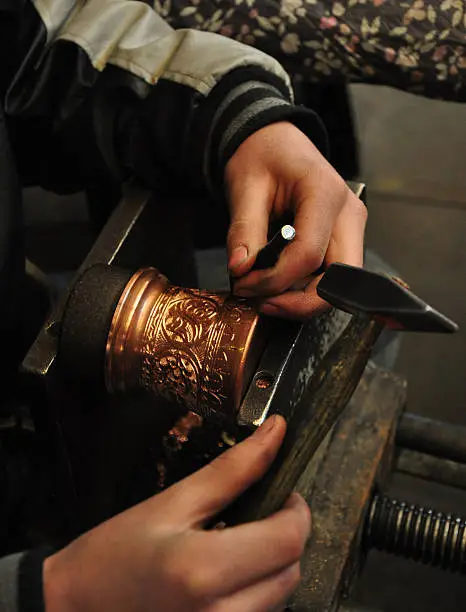
Why Copper Crafts Die Casting Suits Architectural and Furniture Hardware
First, think about how this process works so well with hardware. This will help you find the best alloys or sellers.
Strength, Repeatability, and Surface Quality
Stress is used to push liquid metal into a steel mold so that a copper alloy can be cast. Each shot makes almost the same part because it fills the same hole. This makes sure that the mounting faces and spindle holes are always the same from the very first set of door handles, knobs, escutcheons, rosettes, and furniture pulls. When gravity casting or sand casting is used, the surface is often rougher and needs more work to make it smooth. Dies make things go faster and look better after the model is made. I always tell people who buy from me that the amount they buy is important. Roll some dice. When you order the same size over and over, it's worth the time and money. For desktop, hotel, business, and OEM hardware, that's how all of those types of apps work.
Where Copper Die Cast Components Are Used
Pull handles, cabinet pulls, table fittings, and trim pieces are just a few of the things that this metal is used for. With Copper Crafts Die Casting, you can make pretty things that are the right size, shape, and finish on the outside. People who work in hotels, shops, and making high-end furniture often choose Copper Crafts Die Casting goods to make hardware sets that match in style and finish. You can use these pieces in both old-fashioned and modern home decor because they look good with stone, leather, wood, glass, and other natural materials. Copper alloys are also antimicrobial, which means they can help keep some germs from growing on things that a lot of people touch. A report from the EPA of the United States says that brass and bronze, which are both made of copper, can kill germs. If someone is looking for Copper Crafts Die Casting parts, they shouldn't just think that all copper-based goods are safe or have the same properties. Instead, they should look at the exact makeup of the alloy, any certifications that are needed, and the uses that are allowed. Things that are mixed with copper are used for more than just looks. In power and energy equipment, they are also used as electrical connectors, thermal management parts, and heat-dissipation parts. The people who make the parts for Copper Crafts Die Casting have to think about how well they block, conduct, and handle heat. People who want to buy something should look at each of these technical aspects on its own and make sure that the material and method of production they choose are right for their business. If you buy hardware from a reputable Copper Crafts Die Casting supplier, you can be sure that it will be of good quality, be made reliably, and work well for your needs.
Choosing the Right Copper Alloy
Which alloy to use should depend on how the part will be used, how it looks, how much it costs, and how much it will hold up under stress. When it comes to color, conductivity, or a certain type of corrosion, high-copper alloys are the best pick. Metals made of copper and zinc, like some types of brass, are often a good mix of price, strength, ease of workability, and finishability. That's why the fanciest hardware is made of brass. Bronzes are good for parts that will rust or break down over time. They are made of copper and tin. Whether you die cast pure copper or a mix of copper, different things happen. The way dies wear and the way the process is planned are changed because brass melts below 1,085°C. I believe that these rules for copper-alloy die castings should be included in every RFQ. They should cover the alloy standard, hardness, finish compatibility, and tracking needs. Aluminum only weighs 2.70 g/cm³, while copper weighs more than three times that.
How Copper Crafts Die Casting Works From Drawing to Finished Part
To write a strong RFQ and spot risks early on, you should have a good idea of how the work will be done.
Process Steps
The first thing that needs to be done is to go over the drawings, CAD files, tolerances, and installation conditions. After that, engineers plan how the die's cavities, parting line, gates, runners, and ejector system will be set up. After that, the metal is melted in a controlled environment in the forge and squished hard into the hot steel die. Brass pours at 900°C or more, while aluminum pours at 660°C or less. It's now more important to keep the temperature low and look after the die better. To make it again and again, you have to carefully fill it, keep the pressure up, and let it cool. Once the flash is out, people turn it off. Then, based on the model, CNC tools cut, drill, tap, clean, and smooth the part. It is easy to control porosity, incomplete filling, and deformation when the parameters are stable.
Design Rules for Custom Copper Die Castings
You don't have to change the tools if you plan ahead. If the thickness of the wall stays the same, it stops shrinking, even if the temperature changes. The ribs make it stiffer without adding weight. Long, sharp edges and big curves make it easier for the part to come out of the die. Names, grooves, and transitions that are just for fun are not pushed as much. There must be a mark on every screw, thread, mounting face, and spindle hole that says whether it was cast or machined. The choice changes the price and the tools that are used. Trouble is found with the plan for making the product while the steel is still being shaped. Along with making the output tool, we agree on how to measure it, how to check it, and what the standards are for approval. The part can be measured the same way by everyone.
Surface Finish and Appearance Options
The finish on a handle is a big part of how it looks, feels, and works over time. In Copper Crafts Die Casting, functional edges are usually finished by deburring, tumbling, blasting, brushing, polishing, and CNC machining to make the sizes and surfaces smooth. Die for Copper Crafts: It depends on the design of the product and what the customer wants. Casting parts can be finished in copper, brass, bronze, black, nickel, chrome, or a custom color to make them look old. They can also be brushed, textured, plated, or coated. Manufacturers who offer more than one production batch or project location need to have approved master samples to make sure that variations in color, gloss, texture, and acceptable surface are all the same. Before buying a finish for Copper Crafts Die Casting, people should also make sure that it sticks well to the base metal and works well with it. Porosity on the surface, flow marks, too much flash, polishing lines, and uneven coating coverage are all flaws that could happen. Standardized ways of making things, regular checks on the process, and written quality checks can help control these issues. A professional Copper Crafts Die Casting supplier should set clear standards for finishing and inspection to make sure that every batch meets the quality and look standards that were agreed upon.
Comparing Methods and Controlling Quality
You need to know how to tell if something works better than other options.
Die Casting Versus Other Manufacturing Methods
You can sand cast, invest cast, stamp, CNC machine, cast brass or bronze, and die cast copper. Most of the time, brass parts that are only there for looks cost less than alloys with more copper that can help with color or conductivity. Making big or small parts out of sand is the best way to do it. It is better to use investment casting for small, detailed batches. CNC cutting is very accurate and works well for making prototypes, but it takes longer and longer to make each part. A die cast is best for three-dimensional, solid parts that have been shaped, while a stamp is best for making shapes out of sheet metal. The size, shape, tolerances, finish, and price of the tools you want to buy should help you make your choice.
Quality Control Checks
From the time the metal is brought in until it is packed up, the part should be checked for quality. Suppliers you can trust keep track of the raw materials they sell, including how they were melted and what steps were taken to cast, trim, machine, finish, and check them. The sizes can be checked with calipers, gauges, fittings, height gauges, thread inspection, or a CMM if the difference is small enough. There are functional tests that make sure the product will last even after being used a lot of times and that the mounting fits well. Checks for appearance look at flaws on the surface, color, gloss, coating thickness, how well it sticks, and how resistant it is to corrosion. They need to be done with the right lights and plans for taking samples. They set limits so that buyers and sellers can agree on what is possible. Before you say yes to making the product, you should ask for inspection records, samples, and papers that show how it was made.
Decision Guide for Buyers
When the job is done right, the company faces less risk. Dies are a good way to make difficult 3-D parts with medium or high volumes. A hotel chain that buys the same lever handle for many locations probably wouldn't need a die, but a designer prototype that is only made once would. CNC machining is a good way to make prototypes and small batches. Investment casting, sand casting, or stamping are better for forms and sizes that are bigger or different. Choose a metal and finish based on how it will look, how strong it is, how much it will wear, how much humidity it will get, how much salt it will be exposed to, and how much you want to spend. Then, give the supplier a grade based on how well they do engineering, quality control, shipping, communication, and paperwork. Before you say yes, make sure you know the details, including the measurements, quality standards, inspection plans, samples, who owns the tools, shipping details, packing, and what to do after the sale.
Sourcing, Cost, and Lead Time for Custom Copper Hardware
It's easy to make the technical choices above if you have good sources.
How to Source a Dependable Manufacturer
Before they look for Copper Crafts Die Casting services, buyers should make a full technical brief. This should have engineering drawings, CAD files, material specs, need for surface finish, allowable dimensions, yearly demand, expected order quantities, shipping plans, and ways to package the goods. This lets Copper Crafts Die Casting service providers know what the job needs so they can give correct quotes. People who want to buy something should also ask sellers to separate the costs in their quotes into different groups, like engineering, tools, unit prices, machining, finishing, inspection, packing, freight, and payment terms. When you look at these things one by one, it's easy to see how much each offer is worth and if there are any secret costs. Price isn't the only thing you should consider when looking for a good source. You should also look at their die-casting tools, how well they understand copper metals, how well they can make tools, what CNC machining resources they have, how they control quality, how they finish the surface, and how long they've been in business. Things that Copper Crafts Die Casting needs to look and work in a certain way can be made with less risk if they work with a maker who has made both pretty metal hardware and precise metal parts before. You should also make sure that the supplier can help you track the product, deal with problems, approve samples, and make engineering changes. Clear communication, well-kept quality records, and ongoing support after the sale are all signs of a Copper Crafts Die Casting partner you can trust. During the whole creation process, this should always be the case.
What Fudebao Technology Brings to the Project
What Zhejiang Fudebao Technology Co., Ltd. does to make things is mostly machine and cast things out of stainless steel, copper alloy, and aluminum alloy. We work with companies that make tools and machines for factories as well as companies that work on boats and cars. Laser cutters, high-speed routers, low-pressure casting machines, and die casting machines are all in our plant. They also include heating, casting, finishing, and treating the surface. With a level of accuracy of ±0.05mm, that setting lets you get the whole thing in one stop, from the blank to the finished item. One more change is that we no longer buy ESS energy storage batteries and HAAS automation machine tools through a middleman. They now come straight from the business. When casting and machining are done in the same place, buyers in hardware for cars, machinery, electronics, and spacecraft don't have to go to different places as often to get tight-fit hardware.
Cost Drivers and Lead Time
How much the alloy costs, how heavy the part is, how complicated the design is, how big the die is, how many holes it has, how much it can hold, how it is machined, finished, inspected, packed, shipped, and so on. Costs of engineering and making tools should be kept separate from costs of selling finished things. Tools for CNC milling, investment casting, or making things might be less expensive for very small amounts or samples than tools for making a lot of things. It takes a certain amount of time to make a tool, get approval, make samples, go through mass production, and any extra time needed for tests or finishes that are hard to do. If you want to lower the total cost of buying something, you can standardize mounting features, change wall thickness, do less machining, pick useful finishes, combine orders, and share right predictions.
Conclusion
Copper Crafts Die Casting lets people make door handles, furniture pulls, and other similar items over and over again with the same shape and the same way to mount them. The metal, which is usually brass, is picked based on how strong it needs to be, how it will look, and how much it will wear down and rust. Things in the design, like the wall width, draft, and datums, can change how well the tooling works. The people in charge of quality should look at the alloy, measure it, try it in real life, and make sure the master samples are fine. When you need to make parts that will be used over and over in medium to large quantities, die casting is better than sand casting, investment casting, CNC machining, and forging. Milling is a better way to make samples. The tools, machining, finishing, and volume all have an effect on both the cost and the wait time. It's better to have a clear technical plan and see how well the product can be made right away. They can use these tips to find the best way, material, and service for their job.
FAQ
What can Copper Crafts Die Casting produce?
As long as the shape fits the die, it can make door handles, rosettes, backplates, furniture pulls, and other artistic items that are all the same size and shape.
How do I choose the right alloy?
Don't just look at the name of an item when making a decision. Check out its price, how well it works, how strong it is, how much it wears, how much rust it gets exposed to, how well it conducts electricity, and how nice it looks. Decor made from different kinds of metal can look great in many ways.
What tolerances can I expect?
Normal casting ranges rely on the form and the tools that were used. You can get a better handle on important holes, threads, and surfaces that fit together better with CNC cutting.
Can I order low volumes?
Yes. CNC samples, test tools, soft tools, or small production runs can be sent by suppliers to help with small projects. Tell us how much you think you'll need each year, and we'll help you pick the right number of tools.
How do I reduce cosmetic defects?
As for the finish, make sure there are clear instructions, that reference samples are fine, that the inspection criteria are spelled out, and that the packaging keeps the item safe from damage like scratches and wear and tear. Master samples are used to make sure that orders for more than one batch are all the same.
Request Copper Crafts Die Casting Support from Fudebao Technology
Fudebao Technology can act as your Copper Crafts Die Casting manufacturer for door handles, furniture fittings, and related hardware. Our factory covers melting, casting, machining, and surface treatment in one workflow, with accuracy up to ±0.05mm. Send your drawings, alloy, finish, and volume to hank.shen@fdbcasting.com, and visit fdbcasting.com for company details. Our engineers will review manufacturability and respond with next steps for your project.
References
1. ASM Handbook, Volume 15: Casting, ASM International, 2008.
2. Copper and Copper Alloys, ASM Specialty Handbook, ASM International, 2001.
3. Product Specification Standards for Die Castings, North American Die Casting Association, 2015.
4. Complete Casting Handbook, Butterworth-Heinemann, 2015.
5. EPA Registers Copper-Containing Alloy Products, U.S. Environmental Protection Agency, 2008.
6. ASM Handbook, Volume 2: Properties and Selection: Nonferrous Alloys and Special-Purpose Materials, ASM International, 1990.



YOU MAY LIKE