Best Aluminum Die Casting Companies for Automotive Parts
2026-04-08
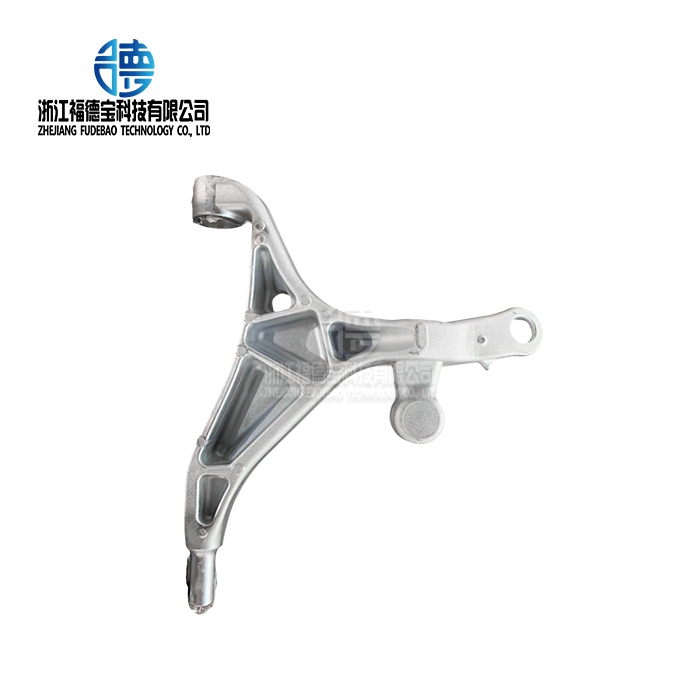
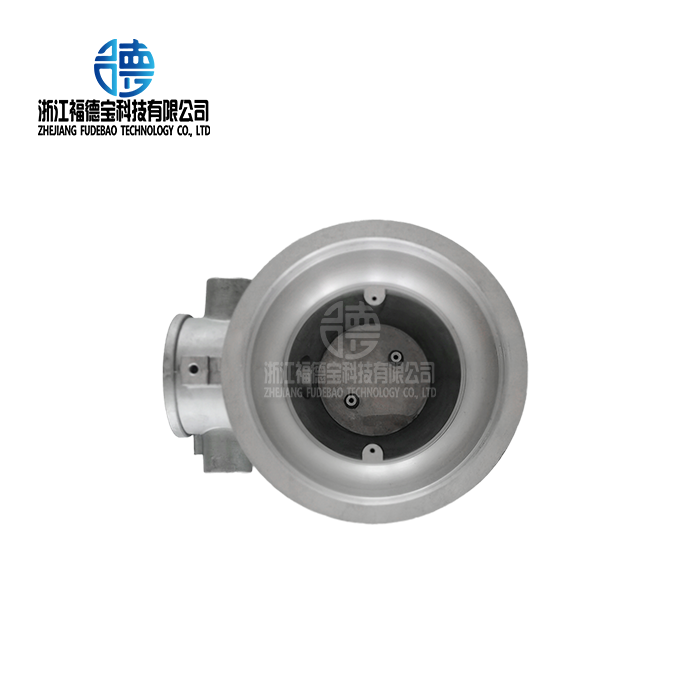
When sourcing precision components for automotive applications, identifying the best aluminum die casting companies becomes mission-critical. Aluminum die casting is a high-pressure metal forming process that transforms molten aluminum alloys into complex, lightweight parts with exceptional dimensional accuracy. Leading manufacturers like Fudebao Technology combine advanced HPDC (High-Pressure Die Casting) equipment, rigorous quality systems, and decades of automotive-grade expertise to deliver transmission housings, engine brackets, structural reinforcements, and battery enclosures that meet strict PPAP documentation and durability standards demanded by OEMs and tier-1 suppliers across North America.

Understanding Aluminum Die Casting for Automotive Parts
Aluminum die casting is being used more and more by automotive engineers to find the best mix between weight reduction and motor performance. At pressures higher than 10,000 psi, liquid aluminum alloy (usually A380, ADC12, or AlSi9Cu3) is poured into steel molds that have been heated. This starts the process. Because of this force, the liquid metal fills every tiny space, making near-net-shape shapes that get rid of the need for extra building steps. The fast cooling cycle hardens the part in seconds, locking in tight limits of about ±0.1 mm. This directly leads to better fitting when putting the car together.
Why Aluminum Alloys Dominate Automotive Manufacturing
With a specific gravity of 2.7 g/cm³, aluminum is about one-third the weight of steel. This makes it a good choice for the car business, which is always trying to make things lighter. Every kilogram of reduced component weight makes gas-powered cars use less gas and electric cars can go farther on a single charge. Aluminum alloys are great for heat-sensitive uses like EV battery boxes and power electronics housings because they are light and conduct heat well (96–120 W/m·K). The natural oxide layer that forms on metal surfaces makes them resistant to rust. This lowers long-term upkeep costs and increases the life of parts that are used in harsh conditions with salt, humidity, and temperature changes.
The Die Casting Process Tailored for Automotive Precision
The first step in the manufacturing process is choosing the right metal. Engineers at places like Fudebao Technology look at load-bearing needs, working temperatures, and crash-test standards to figure out the best material mix. After that comes mold design, which includes things like draft angles, release pins, and cooling lines that keep the surface from porosity and flaws. During injection, molten metal runs into the die hole through runners. The cooling rate is controlled and watched by thermocouples to keep the metal from warping and putting stress on the inside. After the casting process is done, steps are taken to remove any flash, important features are CNC machined to within 0.05 mm of accuracy, and the surface is treated with powder finishing or anodizing to make it more durable and attractive.
Top Aluminum Die Casting Companies for Automotive Parts: Why Choose Fudebao Technology?
There are a lot of aluminum die casting producers in North America and Asia, but not many of them have the combined skills, quality certifications, and automotive-specific knowledge needed to meet tier-1 production deadlines. Leaders in the industry stand out by having IATF 16949 certification, having experience with PPAP submissions, and investing in Industry 4.0 technologies that allow for tracking and statistical process control.
Fudebao Technology's Manufacturing Excellence
Zhejiang Fudebao Technology Co., Ltd. has a 15,000-square-meter building with 45 high-speed machining centers, 22 CNC lathes, 12 low-pressure casting machines, and 8 die-casting machines with holding forces between 280 and 1,250 tons. This set of equipment serves the whole value chain, including melting, casting, trimming, machining, and surface treatment. All of these steps can be done in one place, which cuts down on the time and quality risks that come with having separate supply lines. Our precise cutting can achieve tolerances of ±0.05 mm, which meets the high standards needed for gearbox housings in cars, ABS modulator bodies, and electric motor cases.
Quality assurance rules mirror those used by the biggest OEM providers in Europe and Japan. Coordinate measuring machine (CMM) inspection, X-ray porosity analysis, and pressure leak tests are all done on every output batch to make sure the structure is sound. Material certifications link the chemistry of an alloy to specific lots of ingots. This meets the standards for car tracking during warranty reviews or recall management. We are ready to join tier-1 supply chains because we have IATF 16949 certification and have successfully submitted PPAPs to names that serve the North American market.
Custom Casting and Rapid Prototyping Services
Because of how quickly cars are developed, suppliers need to be able to go from validating an idea to starting production quickly. Fudebao Technology's fast prototyping service can send sample casts within 3–4 weeks of the final design being approved. Soft tooling or 3D-printed sand cores are used to check the shape, fit, and function of the samples before hardened steel production dies are ordered. This iterative method cuts down on the costs of engineering change orders and speeds up the time it takes for new car models to hit the market.
Our custom casting services can handle complicated shapes with built-in fixing bosses, ribs for strength, and smooth changes in wall thickness that regular manufacturing methods can't handle. The design-for-manufacturing (DFM) stage is where engineers start working together. During this stage, our technical team looks at CAD models to find draft angles, gate locations, and cooling strategies that stop common flaws like hot tearing or shrinking porosity.
Client Testimonials and Case Studies
A major automaker that makes electric powertrains worked with Fudebao Technology to remake a battery tray part that was originally made from welded steel stampings. The client cut the weight by 35%, got rid of 14 welding steps, and increased production output by 60% by switching to a single-piece component. The built-in mounting points and wire handling channels cut the time it took to put together each unit from 18 minutes to 7 minutes. Over a 50,000-unit production run, this saved over $480,000 a year.
In a different project, people worked together to make transmission valve bodies that had to have 12 fluid paths that crossed each other and be flat within 0.08 mm. Our low-pressure casting method and five-axis CNC machining made a product that didn't leak during 100,000-cycle longevity testing, which made us the client's first choice for the next generation of transmission platforms.
How to Choose the Best Aluminum Die Casting Supplier for Automotive Parts?
It's not enough to just compare prices when choosing an aluminum die casting partner. For strategic sourcing to work, you need to look at their technical skills, financial security, and cultural fit with your company's quality standards and communication preferences.
Certification Compliance and Quality Systems
IATF 16949 certification is a basic condition for getting into the automotive supply chain. It shows that you follow failure mode and effects analysis (FMEA), advanced product quality planning (APQP), and statistical process control (SPC). Check to see if potential sellers have up-to-date certifications by having third-party checks done. Make sure they don't have any expired certificates. Ask for proof that PPAP entries have been accepted by well-known OEMs. This could include dimensional records, material certifications, and process flow diagrams.
Following the rules about the environment becomes more important as the rules get stricter. Make sure that the sellers you're considering have the ISO 14001 environmental management approval and follow the rules for REACH, RoHS, and conflict minerals disclosure. These certificates lower the risk in the supply chain and help your company meet its reporting requirements for sustainability.
Production Capacity and Lead Time Flexibility
Check to see if a supplier's equipment mass fits the size of the parts you need and the amount of work you expect to do each year. When machines are too small or too close to their capacity limits, they can't keep the quality consistent and can't handle sudden increases in demand. On the other hand, equipment that is way too big may mean that price systems aren't working well. Fudebao Technology has a wide range of machines, from 280-ton units for small housings to 1,250-ton presses for structural parts. This lets them match the right machine to the right part, which minimizes cycle time and maximizes unit costs.
Lead time transparency keeps output from stopping, which costs a lot of money. Make it clear if the estimated arrival times include making the mold, taking multiple samples, and shipping the goods by water. Reliable providers keep safety stock plans for high-runner parts and offer faster production for pressing needs, but they make the extra costs clear from the start.
Customization Capability and Technical Support
For the automotive industry to keep evolving, it needs sellers who work with developers instead of just selling parts. Check to see if potential partners have degreed metallurgical engineers and application experts on staff who can suggest changes to alloys, heat treatment methods, or design improvements that will improve performance or lower costs. Fudebao Technology's engineering team works together by videoconferencing, exchanging CAD files, and going to each other's offices to speed up problem-solving through co-development relationships.
Post-sales support differentiates proactive partners from reactive sellers. Make sure that field service is available to help with installation and troubleshooting when production starts, and that they are ready to work with you on ongoing improvement projects. As production rates rise, suppliers who clearly break down their prices—separating the costs of raw materials, processing fees, and tooling amortization—allow manufacturers to make smart choices about whether to make or buy.
Avoiding Common Sourcing Pitfalls
When people don't agree on dimensional limits, surface finish goals, or inspection criteria, it leads to expensive rework and delays in the plan. Instead of making decisions over the phone, insist on thorough models with GD&T (geometric dimensioning and tolerancing) symbols. Hold talks before production to agree on acceptance criteria, sample methods, and ways to keep nonconforming material under control. Alloy mismatches represent another common problem. To keep the chemistry from changing, use international standards (ASTM, EN, or JIS codes) to choose aluminum grades instead of private trade names. Request certified mill test reports for every batch of products and conduct independent lab tests.
Enhancing Automotive Part Performance with Aluminum Die Casting Design Tips
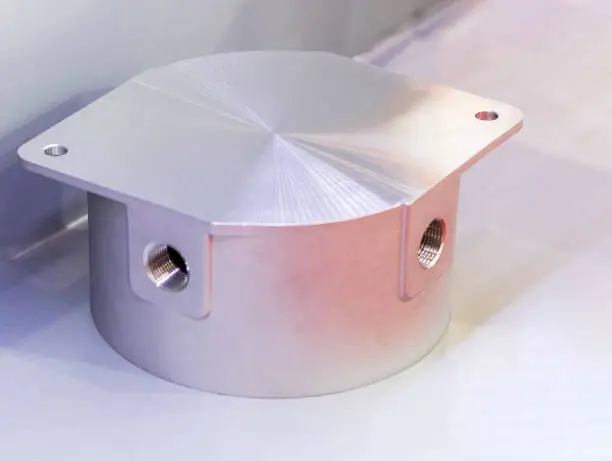
The best aluminum die casting results from design choices made early in the development process, long before making the production tools starts. When OEMs, tier suppliers, and casting makers work together on engineering projects, they can save weight, cut costs, and make parts last longer than they would if they worked on them separately.
Weight Optimization and Structural Reinforcement
Modern modeling software, such as finite element analysis (FEA) and computational fluid dynamics (CFD), finds places where stress is high and load lines in cast parts. Engineers get strength-to-weight ratios that are on par with cast options by cutting away extra material from low-stress areas and adding reinforcing ribs to key areas. Wall width optimization lowers the weight of the casting by 15–25% compared to designs with uniform walls. This directly improves the fuel economy and carrying capacity of the vehicle.
Ribbing patterns require careful spacing—usually 2.5 to 3 times the thickness of the wall next to them—to keep sink marks and holes from showing up where ribs meet walls. Large fillet radii (at least 1.5 mm) spread out loads and make it easier for metal to move during die filling, which lowers the amount of scrap and increases the life of the die.
Cooling Techniques and Defect Prevention
Common casting flaws like porosity, hot tears, and dimensional warping can be avoided with controlled solidification. By strategically placing cooling pathways within the two halves of the die, heat is extracted at rates that balance the need for fast cycle times with quality standards. To get rid of subsurface voids that weaken the pressure stability of hydraulic or pneumatic parts, thicker areas need targeted cooling or vacuum help.
Gate design affects the speed, turbulence, and trapping of air in the metal flow. Turbulence is kept to a minimum by tangential gates, and fill patterns in big, complex parts are balanced by multiple gates. Overflow wells catch the first cold metal and stored gases, keeping these impurities from getting into important parts. Fudebao Technology's mold flow modeling can guess fill patterns and solidification processes, which lets designers make changes to the design before the steel cutting starts.
Alloy Selection for Application-Specific Requirements
A380 aluminum is the most popular metal for making cars in North America because it is good at filling molds, doesn't rust, and is pressure-tight enough for transmission cases and engine parts. ADC12, which is the same as A383, has better movement for thin-wall uses like sensor housings or light frames. AlSi9Cu3 is better at withstanding high temperatures, which is why it is used for engine parts and exhaust gas recirculation (EGR) system parts that work above 200°C.
New metals that contain scandium or a mix of aluminum and magnesium offer even more weight savings and better recycling. These high-tech materials are in line with plans for making cars more environmentally friendly that aim for carbon-neutral production and the cycle economy.
Industry 4.0 and Process Automation Trends
With smart workplace technologies, casting goes from being a craft-based process to one that is data-driven and predicted. Statistical process control can find differences before they lead to faulty parts by keeping an eye on the melt temperature, injection velocity, and die temperature in real time. Machine learning algorithms look at past quality data to find the best process parameters. This lowers the rate of scrap from the normal 8–12% in the business to 3–5%.
Cobots, or collaborative robots, do routine jobs like part extraction, deburring, and inspection, making the workplace safer and keeping quality high. Automated guided vehicles (AGVs) move work-in-progress between stations, which keeps workers from damaging the parts and uses RFID tags to keep track of each part's production history. These innovations position forward-looking providers like Fudebao Technology to deliver the reliability, traceability, and constant growth automakers expect.
Conclusion
To get around in the global world of precision metal forming, you need to work with aluminum die casting makers who have the right technical knowledge, quality systems development, and a dedication to collaborative engineering. Fudebao Technology offers complete solutions that include mold creation, high-pressure die casting, CNC machining, and surface finishing. These full solutions make buying easier and guarantee accurate measurements, material tracking, and on-time delivery. We are a trusted partner that can help you with your most difficult projects, from development to high-volume production, thanks to our IATF 16949 certification, PPAP knowledge, and long history of working with car OEMs and tier-1 suppliers.
FAQ
What aluminum alloys does Fudebao Technology recommend for automotive structural components?
Because it is easy to cast and doesn't rust, A380 is usually our first choice for general-purpose housings and braces. We recommend AlSi9Cu3 or A356-T6 metals for high-stress uses like crash frames or suspension parts because they have better tensile strength and elongation qualities after being heated. To find the best alloy makeup for each application, our metallurgical team looks at factors like working temperatures, loading conditions, and exposure to the environment.
How does Fudebao Technology ensure consistent quality across high-volume production runs?
Our process for ensuring quality includes several steps of checking. Spectrographic research is used to prove the alloy chemistry of new materials that come in. We use statistical process control to keep an eye on important output factors like cycle time, injection pressure, and melt temperature. A coordinate measure machine checks the key dimensions of every production batch, and X-ray porosity analysis and pressure leak tests are also done. Before a package is authorized, final audit checks make sure that PPAP-approved control plans are being followed.
What are typical lead times for prototype castings and production tooling?
After the design is finalized, prototype casts using soft tooling or rapid tooling methods usually take three to four weeks. Production-grade polished steel dies take 8–12 weeks to make, based on how complicated the part is, how many cavities it has, and how busy the tool room is at the moment. When important program goals need to be met quickly, rush services can cut down on wait times by 25–30%. During the quote process, we give you thorough Gantt charts that make it easy to see what the milestones are.
Partner with a Trusted Aluminum Die Casting Supplier - Fudebao Technology
Fudebao Technology has all the answers that automotive procurement teams need when they are looking for a trusted aluminum die casting maker. Our vertically integrated plant offers precision-cast parts from the initial idea to mass production. It is backed by IATF 16949 certification and proven PPAP experience. Our engineering team works together to make sure that designs are optimized, costs are cut, and deliveries are made on time, whether you need fast prototyping, custom metal development, or high-volume production with ±0.05 mm tolerances. Get in touch with hank.shen@fdbcasting.com right away to talk about your unique needs, ask for technical documentation, or set up a virtual tour of our site. Find out how working with Fudebao Technology can make your supply chain stronger through quick responses, low prices, and a dedication to quality that never wavers.
References
American Foundry Society. (2021). Aluminum Casting Technology and Applications in Automotive Manufacturing. Schaumburg: AFS Publications.
North American Die Casting Association. (2020). Product Specification Standards for Die Castings Produced by the Semi-Solid and Squeeze Casting Processes. Rosemont: NADCA Press.
SAE International. (2019). Automotive Aluminum Castings: Design, Properties, and Performance (SAE Technical Paper 2019-01-0721). Warrendale: SAE International.
Davis, J. R. (2018). ASM Specialty Handbook: Aluminum and Aluminum Alloys. Materials Park: ASM International.
Campbell, J. (2015). Complete Casting Handbook: Metal Casting Processes, Metallurgy, Techniques and Design (2nd ed.). Oxford: Butterworth-Heinemann.
Kaufman, J. G., & Rooy, E. L. (2016). Aluminum Alloy Castings: Properties, Processes, and Applications. Materials Park: ASM International.



YOU MAY LIKE
_1756361423150.webp "Cryopump body")
_1756352561845.webp "stainless steel blanking plug")
_1756349794241.webp "round belt pulley")
_1756348356531.webp "Automobile engine oil pan")