
Aluminum Car Parts Manufacturers Deliver Precision OEM Components
2026-08-26
Aluminum car parts manufacturers are a big part of today's automotive supply chains because they help original equipment manufacturers (OEMs) meet ever-higher standards for performance and the environment. These specialized manufacturers make parts that are strong, lightweight, and help with fuel efficiency, lowering emissions, and new design ideas. Working with manufacturers with a lot of experience makes sure that the measurements are correct, that the rules are followed, and that the parts fit together smoothly in complicated car assemblies. Choosing the right aluminum casting and machining partner is very important for procurement professionals who work with global supply chains because it affects the quality of the products they deliver and their ability to stay competitive in the fast-changing automotive markets.
Understanding Aluminum Car Parts and Their Manufacturing Process
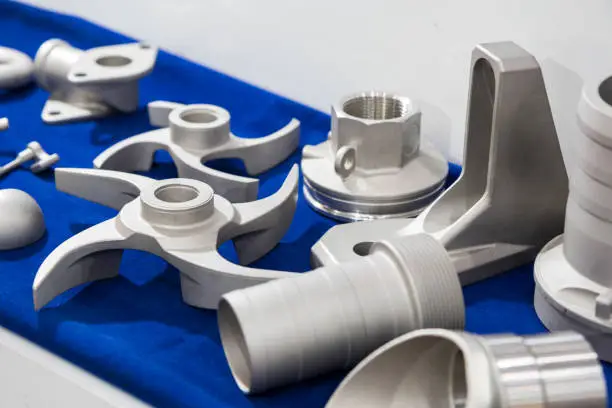
Aluminum car parts are precision-engineered parts made from different aluminum alloys, each chosen for its unique mechanical properties and use needs. Automakers depend on these parts to quickly reduce the weight of their vehicles without affecting their safety or structural integrity.
Aluminum Alloy Selection for Automotive Applications
This part's performance is mostly influenced by the aluminum alloy that was used to make it. For structural frames and suspension parts, alloy 6061 is the best choice because it is easy to weld and doesn't rust. This versatile alloy keeps its mechanical properties stable thru heat treatment, reaching tensile strengths of around 310 MPa in the T6 condition. On the other hand, 7075 aluminum has a much higher strength—more than 570 MPa—equal to many construction steels while still having the weight benefits of aluminum. Automotive engineers choose 7075 for high-stress parts like suspension arms and safety-critical brackets, even tho it is more expensive and can't be welded easily, so it needs to be carefully integrated into the design.
The 3xx alloy type, especially A380 and A383, is most commonly used in die casting because they are more fluid when molten metal is injected. These metals are high in silicon and can fully fill complicated mold holes. This lets housings and transmission cases with thin walls and lots of small details be made. The parts that were made have high pressure tightness and dimensional stability, which are very important for powertrain applications that will be exposed to thermal cycling and mechanical vibrations for the life of the car.
Manufacturing Stages and Quality Control
Precision aluminum automotive parts are made in a number of important steps, each of which affects the quality and function of the final part. Optical emission spectroscopy is used to make sure that the alloy composition meets ASTM B209 or EN 755 standards at the start of the process. Material traceability is an important part of automotive quality systems, and it needs detailed records from the raw material to the final part.
Different casting methods are used for different parts based on their shape and performance needs. With cycle times of less than two minutes, high-pressure die casting is perfect for making a lot of complex parts like transmission housings. Manufacturers make near-net-shape parts that don't need much secondary machining by pressing molten aluminum into steel molds at pressures above 10,000 psi. Vacuum-assist systems get rid of air from mold cavities, which greatly reduces porosity that could weaken structures or applications that need to be pressure-tight.
For bigger structural parts that need better mechanical properties, low-pressure casting is the best method. With this method, molds are filled slowly from below using controlled pressure. This lowers turbulence and keeps gases inside. Low-pressure methods are great for making castings with a finer grain structure and fewer flaws than gravity-fed methods. This makes them ideal for suspension parts and structural elements that are subject to fatigue loading.
CNC machining turns cast blanks into precisely finished parts that have to meet strict physical requirements. Multi-axis machining centers use complicated tool paths to make sealing surfaces with roughness values below 1.6µm, threaded holes that fit perfectly, and mounting surfaces that are accurate to ±0.05mm. Coordinate measuring machines check the accuracy of dimensions at hundreds of points to make sure that every part meets the standards for geometric dimensions and tolerances needed for automated assembly.
The last step in the manufacturing process is surface cleaning, which protects parts from corrosion and makes them look better. Hard anodizing makes a layer of dense aluminum oxide that is up to 50 microns thick and has a surface hardness of about 60 Rockwell C. This coating is very resistant to wear, so parts can pass ASTM B117 salt spray tests for 1,000 hours. Powder coating is an alternative for uses that care more about how things look. It comes in many colors and is very resistant to the elements.
Environmental Advantages Versus Steel Components
Aluminum's good effects on the environment are a big reason why the auto business is moving toward using it more, and aluminum car parts manufacturers are at the forefront of this shift. Aluminum directly lowers car weight because it has a density of about 2.7 g/cm³, which is about one-third that of steel. Depending on how well the design is optimized, changing steel parts with aluminum ones can cut the weight by 40% to 60%. This decrease lowers the amount of energy a car needs to run, whether it has an internal combustion engine or an electric drivetrain.
In addition to being highly efficient, metal is also very easy to recycle. Closed-loop recycling systems are possible because the metal keeps its shape even after being melted down and reformed many times. Recycling aluminum uses only 5% of the energy needed to make it from bauxite ore in the first place, which greatly reduces the carbon footprint of industry. Over 90% of the aluminum in old cars can be recycled with the current system. This creates a sustainable material cycle that helps companies meet their environmental goals and follow the rules.
Comparing Top Aluminum Car Parts Manufacturers for Precision OEM Components
To find the best production partner, procurement teams have to rate producers on a number of performance factors. Not only does this decision change the price and quality of parts, but it also changes the long-term positioning of the market, the ability to innovate, and the resilience of the supply chain.
Quality Certifications and Manufacturing Standards
IATF 16949 is the global standard for automotive quality, and the best auto suppliers have strong quality management systems that are certified to that standard. This certification shows that a company can meet certain customer needs by controlling processes in a planned way and always making things better. Manufacturers that work with aerospace and defense often have AS9100 certification, which means they follow even stricter standards for process controls and documentation.
Another important qualification requirement is the Production Part Approval Process (PPAP) paperwork. Submissions to PPAP give a lot of proof that the production process always makes parts that meet all engineering standards. Dimensional inspection records, material test results, process flow diagrams, and control plans are all in this package. Before approving serial production, OEM procurement teams look over these items to make sure the supplier can do what they say they can do. This is why thorough PPAP planning is necessary for qualification.
Production Capacity and Delivery Performance
You can't just look at the amount of raw materials that a factory can make; you also have to think about how flexible it is and how reliable its deliveries are. Tier-one suppliers often keep separate production cells for their biggest customers. This makes sure that their capacity is always allocated and priorities are always set. When a new product comes out, or demand goes thru the roof, this infrastructure is very helpful because it keeps the production lines from having to stop, which would be very expensive.
The ability of the equipment directly affects the consistency of the product. Modern machining centers have spindle speeds of over 15,000 RPM and tool change times of less than two seconds. This makes the most of working time and minimizes motion that doesn't add value. Before each action, automated tool measurement systems check the dimensions of each tool to avoid waste from broken or worn tools. Manufacturers can keep tolerances very tight even during long production runs with this kind of high-tech equipment, which is necessary for automatic assembly systems.
Delivery speed and supply chain resilience are also affected by how close two things are to each other. Shorter lead times, lower transportation costs, and faster responses to changes in design or changes in demand are all benefits of having manufacturing facilities in the same area. During recent global supply chain breakdowns, companies with a variety of regional production proved to be more reliable than single-source providers that relied on long-distance logistics.
Technical Support and Engineering Collaboration
When a manufacturing partner offers full engineering help, they add value beyond just making parts. Design for manufacturability (DfM) consulting during product development finds ways to make parts more efficient for casting or machining, which lowers costs while raising quality. Simulation tools, like mold flow analysis for casting and machining cycle optimization, can find problems before they happen with real tools. This speeds up development and lowers risk.
Materials engineering helps clients choose the best alloys by balancing cost, performance goals, and the ability to make the alloy. Suppliers with a lot of experience can suggest alloy alternatives that work just as well but cost less, or they can suggest changes to the heat treatment that make the mechanical properties better without having to change the design. When sellers work together in this way, they become strategic partners who help the product succeed as a whole.
Optimizing Your Procurement Strategy with Aluminum Car Parts Manufacturers
Aluminum car parts manufacturers help suppliers meet business needs by matching their technical abilities with those of the suppliers. This builds long-term success. A good procurement plan finds a balance between lowering costs and making sure quality, on-time delivery, and the resilience of the supply chain.
Requirements Definition and Supplier Assessment
For procurement to go well, the needs must be clearly stated, including technical details, quality standards, and payment terms. Technical drawings with geometric measurements and tolerances make it clear what level of accuracy is needed, and material specs make sure that the properties of the materials are always the same. To set clear acceptance criteria, quality requirements should list the standards that apply, how often they should be inspected, and the paperwork that must be turned in.
A supplier assessment looks at a provider in a number of different areas. An audit of a manufacturing plant looks at the condition of the equipment, the controls for the process, and how well the quality system is being used. Talking to engineering teams shows how knowledgeable and good at solving problems you are with technology. A financial stability analysis makes sure that suppliers have the money they need to keep running their businesses and make investments in continuous improvement. Lastly, checking references with past customers gives you information about how well delivery works and how quickly you respond that goes beyond what the marketing says.
Procurement Process and Partnership Development
Usually, the buying process has several organized steps. The first step is to make an inquiry to explain what you need and get quotes. Suppliers figure out if a product can be made and give estimates of price and wait time. Competitive quotes from a number of reliable sources help set prices in the market and show different ways to make things.
Before bulk production starts, a supplier's skills are checked by evaluating samples. To make sure the manufacturer knows what's needed and has the right process controls, prototype parts are carefully inspected for dimensions, tested for materials, and made sure they work. Before mass production starts, the manufacturing processes are improved based on what was learned during the pilot phase.
When you negotiate a contract, you set the business terms, such as payment terms, delivery dates, and performance metrics. Well-written agreements cover things like protecting intellectual property, dealing with change, and settling disagreements. To make relationships last, people need to talk to each other regularly and agree to keep getting better. Teams can look at performance metrics, talk about ways to make things better, and agree on what the future volume projections will be during regular business reviews. This encourages suppliers to invest in long-term improvements to their capabilities.
Environmental and Economic Impact of Choosing Aluminum Car Parts
Using aluminum parts in a car has real economic and environmental benefits that last the whole life of the vehicle. As sustainability becomes more important to business planning and following the rules, these benefits play a bigger role in choosing materials.
Sustainability Profile and Lifecycle Advantages
Due to its light weight, aluminum is very good for the environment. A 10% drop in the mass of a vehicle can increase its range by the same amount as the fuel economy, or 6% to 8% for cars with gas engines. Compared to heavier steel models, this efficiency gain stops several tons of carbon dioxide from being released over the course of a vehicle's 150,000-mile life.
Recyclable materials allow closed-loop methods that make good use of resources. Even if aluminum is recycled over and over again, its metallurgical properties will not change. The infrastructure for recycling cars successfully recovers metal parts from old cars so they can be used again in the supply chain. At this point, more than 90% of aluminum used in cars is recycled, which uses only 5% of the energy needed for basic production and has a much smaller impact on the environment over its whole life.
Economic Value Proposition
Aluminum costs more per kilogram than steel, but the total cost of ownership is less when you look at the big picture. Manufacturers can meet performance goals with smaller, cheaper engines or battery packs by cutting down on weight. When there is less mass, the suspension, brakes, and structural systems are under less stress. This saves weight across the whole vehicle.
Differences in material costs are further balanced out by how efficiently goods are made. The great machinability of aluminum lowers cutting forces and tool wear, which makes production go faster and tools last longer. These features cut down on the time it takes to machine each part, which makes the current equipment more productive. Because aluminum doesn't naturally rust, expensive protective coatings aren't always needed. This keeps the total cost of production about the same as steel, even tho the raw materials cost more. Regulatory incentives, like credits for reducing emissions and bonuses for using less gas, add value to the economy beyond their direct costs.
Latest Trends and Innovations in Aluminum Car Parts Manufacturing
As manufacturing technology improves, it becomes possible to make parts that are more complicated while still being of high quality and affordable, and aluminum car parts manufacturers are leveraging these advancements. These new ideas change the way competition works and open up new ways to use them in car systems.
Advanced Manufacturing Processes
Rapid prototyping and small-scale production are being changed by additive manufacturing, also known as 3D printing. Using selective laser melting, aluminum parts are made layer by layer from metal powder. This lets them have complicated shapes that can't be made with regular casting. This speeds up the development process because samples can be made in days instead of weeks. Also, additive manufacturing makes it cheap to make one-of-a-kind spare parts for low-volume uses where buying traditional tools would be too expensive.
Simulation-driven optimization and automation of equipment are two ways that high-pressure die casting is still getting better. Computational fluid dynamics modeling tells us how molten metal will move thru mold cavities. This lets us nearly perfect gate locations and venting systems before the tooling is made. This cuts down on production steps and makes the quality of the casting better. Automated systems now combine trimming and inspection tools with die casting machines to make production cells that work very well and need very little help from people.
Emerging Alloy Development
Researchers in the field of materials science are always making new aluminum alloys with better qualities. Scandium-modified aluminum alloys are much stronger and more stable at high temperatures than regular alloys, but they aren't used very often yet because the materials are hard to come by. Researchers are looking into different alloying elements so that they can get the same benefits from materials that are easier to find.
Hybrid designs made of more than one material also use the strengths of metal and other materials that work well together. Hybrid buildings made of aluminum and steel use aluminum for the main load-bearing parts where strength-to-weight ratio is important and steel for reinforcements in areas with a lot of stress. Modern joining methods, like friction stir welding and structural adhesives, make it possible for these different materials to be securely joined. This gives car engineers more design options.
Market Growth Drivers and Future Outlook
Convergence trends, like electrification, are what are making the global market for aluminum car parts grow. Every kilogram that is taken off of an electric vehicle's mass increases its range. This means that lowering the vehicle's weight is important for getting people to buy it. This has made more people want structural parts, battery enclosures, and suspension parts made of metal.
The progress made in making cars that drive themselves also opens up new opportunities. Sensor housings need to be precisely measured, have great heat dissipation, and block electromagnetic waves. Aluminum is great at all of these things. In addition, the computer gear for autonomous systems makes a lot of heat, so they need high-tech aluminum heat sinks and cooling parts. These new uses will add to traditional markets, which will ensure that the industry keeps growing.
Conclusion
Aluminum car parts are key to reaching the performance, efficiency, and sustainability goals that are at the heart of the industry's growth, and aluminum car parts manufacturers are essential to this equation. The material's good strength-to-weight ratio, resistance to corrosion, and ability to be recycled all help global producers solve important problems. Picking skilled production partners with experience in precision casting, CNC machining, and quality systems makes sure that parts will work well and saves money on purchases. As electric and automated car technology gets more complicated, aluminum parts will play an even bigger role. This means that strategic relationships with suppliers are essential for staying ahead in global markets.
FAQ
What certifications should qualified suppliers possess?
Maintaining IATF 16949 certification is important for qualified suppliers because it shows they follow global quality standards for the car industry. To do this, you need to have written down process controls, an analysis of the measurement system, and practices for continuous growth. Suppliers who work with more than one industry may also have AS9100 for aerospace or ISO 13485 for medical products. Material certifications based on EN 10204 3.1 make it possible to track the composition of alloys and their mechanical properties, which meets customer needs.
How do lead times compare between casting and machining processes?
It usually takes 8 to 12 weeks to create, build, and test a die casting tool, and each part is made in less than two minutes during a serial production cycle. CNC machining from stock material gets rid of the need to wait for tools to be made, but it takes longer to make each part. Simple parts may take 10 to 15 minutes, while complicated parts can take more than an hour. Using cast blanks and CNC finishing together is often the best way to get the best speed and cost balance for medium to high volume production.
What environmental advantages do aluminum components offer?
When compared to steel, aluminum parts reduce the weight of a vehicle by 40% to 60%, which lowers fuel use and pollution over the life of the vehicle. The material can be recycled over and over again, and closed-loop systems can reuse more than 90% of aluminum used in cars with only 5% of the energy needed for the original production. These traits help businesses reach their sustainability goals and follow strict environmental rules in global markets, which has benefits beyond just lowering costs.
Partner with Fudebao Technology for Precision Aluminum Casting Solutions
Zhejiang Fudebao Technology Co., Ltd. serves car OEMs and tier-one suppliers around the world by combining decades of metalworking experience with cutting-edge production facilities. As aluminum car parts manufacturers, our integrated facility includes the whole production chain, from melting and low-pressure casting to high-speed CNC machining and surface treatment. This means that we can deliver finished parts that are accurate to within 0.05 mm. We have a lot of experience with 6061, 7075, and other specialized casting metals, which we use for everything from engine parts to structural brackets. During the whole process of making a product, our engineering team works together to give advice on design for manufacturability and process optimization. Internationally recognized quality systems make sure that production always meets PPAP standards and customer needs. Connect with our technical specialists at hank.shen@fdbcasting.com to discuss your aluminum casting and machining requirements, request sample evaluation, or explore how our capabilities support your procurement objectives for precision automotive components.
References
1. American Foundry Society (2022). "Aluminum Casting Processes: Technology and Applications in Automotive Manufacturing." AFS Technical Publication Series.
2. Davis, J.R. (ed.) (2021). "Aluminum and Aluminum Alloys: Properties, Processing, and Applications." ASM International Handbook Committee.
3. European Aluminium Association (2023). "Automotive Aluminium Manual: Design and Manufacturing Guidelines for Lightweight Vehicle Structures."
4. Society of Automotive Engineers (2022). "Material Standards and Specifications for Aluminum Automotive Components." SAE Technical Standards Board.
5. Kaufman, J.G. and Rooy, E.L. (2020). "Aluminum Alloy Castings: Properties, Processes, and Applications in Automotive Engineering." ASM International Publishing.
6. International Journal of Lightweight Materials and Manufacture (2023). "Recent Advances in Aluminum Die Casting Technology for Automotive Applications," Volume 6, Issue 2, pp. 178-194.



YOU MAY LIKE