What Tolerances Can CNC Machining Achieve for Aerospace Cast Parts?
2026-06-04
CNC machining achieves precise tolerances of ±0.005 mm (±0.0002") to ±0.1 mm (±0.004") for aerospace cast parts, depending on material qualities, component complexity, and machine sophistication. Modern multi-axis machining centers with real-time monitoring can maintain ±0.01 mm tolerances on aluminum and titanium aerospace castings. This level of dimensional accuracy turns raw cast blanks with surface irregularities and internal porosity into flight-critical components that meet AS9100 and NADCAP certification requirements for structural integrity under extreme aerodynamic loads and temperature fluctuations.

Understanding CNC Machining Tolerances for Aerospace Cast Parts
Why Tolerance Matters in Aerospace Applications?
Tolerance is the design specification-allowable dimensional variance. In aircraft production, tiny variations can affect component fit, structural load distribution, and aerodynamic performance. We've observed that improper tolerance control leads to assembly misalignments, premature fatigue cracking, and catastrophic in-flight failures. CNC machining is required by regulatory agencies like the FAA due to geometric dimensioning and tolerancing (GD&T) regulations.
Typical Tolerance Ranges Achievable Through Precision Machining
General tolerances of ±0.125 mm (±0.005") are achievable with standard CNC machining for non-critical aerospace brackets and housings. High-precision operations achieve ±0.005 mm (±0.0002"), matching ISO 2768-f categories for turbine blade contacts and actuator mounting surfaces. The range depends on how hard the workpiece is, how effectively the toolpath is adjusted, and how steady the cutting temperature is.
Unique Challenges of Machining Cast Parts Versus Wrought Materials
Cast parts provide different challenges than billet stock. Hole sizes, wall thickness variations, and solidification pressures impact tool contact and dimensional stability. Unlike wrought aluminum or titanium with an isotropic grain structure, cast parts may feature micro-shrinkage pores that modify cutting forces unpredictably. Modern CNC machining uses adaptive feedrate control and several finishing passes to compensate for cast microstructure variances and fulfill airplane tolerances.
Key Factors Affecting CNC Machining Tolerances in Aerospace Cast Parts
Material Selection and Machinability Characteristics
Machined aerospace metals react differently. Making die-cast aluminum alloys A356-T6 and A380 is simple. They maintain tighter tolerances due to reduced cutting forces and thermal expansion factors of approximately 23 µm/m·°C. However, cast titanium Ti-6Al-4V and Inconel 718 superalloys require carbide tools and slower cutting rates to regulate heat and work hardening. Accuracy depends on material hardness. For instance, softer alloys provide tighter tolerances, whereas harder materials trade dimension control for superior mechanical properties. Knowing how alloys affect thermal expansion is crucial for parts in cold fuel systems and jet engine hot sections.
Machine Technology: 3-Axis Versus Multi-Axis Systems
Three-axis machining centers can create basic forms cheaply, but they struggle to make aircraft castings with undercut features and compound angles. Five-axis simultaneous CNC machining revolutionizes tolerance control by eliminating setup changes that lead to positioning errors over time and keeping the tool in the optimal cutting path position. We improved geometric tolerances by 40% by switching turbine housing parts from 3+2 numbered machining to complete five-axis continuous operations. Linear motor-driven planes and 20,000 RPM spindles reduce tremor and thermal drift. Both help maintain precision below 0.01 mm throughout lengthy production cycles.
Tooling Quality and Process Control Mechanisms
The major cause of tolerance loss in CNC machining is tool deflection. When drilling deep pockets in cast aluminum structural parts, carbide end mills with the correct helix angles and corner curves have reduced cutting pressures that drive thin tools off center. Real-time process tracking systems monitor spindle load, vibration profiles, and noise emissions to detect tool wear before dimensional deviation. An integrated coordinate measuring machine (CMM) offers closed-loop input, so readings modify tool offsets automatically to account for tool expansion and wear. Precision in CAD/CAM programming affects tolerance. Software-generated toolpaths must account for tool deflection models, cutting force estimations, and material removal order to prevent workpiece distortion during bulk machining.
Comparing CNC Machining Tolerances with Alternative Manufacturing Methods
Manual cutting can lead to human error, and competent machinists may only achieve margins of ±0.05 mm. Additive manufacturing processes, including selective laser melting, produce aircraft metal parts with ±0.1 to 0.2 mm tolerances. These pieces must be machined for interface dimensions. Injection molding and permanent mold casting may manufacture identical parts, but they lack the necessary materials for aircraft construction. For instance, cast aluminum parts require CNC machining to achieve tolerances and surface finishes below Ra 1.6 µm.
CNC machining is superior to other approaches because it preserves material qualities via reuse. Precision results from thousands of parts created with the same G-code software are identical. Mold wear and powder bed irregularities do not affect performance. Precision CNC machining and investment casting are combined. The technology sets mating surface and mounting interface tolerances after near-net-shape casting lowers material waste. This approach balances cheap cost and aerospace precision, but it requires thorough first article inspection to ensure the casting-to-machining system works.
Lead time matters when picking a technique. CNC machining solid billet is the quickest prototyping method. Within 48–72 hours, functioning aluminum airplane parts may be shipped without new tools. When production rates are high enough, building casting molds reduces part machining time but increases upfront costs. Engineering teams must balance tolerance with manufacturing goals and budgets while designing aircraft component families.
Best Practices to Achieve Optimal Tolerances in CNC Machining for Aerospace Parts
Design for Manufacturability Collaboration
Design engineers and CNC machining specialists can avoid high tolerance requirements that raise costs by working collaboratively early on. Design evaluations are advised throughout ideation. Machinists can provide comments on feature accessibility, tool reach, and tolerance stackup's impact on design. Large fillet angles and homogeneous wall thickness reduce casting faults and machining issues in aerospace brackets. Making reference features and inspection spots easy to use again and again allows CMM verification, which tracks the supply chain.
Supplier Selection Criteria and Certification Requirements
When buying aerospace items, organizations must be AS9100D certified and have flight, space, and defense-specific quality control systems. NADCAP accreditation for non-standard CNC machining methods shows expertise in electrical discharge machining (EDM), which makes cavity features with tight tolerances. Process capability studies (Cpk values ≥1.33) from potential suppliers should demonstrate statistical control of critical tolerances across sample production runs. Audits should examine equipment maintenance plans, instrument calibration records, and environmental controls that regulate temperature and humidity variations that impact dimensional stability.
Quality Assurance Practices and Inspection Protocols
In-process checking prevents costly scrap by detecting dimensional drift before finishing CNC machining operations. After roughing passes, strategic inspections ensure there is adequate stock for finishing and that the casting quality supports the scheduled operations. CMM inspection records highlight every critical characteristic to prove tolerances were satisfied using AS9102 First Article Inspection methods. Optical emission spectrometry (OES) verifies metal composition. This prevents using lower-performance materials. Using contact profilometers to detect surface roughness verifies finish. This is crucial for sealing surfaces and aerodynamic profiles, where Ra values below 0.8 µm impact performance.
Case Studies: Achieving Tight CNC Machining Tolerances on Aerospace Cast Parts
Turbine Blade Interface Machining
A firm manufacturing aviation turbines required aluminum cast blade retaining rings with ±0.01 mm tolerance for dovetail holes at 450°C and 15,000 RPM. Cast A357-T6 blanks have 2 mm cutting stock and tiny openings. Five-axis CNC machining with adaptive toolpath techniques was employed to accommodate for casting variances, while cryogenic cooling minimized heat distortion during finishing runs. The final CMM inspection confirmed that all 50 test run parts were compliant, and the Cpk value of 1.67 indicated that the process could be ramped up for production.
Structural Aerospace Bracket Production
A defense contractor needs electronics system cast aluminum mounting brackets. These brackets required many tight-tolerance hole placements to maintain a ±0.025 mm position. First-time three-axis CNC machining failed 18% due to positional drift over several setups. Movement to tombstone fixturing with five-axis machining eliminated movement errors, while real-time probe checks ensured geometry accuracy. Due to reduced scrap, output increased to 99.2% and part costs dropped 35%.
Prototype-to-Production Workflow Optimization
Composite aircraft built by a new aerospace OEM need metal cast fittings. For rapid development, tolerance setup, and contact checking, billet CNC machining was employed throughout prototype development. The production shift featured permanent mold casting and integrated machining. Baseline capability data was obtained throughout the production ramp utilizing statistical process control. This enabled proactive tool adjustments before measurement patterns approached tolerance limits. Quality never suffered because the regulated procedure maintained prototype correctness during volume production.
Conclusion
Advanced CNC machining technology, stringent process control, and suppliers that can handle material variances are needed to make aerospace-grade cast parts. Using proper fixturing, tooling techniques, and quality assurance processes, current multi-axis systems achieve ±0.01 mm precision. When engineers understand how casting quality, material features, and machining parameters interact, they may set realistic constraints that balance performance and manufacturing cost. Successful airplane component projects need early design-production coordination. Qualified vendors who can correctly manufacture complicated cast shapes are used.
FAQ
What tolerance ranges are realistic for aerospace aluminum castings?
Standard CNC machining operations may achieve ±0.05 mm (±0.002") on general features, while precision multi-axis machining can achieve ±0.01 mm (±0.0004") on crucial interfaces on aircraft aluminum castings like A356-T6 and A380. Tolerance depends on casting quality, part complexity, and feature accessibility. Standards favor investment castings with a greater surface quality than sand-cast items that need more stock removal.
How does material hardness affect machining precision?
Harder aviation metals like cast titanium and Inconel require larger cutting forces. This worsens tool deflection and heat expansion, limiting tolerances to ±0.025 mm without special CNC machining tools. Finer standards may be used with softer aluminum metals because they cut better and are stable at high temperatures during machining.
Can additive manufacturing replace precision machining for aerospace parts?
Additive printing excels at complex forms and rapid prototypes, but current tolerances are limited to ±0.1 to 0.2 mm. Advanced aeronautical uses require hybrid technologies for finer tolerances. CNC machining usable sections on 3D-printed objects offers design freedom and flying certification.
Partner With Fudebao Technology for Precision Aerospace Machining Solutions
Zhejiang Fudebao Technology produces precision aircraft parts using CNC machining and casting, maintaining tolerances of ±0.05 mm on aluminum and copper alloys. Modern multi-axis systems, HAAS high-speed machining centers, and AS9100-compliant testing instruments are in our premises. Utilizing optimized toolpaths and rigorous first article inspection, we specialize in converting low-pressure and die-cast aircraft blanks into flight-ready parts. Our technical staff can assist you from design review to mass production, whether you're building the next generation of aviation constructions or require reliable CNC machining for defense. Contact our aerospace specialist, Hank Shen, at hank.shen@fdbcasting.com to discuss your precise machining needs and get a proof of capability.
References
SAE International. (2021). Aerospace Material Specification: Aluminum Alloy Castings AMS 4217. Society of Automotive Engineers Technical Standards.
Kalpakjian, S., & Schmid, S.R. (2020). Manufacturing Engineering and Technology (8th ed.). Pearson Education: Precision Machining Processes Chapter.
American Society of Mechanical Engineers. (2018). ASME Y14.5-2018: Dimensioning and Tolerancing. ASME Standards Committee.
Performance Review Institute. (2019). NADCAP Audit Criteria: Conventional Machining AC7130. PRI Nadcap Program Publication.
Donachie, M.J. (2004). Titanium: A Technical Guide (2nd ed.). ASM International: Machining of Titanium Castings Section.
Campbell, J. (2015). Complete Casting Handbook: Metal Casting Processes, Metallurgy, Techniques and Design (2nd ed.). Butterworth-Heinemann: Casting Quality and Machining Allowances Chapter.



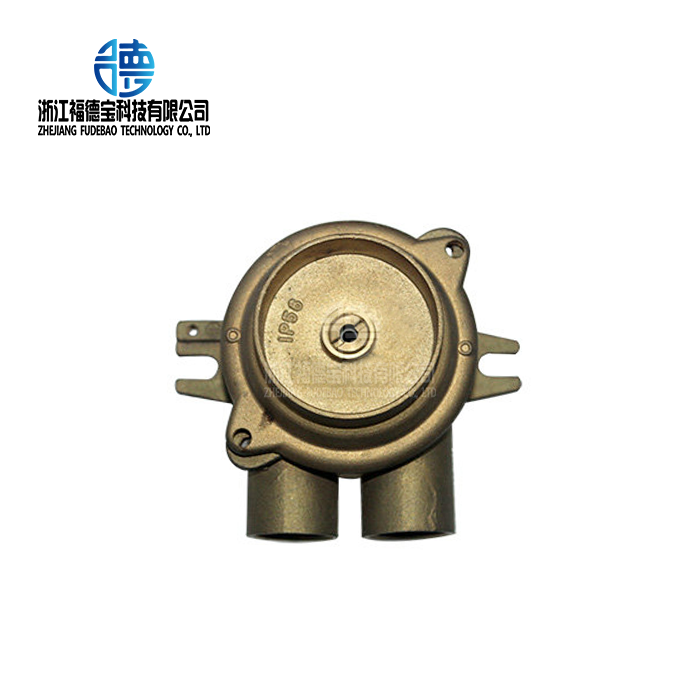
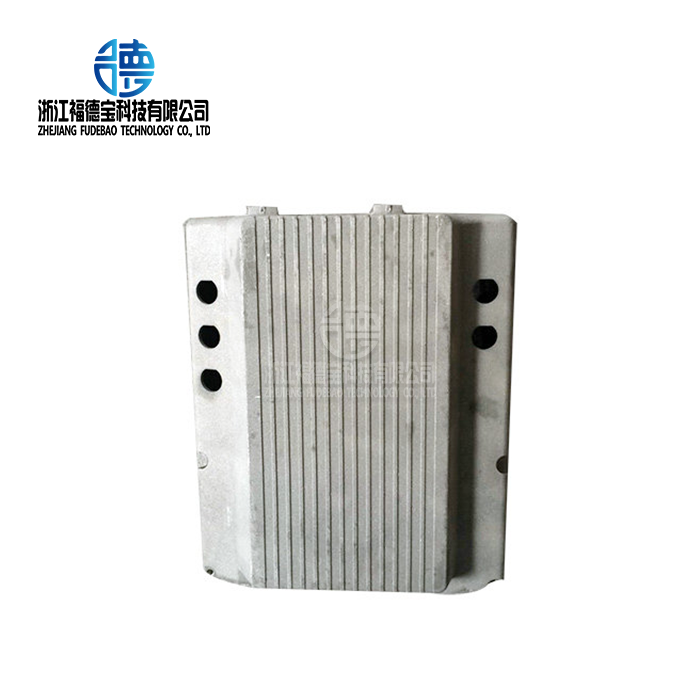
_1756352822273.webp "Stainless steel plugs")
_1756352625880.webp "plug stainless")
_1756349696500.webp "Pulley aluminum casting")