What's the Difference Between Gravity Cast and Low Pressure Cast?
2026-05-09
How the liquid metal gets into the mold hole makes all the difference. In gravity casting, the mold is filled from above only by gravity. In low pressure casting, molten aluminum or magnesium metals are pushed up into the mold from below using controlled air pressure (usually 0.02–0.1 MPa). This counter-gravity method in low pressure casting reduces turbulence, gets rid of oxide inclusions, and improves internal soundness compared to gravity casting. This makes parts with better mechanical properties and consistent dimensions that can be used in safety-critical aerospace and automotive applications.
Understanding Gravity Casting and Low Pressure Casting
How Gravity Casting Works
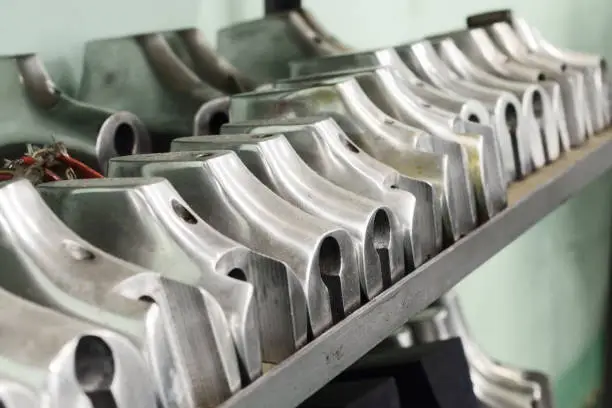
Gravity casting, which is also called permanent mold casting, uses the Earth's gravity to fill metal molds that can be used again and again. From a ladle, molten aluminum or magnesium alloy is poured into the mold hole that is above. The gates and runners in the mold allow gravity to pull the liquid metal downward. The method works best for simpler shapes and low-to-moderate production numbers that support investing in a permanent mold without the need for complicated pressure control systems.
This method is often used for parts of industrial machinery with walls thicker than 4mm, like pump housings, gearbox cases, and structural brackets. The design complexity stays modest. As heat moves through the metal mold walls, the solidification process happens spontaneously. This makes a grain structure that works well for many non-critical uses. Since there are no sealed pressure tanks or automatic control systems needed, the costs of the tools are still cheaper than with pressure-assisted methods.
The Low Pressure Casting Process Explained
The basic idea behind low pressure casting is very different. A vertical riser tube links a holding furnace that is under pressure to the mold hole. The melted metal is pushed up against gravity into the mold by controlled air pressure between 20 and 100 kPa. The flow is smooth and laminar. This counter-gravity filling method is carefully controlled by programmable pressure curves that keep the velocity steady at the gate to stop the material from solidifying too quickly or getting flaws from turbulence.
The controlled pressure stays in place while the metal solidifies, letting liquid metal from the container keep shrinking thick parts. As soon as the casting is solid, the pressure drops, and any leftover metal in the riser tube runs back into the furnace to be used again. This method gets material returns of more than 90%, while gravity methods usually get 50–60% because big feeders and lifters have to be machined away as scrap.
Material Selection Across Both Processes
Most of the time, aluminum alloys like A356 (Al-Si7Mg) and A380 are used in both methods because they are strong for their weight and easy to cast. Magnesium metals, like AZ91D, are used in situations where weight reduction is very important. But low pressure casting lets you have more precise control over the alloy's chemistry, especially its iron content below 0.15% and the amount of strontium change, which is important for getting better elongation qualities after T6 heat treatment.
Copper metals are sometimes used in electrical uses that need good thermal conductivity, but aluminum is more common because it is cheaper and works well enough in most heat dissipation situations. The choice of material relies on the operating temperature, the required mechanical load, and whether the part will be heat treated later to make it stronger. When using low pressure, these changes can be handled more reliably than when using gravity, where changes in the pouring temperature can damage the alloy's features.
Comparative Analysis: Gravity Casting vs Low Pressure Casting
Quality and Defect Characteristics
The way these methods fill are directly responsible for the changes in quality. As metal splashes and tumbles into the hole during chaotic pouring in gravity casting, air gets trapped and an oxide film forms. These inclusions make stress concentration points that shorten the wear life and make it harder for parts like cylinder heads or motor housings to keep air inside them. An X-ray often shows patchy porosity, especially in thicker parts where feeding stops working well.
These problems can be solved by low pressure casting, which uses laminar flow to keep oxide buildup and stored gases to a minimum. Keeping the feeding pressure steady during solidification makes sure that the shrinking holes stay filled, which results in thicker microstructures. As a result of this method, parts always meet the ASTM E155 radiography standards that are needed for safety-critical parts in cars and planes. Surface finishes usually have a roughness of 3.2 to 6.3 µm, which means they don't need as much cutting after being made than gravity-cast parts that do.
Cost Considerations Throughout Production Lifecycle
The difference in measurement correctness turns out to be big. Low pressure casting keeps ISO 8062 CT6-CT7 tolerances, keeping ±0.3mm on important measurements without needing any extra work. Gravity casting usually gets to CT8 or CT9, so more work has to be done to meet strict requirements. When looking for parts like suspension knuckles or electrical connector housings, where contact dimensions directly affect how well they fit together, this precise edge becomes very important.
Gravity casting is better for initial capital investment because it requires less complicated tools. For a simple gravity casting setup to work, you need metal molds that can be used again and again and melting furnaces that don't have complex pressure control systems or sealed rooms. When you look at the total cost of ownership, though, this benefit seems less important. Higher scrap rates, more machining needs, and more repairs because of defects drive up per-piece costs, even though beginning tooling costs are lower.
Lead Time and Production Flexibility
For low pressure casting systems to work, they need special furnaces with pressure rooms that are sealed, automatic pressure processors, and riser tube assemblies that are built in. Mold equipment, which is usually made of H13 tool steel, costs more because it needs to be sealed and machined to very precise standards. Still, material returns close to 90% cut remelting costs and raw material use by a huge amount. Fewer rejects, less secondary machining, and longer tooling life (30,000 to 50,000 cycles) all work together to make the cost per unit competitive at middle to high production rates.
Scalability dynamics are very different. Gravity casting works well for prototypes and small batches where it makes financial sense to spread the cost of the tools over a smaller number of batches. When you make more than 5,000 units a year, automation and uniform quality cut down on labour costs and guarantee claims, making low pressure casting more cost-effective. When purchasing teams look at quotes from suppliers, they should ask for specific breakdowns that include things like scrap rates, secondary operation needs, and expected defect percentages so they can compare the total provided cost correctly.
When to Choose Gravity Casting or Low Pressure Casting?
Optimal Applications for Gravity Casting
As long as strength is more important than exact dimensions, gravity casting is still the best way to make large structure parts. When industrial machinery makers need to buy pump housings, valve bodies, or gearbox casings with walls thicker than 6 mm, gravity casting is a cost-effective way to do it at modest production rates. The process works well with large amounts of mass; each casting can be anywhere from 2 kg to over 50 kg without the need for special handling tools.
Ideal candidates for gravity casting are parts that can handle bigger dimensional bands (usually ±0.8mm or more) where later machining sets up critical surfaces. Brackets for farm equipment, supports for building equipment, and general industry fittings are all examples of places where saving money on materials is more important than getting tighter as-cast tolerances. Being able to make these items without pressurisation tools lowers supplier hurdles and increases the number of places from which they can be bought.
Gravity casting's faster equipment creation is useful for making prototypes and small quantities of speciality parts. When buying teams need 500 to 2,000 units a year and the design could change, the lower mold investment and ability to make small changes make it worth it to accept some quality compromises. This is especially helpful when a new product is being introduced and the design freeze is still unclear. This is because the cost of amortising tools over short production runs is high, so cost control is needed.
When Low Pressure Casting Becomes Essential
Automotive parts that are safety-critical must have the better internal strength that comes from low pressure casting. Under dynamic stress, suspension control arms, steering knuckles, and subframe parts go through millions of wear cycles. When this happens, internal porosity leads to catastrophic failure. The process makes it possible for these parts to pass strict X-ray inspection standards and validation testing methods that parts made by gravity casting can't always meet.
Pressure-tight housings for electric car motor assemblies, transmission cases, and hydraulic parts need to be completely leak-proof, which can only be done with pressure-assisted solidification. Using pneumatic pressure decay to test for leaks shows that low pressure cast parts regularly work better than gravity options, with rejection rates below 0.5% compared to 3-5% for gravity methods. This dependability is very important when warranty costs for breakdowns in the field are much higher than the premium for luxury casting methods.
Sand cores work well with low pressure casting for complex shapes that have internal cooling channels, complicated fastening bosses, or undercut features. The managed 1 bar pressure keeps resin-bonded or cold-box cores from breaking, which lets cylinder heads with complex coolant jackets or electrical housings with built-in heat dissipation channels work. The higher static head pressures in gravity casting often damage delicate cores, which limits the design options.
Real-World Implementation Examples
A major car supplier that makes aluminum wheels only uses low pressure casting to get the impact resistance and aesthetic complexity that current designs need. The thicker microstructure keeps air out and keeps the structure strong under high-speed wear situations that gravity-cast wheels can't always provide. When the number of units produced each year is more than 500,000, the investment in automation is justified, and with failure rates below 0.3%, costly field returns are not needed.
On the other hand, a company that makes industrial compressors gets gravity-cast pump housings for their line of replacement repair parts. With an average production number of 3,000 units per year in 15 different combinations, it is not possible to afford specialised low pressure tooling. The gravity process makes housings strong enough to work at modest pressures, and the tooling's adaptability lets them make frequent design changes as the equipment requirements change across their product line.
After field failures were linked to subsurface porosity, an aircraft parts seller switched from gravity casting to low pressure casting for the production of control arms. Even though each piece cost 40% more, the lack of guarantee claims and the ability to achieve the necessary mechanical qualities through T6 heat treatment—which is not possible with gas-entrapped gravity castings—proved a positive return on investment (ROI) within 18 months. In high-stakes situations, this case shows how quality-related risks can often support process premiums.
Overview of Low Pressure Casting: Equipment, Materials, and Suppliers
Critical Equipment Components
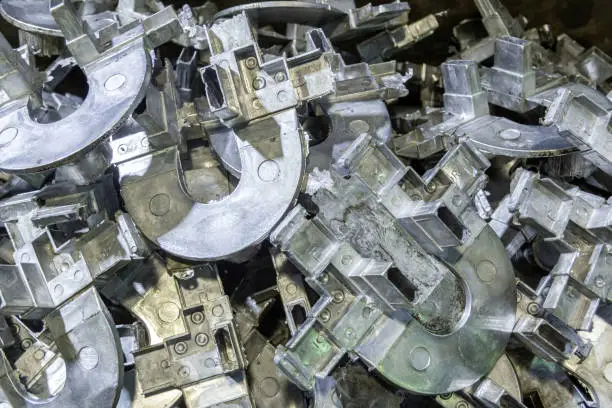
Several specialised methods are built into modern low pressure casting setups. The pressurised holding furnace keeps the liquid aluminum at exact temperatures (usually between 700°C and 750°C for A356 alloy) and has sealed rooms that can hold controlled pneumatic pressure. Modern machines have automatic degassing systems that lower the hydrogen content below 0.15 ml/100g and electromagnetic stirring to make sure that the metal is homogeneous. This is important for reducing porosity.
The furnace is linked to the mold body by a riser tube assembly, which is generally made of heat-resistant ceramics or refractory-coated steel. The width and shape of the tube have a direct effect on how fast it fills and how clean the metal is. Engineered systems have vents and screens that control the flow and catch oxide inclusions before they get into the mold. When the pressure is released, the right riser design stops overflow, which maximises material recovery and keeps the furnace's chemistry stable.
When making molds, H13 tool steel that has been cut to very tight specs and coated with special refractory materials is used. These layers keep heat in and slow down the solidification process while making it easier to remove parts. Robotic spray systems are used in more advanced foundries to evenly apply ceramic washes. This makes tools last longer, up to about 50,000 cycles. Built-in cooling lines in the mold allow exact control of temperature, which improves grain structure and cuts down on cycle times without lowering quality.
Automation technologies are making it easier for top providers to be distinguished. Programmable logic controls run complex pressure models that are made to fit the shape of each part. During filling, the pressure rises slowly, but stays steady during solidification. Robotic part extraction systems, automated trimming stations, and in-line quality checking using vision systems or ultrasound testing make it possible for production cells to work 24 hours a day, seven days a week with little to no human input.
Material Selection and Metallurgical Considerations
The best mix of castability, mechanical qualities, and heat treatability makes A356 aluminum alloy the most popular choice for low pressure casting. The silicon content (about 7%) makes the material very flexible, and the magnesium addition (0.3-0.45%) makes it possible for precipitation hardening through T6 treatment, which gives it tensile strengths of over 280 MPa and extension rates of 6–8%. Strict control of iron elements below 0.15% stops the formation of rigid intermetallics that weaken the ability to bend.
When 150–200 ppm strontium is added, the eutectic silicon shape is improved from large platelets to fine fibres. This makes the material much more flexible and difficult to break. This mechanical improvement is necessary for car suspension parts that are loaded with impacts. The controlled atmosphere of low pressure casting keeps strontium from oxidising during pouring, which is important for keeping effective modification levels that are often lost in gravity casting because of the chaotic filling.
Because they have densities 35% lower than aluminum, magnesium metals like AZ91D are used in situations where weight reduction is important. But magnesium is very reactive, so it needs to be kept in a neutral atmosphere and handled in a certain way. These needs are met by low pressure processes that use covered furnaces. However, open pouring in gravity casting exposes magnesium to airborne oxygen and wetness, which raises the risk of defects.
Supplier Evaluation Criteria
There are big differences in how heat treatments are done. Low pressure cast parts go through the full T6 treatment (solution heat treatment at 540°C, water cooling, and then ageing at 155°C) without burning because very little gas is trapped inside the parts, which stops the voids from expanding during solution heating. Because of gas porosity, gravity-cast parts often get surface blistering when heated. This means they can only be used in as-cast (F) or stress-relieved (T5) states, which have much lower mechanical qualities.
When looking at low pressure casting providers, procurement teams should put a number of professional skills at the top of their list. Documentation knowledge with the PPAP (Production Part Approval Process) shows that you know how to work with car quality systems that need a lot of validation. Suppliers who keep their IATF 16949 approval show that they use organised methods for process control, traceability, and ongoing growth, all of which are necessary for reliable delivery.
Vertical integration, which shortens development processes and makes people more accountable, is shown by having the ability to create and make molds in-house. When suppliers use third-party toolmakers, contact can be slowed down and people may point the finger when quality problems arise. Computer-Aided Engineering (CAE) modelling software like MAGMA or ProCAST can help you optimise the process before you buy any tools. This cuts down on the number of changes you have to make and speeds up the time it takes to get your product to market.
The level of complexity of inspection tools is directly related to the reliability of quality assurance. X-ray or fluoroscopy radiographic testing systems, coordinate measuring machines (CMM) accurate to ±0.005mm, and spectral analysis tools for real-time chemistry proof are the bare minimum that should be used. During the development stages, leading providers use scanning electron microscopy (SEM) for metal analysis and computed tomography (CT) to check the internal shape.
When thinking about geography, you have to weigh wait times against total landing costs. Asian sellers often offer good prices per piece, but it can take 8 to 12 weeks for ocean freight to arrive, and communicating with them across time zones can be hard. North American and European sources charge more, but they are closer, which is helpful for prototyping iterations and just-in-time (JIT) delivery methods. Hybrid strategies that use Asian capacity for mature, high-volume goods while keeping local sources for new products and quick-turn needs make the supply chain more resilient.
Conclusion
Choosing between gravity casting and low pressure casting comes down to the needs of the parts, the amount of output, and the quality standards. Gravity casting is a cheap way to make big, simple parts in modest quantities, where accuracy in measurements and internal soundness are not very important. For safety-critical parts, pressure-tight housings, and uses that need better material qualities through heat treatment, low pressure casting is a must. Low pressure methods allow for more controlled filling and feeding, which leads to better mechanical integrity, tighter tolerances, and higher material outputs. When you look at the total cost of ownership, which includes less waste, fewer secondary operations, and less guarantee risk due to defects, these benefits make the process premium worth it. To find the best balance between quality, cost, and delivery times, procurement professionals should compare both methods based on the needs of each application. They should also keep in mind that the best choice changes as production numbers rise and falls across product lines.
FAQ
1. Can low pressure casting completely replace gravity casting in production?
The ability to replace something relies only on the features of the replacement part and the cost of doing so. Low pressure casting works best for complicated shapes that need tight specs and high quality on the inside. This makes it perfect for automobile wheels, suspension parts, and pressure-tight housings. However, gravity casting is still the most cost-effective way to make simple, bigger parts in smaller quantities, especially when the benefits in terms of accuracy and metal properties don't make up for the extra process investment. Many makers can do both, choosing the best way based on the technical needs of the part and the number of units being made.
2. What are typical lead times for tooling and production ramp-up?
Usually, designing and making a gravity casting mold takes 6 to 8 weeks. Once the mold is installed, production can start almost right away. It takes 10 to 14 weeks to make low pressure casting tools because integrating the pressure system and optimising the process parameters is more complicated. No matter the method, the initial production sample and PPAP approval processes take an extra 4 to 6 weeks. The average time from buy order to series production for gravity casting is 12 to 16 weeks, while the average time for low pressure casting is 16 to 22 weeks. However, these times can be shortened if experienced suppliers keep standard systems up to date.
3. How should procurement teams evaluate and select low pressure casting suppliers globally?
When choosing a supplier, professional skills should be given more weight than location alone. As a minimum, you should look for IATF 16949 approval, PPAP knowledge, and the ability to make molds in-house. Ask for process capacity studies (Cpk values) to get data on dimensions and defect rates from similar uses. Check the level of complexity of the inspection tools, such as its radiographic tests and CMM capabilities. Think about the total landed cost, which includes freight, wait times, and the cost of keeping goods on hand, instead of just the piece price. Before giving a provider money to buy production tools, you should do on-site audits to check their claims about how well they maintain equipment, how mature their quality systems are, and how knowledgeable their technical staff is.
Partner With Fudebao Technology for Superior Low Pressure Casting Solutions
Engineering teams and sourcing leaders looking for trusted manufacturing partners will find that Zhejiang Fudebao Technology has a wide range of low pressure casting skills and has been working with aluminum alloys for decades. Our integrated building has both high-tech casting tools and precise CNC machining centres. This makes it possible to make parts without any problems, from melting metal to finished products with tolerances of up to ±0.05mm. We specialise in serving automotive tier-one suppliers requiring PPAP documentation, industrial equipment manufacturers demanding heat-resistant castings, and electrical sector clients needing pressure-tight housings with superior thermal conductivity.
As an established low pressure casting supplier, Fudebao maintains complete process control through in-house mold development, automated pressure systems, and comprehensive quality inspection including radiographic testing and CMM verification. Our material science expertise ensures optimal alloy selection and heat treatment protocols tailored to your performance specifications. Whether sourcing prototype quantities or scaling to high-volume production, our flexible manufacturing systems adapt to evolving requirements while maintaining consistent quality.
Contact our technical team at hank.shen@fdbcasting.com to discuss your specific application requirements. We provide detailed design-for-manufacturing analysis, competitive quotations, and material certifications supporting global compliance standards. Discover how partnering with a proven low pressure casting manufacturer can optimise your component quality, reduce total cost of ownership, and strengthen supply chain reliability across your product portfolio.
References
1. Campbell, J. (2015). Complete Casting Handbook: Metal Casting Processes, Metallurgy, Techniques and Design. Butterworth-Heinemann Publishing.
2. American Foundry Society. (2018). Low Pressure Permanent Mold Casting: Process Fundamentals and Quality Control. AFS Technical Publication.
3 .ASM International. (2020). Casting Design and Performance. ASM Handbook Volume 15: Casting Engineering.
4 .Kaufman, J.G. & Rooy, E.L. (2016). Aluminum Alloy Castings: Properties, Processes, and Applications. ASM International Materials Park.
5. Society of Automotive Engineers. (2019). Aluminum Casting Quality Requirements for Automotive Applications. SAE Technical Standard J452.
6. Bonollo, F., Urban, J., Bonatto, B., & Botter, M. (2017). Gravity and Low-Pressure Die Casting of Aluminum Alloys: A Technical and Economical Benchmark. International Journal of Metalcasting, Volume 11, Issue 3.



YOU MAY LIKE
_1756352340434.webp "Aluminum chassis cover")
_1756348711711.webp "anti surge turbo housing")
_1756348623524.webp "Turbine compressor housing")