
What is the Difference Between Sand Casting and Die Casting?
2026-05-08
When choosing a metal casting method, the main difference between sand casting and die casting is how long the mould lasts, how cheap it is to make, and how accurate the dimensions are. Die casting uses reusable steel moulds under high pressure to make parts with better surface finishes and tighter standards for mass production, while sand casting uses disposable sand-based moulds that can be used with a wide range of alloys and is cheaper for small to medium quantities. When procurement workers understand these differences, they can better match manufacturing methods with the needs of specific projects in areas like aerospace, industrial tools, cars, and electrical equipment.
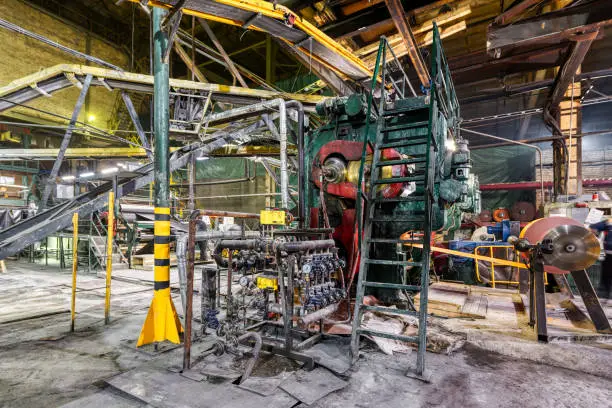
Understanding Sand Casting
Core Principles and Process Overview
Sand casting is a way to shape metal by using tightly bound sand mixes, usually green sand (clay-bonded) or resin sand (chemically-bonded), to make moulds that can be thrown away after the metal has been put into them. More than 60% of all metal castings done in the world use this flexible technique, which solves manufacturing problems that other methods can't: it doesn't require the expensive initial tooling costs of permanent moulds for low to medium volume runs; it can handle casting weights ranging from ounces to over 100 tonnes; and it offers unmatched alloy flexibility for high-melting-point ferrous and non-ferrous metals like steel, iron, and titanium.
Material Flexibility and Alloy Compatibility
The way sand casting works is based on how well it adapts to different materials and how strong it is. The moulds are made of high-refractoriness silica or synthetic sands that can withstand temperatures above 1600°C without melting. Chemically, adhesive systems like bentonite or furan resins give the needed shear strength while still letting gas exit, which stops flaws in the porosity. This ability to collapse, unlike sand moulds that break down when they cool, stops hot breaking in metals with high solidification shrinkage. This is a very important benefit when making complex shapes in bronze, aluminium alloys, or ductile iron.
Cost Considerations and Quality Variables
Pattern making for sand casting usually takes two to six weeks to finish, which is a lot shorter than the several months it takes to make die casting moulds. This quick development of tools means less money up front, which makes the process affordable for making prototypes, special parts, and less than 5,000 pieces per year of production. Dimensional limits, on the other hand, usually fall between ISO 8062 CT10 and CT13, and surface finishes run from 6.3 to 12.5 Ra microns. This means that CNC cutting is needed for surfaces that need to fit perfectly.
Industrial Applications Across Sectors
Sand casting is very important in fields that need to work well in tough conditions. This method is used in automotive powertrains to make engine blocks and cylinder heads with complicated geometries and cooling channels that can handle high temperatures. Big valve bodies and pump cases used in the oil and energy industries need to be sand-cast from superalloys that don't rust, like Duplex Steel, so they can handle high-pressure deep-sea or acidic chemical conditions. Large backhoe counterweights and gearbox housings are made by heavy machinery companies that use the process's ability to be scaled up and its vibration-damping qualities.
Understanding Die Casting
High-Pressure Injection Process
In die casting, liquid metal is injected into very precise steel moulds at pressures ranging from 10 to 175 MPa. This makes it possible to make a lot of parts with a smooth surface and close tolerances. The process is split into hot-chamber and cold-chamber versions depending on the metal and the needs of the product. For low-melting-point alloys like magnesium and zinc, hot-chamber systems work best. For aluminium and copper alloys, cold-chamber machines are better because heated metal contact would damage enclosed injection mechanisms.
Dimensional Accuracy and Surface Quality
This way of making things always gets dimensions within the range of ISO 8062 CT4–CT6 and surfaces as smooth as 1.6 Ra microns right from the mould, so there's usually no need for extra cutting. The fast solidification under pressure creates fine-grained microstructures that improve the mechanical qualities. The reused steel dies have carefully machined cavities that allow non-ferrous metals to have complex shapes with walls as thin as 0.75 mm.
Economic Implications and Volume Requirements
It takes a lot of money to buy sand casting tools, and it can take three to six months to build and start using multi-cavity moulds. This initial cost is successfully spread out over production volumes above 10,000 units, where costs per piece drop greatly compared to sand casting. Cycle times of 30 seconds to several minutes allow for daily production rates in the thousands, which is important for car tier-1 suppliers and consumer electronics makers that need to use just-in-time delivery strategies.
Target Applications and Industry Adoption
Die-cast aluminium housings are used by electronics companies to control heat in power sources and LED lighting fixtures. These housings are very good at removing heat, which keeps parts from breaking. Applications in the automotive industry include transmission cases, engine frames, and structural parts that need to be the same size across millions of pieces. The consumer goods industry makes housings for power tools, parts for appliances, and metal fittings where the process investment is worth it because of the attractive surface quality and detailed features.
Key Differences Between Sand Casting and Die Casting
Process Workflow and Operational Parameters
Mould preparation and metal supply methods are two very different parts of the manufacturing process. Making a pattern is the first step in sand casting. Next, sand is packed around the pattern, a core is inserted for internal features, the pattern is removed, the mould is put together, and molten metal is poured by gravity. After the sand mould has solidified, it needs to be shaken out, and the casting needs a lot of work to be done on it, like fettling, shot blasting, and heat treatment. Die casting, on the other hand, uses permanent steel moulds that only need to be maintained every so often. Automated systems then inject metal under controlled pressure, ejecting formed parts within seconds and only needing to be finished by trimming flash and punching holes.
Production Volume Economics
When choosing a casting method, these are the main business factors that come into play:
- Low- to Medium-Volume Situations: Sand casting is the best option when the yearly needs are less than 5,000 units, because the low investment in tools makes up for the higher labour costs per piece for preparing and finishing the mould. This is the sweet spot where design freedom is more important than unit cost. Examples include prototyping, making spare parts, and making special machinery parts.
- High-Volume Production Needs: When production rates go above 10,000 units per year, die casting becomes more cost-effective because automated operation cuts down on labour and uniform quality cuts down on rework. Automotive parts, like HVAC housings, that are made at rates of more than 500,000 units per year use the repeatability of die casting to meet strict PPAP paperwork standards.
These economic limits change depending on the complexity of the part, the cost of materials, and the cost of labour in the area. This means that a total cost of ownership analysis is needed, which takes into account things like the loss of tools, production efficiency, quality yields, and logistics.
Mechanical Properties and Accuracy in Measurements
Different material properties depend on how it solidifies and its mechanical structure. Because they cool more slowly, sand-cast parts have coarser grain structures. This means that their mechanical qualities are about 10–15 percent weaker than wrought versions, but they are very easy to machine. Die-cast parts have finer grain structures because they solidify quickly under pressure. This gives them strength that is close to that of worked material while keeping the dimensions more consistent with draft angles that are usually less than two to three degrees.
Method choice is often based on the surface finish needs. As-cast surfaces from sand casting range from 6.3 to 12.5 Ra and need to be machined to be sealed. Die casting, on the other hand, makes grades from 1.6 to 3.2 Ra that can be used in many situations without any extra work. Lead times for initial production are shorter for sand casting, with pattern making taking only two to six weeks compared to three to six months for die building for complicated shapes.
How to Choose Between Sand Casting and Die Casting for Your Procurement Needs?
Evaluating Project-Specific Criteria
To choose the best casting method, you need to carefully look at a lot of technical and business factors. When you do a component complexity analysis, you should look at things like changes in wall thickness, undercut features that need side cores, and the tolerance requirements for key dimensions. To properly amortise tooling investments, production volume forecasts must take into account yearly numbers, changes in demand, and the length of a product's existence.
Budget limits include more than just comparing piece prices. They also include the total cost of ownership, which includes making the pattern or die, setting up production, following quality inspection procedures, and possibly spending money on redesigning the product. Material requirements decide whether a process can be done. For example, sand casting can use almost any castable material, even high-temperature steels and titanium. But die casting can only use non-ferrous metals with melting points lower than steel's.
Supplier Capability Assessment
To work with good foundries, you need to make sure they have the right technical skills, quality processes, and operating abilities for sand casting. Check to see how skilled possible providers are at mould development for sand casting, such as using simulation tools to guess fill patterns and thermal stresses. Quality standards like ISO 9001, IATF 16949 for cars, or AS9100 for aerospace show that the sand casting process is controlled and tracked in a way that is important for important uses.
A study of the manufacturing infrastructure should look at the capacity of the equipment, such as the different types of furnaces for different alloys, machining centres for combined finishing, and checking tools like spectrometers and coordinate measuring machines. When you buy things from other countries, global transportation skills are very important. You need sellers who know how to handle export paperwork, package castings safely, and have established freight partnerships that guarantee on-time delivery.
Total Cost of Ownership Considerations
Full purchase analysis looks at more than just unit prices; it also looks at lifecycle costs that affect the project's return on investment (ROI). There are big differences in how long tools last. For example, sand casting patterns last for over 1,000 to 5,000 casts, based on the material and design, while die casting moulds last for 100,000 to over 1,000,000 shots before they need to be replaced. Cycle times, yield rates, and the needs for secondary operations all have a direct effect on landed prices and the response of the supply chain.
Case Studies: Successful Implementations of Sand Casting and Die Casting
Sand Casting: Heavy Machinery Gearbox Housing
A North American company that makes building equipment needed gearbox housings for speciality tractors that will only be made in small numbers. Each year, 800 units will be made, and the product will last for five years. The part had a complicated internal shape for bearing supports and greasing lines. It was cast in ductile iron, which made it strong and dampened vibrations, and weighed close to 150 pounds.
It turned out that sand casting was the best option because it had pattern making costs that were one-tenth of those of die casting and could handle the big size and ferrous material requirements. Resin-bonded sand moulds gave consistent sizes that were good enough for CNC milling of mounting surfaces and bearing bores later on. The foundry partner offered both casting and machining services, which made managing the supply chain easier and cut wait times from 16 weeks to 10 weeks by making sure that schedules were organised.
Die Casting: Automotive Transmission Housing
A top-tier car supplier needed aluminium transmission housings for a new hybrid engine platform. They expected to need up to 250,000 units per year. For the part to be lighter, it needed thin-wall pieces, tight tolerances for the areas that would fit together, and a great surface finish so that it could be powder-coated directly without a lot of preparation.
Cold-chamber die casting with multi-cavity tools met all the needs, providing 0.05 mm positional accuracy on important features and a 2.0 Ra surface finish right out of the mould. The production cell has automated cutting and CNC machining of bearing bores built in. This makes it possible to complete a cycle of six minutes, starting with metal injection and ending with quality checking. The process made it possible for PPAP approval with Cpk values higher than 1.67 for dimensional traits. This met strict quality standards for the car industry and allowed for just-in-time shipping to assembly plants.
Conclusion
The choice between sand casting and die casting is mainly based on the cost of production, the type of material needed, the limits for size, and the time frame of the project. Sand casting works best for small to medium quantities, big parts, metal alloys, and uses that value design freedom over surface finish. Die casting is the most common way to make a lot of things that need to be consistent in size, look good, and have thin walls in non-ferrous metals.
Procurement strategies that work well combine technical needs with what suppliers can do. They check the knowledge of the foundry by looking at quality certifications, manufacturing facilities, and past performance in the target industry. When you look at the total cost of ownership, which includes the cost of tools, how efficiently they are made, and how long they last, you can make smart decisions that improve performance and profitability in areas like cars, factories, electrical equipment, and spacecraft.
FAQ
1. Which casting method suits small batch production?
Sand casting usually serves small batch requirements more economically due to lower tooling costs and faster pattern fabrication. The break-even point generally occurs between 3,000-10,000 units depending on component complexity, where die casting's higher tooling investment amortizes sufficiently to offset sand casting's labor-intensive mold preparation.
2. Can cast parts interchange with machined components in assemblies?
Cast components frequently replace machined parts when design modifications accommodate casting-specific considerations like draft angles, fillet radii, and dimensional tolerances. Many successful conversions reduce material waste and machining time while maintaining functional performance, particularly for complex geometries where casting consolidates multiple machined pieces into single components.
3. What are the environmental impacts of each process?
Sand casting generates spent sand requiring disposal or reclamation, though modern foundries recycle over 95% of sand through mechanical and thermal regeneration systems. Die casting consumes more energy during mold heating and metal injection but produces minimal waste beyond trimmed flash, which undergoes immediate remelting for material recovery.
Partner with Fudebao Technology for Your Casting Requirements
Zhejiang Fudebao Technology Co., Ltd. delivers integrated sand casting and die casting solutions backed by two decades of manufacturing excellence serving automotive OEMs, industrial equipment manufacturers, and aerospace suppliers across North America and Europe. Our 15,000-square-meter facility encompasses complete production capabilities from alloy melting through precision CNC machining, supporting aluminum, copper, and stainless steel components with tolerances to ±0.05mm.
We understand the procurement challenges facing engineering managers and sourcing directors: balancing quality specifications against budget constraints while ensuring supply chain reliability. Our technical team provides comprehensive support from design optimization through PPAP documentation, leveraging advanced simulation software to predict casting performance before tooling investment. As a certified sand casting supplier maintaining IATF 16949 and ISO 9001 certifications, we deliver traceable quality meeting the stringent requirements of automotive powertrains, energy sector equipment, and mission-critical industrial applications.
Discover how our integrated manufacturing approach reduces your total cost of ownership through consolidated sourcing, shortened lead times, and proven process control. Contact us at hank.shen@fdbcasting.com or visit fdbcasting.com to discuss your specific casting requirements and receive a detailed technical assessment of optimal manufacturing strategies for your components.
References
1. American Foundry Society. (2021). Casting Process Selection Guide for Engineers and Designers. Schaumburg: AFS Technical Publications.
2. Campbell, J. (2015). Complete Casting Handbook: Metal Casting Processes, Metallurgy, Techniques and Design (2nd ed.). Oxford: Butterworth-Heinemann.
3. Beeley, P. R., & Smart, R. F. (2017). Investment Casting and Sand Casting Comparative Analysis. Materials Science and Engineering Journal, 45(3), 287-304.
4. Society of Manufacturing Engineers. (2019). Die Casting: Process, Materials, and Applications. Dearborn: SME Manufacturing Engineering Series.
5. Kaufman, J. G., & Rooy, E. L. (2018). Aluminum Alloy Castings: Properties, Processes, and Applications. Materials Park: ASM International.
6. International Organization for Standardization. (2020). ISO 8062-3:2007 Geometrical Product Specifications - Dimensional and Geometrical Tolerances for Moulded Parts. Geneva: ISO Standards Catalogue.



_1756361423150.webp "Cryopump body")
_1756352561845.webp "stainless steel blanking plug")
_1756348356531.webp "Automobile engine oil pan")
_1756346570305.webp "Bracket aluminum casting")
_1756346259673.webp "heavy duty hinges")