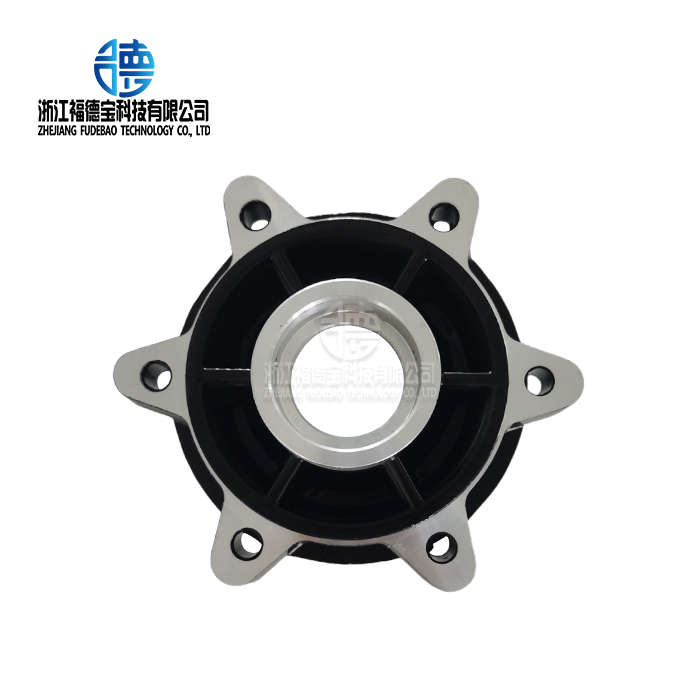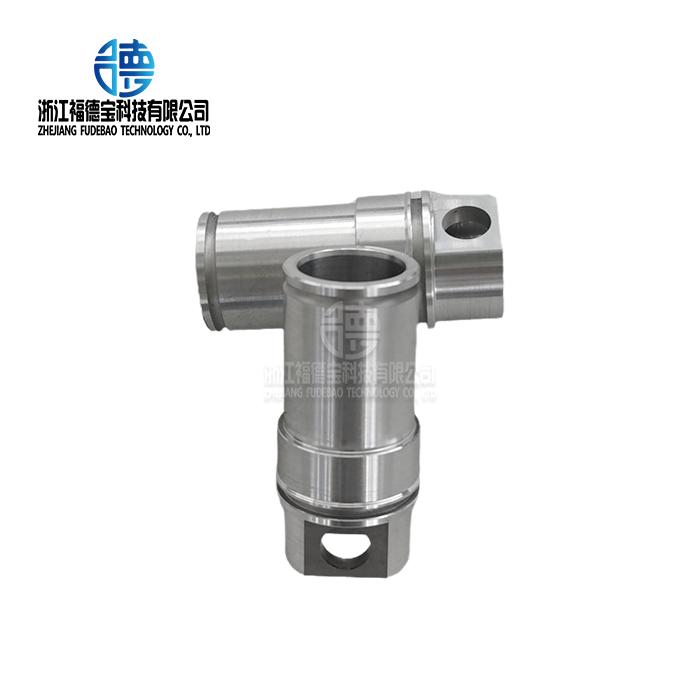
How Does Aluminum Die Casting Work?
2026-05-09
High-pressure liquid aluminum die casting alloy is poured into a solid steel mold under high pressure, usually between 1,500 and over 30,000 psi. This is a precise way to make metal products. This high-pressure die casting (HPDC) method makes it easy to make metal parts quickly that are the right size, have clear edges, and a smooth surface. By casting complex, near-net-shape geometries as a single unit, the process gets rid of the need for welding assembly. It also greatly reduces the weight of the parts without affecting their structural integrity. Finally, it allows for large-scale mass production with little secondary machining, which lowers the cost per unit for large runs.
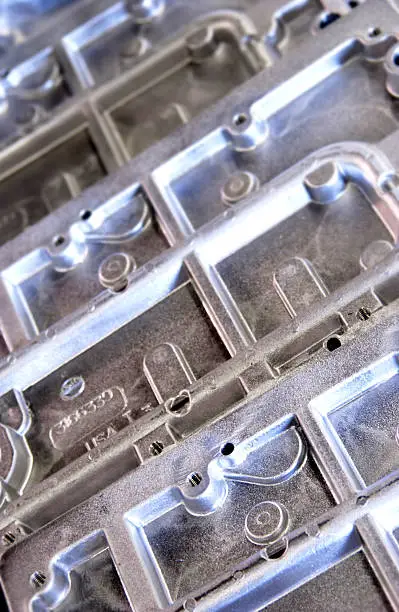
What is Aluminum Die Casting and How Does It Work?
Understanding the Core Process
Die casting is an advanced method of working with metals that has changed the way things are made today. In a controlled melting furnace, an aluminum die casting alloy (usually A380, ADC12, or AlSi9Cu3) is heated to between 650°C and 750°C to start the process. The solid billets of this molten metal change into a liquid that can flow into complex mold holes. During this phase, controlling the temperature is very important because too much heat can cause too much oxidation and not enough heat can cause the mixture to solidify too soon.
Step-by-Step Workflow
The die throwing process is choreographed very precisely. Release chemicals are used to prepare the steel mold so that the cast part doesn't stick to the die surfaces. The liquid aluminum is put into a shot tube after the mold halves close and lock under hydraulic pressure. The liquid metal is then pushed into the die hole at speeds of up to 100 meters per second by a hydraulic pump. Even the smallest parts—some as little as 1.5 mm—are filled at this very high speed before the aluminum starts to cool down. In milliseconds, the whole insertion cycle is over.
The aluminum quickly hardens when it comes into touch with the steel mold that is cooled by water after filling, a process known as aluminum die casting. Cooling lines that were machined into the die effectively remove heat, which lets the part solidify in 20 to 90 seconds, depending on how thick it is. When the die opens, ejector pins push the newly made part out of the hole, and the process starts all over again. These days, automatic cells can make thousands of parts that are all the same every day, with very little difference in size.
Alloy Selection and Tolerance Standards
Material choice has a direct effect on how well something performs. Because it is so fluid and easy to shape, A380 metal is perfect for making housings and frames for cars. A356 is chosen for aerospace and defense uses because it has better mechanical properties and can be heat treated. ADC12 is often used for electrical enclosures and motor housings because it is a good mix between being able to be made and not rusting. Because different alloys react differently to changes in temperature and stress, engineers have to match the qualities of the material to the needs of the application.
Die casting usually has dimensional limits between ±0.05mm and ±0.15mm, but this can change based on the size and position of the feature. Tolerances that can be met are outlined in NADCA guidelines. Tighter requirements can be reached through secondary CNC cutting. By knowing these standards, buying teams can set reasonable goals during the quotation process, which helps avoid expensive redesigns later in the production cycle.
Benefits of Aluminum Die Casting for B2B Manufacturing
Superior Performance Characteristics
Die casting has many benefits that go beyond just making parts. When compared to sand casting, aluminum die casting produces much tighter tolerances and better surface finishes, which often means that no heavy cutting is needed. In sand casting, the best precision in dimensions is about 0.5 mm. But in die casting, the accuracy is usually about 0.1 mm across important features. This level of accuracy directly leads to shorter building times and better component swapping on production lines.
Compare aluminum to other materials and you'll see that it has clear advantages. Zinc die casts are good at keeping their shape, but they don't conduct heat as well as aluminum does—about 96 W/m·K compared to 116 W/m·K for zinc. Magnesium has an even smaller density, but it needs to be handled in a certain way because it can catch fire. Aluminum naturally has high strength and resistance to heat, which plastic injection molding can't match. This is especially true in car powertrain uses where temperatures regularly reach 150°C.
Economic and Production Advantages
Efficiency in manufacturing stands out as a key difference. When making a lot of something, aluminum die casting has these main benefits:
Rapid Cycle Times: From putting in the metal to ejecting it, die casting cells can make whole parts in less than two minutes. This throughput helps just-in-time manufacturing methods work and lowers the cost of keeping supplies on hand. Automotive suppliers like this speed a lot when they need to speed up production for the release of new cars.
Reduced Material Waste: Because the shape is close to a net, up to 80% of the cast part doesn't need any more material cleanup. When CNC cutting the same part from aluminum stock, on the other hand, about 60% of the starting material might be removed as chips. This material economy cuts down on the amount of raw materials needed and the cost of getting rid of trash.
Consolidated Assembly: Geometries that are complicated and have mounting bosses, ribs, and binding features built in get rid of the need for extra welding or mechanical joins, for example through aluminum die casting. A transmission housing that might need 12 different stampings and 40 welding processes can be made from a single piece of metal. This cuts down on the amount of work that needs to be done and makes the structure stronger.
Long Tool Life: Modern molds made of H13 tool steel can make 100,000 to 500,000 shots before they need to be fixed up. Because the tools last a long time, they can be used for many production runs, which makes die casting a good investment once the annual production runs over 5,000 units.
All of these benefits make things a lot easier for engineering managers and buying directors who have to balance quality, delivery speed, and the total cost of ownership. The initial cost of the tools is balanced out by lower piece prices when demand is high and better performance of the parts in service.
Design Optimization Opportunities
Die casting works best when the parts are well designed. Uneven wall thickness stops different cooling rates that cause buckling. Engineers usually aim for theoretical walls that are 2.5 mm to 4 mm thick and have smooth changes. Draft angles of 1° to 3° make it easier to remove parts and keep tools in good shape for longer. The position of the gate system affects the flow patterns of metal and where weld lines appear, which in turn changes the mechanical qualities of those areas.
During the early stages of development, when design engineers and casting experts work together, they can find possible flaws before the steel is cut. Digital modeling software models how metal flows, suggests areas that might have holes, and finds the best places for cooling channels. The number of actual prototypes that need to be made is cut down, and the time it takes to get to production is sped up.
Common Challenges and How to Avoid Aluminum Die Casting Defects
Identifying Typical Defects
Even though the process is mature, errors still happen from time to time in aluminum die casting. Porosity shows up as tiny holes in the casting, which lowers its strength and makes it easier for pressure-containing parts to leak. Gas porosity happens when hydrogen or air get stuck in the liquid aluminum. Shrinkage porosity happens when thick pieces don't get enough metal as they harden and shrink.
Two metal fronts meet but don't bond properly, making a cold shut. This leaves a line and weakens the structure. This flaw usually happens when the melt temperature is too low, there is too much spray lube, or the gate design is bad. Uneven cooling rates or leftover stresses that are locked into the casting during solidification can cause it to warp and lose its shape.
Root Cause Analysis and Prevention
To solve these problems, you need to control the process in a planned way. It is possible to reduce gas porosity in liquid aluminum by using rotating degassing tools or nitrogen purging in the right way. Using ceramic foam screens to keep the melt clean gets rid of oxide specks that can start porosity. With vacuum-assisted die casting, air is sucked out of the hole before injection, which greatly reduces the amount of gas that gets stuck.
Optimized food plans can help with shrinkage flaws in aluminum die casting. Putting gates in place to guide the flow of metal towards thicker parts makes sure that there is enough material for solidification. Bosses and ribs lose volume, but local intensification, which uses squeeze pins to apply extra pressure to certain areas, makes up for it.
Thermal control keeps things from twisting. The balanced cooling path design takes heat from both halves of the die in the same way. Keeping an eye on the flow rates and temperatures of the coolant keeps the temperatures stable from shot to shot. Post-casting heat treatment gets rid of any remaining stresses and keeps the dimensions stable, which is especially important for areas that will be precisely cut.
Quality Assurance Protocols
Strict inspection proves that the product meets the requirements. Using coordinate measuring tools (CMM) to check the dimensions of important features against engineering models is called dimension verification. X-ray radiography finds internal cracks without damaging the material. This is very important in medical and military fields where hidden flaws can be dangerous. Metallographic research looks at the substructure and makes sure that the heat treatment worked.
Statistical process control keeps an eye on important factors like cycle time, melt temperature, injection velocity, and increase pressure to find process drift before it leads to parts that don't meet standards. Capability studies measure how precise a process is; Cpk numbers above 1.33 mean that the process is strong and centered. Partnering with certified providers who keep up with their ISO 9001 quality management systems and IATF 16949 car certifications makes sure that processes are recorded and that people are always looking for ways to make things better.
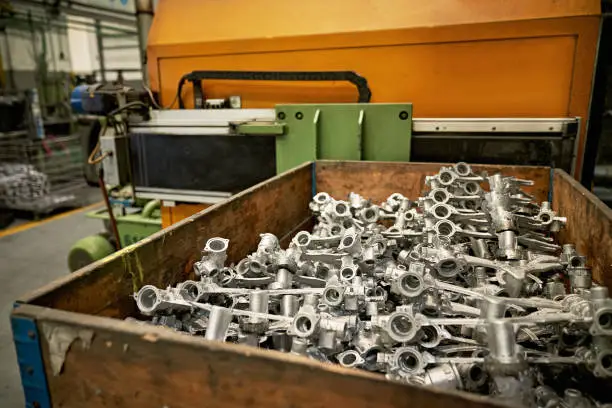
How to Choose the Right Aluminum Die Casting Service Provider?
Critical Evaluation Criteria
Choosing an aluminum die casting partner is a big strategy choice that will have effects for a long time. How well a seller can meet your needs depends on how much they can produce. Not only look at how the machines are being used now, but also at the range of tonnages that are available. Machines that can handle parts from 300 tons to 2,500 tons are very different in size. Check the yearly output capacity and the ability to adapt to changes in demand without affecting delivery performance.
Technical skills go beyond simple casting. Does the seller give combined CNC machining, which gets rid of the need to coordinate with multiple vendors? Can they do the assembly, surface cleaning, and heat treatment all in-house? Expertise in mold development is very important. Suppliers who can design and build tools in-house can act faster to changes in the design and keep a better eye on the quality of the tools.
Getting a certification shows that you are committed to quality and process control. ISO 9001 is the basis, and IATF 16949 shows the level of strictness needed for the car industry. For aircraft uses, AS9100 certification is a must. With detailed material certifications, dimensional reports, and capability studies, the PPAP paperwork capability—especially for car tier-1 suppliers—proves that the company is ready to support production starts.
Balancing Cost and Capability
The lead time you expect must match the time frame for your growth. Depending on how complicated they are, prototype tools can make sample parts in six to eight weeks, while production tools can take twelve to sixteen weeks. Minimum order numbers are very different. Some providers can do prototyping runs of 500 pieces, while others only do annual sales of several thousand pieces. Knowing these limits keeps standards from being too high or too low.
Different factors affect how prices are set. The price of raw materials changes with the price of aluminum, including in aluminum die casting. The tool's amortization is based on its expected career output. Piece-price is affected by how hard it is to machine, how many inspections are needed, and how the item is to be packed. Instead of looking for the cheapest quote, think about the total value. Consistent quality, on-time delivery, and helpful technical support can often explain small price increases and lower the overall risk of the supply chain.
Geography affects the decisions that are made. Domestic suppliers may have higher labor costs, but they also have faster lead times, better communication, and easy operations. While international foundries offer low prices, they also bring longer ocean freight times and the possibility of tariff risk. To evaluate this trade-off, you need to look at how much product you can hold and how predictable your demand is.
Partnering for Success
At Zhejiang Fudebao Technology, we help clients around the world in the automobile, industrial equipment, aircraft, and electrical sectors by combining advanced production skills with service that is focused on the customer. Our building combines the whole production process, from designing the mold to finishing it, so there are no coordination problems. From our casting pieces, our high-speed CNC cutting centers and multi-axis lathes cut surfaces to within 0.05 mm of accuracy. Low- and high-pressure casting machines weighing between 280 and 1,250 tons can handle a wide range of part shapes and output rates.
We have a lot of experience with alloys that meet the requirements of A380, ADC12, A356, and special standards. These alloys are used in a wide range of applications, from engine brackets that need to be stable at 150°C to electrical housings that need to be highly resistant to corrosion. Our quality systems meet the requirements of IATF 16949 and ISO 9001, and we can fully support car starts with PPAP. Our engineering team works closely with the people involved in your project to make sure it can be manufactured well and that the programme is a success, from the first design meeting to the production ramp and ongoing supply.
In the past, we've made precise transmission housings for automakers, motor casings for green energy systems, and structural brackets for use in spacecraft. This wide range of work shows flexibility and technical depth in a number of challenging fields. Whether you need to test a sample or start full-scale production, our scalable capacity and tried-and-true methods will get you reliable, high-quality parts that meet your exact needs.
Conclusion
Aluminum die casting turns liquid aluminum into precise parts that make modern industry work. The process mixes metals science, mechanical engineering, and manufacturing to make parts that meet strict performance standards and can be made in large quantities at a low cost. Engineers and procurement workers can make smart choices about where to source materials if they understand the whole process, from choosing the alloy and getting the mold ready to injection, solidification, and post-processing.
The advantages are big: better accuracy in measurements, a smooth surface, fast production processes, and better use of materials. Dealing with possible flaws by using strong process control and working with qualified, experienced providers guarantees consistent quality and programme success. Aluminum die casting continues to be a crucial production technology that supports innovation across many sectors as vehicle electrification, the growth of renewable energy, and industrial automation continue to drive demand for lightweight, durable components.
FAQ
1. What factors determine aluminum die casting pricing?
Cost patterns are affected by many things. Picking the right metal is important. Standard grades like A380 and ADC12 have set prices, but speciality alloys like A356-T6 or materials approved for use in space cost more. Complex shapes with thin walls, deep pockets, or complex cores need more complex tools and longer production cycles because they have an effect on cycle time and tool cost. Through tool amortization, annual volume has a big effect on piece price. For example, if you run 100,000 units of a tool, the cost of each part is much lower than if you only ran 5,000 units. Additional steps like CNC machining, heat treatment, and surface finishing raise prices, but they are often needed to meet practical needs. The total settled cost also includes the cost of packaging, shipping, and good paperwork.
2. How long does typical die casting development take?
Timelines are different for each step of a job. From the time the design is frozen to the time sample parts are made, prototype tooling for design approval usually takes six to ten weeks. For production tools, development takes longer—12 to 16 weeks for fairly complicated parts, and up to 20 weeks for big, complicated molds with lots of slides or complicated cooling systems. Once the equipment is proven to work, production quickly ramps up, and bulk manufacturing can make thousands of parts every month. Keeping your engineering team and the casting provider in close contact during development speeds up the process of fixing problems and stops delays.
3. Can aluminum die cast parts undergo post-processing?
There are many finishing choices. Heat treatment, especially T5 and T6 tempers, greatly improves mechanical qualities, raising tensile strength by 30% or more and making the material more stable in its shape. Cast pieces can get precise features, threads, and bearing surfaces added to them with CNC cutting. Powder coating protects against rust and improves appearance; anodising improves wear resistance and electrical insulation; and chromate conversion coatings are used in aircraft. In hydraulic and pneumatic uses, impregnation covers microporosity in parts that hold pressure, allowing them to work without leaks.
Partner with Fudebao Technology for Your Aluminum Die Casting Manufacturing Needs
Fudebao Technology has everything that procurement managers and engineering teams need in a trusted aluminum die casting source. We can make everything from blanks to finished parts in one place. This includes melting alloys, high-pressure and low-pressure casting, precision CNC cutting, and surface finishing. We keep standards very tight, to within 0.05 mm, and support high-precision parts for cars, housings for industrial equipment, and electrical covers for tough jobs. Our engineering team can help you with design-for-manufacturing, provide PPAP paperwork, and provide ongoing technical support for the entire duration of your product. You can email us at hank.shen@fdbcasting.com to talk about your unique needs, get more information, or get a custom price. You can look at our full list of services at fdbcasting.com, read case studies from the car and industrial sectors, and learn why Fudebao Technology is the aluminum die casting manufacturer of choice for global names.
References
1. North American Die Casting Association (NADCA). Product Specification Standards for Die Castings Produced by the Semi-Solid and Squeeze Casting Processes. NADCA, 2019.
2. Kaufman, J. Gilbert, and Elwin L. Rooy. Aluminum Alloy Castings: Properties, Processes, and Applications. ASM International, 2004.
3. Campbell, John. Complete Casting Handbook: Metal Casting Processes, Metallurgy, Techniques and Design. Butterworth-Heinemann, 2015.
4. Vinarcik, Edward J. High Integrity Die Casting Processes. John Wiley & Sons, 2003.
5. American Foundry Society. Aluminum Casting Technology. American Foundry Society, 2017.
6. Society of Automotive Engineers (SAE). SAE J452: General Information—Chemical Compositions, Mechanical and Physical Properties of SAE Aluminum Casting Alloys. SAE International, 2018.



YOU MAY LIKE
_1756349957728.webp "metric v belt pulley")
_1756348300182.webp "Aluminum die-cast housing")