
What Makes Aerospace Aluminum Castings Suitable for Aircraft Parts?
2026-08-24
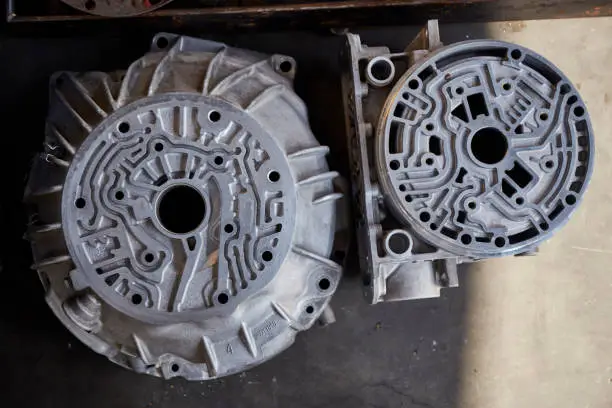
Aerospace aluminum castings represent specialized components manufactured through controlled solidification processes, delivering the exceptional strength-to-weight ratios, corrosion resistance, and dimensional precision required for safety-critical aircraft applications. These cast parts leverage aluminum alloys like 2024, 6061, and 7075, engineered to withstand extreme operational stresses while reducing overall aircraft weight. Their suitability stems from inherent material properties—high tensile strength, thermal stability, and fatigue resistance—combined with rigorous manufacturing standards including AMS and ASTM compliance, ensuring consistent reliability across demanding aerospace environments where performance margins directly impact fuel efficiency and operational safety.
Understanding Aerospace Aluminum Castings: Properties and Standards
Material Properties That Define Aerospace Performance
The strength of aircraft-grade aerospace aluminum castings comes from the fact that their material properties are carefully balanced. Tensile strength usually falls between 290 and 570 MPa, but this depends on the metal and the way it is heated. This makes sure that the structure stays strong under the repeated loads that happen during flight operations. Corrosion protection is very important when parts are exposed to water, changes in temperature, and chemicals from hydraulic fluids or de-icing agents. Aluminum surfaces naturally form an oxide layer that protects them. Anodizing or chemical conversion treatments are often used to make this layer stronger.
It doesn't matter what the temperature is. Parts of an airplane's temperature change a lot from working on the ground to cruising at high altitude. Aluminum alloys keep their shape over these temperature ranges while quickly getting rid of heat, which is very important for parts close to the engine or electronic housings. The low thermal expansion coefficient keeps the parts from warping or becoming out of alignment, which could affect the tolerances of the assembly.
Alloy Selection for Specific Aircraft Applications
Copper is the main alloying element in Alloy 2024. It has great fatigue resistance and can be used for fuselage structures and wing parts that are stressed over and over again. This alloy has the best properties when it is heated to T3 or T4 temperatures. These temperatures balance the ability to be shaped during secondary processes with the end mechanical performance.
Alloy 6061 is very easy to machine and weld, which makes it perfect for clamps, bolts, and structural supports that need to be changed after they are made. Its magnesium and silicon content gives it some strength while also making it very resistant to rust without any extra surface treatments. Many procurement teams ask for 6061-T6 for parts that aren't the main load-bearing ones, because it's easy to make and lowers the overall cost of production.
Alloy 7075 is in the high-strength group. It has tensile strengths of about 570 MPa in the T6 state thanks to the zinc that is added to it. This material is chosen by aerospace engineers for parts that are put under a lot of stress, like landing gear brackets, control surface fittings, and structural joints, where weight reduction must not come at the cost of strength. The downside is that it doesn't resist corrosion as well as 6061, so protective coatings are usually needed.
Industry Standards Governing Quality Assurance
Following the AMS guidelines makes sure that materials can be tracked and that performance stays the same. AMS 4222 is about sand castings and AMS 4226 is about permanent mold castings. Both sets limit the composition, specify requirements for mechanical properties, and specify testing methods. ASTM B108 gives more information on permanent mold castings of aluminum alloys and sets accepted standards for porosity, surface finish, and dimensional tolerances.
These standards call for a lot of tests, like checking the tensile strength, measuring the stiffness, and looking at it without damaging it with X-rays or ultrasound. For each production lot, the material must be certified, which includes information about the melt chemistry, heat treatment parameters, and mechanical test results. This is important information for regulatory audits and quality systems in the aerospace industry.
The Aerospace Aluminum Casting Process: From Raw Material to Finished Part
Casting Methods Tailored to Component Requirements
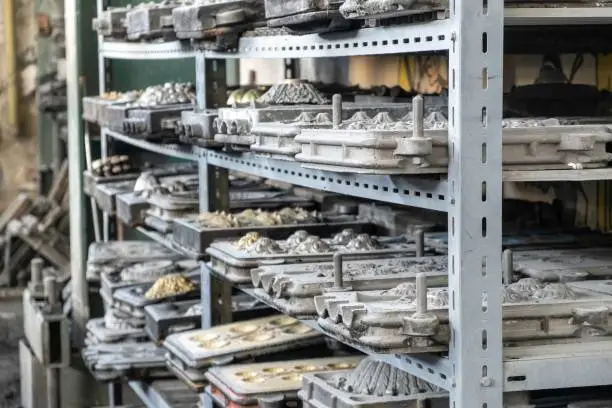
For different aircraft uses, different casting methods are used. Sand casting is a way to make big, complicated shapes, like transmission housings or structural parts where small amounts are being made. The first step is to make a pattern. Next, a sand model is prepared using resin-bonded sand systems, which give a better finish than standard green sand methods. Pouring temperatures between 700°C and 750°C make sure that the mold is completely filled while preventing gas from getting trapped in aerospace aluminum castings.
Permanent mold casting, which is also known as gravity casting, makes parts that need better surface quality and tighter control over their dimensions using metal models that can be used more than once. This method works well for making brackets, fittings, and manifold bodies in medium quantities. Compared to sand casts, the metal dies allow for faster cooling, which improves the mechanical qualities and refines the grain structure.
The finest details and tightest tolerances can be achieved through investment casting, which makes it perfect for making turbine parts, valve bodies, and precision fittings. The lost-wax method makes complex shapes, like hollow spaces and thin walls, that can't be made any other way. The cost of the tools is higher, but the near-net-shape feature cuts down on the amount of cutting needed and the waste of material.
Critical Process Steps Ensuring Mechanical Integrity
When things are melted in controlled-atmosphere furnaces, oxidation and hydrogen absorption that cause porosity flaws don't happen. The addition of alloys is carefully planned, and degassing processes use argon or nitrogen to get rid of any dissolved gases. Monitoring the melt temperature and spectroscopic analysis make sure that the chemistry is within the limits set by the manufacturer before pouring.
In order to prepare a mold, it has to be heated to certain temperatures that combine the need for metal flow with the need for cooling rate. Turbulence is controlled by the pouring speed and the gating design, which keeps oxide inclusions and surface defects from happening. It is possible to figure out how many cooling cycles are needed to get the ideal microstructure while minimizing leftover stresses.
As-cast qualities are changed by heat treatment to achieve aerospace-grade performance. Solution heat treatment breaks down alloying elements into solid solutions. This is followed by quick quenching to keep the state of being supersaturated. By aging things artificially at controlled temperatures, hardening phases form, which improves their hardness and tensile strength. Temperature uniformity within ±5°C makes sure that all batches get the same results.
Inspection Protocols Guaranteeing Component Integrity
Advanced checking methods make sure that the inside is safe and that the measurements are correct. An X-ray can find holes, holes caused by shrinkage, or inclusion defects that can't be seen with the naked eye. Ultrasonic testing is another way to check thick-section parts that may not be sensitive enough for radiography.
Coordinate measuring tools check that the dimensions are correct by writing down the real measurements and comparing them to the tolerances on the plan. Statistical process control keeps an eye on changes in dimensions so that changes can be made before parts become nonconforming. Surface roughness measurements make sure that sealing surfaces and areas that are vulnerable to wear and tear have the right finish.
Comparing Aerospace Aluminum Castings with Alternative Materials
Performance Trade-offs Versus Steel Components
Steel is stronger overall, but it is also denser, which cancels out this benefit in most aircraft uses. An aerospace aluminum castings that weighs 2.7 kg is as stiff as a steel part that weighs 7.8 kg and has the same shape. This means that a lighter part can carry more weight or use less fuel. Aluminum doesn't naturally rust, so it doesn't need protective coatings or stainless grades like metal materials do.
Differences in machinability affect the economics of manufacturing. Aluminum's lower cutting forces allow for faster speeds and longer tool life, which cuts down on cycle times and the cost of tools for secondary operations. Because the material is thermally conductive, it helps heat escape during machining, so it doesn't work harden or change shape in ways that happen with harder alloys.
Cost-Performance Balance Against Titanium Alloys
Titanium has great strength-to-weight ratios and can withstand higher temperatures than aluminum. This makes it an essential material for engine parts and high-stress aircraft structures. But the cost of raw materials is three to five times higher, and problems with machining make manufacturing even more expensive. Titanium needs special tools and slower feed rates because it doesn't conduct heat well and tends to work harden.
When operating temperatures stay below 200°C and strength requirements are met by aluminum alloys, procurement managers choose aerospace aluminum castings. This smart choice of materials keeps program costs low while still meeting performance goals. Hybrid designs use titanium for high-temperature areas that need to be strong and reliable, and aluminum casts for structures around them. This makes the whole system more cost-effective.
Casting Versus Forging Considerations
Forged aluminum parts have better grain flow and slightly better fatigue properties, especially in single-load-path applications that are under a lot of stress. Forging gets rid of worries about casting holes and makes the material's properties more evenly distributed. These benefits come at a cost of 30–50% more than similar castings, and it takes longer to make the die and set up the production line.
When complicated shapes cut down on the number of parts needed for assembly, fasteners aren't needed, and inspection is easier, castings are the best choice. Design freedom lets features like mounting points, bosses, and ribs be made completely instead of being machined from billet stock. The one-piece construction makes the structure stronger while also lowering its weight.
Benefits of Aerospace Aluminum Castings for Aircraft Manufacturers
Weight Reduction Driving Operational Efficiency
Every kilogram that is taken away from an airplane's frame directly leads to less fuel being used or more cargo being carried. Aerospace aluminum castings get the best strength-to-weight ratios by strategically placing materials to strengthen areas that are under a lot of stress and reduce their weight in areas that aren't under much stress. The stiffness per unit weight is increased by using hollow parts, internal webbing, and the right wall widths.
Over the life of an airplane, these efficiency gains add up. Structure-weight savings lead to measurable cost savings for a typical commercial jet that flies 3,000 hours a year. Lightweight parts are useful for military applications because they allow for longer ranges or more ordnance.
Production Scalability Matching Program Volumes
Casting methods are very good at adapting to different levels of production, from small prototypes to mass production. When compared to forging dies or complex machining setups, initial tooling expenses stay low. This cuts down on development times and lowers financial risk during the program start phases.
Instead of re-engineering processes from the ground up, manufacturers increase production by adding more mold space. This adaptability lets you handle changes in demand without leaving expensive equipment idle or forcing expensive overtime work. Using shared equipment resources, suppliers can help with both large OEM programs and specialized, low-volume jobs.
Design Optimization Enabling Innovation
Casting technology makes it possible to make parts with complex shapes that can't be made by cutting or shaping. Engineers combine several functions into a single part, which cuts down on assembly steps and possible weak spots. The mold lets out internal passages for fluid routing, built-in heat sinks, and compound curves that are all ready for the final finishing steps.
Design freedom speeds up the process of coming up with new ideas. Topology optimization software finds the best ways to distribute materials, and casting processes accurately copy these. The end result has the least amount of weight and the most effectiveness, meeting ever-tougher efficiency goals without lowering safety standards.
Procurement Considerations for Aerospace Aluminum Castings
Supplier Qualification and Certification Requirements
Making sure that suppliers' quality systems meet flight standards is the first step in effective buying. The AS9100 approval shows that the configuration control, traceability, and non-conformance management systems are well-established. Accreditation by NADCAP for non-destructive testing and heat treatment gives even more peace of mind that important special processes are being watched over properly in the production of aerospace aluminum castings.
Audits of suppliers look at more than just paper approvals to see how well they can make things. Checking the condition of equipment, process controls, and the skills of the staff can show how mature an operation is. Looking at past performance data and customer examples can help you find reliable partners who can keep their long-term supply promises.
Lead Time Planning and Order Structuring
Depending on how complicated the part is, tooling development usually takes 8 to 12 weeks. This is the longest part of the initial purchase plan. Before serial deliveries start, it takes an extra 4 to 6 weeks for the first article to be made and qualified. When procurement teams know these times, they can choose suppliers in a way that fits with program goals.
Minimum order quantities show the smallest economic batch sizes that balance the costs of setting up and keeping inventory. For fixed mold methods, many aerospace casting suppliers set MOQs of 50 to 100 pieces. Sand casting, on the other hand, can handle smaller lots more cheaply. When demand is high, volume agreements allow for better price and capacity allocation.
Request for Quotation Best Practices
Full RFQs have all the technical information you need, like 3D models or thorough drawings, material specs, inspection rules, and packing guidelines. By saying the yearly amounts, delivery dates, and length of the contract, providers can make sure that their bids are the most cost-effective for the whole program, not just for individual parts.
Clear acceptance criteria stop disagreements later on. Setting clear standards for critical dimensions, acceptable flaws, and necessary certifications creates a community of quality enthusiasts. Including review standards for prototypes or first articles helps make sure that everything is in sync early on, before investing in production tools.
Conclusion
Aerospace aluminum castings offer the perfect mix of lightweight, mechanical reliability, and cost-effective production that current aircraft projects need. When you combine the unique properties of aluminum alloys with advanced casting techniques and strict quality control systems, you get parts that meet the highest performance standards in the industry. Aerospace companies can meet their weight reduction goals while keeping costs low and schedules on track by carefully choosing materials, improving processes, and forming relationships with suppliers. As planes get better at being environmentally friendly and efficient, new casting methods for metal keep making it possible for next-generation space systems to work.
FAQ
Which aluminum alloys are most commonly used in aerospace castings?
Because they have been used in casting for a long time, alloys 2024, 6061, and 7075 are most often used in aerospace aluminum castings. Alloy 2024 is great for structural parts because it doesn't wear down easily, and 6061 is great for brackets and mounts because it has balanced properties and is easier to machine. Alloy 7075 is the strongest material available and is best used for heavily stressed parts like landing gear. However, it needs to be carefully protected from rust.
How do aluminum castings reduce aircraft weight?
Aluminum's density is only 2.7 g/cm³, while steel's is 7.8 g/cm³. This means that structures made of aluminum can be much lighter while still being strong. Casting methods make complicated shapes with the best distribution of materials, putting strength where it's needed and minimizing mass in places that aren't being used much. This decrease in weight directly enhances fuel economy and raises the payload capacity of the airplane over its entire service life.
What kinds of certifications should aerospace casting suppliers maintain?
Suppliers you can trust have AS9100 quality system approval, which shows that they have controls in place for aircraft processes. Getting NADCAP certification for heat treatment and non-destructive testing proves that you can do important special processes. Following the rules set by AMS and ASTM for materials guarantees consistent quality, and methods that keep track of parts from the time they are made in the factory until they are delivered to the customer are recorded.
Partner with Fudebao Technology for Certified Aerospace Aluminum Castings
Zhejiang Fudebao Technology Co., Ltd. has been making aerospace aluminum castings for decades and has a lot of experience in this field. They provide global OEMs and tier-1 suppliers with precision parts that meet the highest industry standards. Our integrated facility has low-pressure casting equipment, high-speed CNC machining centers, and a wide range of finishing options. This means that we can provide full solutions from raw materials to certified finished parts. We have strict quality systems that allow full traceability and measurements to be accurate to ±0.05mm, which is very important for aerospace applications that need to be completely reliable. Our technical team works closely with procurement and engineering partners to make sure that designs are optimized for production while still meeting your performance goals and budget needs. This is true whether you need small quantities for a pilot or large quantities for mass production. Email our aircraft aluminum castings supply team at hank.shen@fdbcasting.com to talk about the parts you need, ask for technical information, or set up a site visit. On fdbcasting.com, you can find more information about what we can do.
References
1. Davis, J.R. (2001). Aluminum and Aluminum Alloys. ASM International Handbook Committee, Materials Park, Ohio.
2. Campbell, J. (2015). Complete Casting Handbook: Metal Casting Processes, Metallurgy, Techniques and Design. Butterworth-Heinemann, Oxford.
3. Aerospace Material Specification AMS 4222G (2018). Aluminum Alloy, Sand Castings. SAE International, Warrendale, Pennsylvania.
4. Kaufman, J.G. and Rooy, E.L. (2004). Aluminum Alloy Castings: Properties, Processes, and Applications. ASM International, Materials Park, Ohio.
5. Staley, J.T. and Lege, D.J. (1993). Advances in Aluminum Alloy Products for Structural Applications in Transportation. Journal of Physics IV France, Volume 3.
6. ASTM International (2019). ASTM B108-19: Standard Specification for Aluminum-Alloy Permanent Mold Castings. West Conshohocken, Pennsylvania.



YOU MAY LIKE