
High Volume Aluminum Casting for Lightweight Automotive Components
2026-08-24
High volume aluminum casting represents a transformative manufacturing solution that enables automotive OEMs and tier-1 suppliers to produce lightweight, structurally sound components at scale. Through advanced techniques like high-pressure die casting and low-pressure casting, manufacturers convert molten aluminum alloys into precision-engineered parts—housings, brackets, engine components, and structural elements—that reduce vehicle weight by up to 60% compared to steel alternatives while maintaining exceptional strength. This manufacturing approach addresses critical industry demands: improving fuel efficiency, extending electric vehicle range, and meeting stringent emission standards without compromising safety or performance. As automotive engineering evolves toward lighter, more efficient designs, understanding the nuances of aluminum casting becomes essential for procurement teams seeking reliable, cost-effective solutions.
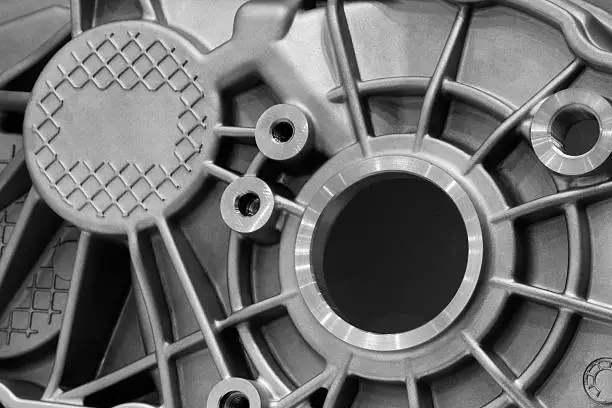
Understanding the Aluminum Casting Process for Automotive Parts
Through carefully controlled metallurgical processes, aluminum casting turns raw materials into parts that work in cars. First, the right aluminum alloys must be chosen. These are usually A380, ADC12, or A356, as they each have different mechanical properties that make them better for different uses. These metals are put into furnaces, where exact temperature control makes sure that they flow smoothly and don't absorb too much gas.
Core Casting Technologies Explained
Automotive parts that need to be made with tight tolerances on size and a smooth surface finish are mostly made by high-pressure die casting. At speeds of more than 100 meters per second, molten aluminum flows into steel shapes and fills complex spaces before it hardens. This quick process makes parts with a near-net form that need less extra machining. This lowers production costs while keeping the quality the same across thousands of units.
Low-pressure casting is a good way to make structural parts that need to have good mechanical properties. Under controlled pressure, aluminum moves up into molds, getting rid of the turbulent flow that leads to porosity flaws. The slower fill rate makes the microstructures denser and more resistant to wear, which is important for suspension parts and load-bearing frames that are put through repeated stress cycles.
Gravity casting and sand casting are both used to make parts that need to be bigger or smaller. These methods can handle complicated shapes and give you the freedom to make prototypes before you spend a lot of money on expensive tools. Sand casting is especially helpful for companies that make heavy-duty parts for industrial machinery where a moderate finish is enough.
Material Benefits Driving Industry Adoption
Aluminum alloys have a strength-to-weight ratio that changes the structure of vehicles in a fundamental way. A normal aluminum engine block is 40% lighter than a cast iron block of the same size and shape, but it is just as strong and good at managing heat. This weight loss immediately leads to faster acceleration, shorter stopping distances, and lower fuel use, all of which have been measured in the real world.
Another clear benefit is that it is good at conducting heat. Aluminum gets rid of heat three times better than steel, which makes it perfect for battery thermal management systems, transmission housings, and electric motor cases. Manufacturers of electric vehicles use this trait to keep the batteries at the best temperature during fast charging cycles and extend their life.
Corrosion protection makes parts last longer, especially suspension parts that are exposed to road salt and water. Aluminum naturally creates an oxide layer that protects it from wear and tear. This keeps warranty claims to a minimum and increases customer satisfaction. This natural durability fits with the trend in the auto industry toward longer service intervals and lower total cost of ownership.
Comparison of High Volume Aluminum Casting Methods for Automotive Parts
To choose the best casting method, you have to weigh the costs, the amount of work that needs to be done, the accuracy of the measurements, and the mechanical qualities. For projects involving high volume aluminum casting, selecting the right process is especially important because each method offers different advantages depending on the component requirements and the overall goals of the manufacturing process. Each casting method has its own benefits that depend on the needs of the component and the goals of the manufacturing process.
Die casting works best when there are a lot of them and the cost of the tools is spread out over millions of units. Cycle times of as little as 60 seconds per part are good for automakers that make regular parts like valve covers, gearbox cases, and steering housings. Surface finishes often get rid of the need to paint, and consistent dimensions cut down on changes that need to be made on the production line. But the method requires a big investment up front in hardened steel dies, so it's only cost-effective when the amount of production is high enough to cover the cost of the tools.
For specific uses, investment casting provides a high-quality surface and complex geometric shapes. This method can handle undercuts and complicated internal paths that other methods can't. It's used for special parts like turbocharger housings and aerospace-grade structural elements. Since this method still has lower production rates than die casting, it is best used for parts where accuracy is more important than volume.
Pressure Technology Comparison
Low-pressure systems fill molds from below, letting gases that are trapped escape naturally as the metal rises steadily. This managed method reduces flaws caused by turbulence and makes parts with the same density across all cross-sections. Less porosity leads to better mechanical qualities in automotive structural parts, especially in safety-critical uses that need to be resistant to impact.
When high-pressure die casting, speed and surface finish are more important than perfect mechanical performance. Sometimes, the rapid injection process traps very small air pockets that lower the ultimate tensile strength compared to low-pressure methods. But high-pressure methods are still the standard for parts that aren't structural and where surface quality and exact measurements are most important, like instrument panel clamps, sensor housings, and decorative trim.
Material Comparison Considerations
On a number of levels, aluminum is better than steel and magnesium alternatives. Aluminum castings are 60% lighter than steel casts while still having 70% of the tensile strength, which is enough for most vehicle uses. Although magnesium saves a little more weight than aluminum, it is harder to keep from rusting and costs more, so it is only used in high-end vehicles.
The total costs of making something are included in cost analysis, not just the prices of raw materials. Aluminum's lower melting point means that less energy is needed during production, and its better machinability means that finishing processes use fewer tools. When you add these things together, you get competitive total cost structures that procurement teams that are trying to stay within their budgets will like.
Design and Quality Considerations for High Volume Aluminum Casting
The success of casting, the speed of production, and the quality of the finished part all depend on how well the parts are designed. When engineering teams work with foundries early on, they can make designs that meet both functional needs and manufacturing realities. This way, expensive redesigns don't have to be done during the ramp-up of production.
Critical Design Parameters
Uneven wall thickness causes different cooling rates that cause warping and residual stresses. Automotive clamps usually have walls that are 3 to 5 mm thick, which gives them enough strength and makes sure that they solidify evenly. Instead of big jumps, changes between thick and thin parts need to be made slowly. This lowers the thermal differences that cause flaws inside the material.
Allowances for shrinkage account for the fact that aluminum shrinks when it cools from liquid to solid. When designers set critical dimensions, they take into account about 1.5% linear shrinkage. This makes sure that finished parts meet tolerance requirements without needing too much machining. Simulation software that is very advanced can predict how steel will shrink, which helps engineering teams make the best gating systems and cooling channels before they cut the steel.
Defect Prevention Strategies
Porosity is still the most common flaw in casting. It happens when gases get caught or when the metal shrinks while it hardens. To get rid of porosity, manufacturers use vacuum-assisted filling systems to remove air from mold holes before metal is injected. Post-casting heat treatments move tiny holes around, which makes the mechanical properties and pressure-tightness better for parts that need to seal fluids.
When two different metal lines meet without fully joining, they make weak surfaces that are prone to fatigue failure. The right gating design makes sure that multiple injection spots can fill the hole at the same time, keeping the mold at the right temperature throughout. During design review, flow simulation software finds possible cold shut sites. This lets problems be fixed before production starts.
Controlling the temperature during the casting process has a big impact on the grain and the mechanical traits that come from it. Mold preheating gets rid of thermal shock, which causes solidification to happen too quickly and small parts to not be filled all the way. Controlled cooling rates after casting change the size of the grains and how they are spread out in the strengthening precipitates. This has a direct effect on the tensile strength and elongation characteristics that are measured during quality testing.
Selecting the Right Aluminum Casting Supplier for High Volume Automotive Projects
Choosing a supplier is a strategic move that affects the quality of the product, the stability of the supply chain, and the company's place in the market over the long run. Automotive buying teams look at possible partners in more ways than just the prices they offer per piece.
Production capacity assessment begins with understanding available equipment and throughput capabilities. Suppliers operating multiple die casting machines with tonnages ranging from 400 to 3000 tons demonstrate flexibility to accommodate various component sizes. Dedicated manufacturing cells for specific customer programs prevent scheduling conflicts and ensure consistent capacity allocation during demand fluctuations.
Technical expertise separates competent foundries from exceptional manufacturing partners. In addition to basic production services, engineering teams that can do mold flow analysis, metallurgical advice, and design-for-manufacturing teamwork add a lot of value. Suppliers who put money into advanced process controls and continuous improvement programs get measurably better results with fewer production interruptions.
Certification and Quality Systems
Getting IATF 16949 certification shows that you have the quality management skills needed to work with tier-1 suppliers. This standard requires strict process controls, detailed paperwork, and proactive methods for preventing defects that lower the number of failures in the field and the cost of warranties. For companies providing high volume aluminum casting, maintaining this certification demonstrates the ability to meet automotive production requirements with consistent quality and reliable process control. To reduce the number of audits that need to be done and make sure that OEM quality standards are met, procurement teams give priority to certified suppliers.
PPAP documentation is objective proof that manufacturing processes always make parts that meet engineering requirements. Full PPAP packages come with control plans, process flow diagrams, material certifications, dimensional inspection reports, and more. These cover every part of production and are very detailed. Suppliers who are familiar with PPAP requirements make it easier to start new programs and get new vehicle platforms on the market faster.
Client references and industry reputation offer insights into supplier reliability beyond formal certifications. Long-standing relationships with major automakers show consistent success and the ability to solve problems when things get tough. Site visits reveal operational discipline, equipment maintenance practices, and workforce competency—factors difficult to assess through documentation alone.
Prototyping and Production Scalability
Prototype services let you test your idea before you spend money on production tools. Suppliers that offer rapid prototyping through 3D-printed sand molds or soft tooling cut down on the time it takes to develop new products and the risk that comes with launching them. Functional samples are put through technical tests and fit checks to find ways to improve the design early on, when it's still cheap to make changes.
Production scalability makes sure that providers can handle higher volumes as plans for making more cars reach full production rates. Manufacturing systems that are flexible and have extra capacity can handle changes in demand without affecting delivery times. Suppliers that have been good at scaling up in earlier projects pose less of a risk for buying teams that are in charge of launching new products.
Future Trends and Strategic Insights for Aluminum Casting in Automotive Industry
The world of car casting is changing quickly as new technologies and the need to be environmentally friendly change the way things are made. Smart procurement strategies plan for these changes ahead of time, setting companies up to take advantage of new skills that give them a competitive edge.
Additive manufacturing integration makes it possible to make hybrid production processes by combining 3D-printed cores with standard casting methods. It is now possible to make complex internal cooling tunnels and lightweight lattice structures that were not possible before. This leads to big steps forward in heat management in electric powertrains. This merging makes parts lighter while also making them work better, which is in line with industry goals for lightweighting.
Process automation transforms foundries into "smart factories" with systems that are connected and work together to make the best use of production parameters at all times. Robotic finishing cells get rid of the variations that come from doing things by hand, so the quality of the surface stays the same across production runs. Automated checking systems that use machine vision can find flaws that humans can't see. This keeps parts that don't meet standards from getting into supply chains.
Industry 4.0 Implementation
Platforms for data analytics collect sensor data from casting machines, melt furnaces, and quality inspection tools to find process trends before they turn into problems. Predictive maintenance programs look at patterns of vibration and changes in temperature to schedule service for equipment during planned breaks instead of having to fix problems as they happen. These features make equipment work better overall and cut down on unplanned production stops.
Integrated supply chain management systems show you the availability of materials, the state of production, and the organization of transportation in real time. Automotive companies can access supplier websites that show them their current inventory levels and production plans. This lets them use just-in-time shipping tactics that cut down on the costs of storing goods. Transparency along the whole value chain speeds up the process of solving problems and makes it easier for buyers and sellers to work together.
The creation of advanced alloys keeps pushing the limits of performance while also taking environmental issues into account. New recipes use more recycled materials without changing their mechanical qualities. This helps circular economy efforts and lowers carbon loads. Aluminum makers work with experts from the car industry to make sure that the alloys are the right mix for each job. This helps improve properties like weldability, machinability, and crash energy absorption.
Strategic agreements with suppliers move beyond business relationships and toward models of joint creation. New problems, like making battery cases that are lightweight, integrating high-voltage insulation, and improving the thermal interface, are being worked on together in joint development projects. Sharing expertise speeds up the process of finding answers. Long-term contracts with volume promises encourage suppliers to invest in dedicated capacity and specialized skills that are in line with buyer roadmaps.
Conclusion
High volume aluminum casting is still changing the way cars are made by lowering weight, improving performance, and making it easier to make more cars at a lower cost. When procurement teams choose the right casting methods, put design-for-manufacturing principles first, and work with skilled sources, they set their companies up for success in markets that are becoming more competitive. As the use of electric vehicles grows and government regulations get stricter, aluminum's unique mix of properties—lightweight strength, thermal management, and corrosion resistance—makes it the best material for next-generation auto parts. Strategic investments in advanced casting technologies and working together with suppliers lead to improvements in the performance of products, the efficiency of production, and the overall cost of ownership.
FAQ
What lead times should we expect for high volume aluminum die casting projects?
Usually, it takes 12 to 16 weeks to make a new tool, which includes designing the mold, getting the steel, cutting it, and getting approval on a model. Production ramp-up adds two to four weeks to allow for process optimization and quality assurance. Reorder amounts are filled within 4 to 6 weeks, based on volume needs and available capacity, by established programs using approved tools.
How does aluminum casting safety compare to other metalworking processes?
Because aluminum melts at lower temperatures and doesn't give off toxic fumes, aluminum casting is safer to work in than ferrous metal foundries. In modern factories, protected systems with automatic metal handling keep workers from coming into contact with hot or molten metal. Environmental controls catch particulate emissions, making the workplace cleaner than it would be in a normal sand casting operation.
What surface finishing options work best for cast aluminum automotive components?
Powder coating gives long-lasting, corrosion-resistant finishes that are good for car parts that are used in tough conditions. Anodizing improves the natural defense against rust and lets you choose a color for parts that people will see. With CNC cutting, you can make bearing surfaces and mating interfaces that are more accurate in terms of size than what can be done with casting. On important features, you can usually get margins of ±0.05mm.
Partner with Fudebao Technology for Superior Aluminum Casting Solutions
When it comes to making cars lighter, Zhejiang Fudebao Technology Co., Ltd. has great high volume aluminum casting skills that are especially designed to meet those needs. Our integrated manufacturing facility has CNC lathes, high-speed machining centers, low-pressure casting machines, and high-pressure die casting equipment. These machines support the whole production process, from the first melt to the final finishing steps. We get ±0.05mm accuracy on important dimensions, which meets the strict needs of automotive powertrains, structural parts, and precision assemblies. Working with well-known international names like HAAS automation machine tools and ESS energy storage systems has shown that we are technically skilled in a wide range of difficult situations. Get in touch with our team at hank.shen@fdbcasting.com to talk about your specific part needs and find out how working with a reliable high volume aluminum casting company can improve your supply chain and lower your overall production costs.
References
1. American Foundry Society. (2021). Aluminum Casting Technology Handbook: Processes and Quality Standards for Automotive Applications. Des Plaines: AFS Publications.
2. Davis, J.R. (Ed.). (2019). Aluminum and Aluminum Alloys: Casting Design and Performance Optimization. Materials Park: ASM International.
3. Campbell, J. (2020). Complete Casting Handbook: Metal Casting Processes, Metallurgy, Techniques and Design Applications. Oxford: Butterworth-Heinemann.
4. Society of Automotive Engineers. (2022). Lightweight Materials in Automotive Engineering: Aluminum Casting Solutions for Electric and Conventional Vehicles. Warrendale: SAE International.
5. North American Die Casting Association. (2021). Die Casting Process Guidelines: High Pressure and Low Pressure Aluminum Casting for High Volume Production. Wheeling: NADCA Technical Publications.
6. Kaufman, J.G. & Rooy, E.L. (2018). Aluminum Alloy Castings: Properties, Processes, and Applications for Automotive and Industrial Markets. Materials Park: ASM International.



YOU MAY LIKE