
What Makes a Professional Die-Cast Aluminum Supplier?
2026-07-21
A professional die-cast aluminum supplier distinguishes itself through certified manufacturing capabilities, precision tooling expertise, and comprehensive quality systems that ensure dimensional accuracy and material consistency. These suppliers master the high-pressure die casting (HPDC) process, utilizing alloys such as A380 and ADC12 to produce lightweight, durable components with tolerances reaching ±0.05mm. Beyond production capacity, they offer integrated services spanning mold development, CNC machining, surface treatments, and PPAP documentation—capabilities that directly impact your product performance, supply chain reliability, and competitive positioning in demanding markets like automotive, aerospace, and industrial equipment.
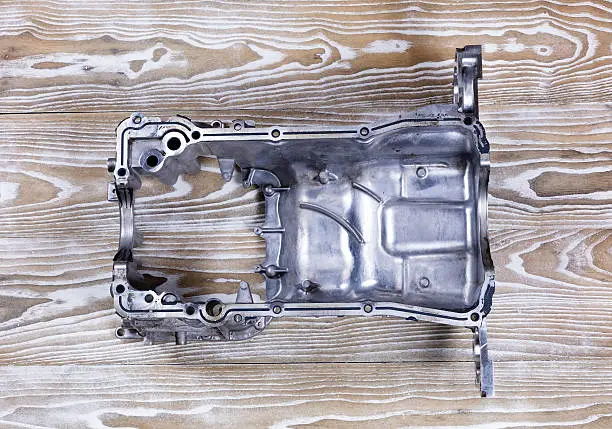
Introduction
Parts made of die-cast aluminum are now essential to manufacturing in many fields, including automotive, aerospace, electrical, and industrial. Because they are made of lightweight materials, have great strength-to-weight ratios, and can handle heat well, these parts can't be replaced in a wide range of situations, from EV inverter housings to precision-machined flight brackets. More and more, procurement managers and engineering teams are under pressure to find providers who can not only provide parts but also form strategic relationships that guarantee accurate measurements, the ability to track materials, and the ability to increase production volumes as needed.
When looking for a skilled die-cast aluminum parts supplier, you need to look at their technical skills that go far beyond simple casting skills. The right partner knows how to make moulds, how to choose the right metal for different thermal and mechanical needs, and how to keep testing systems that meet IATF 16949, AS9100, and ISO standards. Your product's market readiness, warranty costs, and long-term profits will all be affected by this choice. When parts for car engines have to withstand high temperatures or aircraft structural elements have to stay within very tight tolerances, it's important to know what makes a good source great.
Understanding Die-Cast Aluminum and Its Procurement Importance
Material Properties That Drive Industrial Performance
Die-cast aluminum alloys, such as A380, have a tensile strength of about 47 ksi and a density of only 2.71 g/cm³. This means that they can be used to make parts that make vehicles lighter while still maintaining their structural integrity. With a thermal conductivity of about 96 W/m-K, the material turns housings into active cooling systems. This is a huge benefit for electrical motor cases and power electronics, where heat loss directly affects the life of components. Corrosion protection can be improved by applying the right surface treatments that meet ASTM B117 standards. This makes sure that parts can withstand harsh conditions like sea use or contact with road salt.
Process Advantages Over Alternative Manufacturing Methods
High-pressure die casting uses 30,000 psi of pressure to push liquid aluminum into hardened steel dies. This lets complex shapes be made with wall thicknesses as low as 1.5 mm in some places. Using this method, mounting bosses, cooling fins, and EMI shielding ribs are all combined into a single net-shaped part, which means that no extra assembly steps are needed, as they would be for sand casting or machined parts. Production repeatability keeps tolerances within ±0.002 inch/inch according to NADCA standards over thousands of rounds. This makes the method perfect for tier-1 car providers that need more than 50,000 similar parts every year.
Industry-Specific Demands Shaping Supplier Selection
Before giving the go-ahead for production runs, auto OEMs demand PPAP paperwork packages that include dimensional records, material certifications, and process failure mode analysis. Aerospace buyers need to be able to fully trace the materials they use, connecting each batch of parts to a specific melt chemistry that can be checked with optical emission spectroscopy. Manufacturers of industrial tools try to make batches that can be as small as 500 test units or as large as 10,000 or more units of production without affecting the cost per unit. Because of these different needs, procurement teams have to check to see if suppliers have the right technical infrastructure and quality systems to work with their industry.
Core Competencies of a Professional Die-Cast Aluminum Supplier
Certification Frameworks and Quality Infrastructure
Top providers have at least ISO 9001 certification, while car experts have IATF 16949 certification, and aerospace-focused businesses have AS9100D certification. These frameworks require statistical process control, calibrated measurement systems that are checked through gauge R&R studies, and written methods that cover everything from inspecting new materials to making sure the end part works. Real-time X-ray inspection systems find internal holes that could weaken electrical housings' pressure-tight seals. Coordinate measuring machines (CMMs) check complicated shapes against GD&T standards, which is important for integrating them into an automatic assembly line.
Advanced Alloy Knowledge and Heat Treatment Expertise
Professional providers help customers choose the right alloy based on the needs of the product, and for die-cast aluminum, A380 is ideal for complex automotive brackets due to its excellent machinability and die-filling characteristics, while ADC12 is preferred for outdoor telecom housings because of its superior corrosion resistance, and heat treatment options such as T5 and T6 tempers can further tailor mechanical properties for structural strength or dimensional stability in precision-machined parts. A380 is great for making complicated car brackets because it is easy to machine and fill with a die, and ADC12 is great for outdoor telecoms boxes because it resists corrosion better. Heat treatment options, such as T5 and T6 tempers, change the mechanical properties of materials, making them stronger for structural uses or more stable in their dimensions for precision-machined parts. This knowledge of metals keeps expensive redesigns from having to be done when parts fail field testing because the material specs are wrong.
Integrated Manufacturing Capabilities
The best suppliers have facilities that do everything under one roof, including melting, casting, CNC machining, and surface treatments. This integration gets rid of the time it takes for multiple providers to work together and keeps tolerances tighter when post-casting machining operations need to be accurate to within 0.05 mm on important mounting areas. Complex undercuts, thin-wall sections, or combined cooling channels can be made if the die design and production skills are good enough. Before cutting expensive tooling steel, suppliers who have their own mould flow analysis tools can predict and stop flaws like porosity or missing fill.
Comparing Suppliers – What to Look for When Choosing a Die-Cast Aluminum Partner?
Technical Consultation and Design Support
During the design process, suppliers who focus on engineering work together to find ways to combine multiple machined parts into a single cast component, suggest draft angles that make part ejection better, and find places for ribs that make the structure stiffer without adding weight. This consultation on the front end cuts down on tooling iterations and speeds up time-to-market. Suppliers that offer prototype services through fast tooling or 3D-printed designs let you test how well the prototype works before you buy production dies, which can cost tens of thousands of dollars and take 10 to 14 weeks to arrive.
Production Technology and Capacity Assessment
Check to see if the makers use current die-cast aluminum machines with the right tonnage for your part size. For example, 350-ton machines are good for small electrical connectors, while 800-ton or more machines are better for big car structural parts. Vacuum-assist die casting systems remove air from mould spaces before injecting metal. This makes pressure-tight housings that are tested for leaks much less porous. If complicated features like angled mounting holes or precise bearing bores can be made quickly and easily, CNC machining machines with 4 or 5 axes are needed. Knowing these technical details helps procurement teams match the skills of suppliers with the needs of specific parts.
Track Record and Industry Experience
Automotive tier-1 customers only do business with suppliers who have shown they can meet strict measurement standards and supply chain demands, such as just-in-time delivery and kanban inventory management, and for die-cast aluminum components, this means evaluating a supplier's ability to scale from prototypes to high-volume production, handle mid-project material specification changes, and implement cost reductions without compromising quality, with client feedback from OEM engineering managers providing the most reliable indicator of responsiveness and flexibility. Looking at case studies can help you figure out if your suppliers have dealt with problems like yours before, like going from small prototypes to large-scale production, handling changes to material specifications in the middle of a project, or lowering costs without lowering quality. Client comments from OEM engineering managers are more reliable than general marketing claims because they show how responsive the company is when there are problems with quality and how flexible it is when production numbers change without warning.
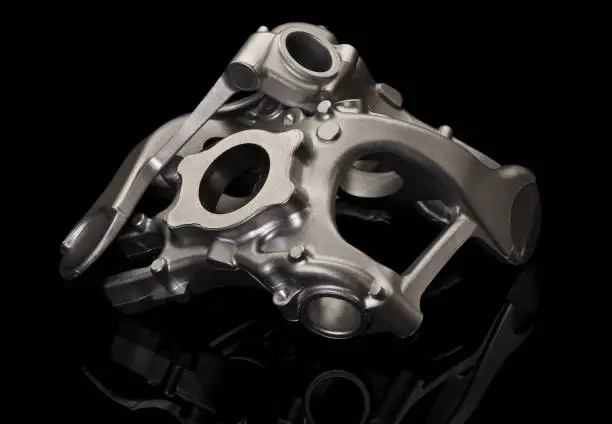
How a Professional Die-Cast Aluminum Supplier Supports Your Procurement Goals
Customized Solutions From Concept Through Production
Professional providers approach each project as a partnership, starting with design review meetings where experts check to see if the product can be made and suggest ways to make it better. Prototype tooling makes the first models that are used for testing functionality and confirming the design. This lets the design be improved over and over again before moving to production dies. Scalable production capacity is important for automotive programs that go from making 5,000 units a year at model launch to making 50,000 units or more at peak production as they move from small-scale to large-scale production. This adaptability guards against supply problems that affect the whole assembly process.
Comprehensive Quality Assurance and Testing
In addition to measuring the size of something, strict quality systems check for things like pressure decay leaks that prove IP67 sealing works for outdoor electrical enclosures, salt spray tests that follow ASTM B117 to make sure that surface treatments can handle 500–1000 hours of corrosive exposure, and cross-hatch adhesion tests that prove powder coating bonds that keep flaking in high-vibration automotive applications. Optical emission spectroscopy checks the chemistry of each melt batch against certain limits. This makes sure that the mechanical qualities stay the same over production runs that last for months or even years. These steps stop warranty claims and problems in the field that hurt the brand's reputation.
Sustainable Manufacturing and Innovation
Modern suppliers take care of the environment by using closed-loop cooling systems that use less water, die-cast aluminum recycling programs that turn scrap into production alloys, and energy-efficient melting furnaces that lower carbon footprints. If you follow the RoHS guidelines and REACH rules, you can get into European markets, but there are strict material limits. Forward-thinking suppliers buy new technologies like simulation software that predicts die wear patterns to help them make the best maintenance schedules and automated inspection systems that use machine vision to find surface defects faster than manual inspection. These new technologies lower costs and improve delivery performance.
Conclusion
When looking for a professional die-cast aluminum supplier, you need to look at their technical skills in areas like metallurgy, precision manufacturing, quality systems, and the reliability of their supply chain. The best partners show that they follow through on their certifications, have facilities that cover everything from casting to finishing, and offer tech help that makes designs easier to make. Their history of working with tough industries like aerospace and automobile shows that they can handle the tight tolerances, documentation needs, and high output numbers that are necessary to succeed in competitive markets. When you build strategic relationships with your suppliers on these bases, you can be sure of stable quality, quick communication, and ongoing efforts to make things better. This will protect your product's performance and revenue over many years of production.
FAQ
What alloys are commonly used in die-cast aluminum applications?
A380 and A383 are the most common grades used in automotive and industrial settings because they are good at filling dies, easy to machine, and have balanced mechanical properties, such as a tensile strength of about 47 ksi. ADC12 is used for outdoor and telecommunications equipment that needs to be more resistant to corrosion. A356 is sometimes used in aerospace applications that need a stronger metal, but it is usually made by fixed mould casting instead of high-pressure die-cast aluminum casting.
What lead times should I expect for die-cast aluminum parts?
Usually, prototype casting takes 4 to 6 weeks to make the first models that are used to confirm the design. Depending on how complicated it is, making a production die takes 10 to 14 weeks. Then, the first article inspection and approval process takes another 2 to 3 weeks. Once the casting is approved, production runs deliver parts in 4–8 weeks for orders of less than 5,000 pieces. For bigger orders, the time frame could be extended to 10–12 weeks, depending on the machine's capacity and the finishing needs.
Can suppliers assist with design optimization?
Professional suppliers offer full engineering advice, which includes mould flow analysis to predict fill patterns and find possible flaws, DFM reviews to suggest changes that lower the cost of tools or improve part quality, and tolerance analysis to make sure that specifications match what the process can do. This partnership stops expensive redesigns and speeds up the time it takes to finish projects.
Partner With Fudebao Technology for Your Die-Cast Aluminum Manufacturing
As a certified die-cast aluminum supplier, Zhejiang Fudebao Technology sends high-precision parts to automakers, aerospace contractors, and companies that make industrial equipment in North America and Europe. Our factory has low-pressure casting machines, high-speed CNC machining centers, and full surface treatment facilities. For jobs that need precise measurements, we can support tolerances of up to ±0.05mm. We offer PPAP paperwork, material traceability, and scalable production from prototypes to high volumes. Our products range from aluminum housings for EV power electronics to structural brackets in aerospace parts. Email our team at hank.shen@fdbcasting.com to talk about the details of your project, get technical advice on how to improve the design, or get detailed quotes. You can learn more about how we can help businesses where the quality of parts has a direct effect on safety and performance by visiting fdbcasting.com.
References
1. North American Die Casting Association (NADCA). "Product Specification Standards for Die Castings: Aluminum and Magnesium." 2019 Edition.
2. ASM International. "Properties and Selection: Nonferrous Alloys and Special-Purpose Materials." ASM Handbook Volume 2, 2021.
3. American Society for Testing and Materials. "ASTM B85: Standard Specification for Aluminum-Alloy Die Castings." Annual Book of ASTM Standards, 2022.
4. Society of Automotive Engineers. "SAE J2506: Design Guidelines for Aluminum Die Castings." SAE Technical Paper Series, 2020.
5. International Organization for Standardization. "ISO 16220: Magnesium and Magnesium Alloys – Unalloyed Magnesium and Applications." Quality Management Systems for Casting Facilities, 2018.
6. Aerospace Industries Association. "AS9100D Quality Management Systems – Requirements for Aviation, Space and Defense Organizations." 2018 Revision.



YOU MAY LIKE