
What Factors Affect Aluminum Die Casting Process Quality?
2026-07-21
When sourcing precision metal components for automotive powertrains, industrial pumps, or electrical housings, the aluminum die casting process stands at the intersection of speed, accuracy, and scalability. This high-pressure manufacturing technique transforms molten aluminum alloy into complex, near-net-shape parts that eliminate welding, reduce weight, and lower per-unit costs in high-volume production. Yet the quality of these castings hinges on variables that procurement managers and engineering teams must deeply understand to avoid costly defects, production delays, and supplier disputes.
Aluminum die casting quality directly impacts dimensional accuracy, surface integrity, and mechanical strength—factors that determine whether a transmission housing withstands thermal cycling or an EV battery enclosure meets crash-test standards. This guide addresses core quality drivers such as material composition, die design, process control, and mold maintenance, equipping buyers with the knowledge to evaluate suppliers, negotiate specifications, and ensure consistent outcomes. By mastering these variables, decision-makers can optimize sourcing strategies, reduce rework, and forge partnerships with manufacturers capable of delivering precision components at scale.
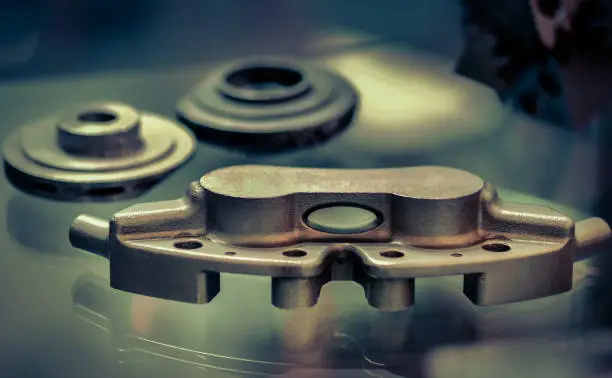
Understanding the Aluminum Die Casting Process Quality
Defining Quality Metrics in Die Casting
Dimensional accuracy (usually within ±0.05mm for precise uses), surface finish ratings (Ra values between 1.6 and 3.2 μm are possible), and mechanical traits like tensile strength and elongation are all ways to judge the quality of the aluminum die casting process. Acceptable deviation ranges are set by industry standards like NADCA limits and ISO 8062. For the car and aerospace sectors, process validation is controlled by certifications like IATF 16949 and AS9100.
Process Flow and Critical Control Points
Melting aluminum alloys like A380 or ADC12 at temperatures between 650°C and 700°C is the first step in the aluminum die casting process. Under pressures ranging from 10,000 to 25,000 psi, molten metal is poured into a solid steel mold. Within milliseconds, complex holes are filled. Controlled cooling pathways inside the die speed up the solidification process. Stable metal temperature, injection speed, regular die temperature, and release timing are some of the most important control points. Any mistakes at any stage, like solidifying too quickly or trapping air, can cause flaws like porosity, cold shuts, or dimensional twisting. When buying, teams know about these stages; they can tell if a supplier's process tracking systems and operator training are rigorous enough to ensure consistent output.
Standards and Certifications
Following the PPAP documents and first-article inspection procedures ensures that things can be tracked and made again. For millions of cycles, suppliers who use strong statistical process control and advanced inspection tools like CMM systems and X-ray flaw detection have shown they can keep limits tight. When buyers are looking for parts that can't fail, these features directly lower their risk.
Primary Factors Impacting Aluminum Die Casting Quality
Material Selection and Alloy Composition
The choice of aluminum alloy has a big impact on the quality of the casting and how well it works in a given situation, and for the aluminum die casting process, A380 offers excellent fluidity and castability for complex automotive brackets, A356 provides high mechanical strength and heat-treatability for structural aerospace components, and ADC12 balances castability and corrosion resistance for electrical enclosures. A380 has a lot of silicon in it, which makes it very fluid and easy to mold. This makes it perfect for complex shapes in automotive brackets and housings. A356 is good for structural parts in aircraft because it can be heated and has high mechanical strength. For electrical enclosures, ADC12 strikes a balance between being able to be cast and not rusting. The purity of the alloy is very important. Too much iron makes the metal more brittle, while controlled amounts of copper make it stronger. Suppliers who follow strict processes for inspecting arriving materials and certifying alloys reduce compositional variation, which means that mechanical qualities are always the same from batch to batch. This directly addresses sourcing worries about the dependability of parts when they are stressed and heated and cooled many times.
Die Design and Engineering
The design of the tools affects both how well they work and how few mistakes they make. Venting systems that work well get rid of held air during high-speed pumping, which lowers porosity. Putting gates in the right places controls the direction and speed of metal flow, which stops the turbulence that leads to cold shuts. Optimized cooling channel plans make sure that heat is removed evenly, which reduces thermal stress and bending. Positioning of the ejector pin must keep the surface from getting damaged while still allowing for clean part release. When properly maintained, die materials and surface treatments can make a tool last longer than 100,000 cycles. Suppliers who can build molds in-house can make changes to designs quickly and fix quality problems during testing instead of after production starts.
Process Parameter Optimization
It is essential to keep the temperature under control during the whole aluminum die casting process. The temperature of the metal affects how thick it is and how well it fills; the temperature of the die affects how fast it hardens and how much thermal stress it has. Injection speed and pressure must be adjusted to fit the shape of the part. If there isn't enough pressure, the filling won't be full, and if there is too much speed, air will get trapped. Holding pressure during solidification makes up for metal shrinkage, which keeps the shape of the part. Cycle time strikes a mix between production and cooling enough to keep ejection damage from happening. Real-time monitoring systems used by advanced suppliers keep an eye on these variables shot by shot and send out alerts when parameters move outside of acceptable ranges. This prediction method stops groups of defects and keeps first-pass return rates above 98%.
Mold Maintenance and Longevity
Without regular maintenance, even the best-designed die will break down. When temperatures change, microcracks appear on die surfaces, and rough aluminum alloys wear away at the details of cavities. Regular maintenance checks the surface, uses penetrant tests to find cracks, and rebuilds old parts by welding or remachining them. Managing the die temperature and using the right release agent can make it longer between major repairs. Suppliers who keep records of maintenance history and link mold condition to quality data show good management, which keeps dimensions consistent over hundreds of thousands of cycles.
Common Defects in Aluminum Die Casting and Their Solutions
Porosity and Gas Entrapment
Porosity shows up as pinholes on the surface or internal spaces that can be seen with an X-ray, and in the aluminum die casting process, gas porosity occurs when air is trapped during injection or hydrogen is absorbed from the molten metal, while shrinkage porosity results from insufficient feeding during solidification, both of which can be minimized through vacuum-assisted die casting, proper degassing of the melt, and increased pressure during solidification. There are gas pores when air gets trapped during injection or when hydrogen from molten metal is absorbed. Shrinkage porosity happens when solidification shrinkage isn't balanced by enough food. Some solutions are vacuum-assisted die casting to get rid of air, properly degassing the metal before filling, and applying more pressure during solidification. Changes to the die design, such as better vents or moving gates, change the way gas can leave. Before parts get to the assembly lines, non-destructive testing protocols find flaws below the surface. This keeps critical applications like automotive safety components from failing in the field.
Cold Shuts and Flow Lines
Cold shuts show up as gaps that can be seen where metal fronts meet but don't bond, making weak planes that are likely to crack. They happen because the gate wasn't designed well or the cooling started too soon. To fix the problem, the metal and die temperatures need to be raised, the injection speed profiles need to be optimized, and the gates need to be redesigned to encourage laminar flow. Even though surface flow lines are mostly just for looks, they can be a sign of rapid filling that hides bigger problems. To avoid needless rejections, procurement teams should set clear standards for acceptable surface quality from the start, combining requirements for looks with requirements for functionality.
Dimensional Warping and Distortion
When parts cool unevenly, they leave behind leftover forces that bend them after they are ejected. This is called warping. Sections with thin walls and asymmetrical shapes are especially likely to be damaged. Some solutions are improving the layouts of the cooling channels so that they remove heat evenly, changing the time of the ejection to ensure proper solidification, and using stress-relieving heat processes after casting. Using finite element analysis to predict thermal gradients during die design lets changes be made ahead of time. Suppliers who can do this level of engineering precision send parts that stay within specs even after they are assembled and machined again.
Comparing Aluminum Die Casting Quality with Other Casting Methods
Aluminum Die Casting vs. Sand Casting
Sand casting can handle bigger differences in size (±0.5mm or more) and makes rougher surfaces (Ra 6.3–25 μm), which need a lot of machining. It works well for small amounts of work and metals with high melting points, but it's not as fast as die casting because sand molds are destroyed after each pour, but steel dies keep going around and around. Die casting makes it possible to get a better surface finish and tighter tolerances right from the mold, which cuts down on machining time and scrap rates. Tier-1 automotive suppliers prefer die casting for making a lot of brackets and housings because the consistent dimensions and high production rate make it worth the cost of investing in tools.
Aluminum Die Casting vs. Investment Casting
Investment casting is great for making parts with complex shapes, thin walls, and fine surface details, but it takes longer to make and costs more per part. It is used in medical implants and aircraft rotor blades where complexity is more important than bulk. Die casting is the best way to go when you need high output, strong mechanical qualities, and cost-effectiveness for more than 10,000 units per year. Procurement managers weigh these trade-offs based on the budget, the difficulty of the part, and the number of units that need to be made.
Aluminum Die Casting vs. Zinc Die Casting
Zinc die casting has lower melting points and longer tool life, but the parts it makes are denser, heavier, and don't conduct heat as well, while the aluminum die casting process is preferred for lightweight automotive components and electronics housings due to its superior strength-to-weight ratio and thermal conductivity, with material selection based on application requirements rather than cost alone, and experienced suppliers help buyers determine the optimal process-material match for each use case. Aluminum is better for lighting cars and keeping electronics cool because it has a high strength-to-weight ratio and can quickly remove heat. Zinc is good for making small, complicated gears and artistic parts. Material choice is based on application needs, not just price, and knowledgeable suppliers help buyers find the best process-material match.

Optimizing Supplier Selection to Ensure High Quality
Certifications and Industry Experience
Automakers want IATF 16949 approval to show that they follow PPAP and control processes. Aerospace buyers need AS9100 and the ability to track materials down to the batch level. When buying industrial tools, ISO 9001 and proof of heat treatment and testing skills are given the most weight. Track records of suppliers in target businesses show that they know what quality standards are expected in that field. A company that makes parts for cars knows about temperature cycling validation, and a company that makes parts for spacecraft knows about NDT procedure rigor. Certification doesn't guarantee competence by itself, but when combined with experience in the field and audited process documentation, it greatly lowers the risk of procurement.
Operational Capabilities and Flexibility
How feasible buying is depends on lead times, minimum order amounts, and the ability to customize. Integrating mold creation, casting, CNC cutting, and surface treatment into one supplier makes it easier to keep track of deadlines and who is responsible for what. Combining high-pressure die casting with low-pressure casting makes it possible to use more materials and shapes. Flexible batch production can handle everything from trial runs to mass production without having to pay a lot of money for setup. With global production bases, products can be delivered quickly and cheaply to different parts of the world. Cost and supply chain resilience must be weighed by procurement teams. Relying too much on suppliers far away can cause problems, but local partners with higher costs may be worth it because they are responsive and make logistics simpler.
Quality Assurance Infrastructure
Advanced checking tools tell the difference between good providers and average ones. CMM devices check the accuracy of measurements at several places on each part. X-rays and CT scans can find internal porosity without damaging the material. Spectrometers check the makeup of each batch of alloys. Statistical process control charts show how stable parameters are over time. Suppliers who share quality data openly and allow checks to happen build trust. Before contracts are signed, quality development can be seen by asking for first-article inspection reports, process flow diagrams, and FMEA documents during the quote phase. Doing this avoids expensive source changes in the middle of production.
Conclusion
The quality of the aluminum die casting process comes from the careful interaction of material science, precise tooling, process control, and a committed supplier. When engineering managers and procurement heads understand how these roles affect each other, they can clearly state what is needed, carefully evaluate sources, and work together to solve problems before they get worse. Accurate measurements, a smooth surface, and strong mechanical performance are not accidents; they are the result of careful alloy choice, die building, parameter optimization, and diligent upkeep. By comparing casting methods, you can see that die casting is best for high-volume, precise manufacturing, which helps you make smart choices about where to get your materials. Casting quality goes from being a risk to a competitive advantage when you work with certified suppliers who show they have technical know-how, operational flexibility, and clear quality systems.
FAQ
What temperature range minimizes defects in aluminum die casting?
Usually, molten aluminum is kept at a temperature between 650°C and 700°C. This keeps the flexibility needed to fill the mold completely and the speed at which die wear can be maintained. The temperatures vary from 180°C to 280°C, based on the shape of the part. Thinner sections need warmer dies to keep them from solidifying too quickly, while thicker sections need cooler dies to keep cycle times from being too long. Accurate systems for keeping an eye on and controlling temperatures are necessary.
Can surface imperfections be reduced without increasing costs?
Getting the injecting settings (velocity, pressure, and metal temperature) just right can often get rid of flow lines and surface holes without spending more money. Better venting and gate design might need small changes to the tools, but it stops problems from happening again. Treatments done after casting, like shot peening or coating, cost more but give better results when needed for function or style. Quality and budget are both met when process optimization and focused finishing are balanced.
What are typical MOQs for customized aluminum die cast orders?
For first production runs, the minimum order numbers are usually between 1,000 and 5,000 pieces, but they depend on the complexity of the part and the cost of the tools needed to make it. For high-volume car parts, it may take 10,000 or more units to justify making their own tools. Soft casting or multi-cavity molds that are shared between projects can be used for prototyping and small sales. Talking about expected volume early on helps suppliers come up with cost-effective solutions that fit the size of the production and the budget.
Partner with Fudebao Technology for Precision Aluminum Die Casting Excellence
Zhejiang Fudebao Technology has decades of experience working with the car, industrial machinery, electrical, and aircraft industries to provide top-notch aluminum die casting process solutions. With tolerances as low as ±0.05mm, our vertically integrated facility has high-speed machining centers, CNC lathes, low-pressure casting machines, and advanced die casting equipment. This makes it possible for smooth "melting-to-finishing-to-surface treatment" workflows. We directly sell foreign names like ESS energy storage systems and HAAS automation machine tools, which shows that we can meet strict OEM standards. Our team can help you with custom discussions, quick quotes, and sample evaluations, whether you need PPAP-compliant engine housings, heat-dissipating electrical enclosures, or lightweight aircraft structural components. Visit fdbcasting.com or email hank.shen@fdbcasting.com to learn more about how our aluminum die casting process maker services can help you improve the quality of your products and the stability of your supply chain.
References
1. North American Die Casting Association (NADCA). "Product Specification Standards for Die Castings." NADCA, 5th Edition, 2019.
2. Campbell, John. "Complete Casting Handbook: Metal Casting Processes, Metallurgy, Techniques and Design." Butterworth-Heinemann, 2nd Edition, 2015.
3. Kaufman, J. Gilbert, and Rooy, Elwin L. "Aluminum Alloy Castings: Properties, Processes, and Applications." ASM International, 2004.
4. Vinarcik, Edward J. "High Integrity Die Casting Processes." John Wiley & Sons, 2003.
5. International Organization for Standardization. "ISO 8062-3:2007 Geometrical Product Specifications (GPS) — Dimensional and Geometrical Tolerances for Moulded Parts." ISO Standards, 2007.
6. Totten, George E., and MacKenzie, D. Scott. "Handbook of Aluminum: Vol. 1: Physical Metallurgy and Processes." Marcel Dekker, 2003.



YOU MAY LIKE