
What is Sand Casting for Jewellery Making?
2026-04-21
Sand casting is an old way to shape metal that has been used for a long time to make jewelry. Artists pour molten valuable metals like gold, silver, or bronze into molds made of bonded sand mixes that are then thrown away. This method from the forge is still used to make jewelry today because it lets artists copy complicated patterns with amazing accuracy while keeping costs low for small to medium production runs. In contrast to fixed mold processes, sand casting can handle complicated geometries and undercuts without needing expensive tooling changes. This makes it a great choice for custom jewelry collections and prototype development in the business-to-business (B2B) sector.
Understanding Sand Casting: Basics and Benefits
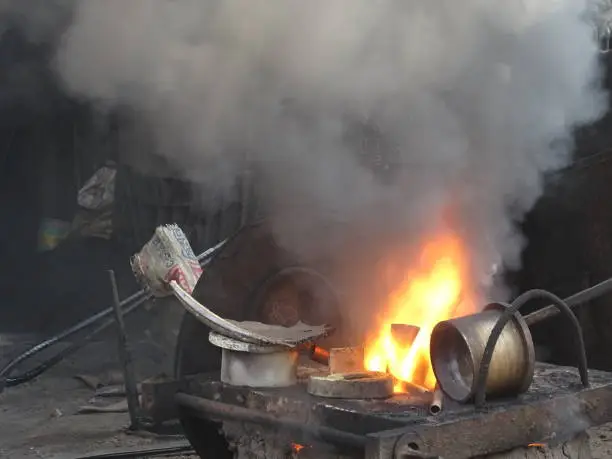
Making a negative image of the jewelry piece you want to make in a sand model and then filling that hole with molten metal is the basic idea behind sand casting. The first step is for artists to make a hard model by packing special casting sand around a master design, which is usually made from wax or resin. When the pattern is taken away, the empty space that's left has the exact same surface details as the original design. The sand will be broken away to show the final casting when the molten metal fills the hole and hardens.
How Sand Casting Works in Jewellery Production
In jewelry foundries, we use two main types of sand: green sand and chemically-bonded resin sand. Green sand is made by mixing silica particles, bentonite clay, and water. This makes a mix that can be used again and again and keeps its shape under mild forces. For easier jewelry parts with less strict surface finish standards, this method works well. On the other hand, resin-bonded sands use furan or phenolic binders that harden at room temperature. This makes them stronger in molds and gives them smoother surfaces. A lot of jewelry makers like resin systems for making pieces with fine details or sharp edges because the stronger mold walls don't wear down as easily when metal is poured into them.
One big benefit of sand molds is that they can be used with different metal types. Sterling silver melts at about 893°C, so it runs easily into small holes in molds without breaking them. Bronze metals work just as well at higher filling temperatures near 1050°C, even though their warm patina makes them popular in art jewelry. Foundries can use the right refractory sand processes to cast even platinum-group metals, but they need special crucibles and neutral atmospheres to do so.
Cost-Effectiveness Compared to Alternative Methods
When buying teams look at casting technologies, they often compare how much the initial investment will cost to how much the technology will be used. For die casting and investment casting, you need expensive metal dies or ceramic shell systems that only start to save money when you make a lot of them, usually thousands of them. This problem is solved by sand casting, which uses models made from cheap materials like wood, plastic, or printed resins. Pattern costs are very low compared to die costs, which lets jewelry brands test how well their designs are received by the market with small runs before investing in casting for mass production.
In addition to being cheaper to make, sand models allow for changes that fixed molds can't. If a client wants to change the design after seeing the first models, pattern makers can change the sizes or add features right away instead of having to wait weeks for die repair. This ability to adapt is very important in the fashion jewelry industry, where styles change quickly and product lifecycles shorten.
Design Freedom and Prototyping Speed
Sand casting's physical flexibility enables jewelers to create patterns that are difficult to make with other methods. It is now possible to make walls with different thicknesses, re-entrant angles, and internal gaps without using complicated core systems or multi-part dies. A carefully designed sand mold naturally creates a statement ring with intertwined bands and secret clasp mechanisms. This is something that is hard to make from solid stock.
Rapid testing features make sand casting even more useful during product development. Digital pattern making with 3D printing has changed the way things are usually done. Designers now send CAD files straight to printers that make patterns overnight. Foundries quickly pack these printed models into sand and make test castings within 48 hours. This cuts down on feedback loops that used to take weeks to complete. This speeds up the process, which helps procurement managers meet tight start dates while still keeping quality checks.
Key Components and Materials Used in Sand Casting for Jewellery
There is more to the material science behind sand casting than just adding sand and cement. Foundries carefully choose the parts they use based on the metals they are casting and the size limits needed by jewelry standards.
Casting Sand Selection and Properties
Jewelry foundries mostly use silica sand because it is easy to find and has a high freezing point (about 1710°C). The surface finish is directly affected by the grain size distribution. Finer grains (between 120 and 200 mesh) make casting surfaces smoother and require less cleaning after casting. But sand that is too fine lowers permeability, which means it traps gases that can make the metal solidify with holes in it. Foundry experts find a balance between these two factors by mixing grain sizes to get a good surface and enough gas escaping.
When making reactive metals or when heat expansion is a problem, specialty sands come into play. Olivine sand, which is made up of magnesium iron silicate, expands less when heated than silica, which keeps mold from cracking during quick cooling cycles. Chromite sand is very good at moving heat away from the casting more quickly, which helps smooth out the grain structure in the solid metal. Even though they are more expensive than silica, these options make high-value jewelry pieces more accurate in their measurements and better in terms of their mechanical properties.
Binder Systems and Their Impact
The binder chemical controls the mold's strength, the time it takes to heal, and how easily it breaks down after casting. Clay-bonded green sand uses bentonite's natural ability to stick together when it gets wet to form bonds that stay strong until the hot metal makes the steam expand. This method works well for foundries that run nonstop and where sand can be recycled and used again and again. Green sand molds, on the other hand, make surfaces that are rougher and limits that are less tight than chemical bonds.
Chemical binding systems, such as furan, phenolic, and sodium silicate types, can cross-link at room temperature or with only a small amount of heat. When you mix furan resins with phosphoric acid catalysts, they harden in just a few minutes to make molds that are very stiff and won't bend at high temperatures. The final casts have surface finishes that are very close to 6.3 Ra (microns), which means that a lot less work needs to be done to finish them. Sodium silicate binders that are triggered by CO2 gas are a better choice for the environment, but they take longer to fix and aren't as strong as green sand or organic resins.
Pattern Materials and Mold Construction
Pattern choice affects both the original cost and the life of the production. Carved wood or pine designs are still popular for making small amounts of jewelry because they are cheap and easy to shape by hand. Usually, these patterns can handle 50 to 100 mold prints before the fine features start to fade. When the number of uses justifies the cost, metal designs made from aluminum or brass can be used over and over again and keep their shape even when the temperature changes.
The costs of pattern making have changed since additive printing came along. Photopolymer resins that are made with layer resolutions below 50 microns can record complex textures and organic shapes that would be hard to make with standard tools. When the metal is poured, these designs burn out smoothly, leaving no ash behind that could get into the casting and make it dirty. A lot of jewelry companies now keep digital libraries of patterns and make copies as needed instead of keeping real stock.
Metal Alloy Considerations
Sterling silver, which is made up of 92.5% silver and 7.5% copper, is the most popular sand-cast jewelry metal because it is easy to work with and doesn't tarnish. Its low freezing point saves money on energy, and its medium flow lets it fill detailed mold parts without needing too much superheat. People who work in procurement should know that silver's high heat conductivity means that careful gating design is needed to keep the material from solidifying too quickly before it fills the whole space.
Sculptural jewelry artists who want warm colors and good sand casting properties like bronze metals, especially those with 10-15% tin content. Compared to pure copper, bronze has lower flaw rates because it flows easily and shrinks little when it solidifies (about 1.5%). The metal also gets unique patinas through controlled oxidation, which makes it more artsy without any extra work.
When pure gold is mixed with copper, silver, zinc, and sometimes nickel to make gold casting alloys, they come with their own set of problems. If you use the right degassing methods to get rid of the pores caused by dissolved gases, different types of yellow gold (14K–18K) cast well. When nickel or palladium is added to white gold metals to make them harder, they become less fluid and need higher pouring temperatures. To stop mold-metal reactions, they need to be treated with refractory sand.
Step-by-Step Sand Casting Process for Jewellery Making
When buying teams work with foundries, knowing the sequential process helps them set realistic deadlines and quality standards.
Pattern Preparation and Mold Design
The casting process starts with making a pattern or choosing one from a stock of patterns. Patternmakers include shrinkage allowances—usually 1% to 2%, but it depends on the alloy—to account for the metal's shrinking when it cools. They also add machine stock to areas that need to be finished after casting to make sure there is enough material left over after cleanup.
The most complicated part of mold preparation is designing the gates and risers. The gates let liquid metal into the mold hole, and the risers hold more metal that is added as the metal solidifies and shrinks and hardens. Turbulence from bad gates traps air bubbles, and shrinking porosity from not enough riser volume creates holes inside the pipe. Simulation software is used by experienced casting engineers to model how metal flows and solidifies so that these processes are as efficient as possible before they start production.
Mold Creation and Assembly
To start molding, the design is put face down in a molding flask, which is a hard frame that holds the sand. Molders use air rammers or moving tables to pack sand around the pattern. They apply enough pressure to pack the mixture down without breaking the pattern. The intensity of the compacting affects the accuracy of the dimensions; molds that aren't packed down enough move during the filling process, while molds that are packed down too much stop gases from escaping.
Once the drag (bottom flask) is full, a splitting agent is spread on the sand to keep the two mold halves from sticking together. They put the cope (top flask) in place and add more sand to the tops of the patterns. Cores, which are separate sand shapes, are put into the mold hole before it is closed for patterns with undercuts or internal features. These cores make it possible to make hollow sections or complicated internal shapes that would be impossible to make with just the mold surfaces on the outside.
Metal Melting and Pouring Operations
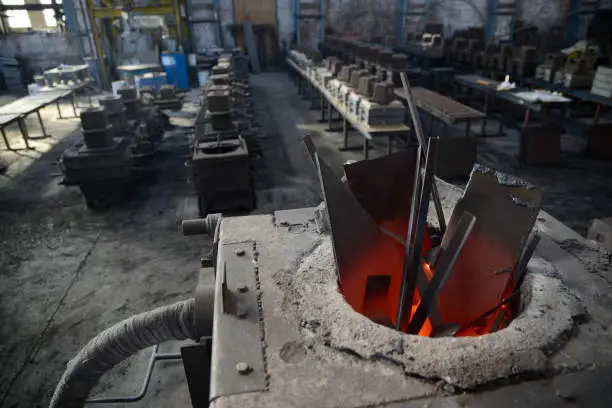
To prepare metal, you need to keep the temperature just right and be very clean. Based on the number size and type of metal, foundries use electric resistance furnaces, induction crucibles, or gas-fired units to melt jewelry alloys. To make sure that silver and bronze are completely fluid, they are usually heated 50 to 100°C above their liquidus temperature. Gold alloys, on the other hand, need more strict control to keep the zinc components from vaporizing.
When you degas something, you get rid of the released hydrogen that would otherwise make holes when it solidifies. There are different types of foundries. Some add chemical fluxes that bind with oxides and gas molecules, while others bubble harmless gases like argon through the melt. After the metal is cleaned, the dross on the surface is skimmed off, and it is slowly put into the mold's sprue hole. Too slow of a pouring speed can cause the liquid to freeze too soon, and too fast of a speed can cause turbulence and air to get trapped.
Cooling, Shakeout, and Finishing
Solidification times depend on how thick the casting is and what traits the metal has. Thin pieces of jewelry freeze in minutes, but heavy pieces may need 30 to 60 minutes to fully harden. Foundries keep an eye on cooling rates to control the microstructure. Fast cooling creates smaller grain structures that have better mechanical properties, but too fast of a speed can cause weak alloys to crack.
Once the sand mold has cooled below critical temps, it is broken by shaking it or taking it off by hand. This is called "shakeout." The casting comes out of the mold still connected to its gate system, which is taken off with shears or cut-off saws. Tumbling in gritty media, sandblasting, or chemical cleaning treatments get rid of any sand that is still stuck to the casting surface.
The rough casting is turned into a jewelry piece that is ready to sell by finishing it. CNC machining makes sure that the matching surfaces are perfectly flat and within the required dimensions. Manual grinding, on the other hand, gets rid of parting line remains and gate stubs. From 120-grit rough shape to 8000-grit mirror finishes, polishing goes through progressively smaller abrasives, and buffing with rouge compounds is the last step. Before they are packaged, some patterns get extra steps like oxidation, finishing, or stone setting.
Conclusion
Sand casting is still used to make jewelry because it solves real business problems that procurement professionals face every day, like how to balance the need for customization with limited budgets, how to respond quickly to changes in the market, and how to keep quality high while producing different amounts of jewelry. The method blends hundreds of years-old foundry techniques with modern materials science and digital tools to make parts that meet current jewelry standards while still being affordable. Understanding the technical details, like choosing the right sand and binder chemistry, as well as gating design and preventing defects, helps sourcing teams closely evaluate suppliers' skills and build relationships that will help the product succeed in the long run.
FAQ
What tolerances can sand casting achieve for jewellery components?
Dimensional limits for sand casting are usually in the ISO 8062 CT10–CT13 range, which means that most jewelry-scale parts are within ±0.8–2.0mm. Because they are more hard, resin-bonded sand systems can make tolerances that are smaller than those possible with green sand. For critical measurements like ring shank widths or clasp contact surfaces, post-cast CNC machining is often needed to get the ±0.05mm accuracy needed for a good fit and function. Tolerance uniformity is also affected by pattern wear; metal patterns keep their dimensions longer than wooden ones across production runs.
How does sand casting compare to investment casting for jewellery?
The lost-wax process of investment casting makes better surface finishes and tighter standards right from the mold, so less work is needed to finish the parts. Ceramic shell systems for investment casting, on the other hand, are much more expensive than sand molds and take longer to process because they have to be built and dewaxed in multiple layers. When making less than 2,000 units or when plan changes happen a lot, sand casting becomes a good way to save money. A lot of jewelry makers use investment casting for their most popular items and save sand casting for limited-edition lines and one-of-a-kind jobs.
Can sand casting produce hollow jewellery pieces?
Sand cores, which are different sand shapes that are put inside the mold cavity before it is closed, make it possible to make hollow parts. As the liquid metal moves around the core, it solidifies and makes holes inside. To remove the core after casting, the design must have enough holes for the sand to be able to escape. Depending on how easily the core can be collapsed and removed, complex hollow shapes with limited access may be hard to work with or even impossible. During the quote process, foundry engineers check the design's viability and may suggest changes to allow core extraction.
Partner with Fudebao Technology for Precision Sand Casting Solutions
We at Zhejiang Fudebao Technology are ready to help you with your jewelry component needs with our precision finishing and sand casting services. We can make jewelry-quality castings with post-machining tolerances as small as ±0.05mm because our plant combines high-tech low-pressure casting tools with high-speed CNC machining centers. We are experts in making parts out of aluminum alloy, copper alloy, and brass that can be used for both decoration and practical jewelry hardware that needs to be reliable mechanically. We are a well-known sand casting company that supplies foreign names directly. Because of this, we know what quality standards and paperwork B2B procurement teams expect. Our full process covering, from design development to surface treatment, makes sure that there is only one person responsible for everything and that communication is streamlined. Please email hank.shen@fdbcasting.com to talk about your unique project needs, expected numbers, and quality standards. We'd love the chance to show you how our technical know-how and flexible production capacity can help you speed up the time it takes to develop your products while keeping the costs low enough to stay competitive in the market.
References
Campbell, John. "Complete Casting Handbook: Metal Casting Processes, Metallurgy, Techniques and Design." Butterworth-Heinemann, 2015.
Brown, John R. "Foseco Foundryman's Handbook: Facts, Figures and Formulae." Elsevier Science & Technology, 2000.
Beeley, Peter R. "Foundry Technology." Butterworth-Heinemann, 2001.
American Foundry Society. "Sand Casting Principles and Practices." Technical Publication Series, 2018.
Groover, Mikell P. "Fundamentals of Modern Manufacturing: Materials, Processes, and Systems." John Wiley & Sons, 2020.
Hurst, Steve. "Metal Casting: A Sand Casting Manual for the Small Foundry." Workshop Practice Series, 1996.



_1756361323684.webp "column guide sleeve")
_1756352625880.webp "plug stainless")
_1756352561845.webp "stainless steel blanking plug")
_1756352340434.webp "Aluminum chassis cover")
_1756346259673.webp "heavy duty hinges")
_1756346144394.webp "aluminum die casting hinge")