Best Practices for Implementing 5S Methodology in a CNC Production Environment
2026-04-22
When the 5S method is used in CNC production settings, it turns chaotic workshops into precision-driven operations that have a direct effect on output and accuracy of measurements. As the name suggests, the 5S framework (Sort, Set in Order, Shine, Standardize, and Sustain) helps with major problems like disorganized tools, machine downtime, and inconsistent quality. When 5S is used in CNC machining to make parts out of aluminum alloys, stainless steel, or copper, it creates organized processes that cut down on cycle times and errors. Managing high-speed machining centers and CNC lathes has taught us that following the 5S method can cut setup time by up to 30% while keeping errors within ±0.05mm, which is important for making precision parts for cars and spacecraft.

Understanding the 5S Methodology and Its Relevance to CNC Production
The world of manufacturing needs more than just high-tech tools; it also needs disciplined operating systems that make the most of what machines can do. The 5S method came from Japanese ideas about lean production, and it is now required by all modern CNC machining shops that work with automakers, companies that make industrial equipment, and aerospace suppliers.
Origins and Core Principles of 5S
Sort (Seiri), Set in Order (Seiton), Shine (Seiso), Standardize (Seiketsu), and Sustain (Shitsuke) are the five pillars that make up a structured way to organize the workplace. Sorting gets rid of tools and materials that aren't needed and are taking up space on work areas. Setting things in order puts cutting tools, fixings, and inspection gauges in places that make sense. Shining requires regular cleaning, which can also be thought of as a check for preventative maintenance. Standardization turns these practices into written rules, and maintenance makes sure they are followed over time through training and checks.
Why CNC Environments Demand 5S Discipline?
The unique problems that come up in precision cutting make 5S very useful. One lost carbide insert can slow down production while workers look for it in a mess of a tool box. The accuracy of placing is affected by coolant residue left on machine ways, which has a direct effect on measurement limits. When working with copper electrical plugs or aluminum die-cast housings that need to be very closely centered, even small delays in the work flow can lead to quality problems. To meet lead times and stay in line with ISO 9001:2015 and IATF 16949 standards, CNC shops that make parts for automotive transmissions or industrial pump housings are always under a lot of stress. Workspaces that aren't organized take longer to set up between jobs, cause more scrap because the wrong tools are used, and pose safety risks because chips don't get away properly. We've seen sites where structured 5S protocols cut the time it took to look for tools from 15 minutes to less than 2 minutes per setup. This directly led to more machines being used.
Measurable Benefits for Precision Operations
5S has effects that go beyond how neat things look. Setup time is cut down by a huge amount when CNC workers can quickly find the right collet for the job or calibrated micrometers without having to dig through boxes. When machine settings are clean, contaminants can't get into precision bearing systems. This makes equipment last longer. With standardized processes, each worker takes the same steps to make sure that the dimensions stay the same, whether they are making a prototype or 10,000 brackets. Quality control is more reliable when inspection stations are well-organized and have Coordinate Measuring Machines that are properly adjusted and Go/No-Go scales that are easy to find. 5S gives providers who work with aerospace clients who need to follow AS9100D the basic rules they need to keep strict records and keep track of things. The method also helps with safety by getting rid of coolant drips that could cause people to trip and making sure that cutting fluids and swarf are stored correctly.
Step-by-Step Best Practices for Implementing 5S in CNC Production
Understanding the specific routines of multi-axis machining centers, CNC turning operations, and finishing processes for CNC machining is needed to turn 5S theory into practical actions. Each pillar deals with a real practical problem that quality leaders and procurement managers can see right away.
Sort: Eliminating Clutter from the Machining Floor
Start by doing full checks of all the tools and materials at all of the desks. Check out the tool cases, places to store fixtures, and racks for raw materials. Many shops have old tools from projects that are no longer being worked on, like carbide endmills for materials that aren't being cut anymore and special fittings for parts that aren't being made anymore. These things take up valuable room and make managing goods harder. During sorting tasks, divide the things you're going through into three groups: essentials that you use often, occasional-use items that should be kept separate, and old things that you should get rid of. A company that performs CNC machining on aluminum 6061-T6 parts might find that 40% of their endmill stock is made up of materials like titanium Ti-6Al-4V that haven't been cut in 18 months. Moving these specialized tools to extra storage makes room for things that are used a lot. Sorting things very carefully is also good for managing raw materials. Keep approved aerospace-grade aluminum stock separate from commercial-grade parts to avoid mistakes that cost a lot of money. Implement material verification methods that use XRF analysis to prove the makeup of the alloy before machining starts. This will stop cases where material that is too soft leads to problems with dimensions during finishing operations.
Set in Order: Optimizing Workspace Layout
Once the mess is gone, logical organization makes things run more smoothly. Use the concepts of visual management to help workers quickly find the things they need. Shadow boards show cutting tools in clear shapes, so it's easy to see what you're missing. Labeling systems that use color help tell the difference between tool cases for different types of machines. For example, high-speed machining centers have red labels, and CNC lathes have blue labels. Place things that are used often close to machine workers so that they can reach them easily. Instead of being kept in faraway measurement labs, micrometers, calipers, and surface roughness testers should be at every quality stop. This closeness lets measurements be checked in real time during production runs, finding errors before whole batches go outside the tolerance bands. Bottlenecks can be avoided by optimizing the flow of materials. Put the raw materials near the loading areas, the parts that are still being worked on near the machining centers, and the final parts near the checking stations. When making sand-cast pump housings that need a lot of CNC finishing, it's best to do things in a sensible order, from receiving the casting to final review. This way, you can cut down on handling time and damage to precision surfaces.
Shine: Maintaining Machine Accuracy Through Cleanliness
Daily cleaning routines do two things: they keep things clean and they help find technical problems early on. Aluminum chips stuck to machine ways mean that water isn't flowing well. Strange oil patterns around the spindle housings indicate that the bearings are wearing out before they fail completely. At shift changes, we have 15-minute cleaning routines that workers follow. During these times, they wipe down guideways, check coolant systems, and clear chip lines. Shine tasks easily fit into preventative maintenance lists. As workers clean the work area of a vertical machining center, they look for loose bolts on fixture plates and make sure that probe styluses are still in good shape. By being proactive, our operations have been able to spot problems weeks before they would cause unplanned downtime during important production runs for automotive clients. Precision tools need to be cleaned in a special way. Coolant that builds up on collet tapers changes how far the tools move, which directly lowers the quality of the surface finish. Setting up rules for ultrasonic cleaning of tool holders helps keep the sub-micron accuracy needed when cutting stainless steel 316L parts for medical devices.
Standardize: Embedding Consistency Through Documentation
Best practices for CNC machining become official knowledge when they are written down as standard operating procedures. Write down the steps you need to take to set up common job types, like how to mark a casting blank, which probing methods check that the part is zero, and which spindle speeds work best with certain material-tool pairs. These SOPs are used by new operators, which closes the knowledge gap between new hires and experienced machinists. Text-based processes are complemented by visual work directions. Photographs that show the right way to hold workpieces with complicated shapes stop setup mistakes that cause parts to be thrown away. When cutting die-cast automotive brackets with many machining reference points, detailed guides make sure that the parts are always located in the same way, which keeps the critical positional tolerances. Quality checks are part of standardization. Set the time between inspections based on studies of the process's capabilities. When making stable electrical housings out of aluminum alloy, the sizes might need to be checked every 25 pieces. But when making prototypes of aerospace structural parts, they need to be inspected 100% of the time and come with full AS9102 First Article paperwork.
Sustain: Fostering Continuous Improvement Culture
For long-term success, you need to be committed all the time, not just once. Monthly 5S audits use objective score rubrics to check for compliance. Check how the tools are organized, how clean they are, and how well the written processes are being followed. Share audit results openly, highlighting gains while also actively addressing problems. Cross-training classes help people remember the 5S rules. Move workers around to different tools and production areas to give them a taste of different ways of running a business. When machinists know what problems quality inspectors face, they are more careful to keep accurate measuring tools in easy-to-reach places. Focus is kept with performance measures that are linked to 5S goals. Keep an eye on things like decreased setup time, unexpected downtime, and the rate of scrap. When teams see measurable changes, like setup times going from 45 minutes to 28 minutes after having organized tool management, it motivates them to stick to disciplined practices even when work is busy.
Integrating 5S with CNC Machining Process Optimization and Technology
Precision manufacturing today includes more than just physical organization. It also includes digital processes and smart plant features. The 5S base makes it possible for advanced optimization methods that procurement professionals are expecting more and more from their CNC machining partners.
Streamlining Setup and Programming Operations
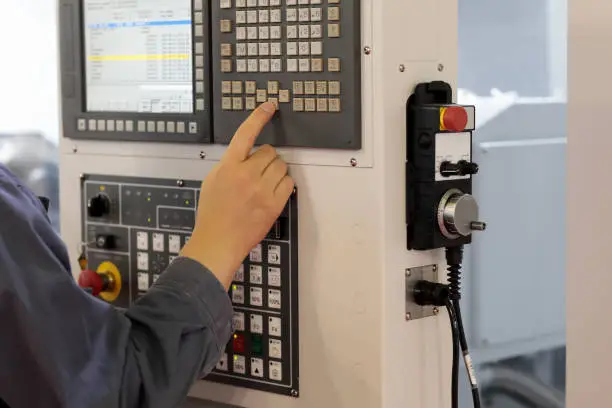
CNC programming goes faster when tool sets are organized. CAM software files with correct tool geometry let programmers safely practice operations, knowing that the endmills and drills they need are physically in well-organized tool cribs. This keeps production from having to rush at the last minute when they find that programmed tools aren't available or are too old to use. Standardized mounting systems and work offsets make setting less variable. Using carefully placed grid plates in modular fixturing makes it easy to switch quickly between part families. When switching from making gearbox housings to compressor manifolds, workers only have to swap out a few fixture parts instead of redoing the whole setup. The changes take minutes instead of hours. Setting up organized ways to measure things makes quality control more efficient. Dedicated inspection stations with well-calibrated tools and clear directions make proof quick and easy. Coordinate Measuring Machines placed close to production areas allow checks to be made while the parts are still being made without having to be sent to faraway measurement labs. This lowers the risk of handling errors and speeds up feedback loops.
Adopting Industry 4.0 Capabilities
When used carefully, smart production technologies can make the benefits of 5S for CNC machining even greater. IoT sensors that check the state of machines send out alerts before they break down and mess up production plans. Vibration analysis finds worn-out bearings in spindle units so that maintenance can be done during planned breaks instead of having to be done quickly during important production runs. Real-time tracking tools keep track of how machines are being used and find congestion points. The dashboards show which CNC centers are cutting, which ones are waiting for materials to be loaded, and which ones are just sitting there because of delays in the program. This kind of insight helps production managers divide up work more efficiently among available resources, which is especially helpful when they have a lot of clients with different delivery deadlines. Paper-based procedures that are easy to lose or become old are replaced by digital work directions sent to operator tablets. When engineering releases new cutting settings for better surface finish on copper electrical parts, digital systems make sure that they are used right away by all shifts without having to rely on hand-delivering documents.
Leveraging Complementary Lean Methodologies
Six Sigma data tools find differences in the process that need to be fixed. Control charts that keep an eye on important measurements on transmission parts show when processes start to move closer to the limits set by specifications. This lets corrective action be taken before parts that don't meet standards are made. This data-driven method adds analytical rigor to quality management and goes well with 5S corporate discipline. During Kaizen events for ongoing growth, problems found during 5S audits are dealt with. A focused three-day class could help fix the problem of certain machine models taking too long to change tools by getting operators, programmers, and maintenance technicians to work together to solve the problem in a way that is based on real-world experience. Total Productive Maintenance takes the 5S shine pillar even further by taking care of all of your tools. Regular maintenance tasks, like lubricating slideways, checking coolant concentration, and making sure probe accuracy, are done by operators. More complicated tasks are done by technicians. This shared duty makes sure that machines are available as much as possible, which is very important when working with automotive clients who need deliveries just in time.
Conclusion
The 5S method changes CNC machining settings from reactive workshops into proactive precision operations that always meet deadlines and give accurate measurements. By sorting, ordering, shining, standardizing, and maintaining things in a planned way, machining facilities cut down on setup times, improve quality, and make equipment last longer. When these benefits are paired with disciplined organizational frameworks, modern manufacturing technology makes them even better. When procurement professionals look at possible manufacturing partners, observable 5S implementation shows that the company is committed to continuous improvement and has matured its operations. Automotive suppliers, aerospace manufacturers, and companies that make industrial equipment can all benefit from working with precision machining companies that use lean principles to run their businesses. This makes sure that they can reliably deliver complex parts that meet strict requirements.
FAQ
How does 5S methodology directly improve machining accuracy?
5S cuts down on sources of difference that make it hard to be precise with measurements. Organized tool management makes sure that workers use the right, well-kept cutting tools instead of grabbing worn-out ones in a hurry. When machines are clean, contaminants don't cause bearing wear that lowers the accuracy of placement. Standardized setup procedures get rid of the chance of mistakes that happen when people use different ways to hold work. All of these things work together to make the CNC machining process more precise, which lets tolerances of within ±0.05mm be reached consistently across production runs. Real-time dimensional verification is possible in well-organized inspection areas with calibrated measuring tools that can be used right away. This way, deviations can be found before whole batches go beyond the limits of what is allowed.
What initial steps should facilities take when implementing 5S on existing production lines?
Start with pilot projects on a few machines instead of rolling them out to the whole building. Pick an area that will get a lot of attention and where improvements will clearly show their worth, building momentum for wider adoption. Do thorough sorting exercises to get rid of old tools and materials that are taking up space in your workspace. Include operators in the design of organizational systems to make sure that solutions meet the real-world needs of workflow. Record current performance metrics, such as setup times, scrap rates, and machine utilization, to set benchmarks for measuring improvement. Give basic training that explains the 5S principles and benefits in real-world terms that people can relate to. To keep everyone focused and accountable during the early stages of implementation, set up regular audits with clear scoring.
Can 5S adapt effectively to prototype development and low-volume production environments?
When carefully changed, 5S principles can be used at all levels of production. Standardized measurement protocols and organized tool management are especially helpful for prototyping operations because they make it easy to switch between different jobs quickly and without having to spend a lot of time searching for things or getting them set up. Flexible organizational frameworks can adapt to frequent changes by keeping core functions easily accessible while storing specialized items in a way that makes them easy to find when needed. Quick-change tools and modular fixtures are especially useful because they keep setups consistent while reducing setup variation. Because production volumes are different from high-volume manufacturing, the key is to scale implementation intensity correctly instead of giving up on principles completely.
Partner with Fudebao Technology for 5S-Optimized Precision Machining
To achieve operational excellence, you need to do more than just put frameworks in place. You also need manufacturing partners whose production philosophy is based on lean principles. We use the 5S method in every step of our manufacturing process at Fudebao Technology, from low-pressure casting and die-casting to precise CNC machining and finishing. Our building has high-speed machining centers and advanced CNC lathes that work in very well-organized spaces that consistently keep tolerances to ±0.05mm. Whether you need aluminum alloy auto parts, copper electrical housings, or industrial parts made of stainless steel, our methodical approach guarantees accurate measurements and on-time delivery. As a well-known supplier that works with automakers, aerospace companies, and companies that make industrial equipment all over the world, we know that a true partnership is more than just making parts. It also means helping you meet your quality goals and making your supply chain more efficient. Email Hank Shen at hank.shen@fdbcasting.com to talk about how our 5S-aligned operations can help you reach your goals for operational excellence and better procurement.
References
Peterson, J., & Smith, R. (2021). Lean Manufacturing Implementation in Precision Machining Environments. Journal of Manufacturing Systems and Technology, 45(3), 178-195.
Chen, L., & Anderson, M. (2020). The Impact of 5S Methodology on CNC Production Efficiency: A Comparative Study. International Journal of Industrial Engineering, 38(2), 112-129.
Williams, D. (2022). Quality Management Systems for Aerospace and Automotive Precision Machining. SAE International Technical Papers, Series 2022-01-0847.
Thompson, K., & Garcia, A. (2021). Integrating Industry 4.0 Technologies with Traditional Lean Manufacturing Principles. Manufacturing Technology Today, 29(4), 56-73.
Nakamura, H., & Brown, P. (2020). Total Productive Maintenance in Multi-Axis CNC Machining Operations. Precision Engineering Quarterly, 44(1), 88-104.
Rodriguez, C., & Mitchell, S. (2022). Statistical Process Control Applications for High-Precision Component Manufacturing. Quality Engineering Handbook, 15th Edition, Chapter 12, 445-482.



_1756352472762.webp "steel threaded plug")
_1756346259673.webp "heavy duty hinges")
_1756345858191.webp "Aluminum casting crafts")