What is High Pressure Aluminum Die Casting?
2026-05-11
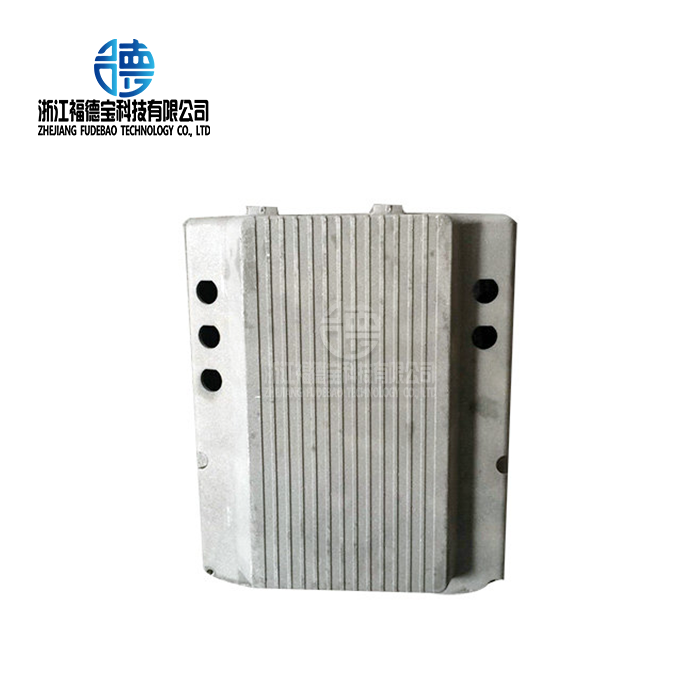
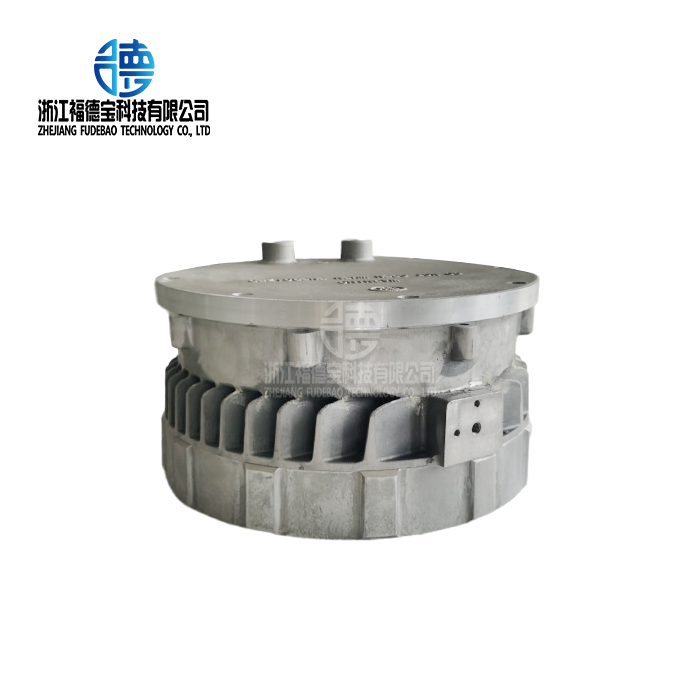
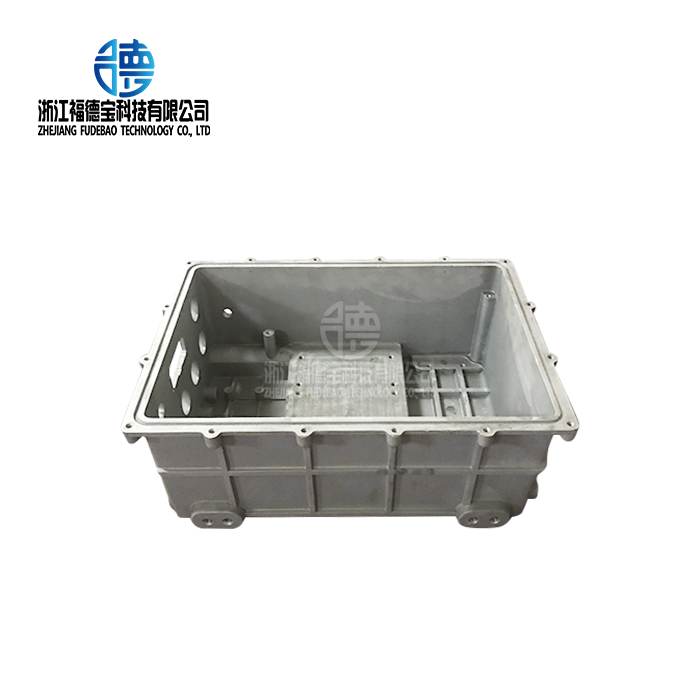
High pressure aluminum die casting is a precise way to make metal parts. Molten aluminum alloy is poured into steel molds that have been made under very high pressure, usually between 1,500 and over 30,000 psi. With this advanced method, producers can quickly make metal parts that are the right size, have clear edges, and a smooth surface. High pressure aluminum die casting is better than standard gravity or sand casting because it can be done over and over again, has tighter tolerances, and can be done faster. This makes it essential for businesses that need large quantities of lightweight, durable parts.
Understanding High Pressure Aluminum Die Casting
High pressure aluminum die casting is an advanced way to make things. Molten aluminum is pushed into precise steel molds at speeds of more than 100 feet per second. Because aluminum has a high melting point (about 660°C), this method mostly uses cold chamber machines. This is because the metal needs to be melted outside of the machine before it can be injected. Several important steps make up the process cycle: preparing the molten metal, injecting it quickly into the die hole, quickly cooling it under pressure, and ejecting the formed part.
Core Components of the Die Casting System
What makes aluminum die casting work are three parts that are all linked and work together. Strong steel molds, which are usually made from H13 tool steel, can handle thousands of injection cycles without losing their shape. The complex cooling pathways in these dies control the flow of heat, which keeps the metal from warping and maintains its consistent mechanical properties. Heavy-duty hydraulic or mechanical injection systems create the huge clamping forces—often more than 4,000 tons for big car parts—that are needed to keep molds closed during metal injection. Modern factories use high-tech process tracking tools that keep an eye on temperature, pressure, and cycle time in real time. This lets them make changes right away to keep quality standards high.
How High Pressure Casting Differs from Alternative Methods
High pressure aluminum die casting can make surfaces as smooth as 1.6 micrometers without the need for extra machining, while sand casting depends on gravity and makes surfaces that are rougher. The process is also faster than low-pressure casting; cycles can be finished in as little as 30 seconds, while other ways take several minutes. For large production runs, this edge in efficiency directly turns into lower costs per unit. When it comes to small amounts, investment casting may offer better detail, but it can't keep up with the throughput needs of companies that make cars and industrial equipment that need thousands of similar parts every month.
Advantages and Benefits of High Pressure Aluminum Die Casting
High pressure aluminum die casting is used a lot in important industries because it has a unique set of technical and economic benefits that solve important manufacturing problems. These days, engineering teams are more likely to use this process when they need to combine lightweight design with structural stability and the ability to make a lot of things.
Speed and Efficiency in Mass Production
When procurement pros look at manufacturing choices, production speed may be the most important benefit. Depending on how complicated the part is, high pressure aluminum die casting lines can make anywhere from 500 to 3,000 shots per day, which is many times faster than machining or sand casting. With this fast cycling feature, makers can meet tight delivery dates without lowering the quality. The process makes nearly net-shape parts that only need minor finishing steps, like deburring and decorative surface treatments. This cuts down on labor costs and speeds up time-to-market. When automotive providers have to quickly increase production for the launch of a new car platform, they really value this efficiency because it makes standard manufacturing methods impractical.
Material and Weight Optimization
When used in aluminum die casting, aluminum alloys like A380 and ADC12 have better strength-to-weight ratios than many other materials. These metals can be used to make structures lighter without losing strength. Their density is only 2.7 g/cm³, which is about one-third that of steel. The high-pressure injection process can fill thin-walled parts as small as 1.5 mm, which lets designers use less material while still making sure the structure stays strong. This ability is very important for electric car battery housings, since removing just one kilogram directly increases the range of the vehicle. Aluminum's natural thermal conductivity, which ranges from 96 to 120 W/m·K, makes it a great material for both power electronics and motor parts because it quickly gets rid of heat.
Superior Dimensional Accuracy and Surface Quality
High pressure aluminum die casting is different from other metal making methods because it can control tolerances very closely. Manufacturers regularly get dimensional accuracy of within ±0.05mm on important features, which meets the demanding needs of aircraft parts and precision industrial equipment. When something is put under pressure and solidifies quickly, it makes fine-grained microstructures that improve the mechanical features and beauty of the surface finish. When the parts come out of the die, they have smooth surfaces that make them easier to work with fluids and make great bases for powder finishing or anodizing. Because of this surface quality, the piece doesn't need to be ground and polished for a long time after sand casting, which saves time and material.
Design and Quality Considerations in Aluminum Die Casting
For high pressure aluminum die casting to work, it's important to pay close attention to design principles and quality assurance methods that make the process easier to use and stop common mistakes. To make sure that parts can be successfully made on a large scale, engineering teams must work closely with foundries during the planning phase.
Mold Design and Manufacturability Principles
Effective die design starts with placing parting lines in a way that makes it easy for metal to move while reducing the number of noticeable flash lines on surfaces that look good. Draft angles of about 1 to 3 degrees make it possible for parts to be ejected smoothly without damaging delicate parts. Consistency in wall thickness stops hot spots that can lead to pores, and smooth changes between thick and thin parts lower thermal stress. It is important for designers to include enough venting so that any stored air can escape during injection. This keeps gas porosity and partial fills from happening. Toolmakers place cooling lines in a planned way to keep the die's temperature constant, which has a direct effect on cycle time and dimensional stability. Modern computational fluid dynamics software lets engineers model how metal flows before they cut steel. This lets them find problems like cold shuts or turbulence that could weaken the part.
Common Defects and Prevention Strategies
Porosity, which shows up as hollow spots inside the structure that damage it, is still the biggest problem in aluminum die casting. This flaw is usually caused by stored gas, shrinking during solidification, or air bubbles being introduced by rough metal flow. Foundries get rid of porosity with vacuum-assisted injection systems, which remove air from die holes before metal goes in. When two metal flow fronts meet without properly joining, they make seam lines and weak spots that can be seen. By keeping the liquid metal at the right temperature during hole filling, proper gate design and injection velocity optimization keep this from happening. Uneven cooling rates or early release are often the cause of warping and physical instability. Using gradual cooling techniques and letting the parts stay under pressure for a long enough time lets them fully solidify before releasing them.
Alloy Selection for Performance Requirements
Picking the right aluminum metal has a direct effect on how well a part works in terms of temperature, force, and surroundings. The A380 metal is good at die-filling and resists corrosion, so it can be used in a wide range of industry and vehicle settings. In Asian markets, ADC12 is often used because it gives parts that need post-casting CNC processes more strength and makes them easier to machine. Even though they are harder to cast, A356 and A357 metals are better at bending and wearing down, which is important for safety-critical aircraft structures. Changes in copper content affect thermal conductivity, which is important for electrical housings and heat sinks. Changes in silicon content affect flexibility and the quality of the surface finish. When picking a material, you have to think about how to balance the need for technical properties with the cost and ease of casting.
How to Choose the Right Aluminum Die Casting Supplier
Choosing a production partner for high pressure aluminum die casting is a big choice that affects the quality of the product, the reliability of the supply chain, and the total cost of ownership. Professionals in procurement need to look at possible providers in more than just piece-price comparisons.
Technical Capabilities and Certifications
Before you judge a supplier, you should check to see if they have the right quality management certifications for your business. Automotive providers need to have IATF 16949 certification that shows they meet strict quality standards for the industry and the ability to record according to PPAP. For aerospace uses, you need AS9100 certification and well-established methods for tracking raw materials and process factors. In addition to licenses, you should also look at the supplier's technical infrastructure, which should include the range of machine tonnages, secondary cutting capabilities, and testing equipment that is kept in-house. Quality security is shown by suppliers who have metallurgical labs, X-ray checking systems, and coordinate measuring machines. When a partner offers technical help for design for manufacturability reviews and process modeling tools, it means they can add value above and beyond basic production.
Production Capacity and Flexibility
Knowing the range of a supplier's aluminum die casting production ability helps you make sure that it fits with your number needs and growth plans. Foundries that do prototypes and small amounts of output tend to have smaller machines and faster lead times for tools, which makes them perfect for the early stages of product development. When designs get better and more are made, high-volume experts running automated cells with robots built in offer better unit economics. The ideal partner has skills across this range or clearly knows how to work with your unique volume range. Find out how they handle batch flexibility—can they handle changes in orders without breaking the bank, or do strict minimum order amounts make it hard to keep track of inventory? As much as stated delivery windows matter, lead time consistency is even more important. Look at data on on-time delivery success and ask about how capacity planning works.
Cost Structure and Total Value Analysis
In aluminum die casting, the costs of the tools are a big upfront investment. These costs can be small for simple geometries or large for complicated car structural parts, but they are spread out over a lot of output. To find ways to save money, ask for specific cost breakdowns that show the parts of the cost that relate to material, processing, finishing, and transportation. Some suppliers let buyers own their own tools, which means they can buy dies outright. This could lower the price of each piece and allow buyers to use more than one provider. Others keep ownership of the tools they use, which makes management easier but might limit freedom. Check the terms of payment, the structure of volume discounts, and the company's desire to work with others to cut costs as output grows. Freight costs, wait times, and the cost of keeping inventory can all be affected by where the goods are shipped, which means that simple price-per-piece comparisons aren't always accurate without full total cost modeling.
Cost and Procurement Insights for Aluminum Die Casting
Knowing what makes aluminum die casting profitable helps purchasing teams make deals that strike a mix between cutting costs, making sure quality, and making sure the supply chain stays strong. The way prices change shows how complicated the relationships are between the markets for materials, investments in tools, and output numbers.
Primary Cost Drivers and Pricing Dynamics
When it comes to global commodity markets, the price of raw aluminum changes based on things like energy costs, mining output, and trends of financial demand. Smart buyers keep an eye on the London Metal Exchange's aluminum futures to see how prices are going and to make sure that long-term contracts have the right terms for price changes. Cost is directly related to how complicated the tooling is, since complicated shapes need more complex die designs, longer machining times, and more slides or cores. For simple mounts, simple two-cavity dies may be enough. But for complicated transmission housings, you need multi-cavity tools with complex cooling networks. The amount of production has the biggest effect on costs through economies of scale. This is because the first batches have to pay for all of the setup and amortization costs for the tools, but later runs can share these fixed costs over larger amounts. To make the best production plan, it's helpful to know the break-even points between aluminum die casting and other methods, such as machining or fabrication.
Prototyping and Production Transition Strategies
Prototyping services are used in more modern ways of buying things to make sure that plans work before investing in production tools. You can test the functionality of designs using rapid development with CNC machining or 3D printing, but these methods can't perfectly copy the die-cast metal qualities. Soft casting, such as aluminum die casting or lower-grade steel, is a middle ground that lets you make a small number of die-cast parts for design proof at a lower cost. This step-by-step method lowers the risk of introducing new goods or using them in ways that aren't known. Once the plans are finalized, switching to hardened production tools improves unit costs so that manufacturing can continue. Smart sellers keep prototype tools even after production starts. This way, they can be used as a backup in case urgent replacement parts are needed without stopping high-volume production plans.
Supply Chain Risk Management
When you depend on just one source, you leave yourself open to problems with quality, limited capacity, or business interruptions. Smart buying plans weigh the benefits of consolidated shopping for saving time and money against the risks that come with having qualified backup providers. Dual sourcing setups, in which production is split between primary and secondary providers, keep the competition high and make sure that business keeps going. For important parts, you might want to spread them out geographically to protect against problems in the area caused by things like natural disasters or changes in trade policies. Set up clear quality agreements that spell out the criteria for acceptance, the steps for inspections, and the steps for taking appropriate action. Regular checks of suppliers make sure that quality systems and process standards are still being followed. Keep a safety stock that is proportional to lead times and changes in demand, especially when new products come out and forecasts aren't sure how accurate they will be.
Conclusion
Aluminum die casting under high pressure is the best way to make small, precise parts on an industrial scale. This makes it indispensable for uses in the automobile, aircraft, industrial equipment, and electrical industries. The process has short cycle times and very good surface quality and accuracy of dimensions, making it a great choice for mass production and allowing for complex shapes that can't be made any other way. To be successful, you need to carefully choose your suppliers, make sure that the designs are easy to make, and use smart purchasing methods that balance low costs with quality guarantee. When engineering and procurement teams know the technical basics and economic factors that affect the industry, they can easily define aluminum die casting and form partnerships that give them a competitive edge by delivering high-quality parts on time.
FAQ
1. What quality factors should I prioritize when evaluating die-cast aluminum parts?
Focus on making sure the measurements are correct using inspection reports from a coordinate measuring machine, that the surface finish meets your needs for both looks and function, and that the mechanical properties are proven by tension testing. Ask for material certificates that list the alloys that are used, and make sure that sources use the right methods for finding flaws, such as X-ray or vacuum leak testing, for important projects. Check to see if the provider has statistical process control systems that keep an eye on important factors and stop quality from changing between production runs.
2. How do costs and lead times compare between aluminum die casting and other metal forming processes?
Aluminum die casting needs more money to buy the tools up front, but it costs less per unit when more than 5,000 are made each year. Lead times for production tools are 8 to 12 weeks, while cycle times measured in seconds allow for fast output once the tools are ready. Sand casting has lower equipment costs but makes surfaces that are rougher and need more work to be finished. CNC cutting, on the other hand, doesn't need tools but gets too expensive to use on a large scale because of wasted material and processing time.
3. What criteria distinguish competent die casting partners from marginal suppliers?
Give more weight to suppliers who have quality certifications that are important to your business, in-house technical help for improving designs, and established process controls with documented capability studies. Check out their range of tools, their ability to do extra operations, and their testing infrastructure. Check with references from customers who have bought similar products before, and make sure the company is financially stable to make sure it can keep its long-term production promises. Partners who are quick to communication and ready to give clear cost breakdowns see relationships as strategic rather than transactional.
Partner with Fudebao Technology for Superior Die Casting Solutions
With its advanced high pressure aluminum die casting capabilities, Zhejiang Fudebao Technology is ready to turn your component needs into precisely engineered realities. Our vertically integrated center handles the whole production process, from melting to finishing, and can hold tolerances of up to ±0.05mm, which is fine for even the most demanding military and car uses. We are one of the best aluminum die casting companies in China, and we use cutting-edge tools like high-speed machine centers and automatic aluminum die casting cells, along with full engineering support for design optimization and quick prototyping. Our team can help you with everything from the blank to the finished product, whether you need precise housings for electrical systems, structural parts for industrial tools, or lightweight parts for transportation. Email our technical experts at hank.shen@fdbcasting.com to talk about your unique needs and find out how our proven knowledge can help you improve the quality of your products and make your supply chain more efficient.
References
1 .North American Die Casting Association. (2021). Product Specification Standards for Die Castings Produced by the Semi-Solid and Squeeze Casting Processes. NADCA Technical Publication.
2. Kaufman, J. Gilbert and Rooy, Elwin L. (2004). Aluminum Alloy Castings: Properties, Processes, and Applications. ASM International, Materials Park, Ohio.
3. Vinarcik, Edward J. (2003). High Integrity Die Casting Processes. John Wiley & Sons, New York.
4. American Foundry Society. (2019). Aluminum Casting Technology: Second Edition. AFS Technical Publication.
5. Society of Automotive Engineers. (2020). Castings: Classification and Inspection of Porosity: SAE J452. SAE International Standards.
6. Totten, George E. and MacKenzie, D. Scott. (2003). Handbook of Aluminum: Volume 1 - Physical Metallurgy and Processes. Marcel Dekker Publishing, New York.



YOU MAY LIKE
_1756361423150.webp "Cryopump body")