What Is CNC Machining? The Complete Basics to Get Started
2026-05-13
As the name suggests, CNC machining is a type of subtractive making that uses computers to turn raw materials into precise parts. Unlike traditional methods that are done by hand, this technology uses software that has already been designed to guide cutting tools very precisely. The process takes away stuff from solid blocks of aluminum, steel, titanium, or industrial plastics, making parts with accuracy of ±0.005mm. This automatic method gets rid of the differences that people make, makes it possible to make complicated shapes that would not be possible with casting, and can be used for anything from a single sample to thousands of identical parts that are always the same.
Understanding CNC Machining: Core Concepts and Process
How CNC Technology Transforms Manufacturing Operations
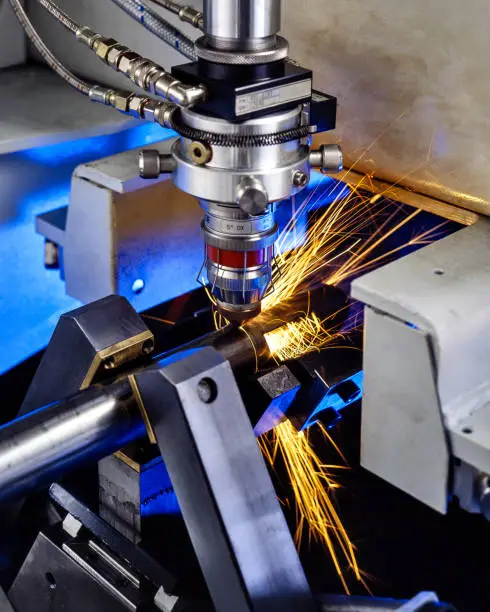
Computer Numerical Control changes the way we make mechanical parts by getting rid of the guessing and lack of stability that come with manual machining. G-code writing turns CAD plans into precise machine movements, which is how the system works. In normal 3-axis equipment, each axis (X, Y, and Z) moves in exact dimensions, putting cutting tools in the right place to remove material layer by layer. When you add movement to a multi-axis machine, you can make complex shapes without having to move the material.
Core Equipment Types and Their Functions
Milling centers are the most common way to make flat areas, slots, and complicated shapes. Cutters that move across fixed workpieces are used in these machines. Lathes are used for turning. The material spins while fixed tools make cylinder-shaped parts like shafts and holes. Larger pieces and softer materials are handled by routing tools. Each type of machine solves a different problem in manufacturing, and in modern facilities, different types of machines are often put together in the same work area.
Material Selection and Its Impact on Outcomes
Material choice has a big impact on cutting parameters, tool life, cycle times, and the performance of the end part. Aluminum alloys, such as 6061-T6 and 7075-T6, are commonly used in aircraft structures and car housings because they are easy to machine and have a high strength-to-weight ratio. Copper metals are better at conducting electricity than other materials used in power tools. Stainless steel types are needed for medical equipment because they don't rust. In turbine uses, superalloys like Inconel 718 can handle high temperatures, but they need special tools and slower feed rates. Engineering plastics like PEEK are used in places where chemical protection and light weight are very important.
It's impossible to say enough about how material hardness affects cutting factors in CNC machining. Softer materials let you cut at faster speeds, but they may leave burrs that need to be removed again. To keep tools from breaking, harder materials need carbide or hardened tools, slower speeds, and careful chip management.
Precision and Tolerance Standards That Matter
Dimensional precision is what sets good parts apart from great ones. Standard deviations are usually within ISO 2768-medium (±0.5mm for features less than 400mm), which is good for most setups. For precise tasks, ISO 2768-fine or special specs with a tolerance of ±0.01mm are needed. The geometric dimensions and tolerance rules of perpendicularity, cylindricity, and true position make sure that parts fit and work properly in systems. Transmission housings for cars need to have their bores perfectly aligned. Brackets used in aerospace must be proven to be flat. To keep germs from growing on medical implants, the surface needs to be smoother than Ra 0.8µm.
Managers of procurement have to weigh the need for patience against the costs that come with it. When standards are tightened beyond what is functionally necessary, it takes longer to machine, tools wear out faster, and more inspections are needed. Setting ±0.02mm when ±0.05mm is enough loses time and money without improving efficiency.
Advantages and Applications of CNC Machining for B2B Procurement
Superior Accuracy Drives Quality Outcomes
When you use computerized control, you can get consistency that you can't get when you do things by hand. Once set up and tested, a CNC machining center will always make the same parts, so there is no difference from batch to batch. This consistency is very important for automakers who need PPAP documents to show that the process can be done. Tier-1 sellers count on this stability to meet strict size requirements for engine parts and structural brackets that have to fit perfectly together when put together.
Speed and Flexibility in Production Volumes
Modern machine centers, including CNC machining, can easily switch between making prototypes and making things in medium to large quantities, without having to buy new expensive tools like casting or molding does. This gives industrial equipment makers more options when they want to make prototypes of things like pump housings or test gear designs before going ahead with full production. Quickly changing design versions cuts down on time-to-market, which gives companies in fast-moving industries a competitive edge. Automated tool changes can be used without anyone being there, so they can get the most use out of equipment across multiple shifts.
Cross-Industry Applications Demonstrate Versatility
Aerospace defense companies use Inconel superalloys to make turbine blades. This lets them get aerodynamic shapes and structures with no holes, which casting can't do without a lot of extra work. Medical device companies make orthopedic bone screws out of nontoxic titanium. They make sure the sides are smooth and free of burrs so that patients are safe and the screws can be sterilized. Before buying forging dies, automotive engineers make prototypes of lightweight transmission parts made from aluminum 7075-T6 to test their mechanical qualities and how well they dissipate heat. Electrical equipment makers use aluminum and copper metals to make motor housings and heat sinks that meet both conductivity requirements and exact size requirements.
Precision-machined parts are being used more and more in the green energy industry for things like solar tracking mechanisms and wind turbine gearboxes. Precision production is the only way to meet the needs of these uses, which call for resistance to corrosion, long life, and uniform performance under a wide range of loading circumstances.
Comparing CNC Machining with Alternative Manufacturing Technologies
When Precision Outweighs Speed Considerations
You can make any design you want and get a prototype quickly with additive manufacturing, but it has trouble with the features of materials and finishing the surface. Parts made from metal powders have linear grain structure and need a lot of work after they are printed to make the surfaces useful. Injection molding is great for making a lot of plastic parts, but it costs a lot and takes a long time to make the molds. Sand casting and die casting are good for big production runs, but they can have porosity problems and need to be machined again to get exact features.
CNC machining fills in these gaps by using production-grade materials to make samples that work. Engineers try parts in the real world to make sure that plans work before they are made in large quantities. This feature lowers the risk of development and speeds up the time it takes to get qualified.
Cost and Lead Time Trade-offs
Material waste is the most important thing to think about in CNC machining. When working with complex shapes, subtractive methods like CNC machining take away a lot of material as chips. Casting makes better use of materials, but it costs more up front to create patterns and make tools. Break-even point relies on the number of orders, the complexity of the part, and the tolerances that need to be met. When sales are small, CNC milling is best. If margins allow, investing in casting or molding may be worth it for high-volume production.
Lead times are very different. Prototypes made by machines get to you in days. It takes weeks to cast models. It takes months to make injection molds. When procurement teams look at these things, they have to compare them to project deadlines and price limits.
Surface Finish and Post-Processing Requirements
As-machined surfaces usually get to Ra 3.2µm with clear tool marks, which is good enough for structural parts. For sealing surfaces and cosmetic uses, Ra 1.6μm or smaller is needed, which can be reached by grinding or making more finishing passes. Anodizing aluminum adds an oxide coating of 5 to 50 microns, so precision holes need to be undersized to keep the end measurements. To get useful tolerances on casting surfaces, they often need a lot of machining, which cancels out the original material savings.
Procuring CNC Machining Services: What B2B Buyers Should Consider
Evaluating Supplier Capabilities and Certifications
Quality management methods show how reliable a company is. Getting ISO 9001 approval shows that you know how to control processes and keep records. Automotive providers need to be able to comply with IATF 16949 and submit PPAPs. For aerospace uses, you need AS9100 approval with advanced inspection procedures and full traceability. Medical device makers want to get ISO 13485 approval to make sure their products are biocompatible and can be sterilized.
Portfolios of equipment show how much can be made and what specialized skills are available. Cycle times for aluminum parts are cut down by high-speed cutting centers. With five-axis simultaneous cutting, you can make complicated shapes without having to set up multiple machines. Inspection tools, like CMMs, visual comparators, and surface profilometers, make sure that the dimensions and surface finish meet the requirements of CNC machining projects.
Communication and Technical Support
Respondent providers get involved in the planning process and find problems with how the product can be made using CNC machining before production starts. For Design for Manufacturing, feedback stops redesigns that cost a lot of money and delays in production. Clear pricing methods include information about the prices of materials, the time needed for CNC machining, the tools needed, and the steps needed for finishing. This lets you plan your budget accurately. Problem-solving and regular reports on the state of the project build trust and make sure that it is delivered on time.
Providing Complete Requirements for Accurate Quotes
GD&T callouts on detailed models clear up any confusion. Material criteria, such as grade, condition, and licensing needs, make sure that the right materials are sourced. It's important to be clear about the surface finish requirements, plating or coating standards, and testing criteria. Expected order quantities and arrival times help providers set the best prices and production schedules.

Best Practices and Design Tips for Efficient CNC Machining
Designing for Manufacturability Reduces Costs
Choosing the right material means finding a mix between performance needs and how the material can be machined. Standard metals are easier to work with and cost less than rare materials. Specifications for realistic tolerances stop needless accuracy that adds costs without adding value. Avoiding deep, narrow pockets and thin walls makes it less likely that a tool will bend or break. End mills with very small radiuses are needed for sharp internal corners because they break easily. It is more reliable to specify radius corners that match normal tool sizes.
Collaboration Between Design and Manufacturing Teams
Early participation of suppliers helps find ways to improve things, such as through CNC machining. As a way to cut down on setup time or machining time, manufacturing experts offer changes to features. Simulation software checks tool paths and finds places where they might collide with metal before cutting it. Prototyping checks designs in real life, showing problems that can't be seen from modeling alone. Iterative development based on feedback from prototypes makes ideas strong enough to go into production.
Strategic Supply Chain Integration
Long-term relationships with reliable providers guarantee steady quality and first-choice scheduling when capacity is limited. With volume agreements, you can get better prices and more committed resources. Regular performance reviews take care of problems before they happen, which is important for just-in-time production systems that need reliable delivery. Diversifying across multiple providers lowers the risk of problems with facilities or limited capacity.
We've become experts at making aluminum alloy, copper alloy, and stainless steel at Zhejiang Fudebao Technology, and we use our skills in car, industrial equipment, and aerospace industries. Low-pressure casting tools, die-casting equipment, high-speed machining centers, and CNC lathes are all part of our facility's full process, which starts with melting and ends with finishing the surface. This vertical integration makes it possible to get everything from raw casts to finished parts all in one place, with limits of just ±0.05mm throughout the CNC machining process.
Conclusion
CNC machining is an important way to make things for businesses that need accuracy, a wide range of materials, and the ability to change how they're made quickly. Procurement experts can make smart choices about where to buy things by understanding its basic rules, which include things like equipment types, material factors, and tolerance standards. Because the technology is accurate, can be used over and over, and can be turned around quickly, it can be used for both prototypes and medium-volume production in the medical, industrial, aircraft, and automobile fields. When you compare CNC to other technologies, you can see when subtractive manufacturing works best. Achieving success depends on choosing providers who are qualified and have the right certifications, tools, and ways of communicating. Costs can be kept low while quality is maintained by designing parts so they can be made. Even though manufacturing is always changing, CNC machining is still the best way to make parts that can't fail.
FAQ
1. What distinguishes 3-axis from 5-axis CNC machining?
Cutting tools on three-axis machines move along linear directions X, Y, and Z. These machines are good for making triangular parts with features on one or two sides. Five-axis tools lets you move around two directions and rotate, so you can get to five faces without having to move. This feature cuts down on setup time, improves accuracy by getting rid of the need to change fixtures, and makes it possible to make complicated shapes that weren't possible with limited axes. Five-axis CNC machining skills are needed for aerospace parts with compound curves and medical implants with organic shapes.
2. How does material hardness affect machining costs?
When cutting harder materials like stainless steels, titanium alloys, and superalloys, you need to go slower, use covered tools that are made for those materials, and change your tools more often. This lengthens the run time and costs more for consumables. Standard carbide tools can quickly cut through soft aluminum and brass, which cuts down on production time and costs. For steels that are harder than HRC 45, EDM or grinding may be needed instead of normal milling.
3. Can surface finishes be improved after machining?
Surfaces that have been machined usually reach Ra 3.2µm. For finer finishing, more work needs to be done. Ra 1.6μm is reached by making light passes with sharp tools. Ra 0.8μm or better is reached by grinding and polishing. Coatings, such as anodizing, add layers of protection but also make things bigger. Designers have to tell suppliers ahead of time what finishes they need so they can do the right work.
4. What documentation supports quality verification?
Dimensional inspection records from accurate CMMs show that the work is in line with the plans. Material approvals link the makeup of the alloy to records kept at the mill. Measurements of the surface finish match the Ra readings. For car uses, PPAP packages come with control plans, process flow maps, FMEAs, and statistical capability studies that show the process is stable.
Partner with Fudebao Technology for Precision CNC Machining Solutions
When it comes to complex B2B projects, Fudebao Technology offers a full range of CNC machining services. Our vertically integrated facility combines casting knowledge with advanced precise machining. It works with aircraft, car OEMs, and manufacturers of industrial equipment to meet their clients' high quality standards. We keep the accuracy of our aluminum, copper, and stainless steel parts within ±0.05mm by using American HAAS automatic machine tools and having the full range of process capabilities, from melting to finishing. Our engineering team works together from the planning stage to the delivery phase, whether you need test housings, production brackets, or complicated assemblies with full PPAP paperwork. Get in touch with hank.shen@fdbcasting.com to talk about your needs with a dependable and skilled CNC machining provider.
References
1. Kalpakjian, S., & Schmid, S. R. (2014). Manufacturing Engineering and Technology. Pearson Education Limited.
2. Groover, M. P. (2020). Fundamentals of Modern Manufacturing: Materials, Processes, and Systems. John Wiley & Sons.
3. Society of Manufacturing Engineers. (2018). Fundamentals of Tool Design. SME Media.
4. American Society of Mechanical Engineers. (2019). ASME Y14.5-2018: Dimensioning and Tolerancing Standards. ASME Press.
5. Boothroyd, G., Dewhurst, P., & Knight, W. A. (2011). Product Design for Manufacture and Assembly. CRC Press.
6. International Organization for Standardization. (2017). ISO 2768-1:1989 General Tolerances for Linear and Angular Dimensions. ISO Standards Catalogue.



YOU MAY LIKE
_1756352561845.webp "stainless steel blanking plug")
_1756349862928.webp "belts pulleys")
_1756348711711.webp "anti surge turbo housing")
_1756346570305.webp "Bracket aluminum casting")