



What Benefits Do Aluminum Die Casting Auto Parts Provide?
2026-07-22
Aluminum die casting auto parts deliver unmatched advantages in modern automotive manufacturing, combining lightweight structural integrity with precision engineering. This high-pressure process creates components like engine housings, transmission cases, and structural brackets that reduce vehicle weight by up to 40% compared to steel alternatives while maintaining exceptional strength-to-weight ratios. The method produces dimensionally accurate parts with tolerances as tight as ±0.05mm, eliminating extensive secondary machining and accelerating production cycles—a critical factor for OEMs managing just-in-time supply chains and demanding quality standards like PPAP documentation.
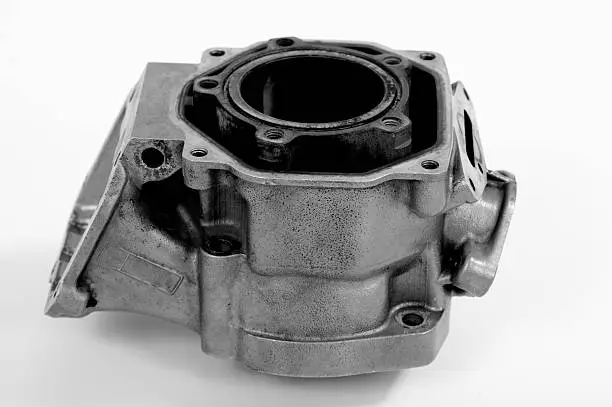
Understanding Aluminum Die Casting in Automotive Applications
A big change has happened in how auto parts are made with the aluminum die casting process. Pressures ranging from 1,500 to 30,000 psi force molten aluminum alloy into precisely engineered steel molds. This makes parts with clear edges and smooth surfaces that usually don't need much finishing work.
How the Process Works in Automotive Manufacturing
Mold making is the first step in the manufacturing process. Engineers make steel dies that can withstand thousands of production cycles. Once the die is ready, molten aluminum that has been heated to about 1,300°F is poured quickly and fills every hole. In seconds, complex shapes are formed. The hardened part is released after it has been quickly cooled down. It is then ready for any secondary operations that need to be done, such as CNC machining or surface treatments. Die casting is perfect for making a lot of car parts at once, where consistency is very important across millions of parts.
Common Aluminum Alloys and Their Automotive Applications
The A380 metal is the workhorse of automobile die casting. It is great for making engine parts and gearbox housings because it is fluid and doesn't let pressure build up. This metal has about 8.5% silicon in it, which makes it easier to cast and better at resisting rust. Because it has better mechanical qualities, A319 is used for things like cylinder heads and structural supports that need to be stronger when they are heated and cooled many times. Specific gravities for these metals are around 2.7 g/cm³, which means that parts made of them weigh about a third as much as parts made of steel but still do the same job.
Comparing Aluminum Die Casting to Alternative Methods
When it comes to car uses, die-cast aluminum parts are much lighter than steel fabrications while still being at least as strong. Although sand casting can make bigger parts, it doesn't get as good of a surface finish or accuracy in dimensions as die casting, and it usually takes 60–70% longer to machine the parts. Die casting magnesium makes things even lighter, but it costs more to make and is harder to keep from rusting. Aluminum's thermal conductivity (96 to 120 W/m·K) is higher than that of both steel and magnesium. This makes it a great material for removing heat from electric car battery housings and power electronics cases.
Core Benefits of Aluminum Die Casting Auto Parts
Aluminum die casting auto parts are a great example of a material that can solve a lot of problems at once, which is what modern automotive engineering needs. These parts are now necessary for building all kinds of vehicles, from those with internal combustion engines to those that are completely electric.
Superior Durability and Crashworthiness
When used in high-stress situations, die-cast aluminum parts show amazing resistance to wear. The natural oxide layer that forms on aluminum surfaces protects against corrosion. This means that parts last longer, even in tough working conditions with chemicals, road salt, and temperature changes. During crashes, aluminum parts absorb impact energy by deforming in a controlled way, which protects people inside the car. Die-cast structural brackets and chassis supports stay strong even when they are loaded and unloaded many times, meeting the strict standards for reliability set by car quality teams.
Lightweight Design for Fuel Efficiency and EV Range
The car industry has embraced aluminum die casting because every kilogram taken off of a vehicle makes it use less gas and put out less pollution. A normal aluminum engine block weighs 40–50% less than a cast iron block of the same size. This directly leads to better acceleration and stopping performance. In electric cars, where the weight of the battery is already a problem, lightweight die-cast parts increase the range by lowering the amount of energy needed to move the car. This edge in weight helps cars meet global CO2 pollution goals and Corporate Average Fuel Economy (CAFE) standards that are getting stricter.
Precision and Consistency in Mass Production
Die casting makes the dimensions stable, so there isn't much difference between production runs. In some geometries, wall thickness can be controlled down to 1.5 mm. This lets designers make the best use of materials without lowering the strength. This level of accuracy makes it easier to put things together because parts fit together correctly without having to be shimmied or adjusted as much as with less exact manufacturing methods. When properly maintained, a tool can last for more than 60,000 rounds. This ensures uniform quality over the tool's lifetime and lets you plan for long-term production costs.
Sustainability and Recyclability Advantages
The fact that aluminum can be recycled fits with the environmental goals of the car business. About 90% of the aluminum in old cars can be recovered and remelted, which takes only 5% of the energy needed to make aluminum from bauxite ore. A closed-loop manufacturing system is made possible by die casting facilities that can use recovered aluminum to make new parts without changing their mechanical features. Aluminum has a good lifetime review compared to other materials and processes because the die casting process itself uses little energy and the metal lasts a long time.
Procurement Insights for B2B Clients: Sourcing Aluminum Die Cast Auto Parts
To find the best manufacturing partner, you need to carefully look at their technical skills, quality systems, and how reliable their business is. Finding aluminum die casting auto parts can be hard for procurement teams to balance against cost goals, performance needs, and supply chain stability.
Evaluating Suppliers: Certifications and Capabilities
ISO 9001 certification is a basic level of quality management assurance, but automotive suppliers should also have IATF 16949 certification, which covers requirements unique to the industry, such as advanced planning for product quality and approval processes for production parts. Look for partners that can make molds in-house. This makes design changes easier and speeds up the time it takes to get a product on the market. Suppliers who have coordinate measuring machines (CMMs) and other high-tech inspection tools show that they are dedicated to checking dimensions and improving quality all the time. Measures of on-time delivery are important because automotive production lines can't handle supply interruptions. This means that supplier dependability is just as important as component quality.
Cost Comparison Framework: Die Casting vs. Alternatives
When it comes to cost, aluminum die casting auto parts provide significant advantages for medium- to high-volume automotive production. Depending on part complexity and design requirements, this manufacturing method usually becomes economically practical when production exceeds 5,000 units per year. The initial tooling investment for aluminum die casting auto parts can range from moderate to substantial depending on the size, geometry, and precision requirements of the component, but these upfront costs are quickly amortized across large production volumes. Compared with forged aluminum components, die casting can reduce grinding and secondary machining time by 40 to 60 percent because the near-net-shape process creates complex features that would otherwise require extensive CNC operations. Although plastic alternatives may offer lower unit costs, they cannot match the thermal conductivity, dimensional stability, and structural strength of aluminum, making aluminum die casting auto parts a preferred choice for engine components, underhood systems, transmission housings, and other automotive applications requiring lightweight performance and long-term durability.
Electric Vehicle Applications and Specialized Requirements
Aluminum die casting providers now have to meet new needs and take advantage of new possibilities as the production of electric vehicles grows quickly. Battery enclosures need to be able to conduct heat well so that they can handle the heat that is generated during charging and discharging cycles and protect the expensive battery cells inside. Motor housings need accurate mounting areas and the ability to block electromagnetic fields. Suppliers to the electric vehicle market need to know how to do thin-wall casting and may need to meet certain alloy standards for how well they carry electricity. When buying teams know about these specific needs, they can find partners who can help with both current internal combustion engines and future electric powertrains.
Addressing Common Challenges and Design Considerations
Even though aluminum die casting auto parts have some benefits, they need careful process control and design principles to get the best results. Early detection of possible problems during the development phase avoids costly changes and delays in production.
Managing Porosity and Quality Defects
The most common problem in die casting is still porosity, which can happen when air gets stuck during high-speed filling or when the metal shrinks when it hardens. By emptying the die cavity before metal is injected, vacuum-assisted die casting systems greatly improve internal soundness by preventing air from getting trapped. The design of the gates is very important. Gates that are placed correctly make sure that metal flows smoothly, with little noise and air getting stuck. When you apply intensification pressure during the solidification phase, it helps get rid of trapped gases and makes up for volumetric shrinking. This makes the parts denser and improves their mechanical properties. If you manage the die's temperature and make sure the injection parameters are just right, you can get rid of cold shuts, which happen when two metal flow fronts meet without properly joining.
Design Guidelines for Manufacturability
Uneven wall thickness causes different cooling rates that cause stresses and warping inside the wall. Engineers should try to keep wall thicknesses between 2.5 mm and 4 mm, going from one thickness to the next slowly to keep the metal flowing smoothly. Draft angles between 1 and 3 degrees make it easier to eject parts without damaging them and increase the life of the die. Ribs and bosses shouldn't be more than 60–70% of the thickness of the wall next to them so that there aren't any problems with shrinking in thick areas. For undercuts and complicated interior features, moving cores or three-plate mold designs may be needed. These add cost and complexity, but they should be justified by the need to meet functional requirements.
Collaboration Between OEMs and Suppliers
Getting suppliers involved early in the planning part pays off in a big way. Die casting experts with a lot of experience can spot possible problems with the process before the tools are even made, and they can suggest changes that make the casting easier without affecting how it works. When design and tooling development happen at the same time, which is called simultaneous engineering, overall program timelines are shortened. When choosing a material, everyone should work together and think about the mechanical needs, the casting properties, and the post-processing requirements. This way of working together builds trust and makes sure that professional skills are in line with program goals. This lowers the chance of having to make expensive changes during the ramp-up of production.
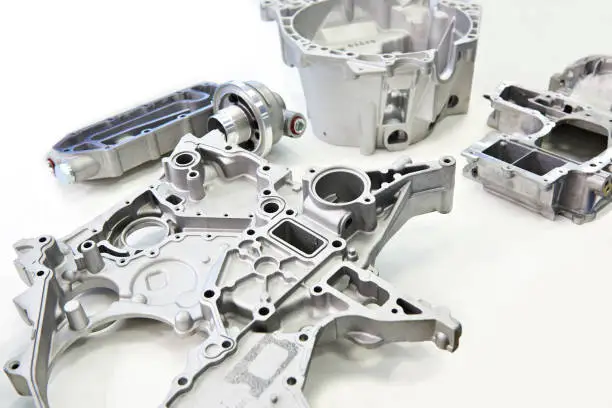
Why Leading Automotive Brands Prefer Aluminum Die Casting
Major automakers are using aluminum die casting auto parts because they have been shown to work well in real operations. These success stories show that there are real benefits that go beyond theorizing about them.
Real-World Applications and Performance Gains
Engine blocks are one of the most difficult things that die-cast aluminum has to do. Major automakers have switched from cast iron to aluminum, which has cut engine weight by 25–30 kg while keeping it durable for more than 150,000 miles. Aluminum is stiff and light, which makes it a good material for gearbox cases. Die casting makes it possible to integrate mounting bosses and fluid passages that would need to be machined in multiple steps for other materials. High-pressure die-cast aluminum is being used more and more in structural parts like shock towers and subframe members. This process makes complicated shapes with the best load paths that maximize strength while minimizing mass.
Weight Reduction and Efficiency Achievements
When compared to a regular steel building, a mid-size sedan that uses aluminum die-cast parts throughout its frame can lose 100 to 150 kg of weight. Under real-world driving situations, this weight loss means that the car uses about 0.4 to 0.6 L/100 km less fuel. In electric cars, this same weight loss increases range by 15 to 20 km per charge cycle, which is a big difference that affects people's choices to buy. Getting rid of extra weight improves acceleration and brake wear at the same time, which has benefits for the whole life of the vehicle.
Strategic Role in Vehicle Electrification
Large structure casts are changing the way electric vehicles are made. For example, some companies make the whole rear undercarriage out of a single die-cast piece. By doing things this way, hundreds of separate stampings and welds are not needed. This makes the structure stiffer while also making building easier and faster. Die casting makes it possible for designers to rethink how vehicles are built, making platforms that are better for battery packaging and crash performance. When suppliers learn how to use the special equipment needed for large-format die casting, they become important partners in the transition to electric vehicles.
Conclusion
Aluminum die casting auto parts have been useful in many important automotive applications. They reduce weight, which improves gas mileage and increases the range of electric vehicles while still meeting the high standards for durability and accuracy that modern vehicles need. The process makes it possible to make complicated shapes with tight tolerances. This lowers the cost of assembly and encourages new designs. Automobile companies are moving faster toward making cars electric and lighter, and die-cast aluminum parts will become more important to vehicle platforms. The environmental benefits of aluminum's ability to be recycled and its energy-efficient production are in line with environmental promises made by the business. When procurement teams know about these benefits and choose manufacturing partners that can deliver, their companies are better prepared to meet both current output needs and future technological challenges in the car industry, which is always changing.
FAQ
Why does aluminum die casting outperform sand casting in automotive applications?
Aluminum die casting auto parts work better than sand casting because they provide better surface finishes and more accurate measurements. Tolerances for die cast parts are usually ±0.1mm, while for sand cast parts they are ±0.5mm or larger. The high-pressure method makes microstructures that are denser and have better mechanical features. Sand casting works well for small batches and bigger parts, but it needs a lot of work to get the surfaces to work, which adds cost and lead time that makes it less cost-effective for large automotive parts.
How does aluminum die casting reduce environmental impact?
Because the parts are lighter, the car uses less fuel over its lifetime, which makes up for the energy used to make them. Recycling aluminum uses only 5% of the energy needed to make it in the first place, and die-cast parts made from recycled material keep all of their mechanical properties. As sprues and runners are remelted and used in other rounds, the die casting process itself doesn't make a lot of waste.
What should procurement teams prioritize when selecting a die casting supplier?
IATF 16949 certification shows that you know how to manage quality in the automotive industry, which is important for PPAP documentation and ongoing production control. Check to see if they have the right tools, testing tools (like CMMs), and the ability to handle the amount you need. Ask for case studies that show similar part complexity and material requirements. Check how responsive they are to contact and how willing they are to help with design optimization. Supplier teamwork has a big effect on the success of the program and how much it costs.
Partner with Fudebao Technology for Precision Aluminum Die Casting Auto Parts
Zhejiang Fudebao Technology Co., Ltd. has become a leading company in metal casting, providing global automakers with a wide range of services covering the entire production cycle. Our facility has high-tech die casting machines, high-speed CNC machining centers, and precise finishing tools that can achieve tolerances of 0.05mm, which is the exact level of accuracy needed for important automotive parts. As a company that makes aluminum die casting auto parts, we keep our ISO certification and help tier-1 suppliers and OEMs with all of their PPAP paperwork. Our streamlined process, which includes everything from melting to surface treatment, guarantees consistent quality and on-time delivery, no matter what you need: gearbox housings, engine frames, or structural parts. Email hank.shen@fdbcasting.com to talk about your unique needs and find out how our technical know-how and ability to compete can help improve your supply chain while still meeting your cost and performance goals.
References
1. North American Die Casting Association. (2021). "Product Specification Standards for Die Castings: Dimensional Tolerances and Draft." NADCA Technical Publication.
2. Kaufman, J.G. & Rooy, E.L. (2018). "Aluminum Alloy Castings: Properties, Processes, and Applications." ASM International, Materials Park, Ohio.
3. Society of Automotive Engineers. (2020). "SAE J2997: Specification for Aluminum Alloy Castings Used in Automotive Applications." SAE International Standards.
4. European Aluminium Association. (2019). "Environmental Profile Report for the European Aluminium Industry: Life Cycle Inventory Data." Brussels, Belgium.
5. Lumley, R.N. (2019). "Fundamentals of Aluminium Metallurgy: Recent Advances in Die Casting Technology." Woodhead Publishing Series in Metals and Surface Engineering.
6. International Energy Agency. (2022). "Global EV Outlook 2022: Securing Supplies for an Electric Future." IEA Publications, Paris.



YOU MAY LIKE
