
How to Select a Die Casting Supplier for Aviation?
2026-07-22
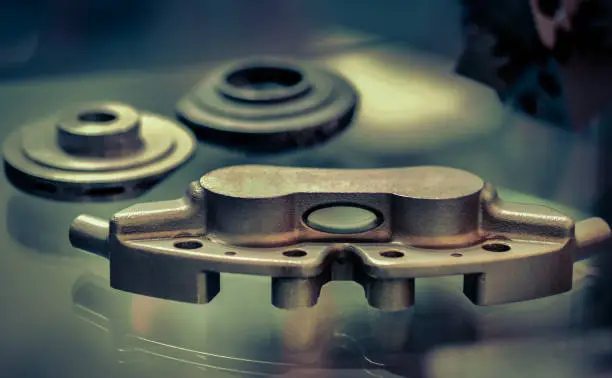
Selecting the right die casting supplier for aviation projects determines whether your aircraft components meet stringent performance benchmarks. Die casting for aviation demands suppliers who master lightweight aluminum and magnesium alloy fabrication, maintain AS9100 and NADCAP certifications, and deliver parts with tolerances within ±0.05mm. The ideal partner combines advanced high-pressure die casting equipment, rigorous quality control systems, and deep aerospace domain knowledge to produce structural brackets, engine housings, and electrical enclosures that withstand extreme operational stress while reducing overall assembly weight.
Understanding Die Casting in Aviation: Core Concepts and Requirements
Precision metal forming processes that balance strength with weight reduction are very important in the aviation industry. Die casting is one of the most important methods. It involves forcing liquid metal into hardened steel moulds at pressures higher than 20,000 psi. This method makes nearly net-shape parts that need very little additional machining. It directly meets the need for cost-effective scalability in aircraft without sacrificing the purity of the dimensions.
The Die Casting Process for Aircraft Components
Within seconds, high-pressure die casting can turn liquid magnesium or aluminium alloys into solid shapes with complicated shapes. The first step is to melt the metal in furnaces that are controlled to very specific temperature ranges. This stops oxidation and makes sure that the alloy stays the same. Plungers that are moved by hydraulics fill mould holes at speeds of up to 100 meters per second, injecting detailed features like mounting bosses and cooling channels. This fast solidification is especially useful for aerospace uses because it forms fine-grain structures that improve the mechanical properties compared to casting or forging.
Aerospace Alloys and Material Standards
Because they naturally don't rust and have great strength-to-weight ratios, aluminium alloys like A356 and ADC12 are used a lot in die casting for aviation. A356 is great for structural parts that are subject to dynamic loads because it is highly flexible and doesn't let pressure through. Even more weight savings can be made with magnesium alloys like AZ91D, which are about 35% lighter than aluminium. However, they need to be handled in a certain way because they can catch fire during processing. Material traceability is now a must; suppliers must use spectroscopy to record the alloy's composition and keep batch records that connect raw materials to finished parts.
Critical Aerospace Certifications
AS9100 certification is the basic quality management system for aviation suppliers. It builds on ISO 9001 by adding controls that are specific to aerospace, such as controls for managing configurations, evaluating risks, and first article inspection protocols. Getting NADCAP approval shows that you know how to do certain processes well, like non-destructive testing, heat treatment, and paint application. When looking at possible partners, procurement teams should check these certifications in the ANAB or PRI databases to make sure that the scope of the accreditation matches the needs of your components. Suppliers who don't have these credentials pose unacceptable compliance risks, even if they offer lower prices.
Advantages Over Alternative Manufacturing Methods
CNC cutting isn't as good for large aircraft orders because it wastes 60–80% of the material and takes hours longer to make each part than die casting. Die casting can get closer tolerances on dimensions than investment casting—usually ±0.005 inches vs. ±0.010 inches—which makes it easier for parts to fit together. Die casting can make surfaces that are smooth (Ra 1.6–3.2 μm), but sand casting can't. This means that a lot of work has to be done after casting, which takes time and money away from the cost benefits. Die casting is only economically possible for production runs of more than 5,000 units per year, though, because it requires expensive tools.
Identifying Your Procurement Needs and Supplier Selection Criteria
Before talking to possible providers, it's important to be clear on the technical requirements and practical standards for aerospace sourcing. Not clear standards cause expensive redesigns and late certifications, which hurts project budgets and timelines.
Defining Part Specifications and Volume Requirements
As required by ASME Y14.5 standards, technical sketches must include callouts for geometric dimensioning and tolerancing (GD&T) that show the most important measurements. When it makes sense, material standards should use aircraft material specifications (AMS) instead of commercial ASTM grades. Forecasts of volume affect whether providers assign specific tools or suggest multi-cavity moulds that are used across projects. If you only need a few hundred pieces a year, you might want to look into low-pressure die casting or permanent mould processes. These have lower tooling costs but lose some dimensional accuracy.
Evaluating Quality Management Systems
Suppliers that are reliable in die casting for aviation use statistical process control to keep an eye on important casting parameters like injection pressure, metal temperature, and cycle time. During the production of die casting for aviation components, shots that don't meet specifications are automatically thrown out to maintain strict aerospace quality standards. Their quality labs should have coordinate measuring machines (CMM), X-ray fluorescence spectrometers for checking the metal composition, and non-destructive testing tools like radiography systems that can find internal cavities below 2% by volume. Professional manufacturers specializing in die casting for aviation also apply precision aluminum casting techniques, advanced mold design, automated die casting systems, and strict dimensional inspection processes to ensure lightweight, high-strength components for aircraft applications. Ask for proof that ongoing process capability studies show Cpk values higher than 1.67 for important dimensions, which means production processes stay stable and centred. In addition, qualified suppliers should provide aerospace-grade material certifications, traceability documentation, fatigue testing reports, and compliance records to support the reliability of die casting for aviation parts used in aircraft structures, engine systems, and other critical aerospace applications.
Assessing Lead Times and Production Flexibility
Making tools usually takes 10 to 16 weeks, but this depends on how complicated the part is and what kind of material is used for the mould. Suppliers who have their own tool shops have better control over this key path item than those who hire outside companies to make moulds. Lead times for production after tool approval range from 3 to 6 weeks for first PPAP submissions to 2 to 4 weeks for production releases. Check how much of a supplier's capacity is being used; facilities that are running at more than 85% capacity find it hard to handle engineering changes or urgent requests without breaking promises that have already been made.
Technical Capabilities and Engineering Support
Leading die casting for aviation providers have metallurgists and process engineers working together during the design phase to suggest draft angles, fillet radii, and gating methods that make the parts easier to make without affecting their performance. Before cutting the steel, they use mould flow modelling software to guess the fill patterns and find places where defects might happen. This upfront investment keeps expensive tool changes from being found during the sampling phases. Suppliers who offer Design for Manufacturing (DFM) reviews show that they are committed to more than just making parts.
Comparing Die Casting Suppliers: Practical Considerations for Aerospace Procurement
Not every authorised seller gives you the same value. To tell the difference between truly qualified partners and sellers who are just barely qualified, you need to look at technical depth, innovation capacity, and operating infrastructure.
Process Expertise Relative to Manufacturing Alternatives
Specialised die casting for aviation casters knows when their process best meets the needs of a component and when it should suggest an alternative. Die casting works best for thin-walled housings with complicated internal geometries. Stamping or extrusion might be a better way to make simple brackets for less money. Suppliers who suggest mixed approaches—casting the main structures and then putting in cut inserts—show that they know a lot about how to make things. Be wary of sellers who always recommend die casting, no matter what the part is made of; this means they only offer a limited range of processes.
Alloy Innovation and Defect Reduction Technologies
Advanced suppliers are trying out new metals, such as aluminum-scandium mixtures that are 30% stronger than regular A356 and can help reduce weight even more. They use vacuum-assisted die casting systems to remove air from mould cavities before metal is injected. This greatly reduces porosity, which is what weakens the material's mechanical properties and pressure integrity. By adding extra pressure during solidification during squeeze casting, microstructures become even denser and closer to the qualities of formed parts. Ask your providers about their R&D investments and partnerships with alloy makers. If their operations aren't moving forward, they won't be able to support next-generation aeroplane projects.
Equipment Capabilities and Automation Integration
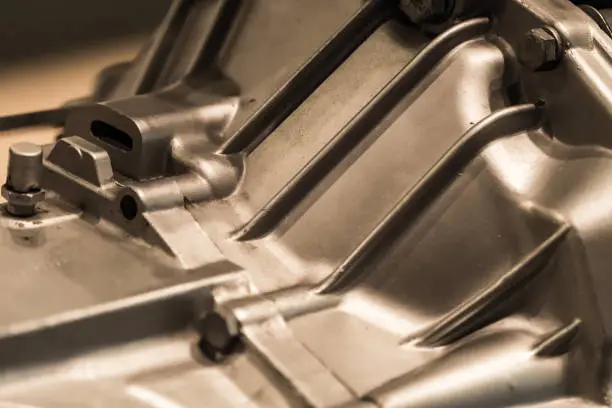
Robotic part extraction, automatic trimming presses, and inline measurement verification systems are all parts of modern die casting cells. This reduces the amount of human handling that causes differences. Real-time monitoring platforms on machines catch problems in the process before they make bad parts, which lowers the scrap rate to less than 2%. Suppliers who still use old equipment from the 1990s can't meet the needs for accuracy and regularity in today's aircraft uses. During facility audits, look at how the machines are maintained. Machines that are well taken care of and have written preventative maintenance schedules are likely to produce reliably.
Geographic Considerations and Supply Chain Optimization
Nearshore suppliers in North America have clear benefits for U.S. aerospace projects, including easier ITAR compliance for defence uses, lower transportation costs, and time zone alignment that makes it easier to communicate quickly during the development stages. However, Asian suppliers that have been around for a long time bring decades of aviation knowledge and investments in capital equipment that younger domestic suppliers don't have. The best choice strikes a balance between lowering risk and having the right technical skills. Dual-sourcing methods, which include a major partner in the nearshore area and a backup provider in the offshore area, protect against disruptions and keep costs low.
Mitigating Risks and Ensuring Quality When Partnering with Aviation Die Casting Suppliers
Aerospace's "zero-defect tolerance" means that all supply relationships need to have aggressive risk management. Reactive quality firefighting causes delays in programs and problems with certification that make it hard to work with customers.
Understanding and Preventing Casting Defects
Porosity is still the most common flaw in die casting for aviation. It shows up as tiny holes in the metal matrix that shorten the product's wear life and make it less resistant to leaks. In die casting for aviation applications, even minor porosity defects can affect the strength, fatigue performance, and safety of aerospace components, making strict quality control essential. Gas porosity happens when hydrogen is absorbed during melting, and shrinkage porosity happens when not enough metal is fed to the parts that are hardening last. These problems are lessened by suppliers using degassing treatments, better gating designs to control the flow of metal, optimized mold designs, and intensification systems that put pressure on the metal while it solidifies. Manufacturers specializing in die casting for aviation often use advanced aluminum alloys, vacuum die casting technology, precision tooling, and real-time process monitoring to achieve lightweight and high-performance aerospace parts. When two metal fronts meet and there are cold shuts, it means that the injection speed or mould temperature is not high enough. Process failure mode and effects analysis (PFMEA) is done by competent providers to find possible ways defects can occur and put in place rules to stop them. For reliable die casting for aviation production, suppliers should also implement non-destructive testing, dimensional inspection, material traceability systems, and aerospace-grade certification procedures to ensure components meet demanding aircraft manufacturing standards.
Advanced Inspection and Testing Protocols
X-ray radiography is still the best way to find internal cracks, and digital systems can pick up on problems as small as 0.5 mm in diameter. Computed tomography (CT) scanning lets you see inside buildings in three dimensions, so you can check the width of walls and measure porosity without cutting them open. For first article inspection, suppliers should set up sample plans that follow ANSI/ASQ Z1.4 or aerospace-specific standards such as AS9102. For each controlled feature, dimensional inspection records need to include exact measurements, tolerances, and the state of conformance.
Contract Structures and Contingency Planning
Each part of the lead time should be listed separately in the agreements, such as tooling, sampling, PPAP approval, and production. Milestone payments should be based on deliverables instead of time elapsed. Include ways to reserve capacity during times of high demand and minimum order quantities that balance the costs of keeping inventory with the benefits of setting up quickly. Set up clear ways for quality problems to be escalated, including actions for containment, timelines for root cause investigations, and standards for verifying corrected actions. Create backup stock for long-lead or single-source parts to protect against problems with suppliers or quality holds.
Building Long-Term Strategic Partnerships
Transactional partnerships with suppliers are best for individual orders, but they miss out on chances to come up with new ideas. As part of strategic agreements, suppliers share demand forecasts for multiple years. This lets suppliers invest in specialised capacity and process changes. Cultures of continuous growth are fostered by joint business reviews that look at quality measures, delivery performance, and cost-cutting efforts. Suppliers who are sure that the program will last a long time offer pricing based on volume and tooling amortisation structures that lower the total cost of ownership. Include skilled suppliers in early design meetings and value engineering workshops, and treat them as an extension of your engineering team.
Case Studies and Best Practices: Successful Selection of Aviation Die Casting Suppliers
Real aerospace projects show how ordered supplier review and active relationship management can lead to success.
Decision Framework Application
A tier-1 die casting for aviation provider was making a new housing for an auxiliary power unit and used a weighted criteria matrix to compare six die casting sources. 40% of the weight went to technical ability, 30% to quality systems, 20% to business terms, and 10% to strategic fit. Site audits showed that the lowest-bidder didn't have any X-ray equipment and only looked at the parts visually, which isn't acceptable for parts that hold pressure. The chosen provider got the best scores on technical and quality factors. They also offered reasonable pricing by making processes more efficient instead of lowering their capabilities, and they were willing to co-locate a quality engineer during the launch phases. This organised method stopped the wasteful practice of picking a seller who wasn't qualified.
Performance Monitoring and Continuous Improvement
After the award was given, the procurement team set up monthly KPI reviews to keep track of defect rates, on-time delivery, and cost performance against goals. Long-term trends and progress efforts were looked at in business reports every three months. When an incoming inspection found a short-term rise in porosity, the joint team did a quick 8D problem-solving exercise and found that furnace maintenance drift was the main cause. The supplier added more process controls and improved maintenance procedures, and within two weeks, performance was back to normal. This way of working together solved problems faster than pointing fingers at each other.
Innovation Through Supplier Collaboration
As part of an effort to cut down on weight, the die casting provider suggested switching from A356 to an experimental aluminum-lithium alloy that would lower the density by 10%. Through a joint development deal where they shared costs and intellectual property, they tested the idea of feasibility, improved the casting parameters, and confirmed the mechanical qualities. By meeting program goals and saving an extra 12% of weight, the final part was certified, showing that strategic suppliers do more than just fill purchase orders. This new idea came about because the provider knew what the program's goals were and had the technical knowledge to suggest answers.
Conclusion
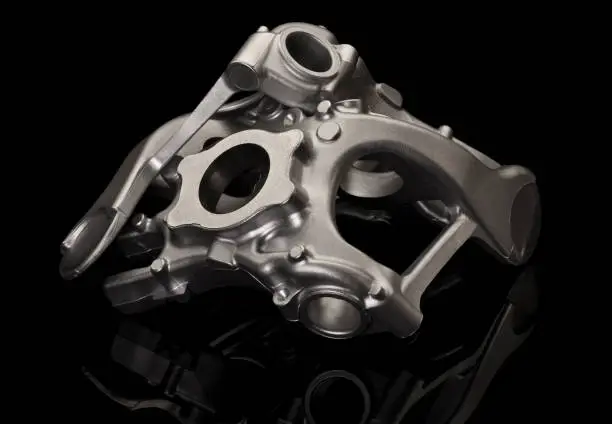
When choosing a die casting for aviation supplier, you need to think about technical capability, quality systems, and strategic alignment. For procurement teams to be successful, they need to clearly describe the requirements for each part, check aerospace certifications against independent databases, and do thorough facility audits that look at tools, processes, and the organization's ability to do its job. They write contracts that balance lowering costs with reducing risk, make backup plans for when things go wrong, and encourage working together to make improvements and come up with new ideas all the time. The best suppliers have decades of experience in aerospace, cutting-edge die casting technology, and a dedication to quality with no defects. These traits turn them from suppliers to strategic production partners who help your program succeed.
FAQ
Why are AS9100 and NADCAP certifications essential for aviation suppliers?
AS9100 sets the standards for quality management that aircraft need. It requires methods for configuration control, risk management, and tracking that go beyond what ISO 9001 requires. Specialised process competencies are checked by independent audits led by technical experts in the field. This makes sure that die casting for aviation suppliers actually carry out important tasks like heat treating, non-destructive testing, and chemical processing to aerospace standards, not just say they can. All of these certifications give suppliers a good chance of knowing they understand and always meet aviation's strict requirements.
How do lead times vary between custom and production orders?
Making custom tools usually takes 12 to 16 weeks, but this depends on how complicated the mould is and how busy the seller is. For casting trials, confirming dimensions, and metallurgical tests, the first sample adds three to four weeks. The PPAP approval process takes an extra 4 to 6 weeks, while the customer reviews and approves the work. When approved tools are used for production orders, wait times drop to two to four weeks. But sellers have minimum order amounts that are usually between 500 and 1,000 pieces. This means that small restocking orders are not cost-effective.
Can die casting suppliers support design optimization efforts?
Application engineers are hired by capable suppliers to check designs for manufacturability and suggest changes that make the designs easier to cast while still meeting functional requirements. Before making the tooling, they run mould flow simulations to find fill patterns, guess where defects will be, and find the best places for gates. This teamwork at the front end keeps expensive tool repair from being found during sampling and speeds up the time to production. When suppliers offer these technical services, they show that they care about more than just making parts.
Partner with Fudebao Technology for Your Aviation Die Casting Requirements
Zhejiang Fudebao Technology has been a leading die casting for aviation supplier for decades, meeting the strict quality requirements of aerospace programs. Advanced high-speed machining centers, CNC lathes, and both low-pressure and high-pressure die casting tools for aluminium, magnesium, copper, and stainless steel alloys are housed in our building. We have full control over the whole process, from melting the metal to treating the surface. The tolerances on the final parts we give are as tight as ±0.05mm, which meets the demanding needs of aircraft structural parts, engine housings, and electrical enclosures.
Our quality systems meet the standards set by AS9100, and we use strict checking methods such as X-rays, CMMs to check measurements, and paperwork to show where materials come from. Our flexible manufacturing method can be used at any point in the lifecycle of your program, whether you need a small number of prototypes or a lot of them. By keeping our promises and always making processes better, we've built long-lasting relationships with automotive OEMs, industrial equipment manufacturers, and aerospace prime contractors.
Reach out to Hank Shen at hank.shen@fdbcasting.com to talk to our tech team about your unique component needs. We'll do a full DFM review, suggest the best ways to make the product, and give you clear quotes that cover the tooling, sampling, and production phases. Fudebao Technology is a reliable company that makes die castings for the aviation industry. They mix high-quality technical work with quick customer service to help your mission-critical projects from the idea stage to certification and beyond. You can learn more about our services and how we improve relationships in aerospace production by going to fdbcasting.com.
References
1. ASM International, "Casting Design and Performance," ASM Handbook Volume 15: Casting, 2008.
2. North American Die Casting Association, "Product Specification Standards for Die Castings," NADCA Standard 403, 2020.
3. SAE International, "Aerospace Material Specifications: Aluminum Casting Alloys," AMS 4291, 2019.
4. Defense Standardization Program Office, "Technical Data Packages for Die Castings," MIL-STD-31000B, 2017.
5. Performance Review Institute, "AC7108/2 Nadcap Audit Criteria for Non-Destructive Testing Facility Surveying," 2021.
6. Campbell, J., "Complete Casting Handbook: Metal Casting Processes, Metallurgy, Techniques and Design," Butterworth-Heinemann, 2015.



YOU MAY LIKE