
What are the Quality Advantages of Low Pressure Casting?
2026-04-28
Low pressure casting stands out as a manufacturing process that fundamentally transforms how we approach metal component production. This counter-gravity technique uses controlled pneumatic pressure—typically between 20 to 100 kPa—to gently push molten aluminum or magnesium alloys from a sealed furnace into a mold cavity through a vertical riser tube. The result is remarkable: components with superior structural integrity, minimal defects, and exceptional mechanical properties that meet the demanding standards of automotive, aerospace, and industrial applications where failure isn't an option.
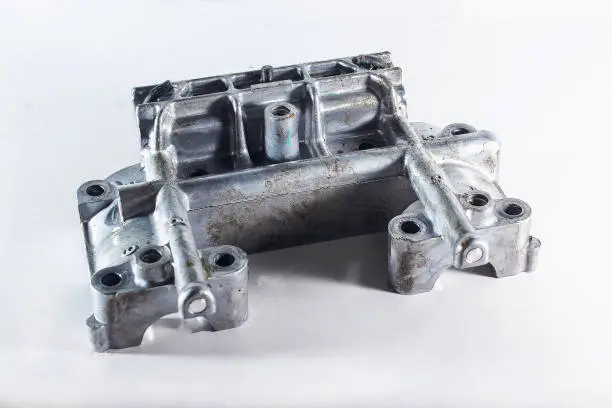
Understanding Low Pressure Casting and Its Quality Fundamentals
Defining the Process Mechanics
We've seen how this casting method is very different from traditional ones at our Fudebao Technology center. The melted metal doesn't just fall into the mold by itself. Instead, it slowly rises through a refractory tube that is directly attached to the base of the mold. This steady rise happens at a pace that keeps instability from happening, which is bad for quality molds. The pressure curve is controlled by complex PID systems that change the speed of filling in real time and keep the flow characteristics smooth throughout the whole pouring process.
Material Selection and Performance Correlation
We carefully choose the metal we use in this process to get the most out of its natural benefits. The most popular choice is still A356 aluminum alloy, especially when the iron percentage is kept below 0.15% and strontium modification is used. This mix gives extension qualities that last through the tough T6 heat treatment cycle, which involves heating the solution to about 540°C and then artificially aging it. Magnesium alloys like AZ91D also work very well. They are lightweight, which is important in the motor housings of electric vehicles where thermal control needs both structural rigidity and conductivity.
The Turbulence-Free Filling Advantage
The main thing that makes this method unique is that it doesn't form an oxide film during filling. When metal tumbles or splashes during pours, which happens a lot in gravity casting, it brings in air and makes oxide skins that become places where defects happen inside the metal. With our low pressure casting method, the speed at the gate stays the same, and the melt front moves forward easily without folding back on itself. This makes casts that regularly meet strict X-ray inspection standards, such as the ASTM E155 standards for aircraft parts.
Key Quality Advantages of Low Pressure Casting
Superior Microstructure and Mechanical Strength
When we look at the mechanical structure, the quality benefits of this low pressure casting method are clear right away. As heat moves up through the mold, directional solidification happens easily because the base stays tied to the pool of molten metal. This makes a fine, thick grain structure with almost no holes. After heat treatment, the parts we make at Fudebao Technology always have tensile strengths above 280 MPa and stretch values above 8%. These are levels of performance that are hard for gravity-cast parts to match.
Fatigue resistance in low pressure casting is directly related to how loud something is inside. Control arms and suspension knuckles in cars have to last millions of load cycles before they start to crack. Getting rid of shrinking pores in key stress areas makes it possible for these safety-critical parts to pass validation tests that would not be possible with casting methods that are prone to flaws.
Dimensional Precision and Surface Quality
Tight tolerances are very important when parts need to fit together with precision-machined parts or seal against fluid pressure. When stable temperatures and steady pressure are paired with the fixed mold tooling used in this process, parts that meet ISO 8062 CT6 to CT7 grades are made. We usually keep limits of ±0.3mm on important measurements without doing any extra work.
With Ra values between 3.2 and 6.3 micrometers, the surface finish quality comes straight from the mold. The need for grinding is greatly reduced by this smooth surface. Electrical motor housings that need a lot of milling to get sealed surfaces can often be used with very little stock removal. This lowers production costs while keeping the geometric accuracy needed for mounting face flatness and bearing hole alignment.
Defect Reduction Through Pressure Feeding
When metal changes from a liquid to a solid, it shrinks, which reduces its volume. Porosity forms in thick parts when there isn't enough liquid metal left to make up for it. This problem is easily solved by keeping the air up during solidification in this process. The holding furnace keeps the metal in liquid form and feeds it into the casting through the upper tube until the gate freezes. With this pressure-fed solidification, you don't need the big external feeders that are needed for sand casting. The material yield goes above 90%, compared to the normal 50–60% for traditional methods.
Programmable pressure curves make it almost impossible for cold shuts and misruns to happen, which are flaws caused by the mold freezing before it's fully filled. When filling electric car battery housings with complex internal ribbing, being able to change the rate of pressure rise makes sure that all the mold is filled, even in thin-wall parts that are far away. This is something that gravity alone can't always do.
Process Repeatability and Automation Capability
When you're making things for tier-one car customers who want PPAP paperwork and statistical process capability, manufacturing consistency is very important. This need is easily met by the automatic nature of this casting technology. Fudebao Technology's equipment has customizable logic computers that control the temperature of the furnace, the time when pressure is applied, the length of time the mold is held, and the temperature conditioning of the mold. This technology gives you stability from shot to shot that you can't get with a manual method.
When the process for low pressure casting is solid, statistical process control starts to make sense. We keep an eye on important factors during production runs, and control charts show that process capability indices (Cpk) are higher than 1.33 for key measurements. Because of this level of repeatability, buying teams can safely choose this method for medium to high-volume production, knowing that both the first and tenth articles will meet the same standards.
Quality Control and Best Practices in Low Pressure Casting
Nondestructive Testing Protocols
To make sure of internal stability, you need to use testing methods that don't damage the part. Using an X-ray or computed tomography for radiographic scanning shows internal porosity, shrinking, and inclusions. When we check, we pay special attention to the gate area and section changes because that's where problems are most likely to happen if the feeding wasn't good enough. Our quality standards are in line with ASTM E155, and we sort flaws by size and frequency to make sure they meet customer needs. Some aerospace parts may need intensity level 1, which means that there can be almost no porosity. On the other hand, level 3 with clear size limits may be fine for industry uses.
Leak testing makes sure that parts like engine heads and fluid lines are pressure-tight. Parts are sealed and pressed together with air or helium. As time goes on, the pressure drop is tracked. When low pressure casting molds are done right, they have a dense microstructure that keeps leak rates below 0.1 cubic centimeters per minute. This meets the strict closing standards for cars.
Metallurgical Analysis and Mechanical Validation
Controlling the chemical makeup starts in the furnace, where spectroanalysis checks the chemistry of the metal before it is poured. To keep brittle intermetallic formation from happening, the iron level must stay below certain limits. It has been proven that adding strontium or sodium changes the shape of eutectic silicon from acicular to fibrous, which makes it much more flexible.
Mechanical testing proves that the casting process produces the qualities that were planned. Tensile test bars are made from real castings instead of test pieces that were cast separately. This gives a more accurate picture of how the part works. After heat treatment, we check the yield strength, final tensile strength, and elongation. The results are written down on material certificates that are sent with every output lot.
Design Optimization for Defect Prevention
The shape of the mold has a big effect on the quality of the casting. Metal must be introduced easily through gates, without shooting or flow separation. We put gates at the thickest part of the casting so that the solidification process can move toward the gate location while the compressed upper tube keeps feeding. The rib thickness is kept below the thickness of the walls next to it so that there aren't any hot spots that would freeze first and cause the walls to shrink.
Before making the tools for low pressure casting, thermal modeling software can help predict how the solid will form. These models find places where defects might happen, which lets the design be changed before expensive steel forms are made. Adding resin-bonded sand cores makes undercuts and holes inside the casting, but the core strength has to be able to handle the pressure (about 1 bar) without distorting or releasing gases that could contaminate the casting.
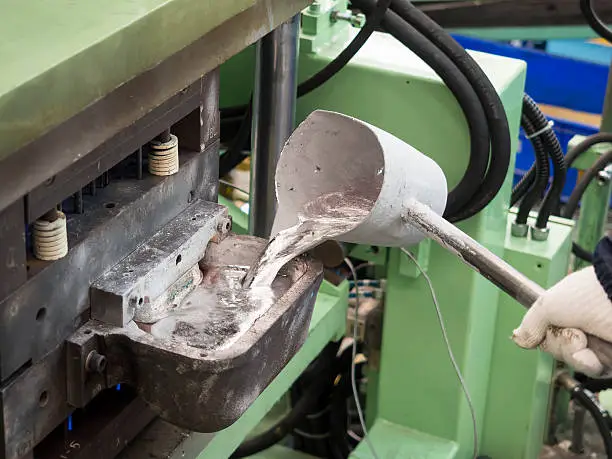
Applications Leveraging Low Pressure Casting's Quality Benefits
Automotive Safety and Performance Components
The most common use of low pressure casting in the world is in alloy wheels. This is the best way to build because it allows for free aesthetic design, is lightweight, and can withstand pressure. Wheels must stay airtight even when they are under dynamic loads and hit potholes that cause shock loads that are higher than normal working conditions. The thick microstructure and pressure-fed solidification make sure that the rim and spoke joints, which are common places for failure, are strong enough to pass safety tests.
Powertrains for electric vehicles need advanced temperature control that is hard to achieve with traditional manufacturing methods. We make motor housings with intricate cooling channels inside that are made of sand cores. Tight standards are used to make sure that the bearings line up correctly and the electromagnetic airgap stays the same. Being able to heat treat these housings after they are made gives them the mechanical power they need to hold the weight of the rotor and resist electromagnetic forces while they are running.
Aerospace and Defense Applications
Parts of airplanes work in places where failure would have terrible results. The quality benefits of this casting method—minimal porosity, the ability to be heated and cooled, and uniform mechanical properties—are perfect for aircraft needs. Parts for landing gear, hydraulic manifolds, and structural brackets can be made in a way that meets the standards of the AS9100 quality system and comes with full evidence of nondestructive testing and material tracking.
Defense uses like this method because it can make pressure-tight housings for computer systems and weapon parts that need to be strong and stable in their dimensions. Fudebao Technology's strict approval and paperwork systems help these picky customers who won't settle for less than the best quality or dependability.
Industrial Machinery and Equipment
Pump housings, compressor bodies, and gearbox cases need to be strong enough to last when they are used all the time and are exposed to heat, pressure, and chemicals that break down metal. The wear resistance and stress power that come from fine-grained microstructure make the product last longer than other ways of making it. This method works for OEM component makers who need uniform quality but don't have the volume that needs their own high-pressure die casting lines because the costs are lower for medium- to high-volume production.
Because sand cores can be used, complicated internal flow paths and mounting features can be cast in one piece, which cuts down on assembly steps and possible leak paths. Manufacturers of industrial equipment like that the process can keep limits on machined features, which cuts down on the time needed for extra operations and tool wear.
Conclusion
The quality benefits of low pressure casting come from its basic steps: controlled, turbulence-free filling that gets rid of oxide inclusions; pressure-fed solidification that stops shrinkage porosity; and stable thermal conditions that make it possible to precisely measure and smooth the surface. These qualities directly lead to parts that have better mechanical properties, are structurally sound on the inside, and are manufactured consistently to meet the strict needs of automobile, aerospace, and industry uses. When purchasing decisions have to weigh the need for quality against the need to produce a lot of goods at a low cost, this casting technology stands out because it offers structural integrity and heat treatment that can't be done with high-pressure methods while still being cost-effective and accurate beyond what sand casting can do.
FAQ
How does this casting method improve mechanical strength compared to alternatives?
The controlled pattern of solidification makes a directed grain structure with few holes, which lets the material be fully heated to T6 conditions. This creates yield strengths above 240 MPa and elongation greater than 8% in A356 metal, which are qualities that high-pressure die castings can't reach because of trapped gas, and sand castings rarely match because of oxide spots and coarse microstructures.
Which metals work best with this process?
Aluminum alloys, especially A356 and A357, are the most popular because they are easy to cast, treat with heat, and have a high strength-to-weight ratio. Magnesium metals, such as AZ91D, are good for uses that need to cut weight as much as possible. Copper metals can be worked with, but they aren't used very often because they melt at higher temperatures and cause tools to wear out faster.
What defect reduction can procurement teams expect?
When processes are properly managed, cold shuts, misruns, and gross porosity almost never happen. X-ray screening refusal rates of less than 2% are possible, while in gravity sand casting they are more likely to be between 5 and 10 percent. This means less money spent on scrap and more reliable arrival times.
Partner With Fudebao Technology for Superior Casting Solutions
When your engineering needs call for the structural integrity and exact dimensions that can only be achieved by counter-gravity aluminum casting, Zhejiang Fudebao Technology Co., Ltd. has a track record of success in automobile, aircraft, and industrial settings. Our combined manufacturing skills include low pressure casting tools, high-speed CNC machining centers, and a wide range of surface treatment methods. These allow us to make parts from molten metal all the way through to finished, inspected parts that meet ±0.05mm tolerances.
We are a reliable low pressure casting company that works with well-known international names like ESS energy storage systems and HAAS automation. We follow the quality systems, metallurgical controls, and inspection processes that procurement teams need. Visit fdbcasting.com or email hank.shen@fdbcasting.com to talk to our expert team about your project needs, get material certifications, or set up facility approval. We're ready to show you how our production skills can meet your most difficult component requirements.
References
American Foundry Society. (2019). Aluminum Casting Technology: Principles and Applications for Permanent Mold Processes. Des Plaines, IL: AFS Publications.
Campbell, J. (2015). Complete Casting Handbook: Metal Casting Processes, Metallurgy, Techniques and Design (2nd ed.). Oxford: Butterworth-Heinemann.
ASTM International. (2021). ASTM E155-15: Standard Reference Radiographs for Inspection of Aluminum and Magnesium Castings. West Conshohocken, PA: ASTM International.
SAE International. (2018). J452: General Information on Permanent Mold Casting of Aluminum Alloys. Warrendale, PA: SAE Technical Standards.
Kaufman, J. G., & Rooy, E. L. (2004). Aluminum Alloy Castings: Properties, Processes, and Applications. Materials Park, OH: ASM International.
North American Die Casting Association. (2020). Product Specification Standards for Die Castings Produced by the Counter-Gravity Low Pressure Process (5th ed.). Wheeling, IL: NADCA Publications.



_1756345939856.webp "Aluminum casting chassis")
_1756347888208.webp "New energy motor shell")
_1756350046757.webp "Heat sink aluminum casting")
_1756349002499.webp "Aluminum alloy clamp casting")
_1756348227989.webp "Aluminum casting movable U frame")