Best Practices for Designing Parts for Aluminum Die Casting
2026-04-28
Designing parts for aluminum die casting takes a deep knowledge of how the qualities of the material, the physics of the process, and geometrical issues all work together to make parts that work well and don't cost too much. At its heart, aluminum die casting is the process of forcing liquid aluminum alloy (usually A380, ADC12, or AlSi9Cu3) into hardened steel molds at very high pressures (up to 30,000 psi). This high-pressure die casting (HPDC) method makes parts that are very close to net shape and have very smooth surfaces. The process solves important problems in manufacturing by lowering the weight of the whole assembly by up to 60% compared to steel options, getting rid of the need for extra welding operations through integrated design features, and making it possible to make a lot of complex shapes at a low cost per unit. When purchasing managers and engineering managers learn the best ways to build things, they can get big benefits in how well products work, how quickly they can be made, and how much they cost overall. This is true for cars, industrial machinery, electrical equipment, and aerospace uses.
Understanding the Aluminum Die Casting Process and Its Design Implications
How Material Selection Impacts Component Performance
Choice of the right aluminum metal is the first step in designing a good part. The A380 is still the workhorse of the industry. It has great fluidity during injection, great die-filling qualities, and good mechanical properties, with a tensile strength of 46,000 psi. This metal works great in electrical boxes and housings for cars that need to be resistant to corrosion while also being moderately strong. Because A365 has more silicon, it has better thermal conductivity (about 120 W/m·K), which makes it perfect for heat-dissipating parts in power electronics and EV battery systems. With a specific gravity of 2.7 g/cm³, the alloy saves a lot of weight without affecting its structural integrity. This meets the strict fuel economy requirements of the car industry and the range improvement goals for electric vehicles.
How a material behaves during solidification has a direct effect on the quality of the surface and the tolerances that can be reached. Within milliseconds of being exposed to air, aluminum forms a natural oxide layer that protects against corrosion and makes parts last longer in tough settings. This quality is very useful for telecommunications equipment that has to deal with salty seaside areas or industrial equipment that works in chemical processing plants. When design engineers know about these material qualities, they can choose the right wall thicknesses, rib placements, and cooling methods that work with the alloy's thermal contraction behavior during the solidification phase of aluminum die casting.
Process Dynamics That Shape Design Decisions
During the pumping phase, speeds of more than 100 inches per second are common, which creates both possibilities and problems. In a very short amount of time, metal runs from the shot sleeve through runners and gates to fill the die hole. This fast filling keeps the concrete from solidifying too soon, but it needs to be carefully placed to avoid gaps caused by turbulence. Cycle times are usually between 45 and 120 seconds, but can be longer or shorter based on the complexity of the part and the thickness of the wall. This allows for production rates that sand casting or machining simply can't match when the number of units made each year is higher than 5,000.
Controlling temperature in aluminum die casting is another important planning factor. When dies work between 400°F and 500°F, they create temperature differences that change how metal flows and how fast it cools. It's possible for shrinkage porosity to form if builders don't take these temperature dynamics into account. This happens because thicker sections harden more slowly than thin walls. These effects can be lessened by strategically placing cooling lines inside the die, but the shape of the component itself needs to make it easy for heat to be extracted evenly. The way that process factors and part design work together is what separates successful projects from those that need expensive changes and output delays.
Best Design Practices to Avoid Common Aluminum Die Casting Defects
Achieving Uniform Wall Thickness for Quality Consistency
The most important design concept is to keep the wall width the same throughout the component. When differences between neighboring parts are more than 25%, they cause different cooling rates that lead to warping, stress buildup inside the material, and the formation of pores. Automotive gearbox housings with walls that are between 2.5 mm and 3.5 mm thick are more stable in terms of their dimensions than parts whose thickness changes quickly from 5 mm to 2 mm over short distances in aluminum die casting.
When different thicknesses are needed for practical reasons, like for load-bearing ribs or reinforced mounting bosses, designers should use gradual changes that are at least three times the thickness difference. A boss that needs to be 8 mm thick and connects to a 3 mm base wall should change over 15 mm of straight line, so that melted metal can flow easily without turbulence or air pockets getting stuck. These physical factors have a direct effect on first-pass yield rates and lower the rejects rates that slow down production and raise the cost per unit.
Implementing Proper Draft Angles and Fillet Radii
Draft angles make it easier for parts to be ejected from the die hole without damaging the surface or changing the shape. Minimum draft needs to be between 1° and 3°, but this depends on the part's depth and surface pattern standards. For pockets or cores that are deeper than 50 mm, a 3° to 5° draft may be needed to keep them from galling or seizure during ejection cycles. Aerospace parts that need to have tighter tolerances often call for limited draft and then CNC machining to get the final measurements. This is done to balance the cost of casting with the need for accuracy.
There are more uses for fillet curves than just looking good. When there are sharp internal points, stress builds up, which shortens the wear life and makes it easier for cracks to start when the load is changed. These failure modes can't happen if the internal radius is at least 0.5 mm. This also makes it easier for metal to flow into the space during filling. To keep the wall width the same at corners, the external radii should match or be bigger than the internal measurements. In situations with a lot of shaking, industrial pump housings with 2 mm fillets at wall joints last 40% longer than designs with sharp corners.
Optimizing Gating and Ventilation to Stop Defects
How liquid metal enters the hole depends on where the gate is placed, which affects fill patterns, air trapping, and surface quality. Putting gates at the thickest part of the metal lets it flow into lighter parts without solidifying too quickly. This cuts down on cold shut flaws that happen when two flow fronts meet without properly fusing. Multiple gates may help with big, complicated parts by spreading the fill pressure out more widely and cutting down on cycle time. But each gate leaves an obvious witness mark that needs to be fixed if the way it looks is important.
Venting in aluminum die casting keeps air from getting trapped, which can cause flaws on the surface and holes inside the material. Vent channels are usually between 0.025 mm and 0.076 mm deep, which is just the right depth for gas to leave but not for molten metal to get through. Strategically placing vents at places where flow fronts meet and in deep pockets makes sure that all the air is sucked out. We have seen that electrical cabinets with properly vented corner features get Class A surface finishes right from the die. This means that they don't need to go through extra polishing steps that cost more and take longer.
Design Optimization Strategies for Performance and Cost Efficiency
Balancing Structural Requirements with Material Economy
Thin-wall casting technology lets wall thicknesses get close to 1.5 mm without affecting mechanical qualities. This is a big step forward for uses where weight is important. When automotive door handles and frames are made with 2.0 mm walls instead of the usual 3.5 mm walls, the weight of the parts is cut by 42% while still meeting the minimum tensile and impact strengths. This weight loss directly leads to better gas mileage and longer EV ranges, which are important competitive benefits in today's aluminum die casting transportation market.
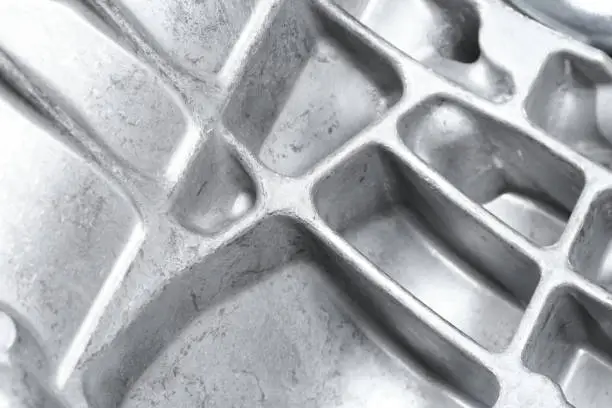
Strategies for ribs protect thin walls from twisting and buckling loads without adding too much material. Between 3 and 5 times their height, ribs should be spread 50% to 70% of the way up the base wall. A base wall that is 2.5 mm thick and has 1.5 mm ribs placed every 15 mm to 20 mm makes for a structure that distributes loads well while keeping total component mass low. When this method is used to build industrial machinery brackets, they can hold the same loads as solid parts that weigh twice as much. This saves money because less material is used and cycle times are cut down.
Incorporating Complex Geometries Through Integrated Design
Being able to create complex features as single-piece parts gets rid of the need for installation, lowers the number of parts needed, and makes the system more reliable overall. This benefit is shown by automotive oil pans that have mounting bosses, drain plugs, sensor ports, and interior baffles built in. What used to be 12 different stamped and welded parts is now just one casting that needs to be thread-tapped and the gasket surface-machined. Consolidating these parts cuts down on the work needed to put them together, gets rid of possible leak paths at weld joints, and speeds up production.
Undercuts and internal passages are hard to work with because they need side-action cores or complicated die processes that make the cost of the tools higher. Designers need to think about whether these features are worth the extra money or if there are cheaper ways to get the same results. For low to medium volume production, collapsible cores can be used to make internal threads and undercuts. For high volume uses, hydraulic side-action systems may be a better choice. The choice is based on the expected lifetime number, the selling price of the component, and the need to be competitively positioned.
Understanding Achievable Tolerances and Their Cost Implications
Standard standards for die casting run from ±0.3 mm to ±0.5 mm, based on the size and complexity of the shape of the part. Following CNC machining processes are helpful for areas that need better control, like bearing surfaces, seal slots, or mounting interfaces. It is technically difficult and not cost-effective to specify ±0.05 mm standards straight from the casting process. Combining as-cast features with selective machining improves both quality and cost.
The quality of the surface finish gets Ra values of 1.6 to 3.2 micrometers straight from the die, which is good for most structural and semi-visible uses. For parts that need to look great, like housings for consumer electronics or tools for buildings, extra finishing steps like powder coating, anodizing, or polishing may be needed. When procurement teams know these limits of potential, they can set the right tolerances based on practical needs. This keeps them from over-specifying, which raises costs without improving performance.
Conclusion
To make parts that work best with aluminum die casting, you need to know how material science, process mechanics, and geometric rules all work together. Uneven wall thickness, the right draft angles, smart ribs, and careful gate placement are the building blocks of error-free and cost-effective production. The process is very valuable because it makes things very light, can work with complex shapes, and can produce things at speeds that can be scaled up. Other technologies simply can't compete with that. For implementation to go well, you need to start working together with experienced suppliers early on. These suppliers can help with manufacturing throughout the planning process, which saves money and time and speeds up time to market. As businesses continue to focus on reducing weight, improving performance, and making production more efficient, learning these best practices will become more and more important to stay ahead in global markets.
FAQ
What wall thickness should I specify for aluminum die cast parts?
For most uses, the best wall width is between 2.0 mm and 4.0 mm. This range strikes a balance between mechanical strength, material economy, and cycle time efficiency. Thin-wall technology lets lightweight designs have diameters close to 1.5 mm, but it needs special tools and careful process control to make this possible. Different cooling rates and longer solidification times make parts thicker than 6 mm more likely to have holes. To keep things from warping and creating interior stress, designers should keep the differences in thickness between neighboring areas to less than 25%.
Which aluminum alloy should I select for my application?
The A380 is good for general-purpose uses that need qualities that are well-balanced, resistant to rust, and good at filling dies. A365 is a better thermal conductor for parts that remove heat in power and electricity uses. The ADC12, which is popular in Asian markets, has qualities similar to the A380, with only a few minor changes in its composition. When choosing a material, you should think about its mechanical strength needs, its working temperature ranges, its exposure to rust, and any other industry-specific requirements your application has.
Can aluminum die casting produce thin-wall components effectively?
With the right process control and tool design, advanced thin-wall casting technology can safely make walls between 1.5 mm and 2.5 mm thick. This feature is useful for uses that need to be light, like in cars, airplanes, and portable tools. To get these sizes, you need high injection speeds, well-thought-out gating techniques, and careful thermal control to keep the material from solidifying too soon. Suppliers with specialized tools and process knowledge can consistently produce these thinner walls, which saves a lot of weight and money compared to standard wall specs.
Partner with Fudebao Technology for Expert Aluminum Die Casting Solutions
Navigating the complexities of aluminum die casting part design requires a manufacturing partner with a lot of technical know-how and a track record of success. Zhejiang Fudebao Technology Co., Ltd. is a leading producer of aluminum die castings. They have modern high-pressure die casting machines, CNC machining centers, and precision finishing systems that cover the whole production cycle, from melting the metal to treating the surface. Our factory can make parts with dimensions that are accurate to within 0.05 mm, which meets the high standards needed for high-precision car parts, industrial equipment housings, and electrical cases that are sold all over the world. We help our clients at every step, from improving the initial design and making fast prototypes to full-scale production and PPAP documentation. Our engineering team works directly with your designers to improve shapes, choose the right metal, and put in place cost-effective manufacturing strategies that meet your performance and budget goals. Get in touch with our technical expert Hank Shen at hank.shen@fdbcasting.com to talk about your specific application needs and find out how our wide range of services can shorten the time it takes to build your product while still providing high-quality parts.
References
North American Die Casting Association. (2019). Product Design for Die Casting: Engineering Guide. NADCA Publication #G-200.
Kaufman, J. G., & Rooy, E. L. (2004). Aluminum Alloy Castings: Properties, Processes, and Applications. ASM International, Materials Park, Ohio.
Reikher, A., & Batra, M. R. (2011). Thermal and Stress Analysis in Die Casting: Theory and Application. Springer Science & Business Media, New York.
Cao, H., Shen, C., & Wang, C. (2018). "Design Optimization for Aluminum High-Pressure Die Casting Components: Reducing Defects Through Simulation." International Journal of Metalcasting, 12(3), 445-459.
American Foundry Society. (2017). Aluminum Casting Technology: Technical Reference Manual. Des Plaines, Illinois: AFS Technical Publications.
Vinarcik, E. J. (2003). High Integrity Die Casting Processes. John Wiley & Sons, New York: Engineering Materials and Manufacturing Series.



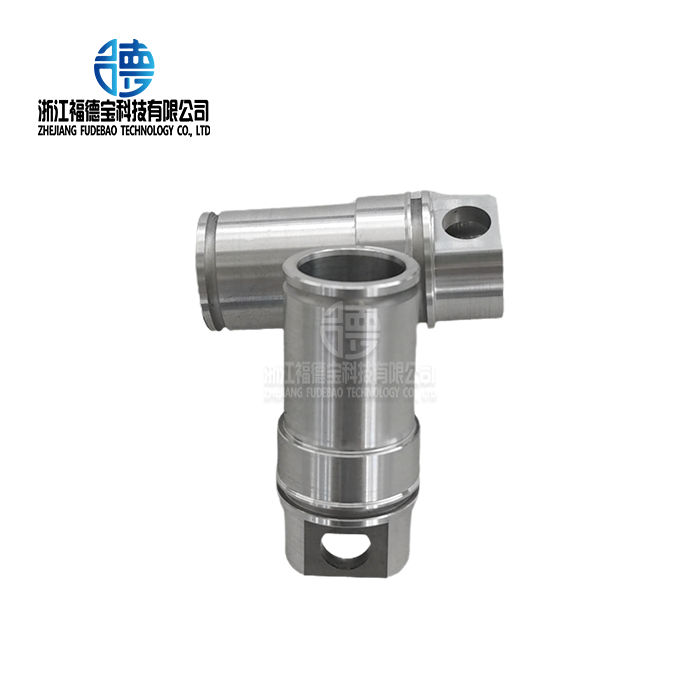
_1756346371362.webp "separator housing")
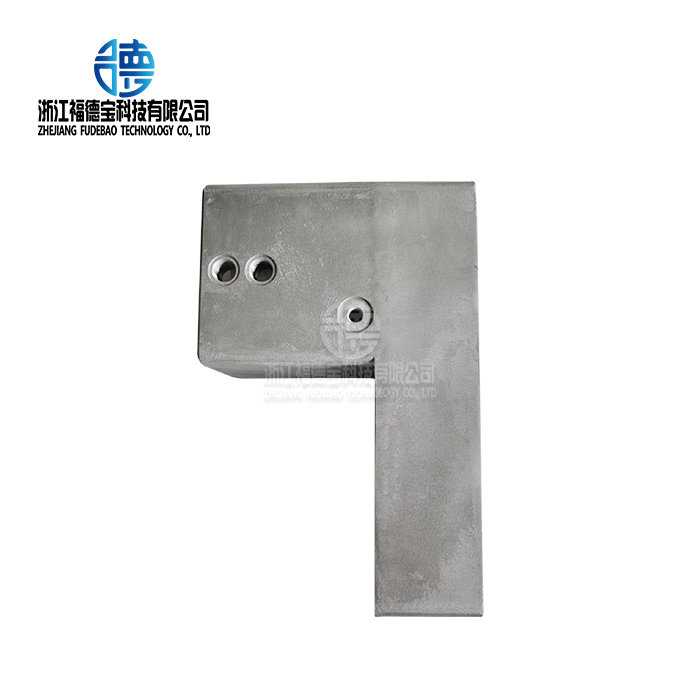
_1756352340434.webp "Aluminum chassis cover")
_1756349957728.webp "metric v belt pulley")
_1756349696500.webp "Pulley aluminum casting")