
The Difference Between Low Pressure Casting and Gravity Casting
2026-03-28
For production workers who want to get the best quality and value for their money, it's important to know the basic differences between low pressure casting and gravity casting. Controlled air pressure (usually 20–100 kPa) is used in low pressure casting to push liquid metal into molds. This method gives better shape accuracy and fewer flaws than gravity casting, which only uses gravity to fill the mold. This difference has a big effect on the quality of the part, the cost of production, and its ability to work with difficult shapes.
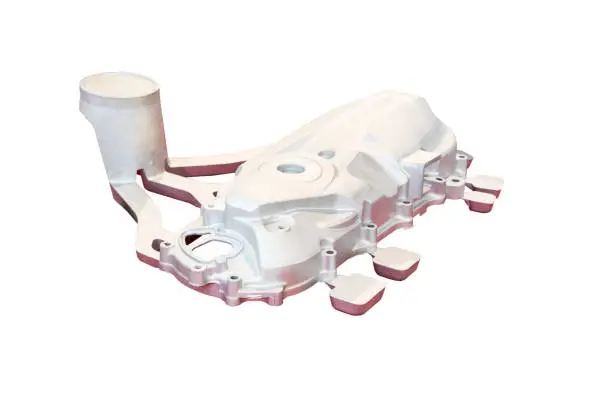
Understanding Low Pressure Casting and Gravity Casting
Core Process Definitions
When controlled air pressure is used, molten aluminum or magnesium alloys are pushed into mold holes during the precision metal casting process known as low pressure casting. This counter-gravity filling method uses lifter tubes to join pressure holding furnaces directly to molds. This creates laminar flow, which reduces turbulence and oxide formation.
In contrast, gravity casting uses the power of gravity to fill fixed or semi-permanent molds. This old method uses hydraulic head pressure, which works for smaller shapes but makes it hard to control precisely during the filling process. Careful gating design is needed for this method to stop turbulence and make sure the mold hole fills properly.
Operational Mechanisms and Equipment
These casting methods are different in more ways than just how they fill the mold. They also have different temperature control systems, pressure regulation tools, and mold design needs. For accurate pressure curves, low pressure casting systems use complex PID control loops, and gravity casting processes are mostly about improving the pouring method and controlling the temperature.
Modern low pressure casting factories use automatic pressure control systems that keep the feeding pressure and filling rate constant while the metal hardens. When compared to gravity casting yields of 50 to 60%, these systems support material yields of over 90%. This lowers remelting costs by a large amount and increases working efficiency.
Detailed Process Comparison: Low Pressure Casting vs Gravity Casting
Metal Filling Mechanisms and Control Systems
Each casting method has its own benefits because of the basic difference in how the metal is delivered. low pressure casting systems use pressured metal injection to get rid of free-fall situations. This gets rid of oxide inclusions and trapped air that are common problems with gravity-poured parts. Better mechanical properties and better structural stability are supported by this controlled climate.
To keep metal from swirling around while the mold is being filled, gravity casting relies on careful ladle holding and pouring methods, unlike low pressure casting. This method is easier to use, but it's hard to get reliable flow patterns with it, especially for geometries that are complicated and need complex gating systems and many fill spots.
Temperature Control and Material Compatibility
Different techniques for controlling temperature are used for each of these casting methods. low pressure casting keeps liquid metal at the right temperature inside protected holding furnaces. This keeps heat from escaping and prevents oxidation during the casting process. This thermal stability helps keep the mechanical features stable and lowers the number of flaws that are caused by temperature.
During the metal transfer and filling processes, gravity casting operations see bigger changes in temperature. These changes in temperature can affect how the metal flows and how it solidifies, so furnace operations and casting plans need to be carefully coordinated to keep quality standards high.
Defect Profiles and Quality Implications
Knowing the types of defects helps people who work in buying figure out the quality risks that come with each casting method. Because the filling conditions are managed and the feeding pressure stays the same during solidification, low pressure casting methods usually have few holes and oxide inclusions. These quality benefits are especially useful for uses that need to be pressure-tight and parts that are safety-critical.
There may be a higher rate of defects in gravity casting, such as shrinking porosity, cold shuts, and inclusion formation. But using the right process control and gating design can fix many quality problems while keeping cost benefits for uses that aren't as important.
Benefits and Limitations from a Procurement Perspective
Quality and Performance Advantages
When procurement teams look at casting choices, they need to think about how the quality will affect the long-term performance of the product and customer happiness. low pressure casting gives you better measurement accuracy, with limits that meet ISO 8062 CT6–CT7 standards. This means that you don't have to do as much machining, and the parts fit together better.
Low pressure casting methods can improve the mechanical properties of materials, which supports T6 heat treatment techniques that improve strength and ductility. This skill is very important for parts of car suspension and for use in spacecraft, where the performance of the material has a direct effect on safety and dependability.
Cost Considerations and Economic Analysis
The amount of money needed to invest in these casting methods is very different, which affects how they are bought and how suppliers are chosen. low pressure casting equipment costs more up front, but it makes better use of materials and cuts down on the need for extra processing, which can make up for the higher starting costs over time.
Gravity casting businesses need less money to get started and easier ways to keep their tools in good shape. Because of these cost savings, gravity casting is a good choice for low-cost projects and smaller production runs where high quality might not be worth the extra money.
Production Flexibility and Scalability
When evaluating suppliers and building long-term partnerships, manufacturing flexibility is one of the most important things to think about. low pressure casting systems help keep quality the same even when production rates change, and they can work with complex shapes by integrating sand cores.
Gravity casting gives you more options for making prototypes and small batches of products. Less complicated equipment needs and faster setup times make it possible for manufacturing methods to adapt to changing market needs and product development cycles.
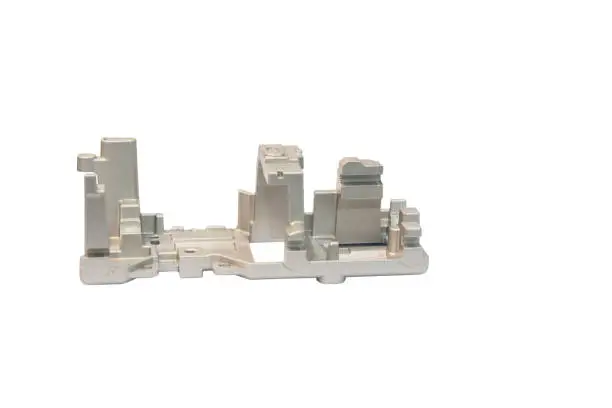
Practical Applications and Industry Use Cases
Automotive Industry Applications
In the car industry, choosing the right casting method depends on how important the part is and how well it needs to work. Most metal wheels are made with low pressure casting because they have to meet strict requirements for how they look, how well they resist impact, and how well they hold up over time. These requirements are too high for gravity casting to safely meet.
Using low pressure to build complex cooling channels into engine parts like cylinder heads and motor housings for electric cars is one way that sand core integration is used. For these uses, the materials need to be pressure-tight and able to conduct heat well so that they can be used effectively in harsh conditions.
Automobile suspension parts like control arms and steering knuckles are safety-critical uses for low pressure casting, which creates an internal structure that is free of flaws and strong enough to pass x-ray inspection standards and millions of load cycles without breaking.
Industrial Equipment and Machinery
Applications in industrial tools show how flexible both low pressure casting methods are for different part needs and operating needs. Manufacturers of heavy tools use gravity casting for bigger structural parts where cost concerns are more important than accuracy needs.
When pressure-tight consistency and precise dimensions are important for operating performance, low pressure casting is a good way to make parts for pumps and compressors. The better mechanical qualities make it possible for reliable operation in settings with changing loads, like factories.
Emerging Technology Integration
Advanced process control systems and automation technologies continue expanding capabilities for both casting methods. Temperature monitoring systems, automated pressure control, and real-time quality assessment tools enhance consistency and reduce defect rates across both low pressure casting and gravity casting operations.
Choosing the Right Casting Partner and Equipment
Supplier Evaluation Criteria
To find good casting partners, you need to look at their technological skills, quality systems, and production powers, making sure they meet the needs of your project. For partnerships to work, suppliers must consistently show that they can provide quality work, reliable delivery, and expert help.
Base quality standards are set by certification requirements such as ISO/TS 16949 for car uses and AS9100 for aerospace components. Some other things to think about are the ability to do radiographic tests, the use of statistical process control, and tracking tools that allow for full quality paperwork.
Technology Assessment and Vendor Selection
Leading casting suppliers invest in advanced equipment and process control systems that deliver consistent quality outcomes. Evaluation criteria should encompass furnace technology, pressure control systems, and inspection capabilities that support specific application requirements.
Production capacity assessment involves understanding equipment utilization, tooling capabilities, and scalability potential that align with projected volume requirements. Successful partnerships require suppliers capable of supporting growth while maintaining quality standards and delivery performance.
Best Practices for Procurement Management
Effective procurement strategies establish clear specifications, quality requirements, and performance metrics that guide supplier relationships and ongoing performance evaluation. Regular supplier audits and performance reviews ensure continued alignment with evolving requirements and industry standards.
Contract negotiations should address quality expectations, delivery schedules, and cost structures that support mutually beneficial partnerships. Collaborative approaches to problem-solving and continuous improvement initiatives enhance long-term supplier relationships and operational success.
Conclusion
The choice between low pressure casting and gravity casting ultimately depends on specific application requirements, quality expectations, and economic considerations that vary across industries and component types. Low pressure casting provides superior quality characteristics and dimensional accuracy that justify higher investment for critical applications, while gravity casting offers cost-effective solutions for less demanding requirements. Procurement professionals must carefully evaluate these trade-offs against their specific needs, considering factors such as part complexity, quality standards, production volumes, and total cost of ownership to make informed sourcing decisions that optimize both performance and value.
FAQ
How does low pressure casting enhance aluminum part quality compared to gravity casting?
low pressure casting eliminates turbulence during mold filling through controlled pressure application, significantly reducing oxide inclusions and entrapped air that commonly affect gravity-cast components. The maintained feeding pressure during solidification ensures superior mechanical properties and dimensional accuracy, making it ideal for safety-critical automotive and aerospace applications.
What are typical lead times for low pressure casting versus gravity casting projects?
Lead times vary based on tooling complexity and production volumes. Gravity casting typically offers faster initial setup due to simpler equipment requirements, while low pressure casting may require additional time for pressure system optimization. However, the superior quality and reduced secondary processing requirements of low pressure casting often result in shorter overall project timelines.
Is low pressure casting cost-effective for small batch aerospace orders?
Yes, low pressure casting proves cost-effective for aerospace applications despite higher initial investment due to superior material yields exceeding 90%, reduced machining requirements, and elimination of costly rework associated with defect-related rejections. The ability to achieve T6 heat treatment without blistering concerns further enhances value proposition for critical aerospace components.
Partner with Fudebao Technology for Advanced Low Pressure Casting Solutions
Fudebao Technology stands as your trusted low pressure casting supplier, combining decades of expertise with state-of-the-art manufacturing capabilities to deliver precision components that exceed industry standards. Our comprehensive facility encompasses the complete production cycle from melting through finishing, supported by advanced CNC machining centers and automated quality control systems that ensure ±0.05mm accuracy. Contact our technical team at hank.shen@fdbcasting.com to discuss your specific requirements and discover how our proven expertise can optimize your supply chain performance and component quality.
References
Campbell, John. "Complete Casting Handbook: Metal Casting Processes, Metallurgy, Techniques and Design." Butterworth-Heinemann, 2015.
ASM International Handbook Committee. "ASM Handbook Volume 15: Casting." ASM International, 2008.
Kaufman, J. Gilbert. "Introduction to Aluminum Alloys and Tempers." ASM International, 2000.
Dispinar, Derya and Campbell, John. "Critical Assessment of Reduced Pressure Test." International Journal of Cast Metals Research, 2004.
Tiryakioğlu, Murat. "Statistical Process Control and Quality Assessment of Shape Castings." International Journal of Metalcasting, 2017.
Flemings, Merton C. "Solidification Processing: Fundamentals of Metal Casting and Continuous Casting." McGraw-Hill, 1974.



_1756349862928.webp "belts pulleys")
_1756348489473.webp "Automobile intake valve")
_1756348300182.webp "Aluminum die-cast housing")