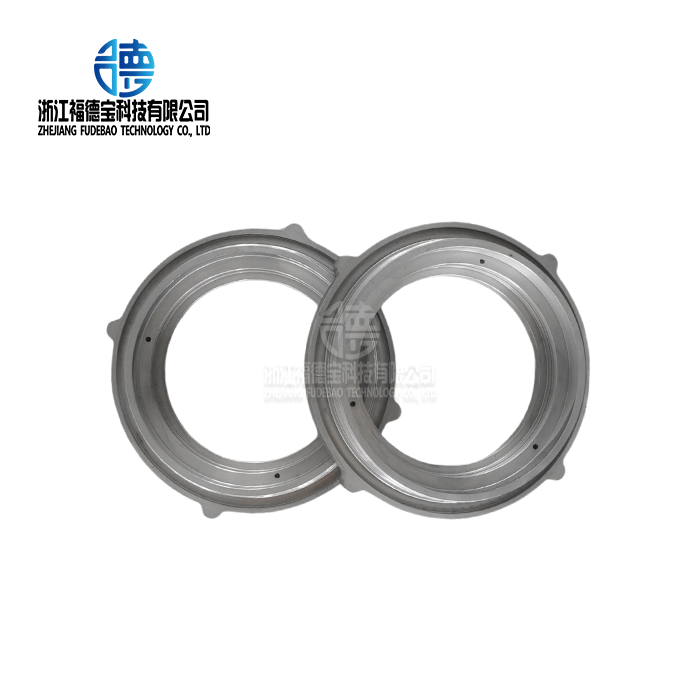
The Conductivity Benefits of Professional Copper Casting for Electrical Parts
2026-07-04
When buying electrical parts, procurement teams and engineering managers always face a big problem: how to find the best mix between high electrical conductivity, long-lasting sturdiness, and low cost. Professional copper casting is the best way to go because it produces parts with higher conductivity ratings, which directly lead to lower energy losses and higher system stability.
Cast copper parts can carry electricity at amounts close to 100% IACS (International Annealed Copper Standard), thanks to precise metallurgical methods. This makes them perfect for power transfer, motor assemblies, and green energy uses. This way of making things gets rid of the performance problems that come with using other materials and can handle the complicated shapes that modern electrical systems need.
Understanding Copper Casting and Its Role in Electrical Parts
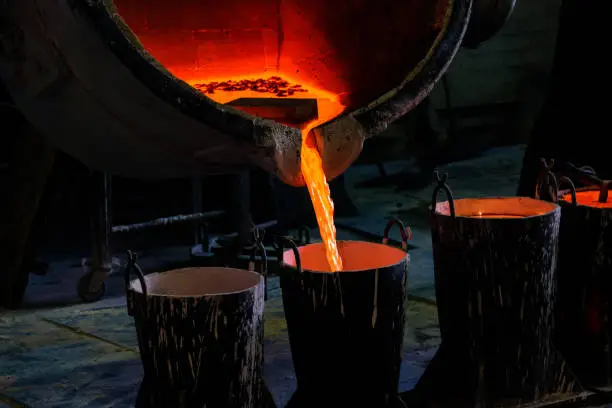
As a specialized metalworking technique called copper casting, liquid copper alloys are put into carefully designed molds to make parts that are both electrically efficient and structurally sound. When compared to wrought methods, which involve a lot of machining and wasteful waste, casting allows for almost net-shape production, which is especially useful when making complicated electrical housings and connections with internal holes that would be too expensive to make.
Core Casting Methods for Electrical Applications
Investment casting, sand casting, and lost wax casting are all different ways to make electrical parts. When measurement accuracy is less than ±0.05mm, investment casting is the best method. This makes it perfect for parts of switches and circuit breakers. Sand casting gives you options for bigger electrical boxes and motor housings where a rough surface finish is fine. For complex heat dissipation shapes in power electronics, lost wax casting is the best way to get the most accurate copy of detail.
Critical Process Stages Affecting Conductivity
In the melting stage, copper stays at a temperature between 1,085°C and 1,200°C. Tough rules over the air keep oxidation from happening, which would make walls between the conductors. When making a mold, refractory materials are used to make sure that the cooling rates are even and that the mold can handle sudden changes in temperature. Controlled flow rates during casting reduce turbulence that causes gas porosity, which is the main flaw that lowers electrical performance.
The cooling phase follows specially designed solidification curves that keep the grain structures lined up so that electrons can move around most easily. Post-casting cleaning gets rid of oxide scale and surface flaws, making sure that electrical links have the most contact area possible.
The quality of the material is directly linked to how precisely the temperatures are controlled during these steps. Deoxidizers, like phosphorus copper, keep the amount of oxygen below 0.01%. This stops copper oxide particles that act as resistance points in the final product. These mechanical controls set professional foundries apart from general metal shops. They give electrical parts where conductivity standards must be met.
Core Benefits of Professional Copper Casting for Electrical Applications
Copper is the best material for electrical parts because of its natural qualities, and professional casting methods make these benefits even stronger. At 20°C, pure copper has an electrical conductivity of 58 MS/m, which is about 60% higher than aluminum and much higher than brass or bronze alloys that are widely used in mechanical applications. This better conductivity directly leads to less resistive warmth, longer component life, and better energy economy in all electrical systems.
Superior Conductivity with Corrosion Resistance
Professionally made copper parts keep their ability to carry electricity even in harsh environments. A protective copper oxide patina forms over time, which makes the metal naturally resistant to rust without the need for insulating coats that would make electrical contact less reliable. This trait is especially useful in green energy systems where parts are exposed to changes in temperature and water. Alternatives made of aluminum need to be protected by anodizing, which adds touch resistance. Brass metals, on the other hand, give up 30–40% of their conductivity to be strong.
In addition to their high conductivity numbers, cast copper parts also have very high thermal conductivity (about 400 W/m·K), which means they can be used as both electrical carriers and heat sinks. This mixture is good for motor housings and generator parts because it keeps the main electrical paths open and moves waste heat away from sensitive windings. In copper casting, achieving this dual functionality requires precise control of alloy purity and solidification rates to maintain both electrical and thermal performance simultaneously.
Precision and Customization Capabilities
Modern electrical systems need parts with complex internal shapes, which can be made with advanced casting methods. OEM designers ask for cooling channels, mounting bosses, and cable passing paths to be built into single-piece cast components. This gets rid of the need for assembly joints, which add contact resistance. Professional foundries keep the size differences between parts to within ±0.05mm at important electrical connections. This keeps the matching forces constant and stops arcing and oxidation at the connection points.
Small-batch production lets you make prototypes without having to spend a lot of money on tools like you would for die casting or pressing. Functional samples let engineering teams test electrical performance before committing to large-scale production. This lowers the risk of development and speeds up time-to-market. Scalability stays smooth, with tried-and-true casting factors being used for everything from small prototypes to production runs with thousands of units, all while keeping the same electrical specs.
Cost-Effectiveness Through Process Efficiency
Professional copper casting makes business sense for more than just the price per unit. When you use near-net-shape production, you do less cutting, which cuts down on cycle time and material waste. Parts that need to be milled from copper bar stock can lose 40 to 60 percent of their material, which is called swarf. This means that the company loses money directly. Between 85 and 95% of the material that goes into casting is used, and gates and steps are reused in other melts. Pattern gear costs a lot at first, but they pay for themselves quickly over large amounts of production. This is especially true for parts with complicated three-dimensional shapes that need multi-axis machining and long cycle times.
Professional foundries make sure that deliveries happen on time by using controlled production plans that balance batch savings with wait times. Lead times for first production runs are usually between four and eight weeks. Orders that are still being filled take two to four weeks to complete. These dates line up with the planning processes for equipment OEMs and energy infrastructure projects, where on-time delivery of parts keeps expensive assembly delays from happening.
Professional Copper Casting Methods and Their Impact on Electrical Part Performance
Choosing the right casting method has a direct effect on how well finished parts work electrically and mechanically. When it comes to surface quality, dimensional accuracy, production volume fit, and material qualities, each method has its own set of trade-offs.
Investment Casting Versus Sand Casting
Investment casting uses ceramic shell molds that are built around wax models to make surfaces with roughness levels between 1.6 and 3.2 μm that don't need any extra cutting. This smooth surface cuts down on rust spots and makes sure that fixed electrical connections make good contact. Because the dimensions are accurate to within 0.075mm across complicated shapes, there is no need for heavy tolerance machining. This keeps the as-cast conductivity without work-hardened surface layers that can form microcracks when the temperature is changed.
Sand casting uses fused sand molds that work well for bigger parts where a smooth finish is not as important. For parts that weigh more than 10 kg, sand casting is a cost-effective way to make electrical housings and structural frames. The surface finish usually ranges from 6.3 to 12.5 μm Ra. When secondary machining processes are already planned for mounting features, procurement teams choose sand casting for copper casting applications. They are okay with the rougher finish that comes from casting on non-critical surfaces and focus on cutting on electrical contact areas.
Lost Wax Casting for Intricate High-Conductivity Parts
When electrical parts need to have both complex shape and the best conductivity, lost wax casting is the best option. The process starts with precise wax patterns that are injected and shaped to exact specs. This makes it possible to make undercuts and internal paths that couldn't be done any other way. After the clay shell is formed and the wax is removed, molten copper covers the empty spaces without turbulence. This keeps gases from getting trapped, which lowers the conductivity of the porosity.
This method works especially well for electrical connections with complicated blade shapes and built-in springs, where high current carrying capacity and mechanical flexibility go hand in hand. Controlled solidification creates a fine grain structure that improves both the electrical and mechanical qualities. This makes it useful for use in harsh vibration settings like those found in transportation and industrial machines.
Hand Casting Versus Industrial Casting
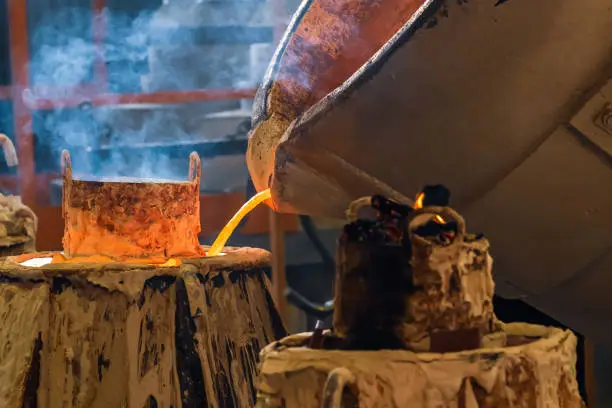
For specific low-volume needs, artisan foundries may need to use hand casting methods to make each mold individually while being closely watched. This method works well for custom electrical art pieces, restoration projects, or specialized study parts that need to be made in less than 50 units, which makes automated processes too expensive. Hand casting lets you change the pouring temperature and method in real time by looking at how the metal flows and how the mold fills up.
Industrial casting uses automated systems that make sure accuracy from batch to batch, which is important for OEM supply lines. Through spectroscopic tracking, automated melting furnaces keep the exact chemistry of the alloy, and automatic filling systems make sure that the fill rates and temperatures are always the same. Statistical process control keeps track of changes in dimensions between production runs. This gives aerospace and car tier-1 suppliers the proof they need for approval and ongoing quality assurance.
Procurement Considerations for B2B Clients: Choosing the Right Copper Casting Supplier
When looking for cast copper electrical parts, it's not just the price per unit that matters; the supplier's skills also play a big role in how well the project turns out. To find foundry partners that can meet both technical performance and supply chain stability, engineering managers and procurement leaders have to look at a number of factors.
Essential Evaluation Criteria
The ability to be precise is what suppliers are judged on. Electrical parts need to be consistently accurate in their sizes to make sure they fit correctly in circuits and make good electrical contact. Capability Process Index (Cpk) numbers above 1.67 for key dimensions show that leading providers are capable; this means that the process is well controlled and there is little variation. By asking for sample parts with full dimensional inspection records, you can compare the real performance to the limits that were promised.
Certifications in an industry show that you are committed to quality processes and following the rules. ISO 9001:2015 certification shows basic quality management, and ISO 14001 certification talks about environmental duty, which is becoming more and more important to companies' efforts to be more environmentally friendly. Suppliers who work with automakers should keep their IATF 16949 approval, which shows that they know about PPAP paperwork, FMEA analysis, and other quality standards for automakers.
Suppliers of electrical parts gain from being recognized by UL and following the rules set by RoHS for material limits. For copper casting suppliers, holding these certifications is not just a paperwork exercise—it directly demonstrates process stability, traceability, and compliance with restricted material regulations that are critical for both automotive and electrical customers.
Lead times and production ability affect how projects are scheduled and how much overstock is kept on hand. Make sure you understand how batch sizes affect schedule for both prototype turn-around times and production cycle times. Suppliers who keep enough capacity gaps can handle rush orders and changes in demand without lowering the quality of their products. Transparency in production ability helps procurement teams figure out if providers can keep up with rising program numbers.
Requesting Quotes Efficiently
Detailed technical specs make the quote process go more quickly and avoid mistakes that lead to expensive changes. Along with PDF prints, you should include dimensional sketches in STEP or IGES format that clearly show the important measurements, the surface finish that needs to be met, and the electrical performance standards. Instead of using private alloy names that might need to be explained, material specs should link to industry standards like ASTM B505 for copper castings and C11000 for electrical uses.
Suppliers can suggest the best investments in tools and production plans based on annual volume estimates and expected release dates. The costs of making a single prototype are very different from the costs of making 10,000 units. As production numbers rise, the cost per unit falls as set tooling costs are spread out over more units. By being clear about the number goals from the start, you can avoid having to re-quote when orders come in.
Responding quickly to the quote part is often a good indicator of how well the supplier will communicate in the future. It takes professional foundries 24 hours to respond to quote requests and five to seven business days to send full offers. Tooling costs should be listed separately from unit prices in proposals. Lead time factors should also be explained, and any standard issues that need engineering talk should be noted. This openness shows that the provider is interested and has the right technical skills.
Industry-Leading Foundry Characteristics
Integrated skills that cover the entire production chain are a hallmark of high-performing copper casting providers. Full-service foundries make patterns, cast, machine, and finish parts in-house. This gives customers a single point of responsibility and makes contact easier. With this vertical merger, there are no more delays caused by coordinating between companies, and quality control is maintained throughout the entire manufacturing process.
As companies' environmental goals grow, sustainability practices have a bigger impact on which suppliers they choose. Modern foundries use closed-loop systems to recycle water, electric induction melting to cut down on pollution compared to fossil fuel burners, and get more than 95% of metal recycled. These methods have less of an effect on the environment and often make the process more consistent by making it easier to control the temperature and lowering the risk of contamination.
Geography factors weigh the advantages of being close to others against the need for particular skills. Domestic providers have shorter lead times, easier transportation, and more convenient site trips for checking up on things and fixing problems. For high-volume projects that can wait for ocean freight, international sources may offer specific alloy knowledge or lower costs. Hybrid sourcing strategies use domestic sources for samples and pressing needs while relying on foreign partners for large production runs where cost is an issue.
Conclusion
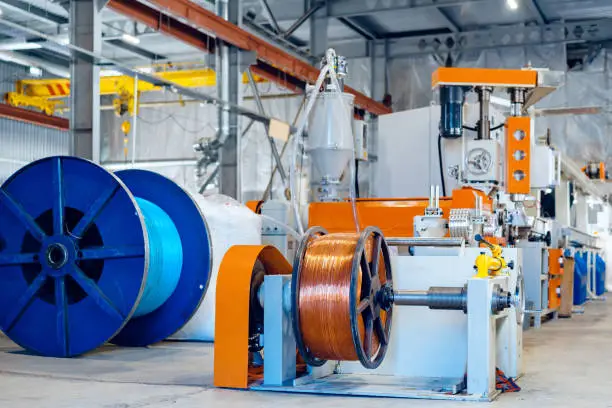
When conductivity, accuracy, and dependability are very important for electrical parts, professional copper casting is the only way to go. Specialized foundries use carefully controlled metalworking methods to make parts that are 100% IACS conductive while still having the complicated shapes and close specs that are needed for modern electrical systems. Choosing the right casting method, like investment, sand, or lost wax, is important for getting the best performance and cost-effective production.
Quality assurance methods that find and stop porosity, inclusions, and other flaws make sure that the electrical performance stays the same across all production amounts. When procurement teams work with experienced casting providers, they get access to technical knowledge, flexible production options, and a reliable supply chain that helps them meet innovation deadlines and achieve long-term program success in tough situations.
FAQ
What Temperature Range Is Required for Effective Copper Casting?
The melting point for professional copper casting is between 1,085°C and 1,200°C, based on the metal and the casting method. Copper melts at 1,085°C, but copper alloys with extras that make them easier to cast or give them certain qualities need slightly higher temperatures. Pouring temperatures are usually 50 to 150°C above the liquidus temperature. This is done to make sure that the material is flexible enough to fill the mold all the way to the top without getting too hot, which can cause oxidation and gas absorption. Foundries use thermocouples and pyrometers to keep precise temperature control, since changes of just 20 to 30°C can have a big effect on the quality of the casting and its final conductivity.
How Does Casting Compare to Machining for Electrical Applications?
Casting makes nearly net-shape parts that use more than 85% of the material, while cutting from solid stock usually throws away 40–60% of the material as swarf. Casting lets you make parts with complicated internal shapes like cooling channels or cable passing tunnels, but multi-axis machining is too expensive for most people. Machining is the best way to make small parts with very tight tolerances (less than ±0.025mm) and when production numbers are too low to justify investing in casting tools. When you combine cast blanks with finish machining, you get the best of both cost and performance. Casting is used for general shape, while finish machining is used to make important electrical contact areas.
Can Small Batch Casting Deliver Consistent Quality for Prototypes?
These days, copper casting methods are very repeatable, even when only making a few prototypes. No matter what size the batch is, professional foundries use the same process controls, melting methods, and quality checks. When it comes to low-volume needs, investment casting is perfect because the cost of the tools stays low for amounts as low as ten units. Lead time is the most important thing to think about because foundries usually combine several small orders to get the most out of their furnaces. While prototype casting costs a little more per unit than high-volume runs, it lowers total program risk by letting you test both mechanical fit and electrical performance before committing to production.
Partner with Fudebao Technology for Superior Copper Casting Solutions
To improve the performance of your electrical components, you need a manufacturing partner with both mechanical knowledge and the ability to make precise parts. We at Zhejiang Fudebao Technology Co., Ltd. are experts in precision cutting and casting copper alloys. We work with companies in North America and around the world in the energy, industrial equipment, and car industries. Our factory uses both high-tech casting methods and fast CNC machine centers to keep errors as low as ±0.05mm and allow for flexible production from small batches to large ones.
We have full control over the whole process, from freezing to treating the surface, so every part has the best conductivity possible. As a well-known copper casting manufacturer that works directly with top international names, we know that your projects need strict paperwork and quality standards. Get in touch with our engineering team at hank.shen@fdbcasting.com to talk about the details of your electrical parts, get detailed technical quotes, and find out how our integrated manufacturing approach gives you better performance and more reliable supply chain that helps your innovation move forward.
References
1. Anderson, K. R. (2021). Metallurgical Principles in Copper Alloy Casting for Electrical Applications. Materials Engineering Press.
2. Chen, W., & Roberts, P. (2020). "Conductivity Optimization in Cast Copper Components Through Process Control." Journal of Materials Processing Technology, 287, 116-129.
3. Davies, M. L. (2019). Modern Foundry Practices: Copper and Copper Alloys. Industrial Press Inc.
4. International Copper Association. (2022). Copper Casting: Technical Guidelines for Electrical Applications. ICA Publication Series.
5. Thompson, J. S., & Martinez, R. (2020). "Defect Analysis and Quality Assurance in Electrical Copper Castings." Transactions of the American Foundry Society, 128(4), 445-462.
6. Williams, H. T. (2023). Advanced Casting Technologies for High-Conductivity Applications. Manufacturing Technology Institute.



_1756347888208.webp "New energy motor shell")
_1756360265131.webp "Aluminum casting chair legs")
_1756352822273.webp "Stainless steel plugs")
_1756350092126.webp "radiator cover")
_1756349696500.webp "Pulley aluminum casting")