
Precision and Performance: The Role of Die Casting in Aerospace and Aviation Manufacturing
2026-07-13
Die casting for aviation is a revolutionary way to make things that meet the most important needs of the aerospace industry: very accurate measurements, strong, lightweight structures, and dependability even in harsh conditions. By injecting molten aluminium, magnesium, or zinc alloys under high pressure into precisely engineered steel moulds, this method makes aircraft parts with tolerances as small as ±0.05mm and lowers the weight of the whole assembly by up to 40% compared to traditional steel fabrication. This technology is used by the aircraft industry to make important parts like engine housings, structural frames, and electrical enclosures that can withstand temperature changes from -65°F to 250°F, vibration loads of more than 15G, and years of heavy use without breaking.
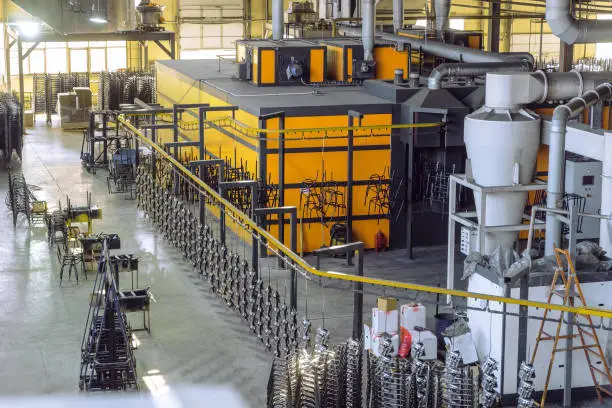
Understanding Die Casting in Aerospace Manufacturing
The High-Pressure Die Casting Process Explained
High-pressure die casting (HPDC) turns liquid metal into solid parts for spacecraft in a matter of seconds. A molten aluminium alloy that has been heated to about 1,220°F flows into a hardened steel die cavity at pressures between 10,000 and 25,000 psi. This huge force makes sure that even the most complicated shapes are filled, like cooling tubes that are as thin as 2 mm and mounting bosses that have built-in holes for fastening. The fast solidification rate—usually 1-3 seconds for thin-walled sections—makes a fine-grain structure that improves mechanical properties while keeping the material uniform throughout the casting.
Material Selection for Aviation Applications
Aerospace experts focus on certain aluminium metals that have the best mix of speed and ease of casting. The widely used A380 alloy is very fluid and can be filled with a die, which makes it good for complex housing shapes that need ribs and bosses that are built in. When heated, A356 alloy has a tensile strength close to 40 ksi, which makes it perfect for load-bearing structural brackets that are subject to cyclic fatigue. The lightest materials are magnesium alloys like AZ91D, which have a density of 1.8 g/cm³. However, they need to be used with care to prevent corrosion. Material tracking is still very important, and before production starts, each batch is spectroscopically checked to make sure it meets chemistry standards.
Dimensional Accuracy and Surface Quality Standards
Normal casting methods have a hard time meeting the dimensional stability needs of aviation parts. Die casting for aviation usually keeps tolerances within ±0.005 inches at key mounting points, so expensive secondary machining isn't needed. As-cast surface finishes measuring 63–125 Ra microinches are made by the high-pressure injection. These finishes are smooth enough for many uses without extra polishing. Temperature-controlled die methods keep the hole sides at 400–500°F, which stops the material from solidifying too quickly and reduces thermal distortion. Component wall thickness consistency stays within 0.010 inches over production runs of more than 50,000 cycles, making sure that parts can be switched out on aircraft assembly lines.
Comparing Die Casting with Other Manufacturing Techniques for Aviation Parts
Cost-Efficiency Analysis Across Manufacturing Methods
When numbers go over 5,000 units per year, production costs strongly favour die casting for aviation. A tooling investment of $15,000 to $80,000 is quickly paid back by lower per-part costs of $3 to $12 for medium-complexity parts. CNC machining can get better tolerances (less than ±0.002 inches), but it wastes more than 70% of the material it cuts and takes hours instead of seconds to complete a cycle. For undercuts and internal openings, investment casting gives designers more freedom, but it takes 8–12 weeks to make the ceramic shell, compared to 6–10 weeks for die casting tool creation. The volumetric efficiency is what matters—die casting can make finished parts at a rate of about 200 to 600 shots per eight-hour shift.
Mechanical Property Comparisons
Forging aligns the grains better than die casting, which leads to tensile strengths that are 15 to 20 percent higher in the same alloys. This benefit is most important for landing gear parts that are under a lot of stress and control surface hinges that can last longer than 50,000 flight rotations. Die castings, on the other hand, can be made into almost any shape, which means they use 60% less raw material than forged blanks that need a lot of machining. Traditional methods can't improve the topology as much as additive manufacturing can. However, current metal powder bed fusion systems have trouble making more than 50 parts a month and need a lot of work to smooth out the surface.
Quality Certification Requirements
Manufacturing for the aerospace industry must follow AS9100 quality management systems, which add rules that are special to aerospace to ISO 9001 standards. NADCAP accreditation makes sure that specific processes, like chemical processing, heat treatment, and non-destructive testing, follow strict rules for how they should be done. Die casting providers have to show that they use statistical process control to keep an eye on the metal's chemistry, chamber temperatures, and injection speeds for each production lot. The first article inspection reports show that using calibrated CMM equipment that meets NIST standards, all of the specified characteristics were checked for size.
Design Considerations and Common Challenges in Aerospace Die Casting
Optimizing Part Geometry for Castability
For die casting for aviation design to work, all vertical surfaces should have draft angles between 1 and 3 degrees. This makes ejection easier and prevents damage to the surface. Differences in wall thickness don't cause stress concentrations inside the wall because of uneven cooling rates. To go from thick to thin sections, there should be gradual tapers instead of sharp steps. Ribs and gussets make structures more rigid without adding mass, but they should still be 50–75% of the width of the walls next to them to keep the uniformity of solidification. Coring methods make internal openings to reduce weight, but they make the tool more complicated and require it to be able to handle high injection pressures without moving.
Addressing Porosity and Defect Prevention
When trapped air can't escape during cavity filling, gas porosity becomes the most important trait to look at. Putting gates in the right places guides the flow of metal to blow air toward vents that were machined at the locations of the parting lines. With vacuum-assisted die casting, the cavity pressure is lowered to 50–150 mbar before injection. This makes it much less likely that gas will get trapped in important structural areas. When metal solidifies, shrinkage porosity appears in areas where liquid metal can't reach because of increasing pressures during the freezing phase, which push more material into these areas. X-rays and computed tomography scans are used to make sure that flight-critical parts that need a 100% detailed check are structurally sound.
Thermal Management and Dimensional Stability
The temperature control systems move heat transfer fluids through cooling ducts that are made into die blocks. This keeps the surface temperatures of the dies within ±10°F during production cycles. Consistent thermal conditions stop warping and dimensional drift, which makes it harder to accurately place holes next to each other. It's important to be careful when placing ejector pins because uneven ejection forces can bend thin-walled sections when parts are being removed. A heat treatment at 350°F for 4 to 6 hours after casting releases residual stresses that were locked in during rapid solidification. This stabilises the dimensions before the final machining operations.
Strategic Procurement and Supplier Selection in Aerospace Die Casting
Evaluating Supplier Capabilities and Certifications
Procurement teams evaluate possible die casting for aviation partners by doing full capability checks that look at how advanced the equipment is, how mature the quality systems are, and how much technical knowledge the company has. Suppliers should use machines with clamping forces between 400 and 3,000 tonnes and real-time process monitoring that shows injection pressures, metal temperatures, and cycle times. On-site metallurgical labs with spectrometers, hardness testers, and metallography stations show that they can analyse materials and figure out why they failed. Although AS9100 certification proves that procedures are followed, it is not enough on its own. Real production records need to be audited to see real quality performance trends.
Balancing Cost, Lead Time, and Quality Priorities
The economic approach that supports die casting at higher numbers is challenged by small-batch aerospace production that makes 500 to 2,000 pieces per year. Tooling lead times can be cut down to 4 to 6 weeks by suppliers who offer rapid tooling through accelerated machining and simplified cooling designs. This lets prototype validation programs get to market faster. With dual-cavity tooling, production rates are doubled, and the cost of the tools is spread out over several parts with similar envelope dimensions. Long-term supply agreements that guarantee a certain amount of goods encourage suppliers to put money into dedicated production cells and inventory management systems that support just-in-time delivery schedules that match the order of aircraft assembly.
Building Strategic Partnerships for Innovation
Working together with a source means more than just buying things. It also means working together on projects to make things lighter and better ways to make things. When suppliers are involved early on in the planning steps of a component, they can find ways to cut costs by combining parts and adding new features. Suppliers use mold-flow analysis software to help with simulations that predict filling patterns, find potential flaws, and find the best gate locations before making the tools. As part of technical support after the sale, failures in the field are looked into using metallurgy, old parts are reverse-engineered, and the process is constantly improved to keep scrap rates below 2%.
Future Trends and Innovations in Aerospace Die Casting
Industry 4.0 Integration and Smart Manufacturing
Modern die casting for aviation plants uses sensor networks to keep an eye on more than 50 process parameters during each production cycle. The data is then sent to cloud-based analytics platforms that can spot small changes in quality before they get out of hand. Machine learning algorithms that have been trained on millions of production cycles can predict the best process windows for new component shapes. This cuts down on the need for trial-and-error sampling when a new product is first introduced. Digital twin technology makes virtual copies of real die casting cells. This lets problems be fixed and operators trained using simulations without stopping production. Real-time tracking systems give each casting a unique number that connects it to a specific material lot number, production factors, and inspection results for as long as it is in use.
Advanced Materials and Hybrid Processes
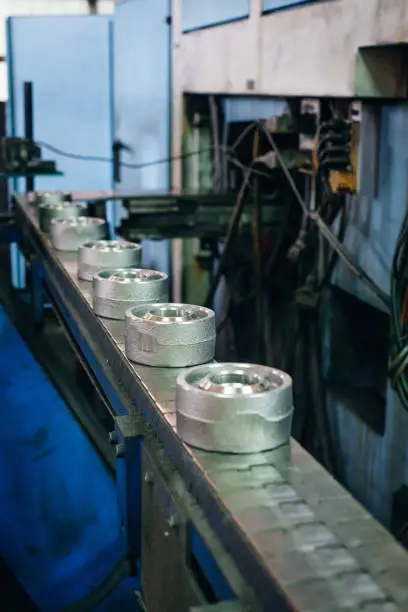
Using composite die casting methods, ceramic reinforcement fibres are mixed into aluminium layers to make them 30% stiffer without adding any weight. These metal matrix composites fix the problem of mismatched thermal expansion in parts that join aluminium castings to carbon fibre composite structures, which are becoming more common in modern aeroplane frames. When semi-solid metal casting methods are used with aluminium slurries instead of fully liquid metal, turbulence during injection is reduced. This reduces the number of holes in thick-section parts that are normally hard for conventional HPDC. Plasma electrolytic oxidation and other surface engineering techniques can be used to make ceramic-like coatings that are more than 100 microns thick. These coatings are resistant to wear and have dielectric properties that make them useful for electrical housing applications.
Sustainability and Circular Economy Principles
Aluminium can be recycled over and over again, which is in line with the aircraft industry's goal of becoming carbon-neutral by 2050. Closed-loop recycling systems take in production waste and parts that are no longer needed and melt them down again without changing their properties. This process can be repeated many times. Melting furnaces with regenerating burners use 40% less natural gas than older equipment because they are more energy efficient. Lightweighting helps the environment for a longer time than just the 20 years that an aeroplane is in service—every kilogram taken off the frame of an aeroplane saves about 3,000 litres of fuel. The total environmental impact is measured by life cycle assessments, which help choose materials and improve processes so that they have the least possible effect on the environment.
Conclusion
Die casting for aviation technology is an important part of manufacturing for the aerospace and aviation industries that want to meet strict goals for performance, cost, and environmental friendliness. The process is the most efficient way to make complex aluminium parts that need to be made with tight tolerances, have great surface quality, and keep their mechanical qualities the same over long production runs. Strategic partnerships with suppliers based on thorough quality systems, advanced technical skills, and a willingness to work together to come up with new ideas help procurement teams find reliable sources for parts that support competitive aircraft programs. As aviation moves toward next-generation electric power and autonomous flying systems, new technologies like smart manufacturing integration, advanced material systems, and environmentally friendly production methods will make die casting more important than ever.
FAQ
What aluminum alloys work best for aviation die casting applications?
Aerospace die casting for aviation is mostly done with the A380 aluminium alloy because it is very fluid and can fill complex shapes completely. It is also resistant to corrosion and stable in its shape. When heat-treated with T6, A356 metal becomes stronger and closer to 40 ksi in tensile strength. This makes it a good choice for structural braces and load-bearing parts. At 1.8 g/cm³ density, magnesium alloys like AZ91D save the most weight, but they need protective coatings to stop galvanic corrosion when they come into contact with different metals in aircraft parts.
How does die casting durability compare to forged aerospace components?
Because the grains move along the shape of the part, forged parts usually have 15-20% higher tensile strength and better wear resistance. Die moulds counter with near-net-shape accuracy, which cuts production costs by 40–60% while still providing good mechanical qualities for most airframe uses, excluding landing gear and engine mount parts that are put under a lot of stress. With the right alloy choice and heat treatment, die castings can meet the durability needs of parts that will be under moderate stress for 30 years of aircraft service.
Which certifications should aerospace die casting suppliers maintain?
The basic requirement for a quality management system is AS9100 certification. This goes beyond ISO 9001 standards and adds controls for managing configurations, assessing risks, and preventing fake parts. Achieving NADCAP accreditation means that specialised process skills like non-destructive testing, heat treatment, and chemical processing meet strict requirements for how they should be done. More certifications, like ITAR registration, let you work with technical data that is related to defence, and ISO 14001 environmental management systems show that you're committed to using sustainable manufacturing methods, which is something that major aircraft OEMs are asking for more and more.
Partner with Fudebao Technology for Certified Aerospace Die Casting Solutions
Defence and aerospace projects need manufacturing partners with quality systems that have been approved, technical know-how that has been proven, and the ability to produce in a variety of ways. Zhejiang Fudebao Technology has facilities that are in line with AS9100 standards. These facilities have advanced die casting machines with clamping forces ranging from 400 to 2,500 tonnes. These machines can make parts that are as small as electrical housings or as big as structural brackets with envelope dimensions over 600 mm. Our streamlined manufacturing process includes melting aluminium, precise CNC machining, and surface treatment. The end result is finished parts that are dimensionally accurate to within ±0.05mm and are ready to be put together for your die casting for aviation requirements.
During the design phase, our engineering team uses mold-flow simulation and DFM analysis to find the best part geometry for casting while keeping weight and cost as low as possible. Material traceability methods connect each casting to official mill test results and records of the production parameters. This helps meet the strict paperwork needs of aviation quality systems. We have built relationships with top aerospace suppliers that show we can handle complicated projects that need PPAP submissions, first article inspections, and ongoing process audits.
Talk to our aerospace die casting experts about the parts you need, look over our capability documentation, and find out how our certified manufacturing systems can help your aviation supply chain. You can get technical specs, capability presentations, or quotes for your next show by emailing hank.shen@fdbcasting.com. Choose a die casting for an aviation company that can provide accuracy, certification, and dependability at every stage of production.
References
1. Campbell, J. (2015). Complete Casting Handbook: Metal Casting Processes, Metallurgy, Techniques and Design. Butterworth-Heinemann Publications.
2. North American Die Casting Association. (2019). Product Specification Standards for Die Castings Produced by the Semi-Solid and Squeeze Casting Processes. NADCA Standards Publication.
3. ASM International Handbook Committee. (2018). ASM Handbook Volume 15: Casting. ASM International Materials Park.
4. Society of Automotive Engineers. (2020). Aerospace Material Specification AMS 4291: Aluminum Alloy Castings for Aerospace Applications. SAE International Standards.
5. Kaufman, J.G. & Rooy, E.L. (2016). Aluminum Alloy Castings: Properties, Processes, and Applications. ASM International Technical Publications.
6. International Aerospace Quality Group. (2018). AS9100D Quality Management Systems - Requirements for Aviation, Space and Defense Organizations. SAE Aerospace Standards Division.



YOU MAY LIKE