
Aluminium Die Casting for Aerospace Components
2026-07-13
Aluminium die casting for aerospace parts is a revolutionary way to make things. Molten aluminium alloy is poured into precise steel molds under pressures of more than 10,000 psi, making parts that are both light and strong, which are needed for modern aviation. Die casting for aviation solves some of the biggest problems in the industry, like making planes lighter so they use less fuel, making complicated shapes with built-in features in a single step, and making sure that the dimensions of thousands of units stay the same while still meeting strict safety standards.
Understanding Aluminium Die Casting in Aerospace
The Fundamentals of Aviation Die Casting
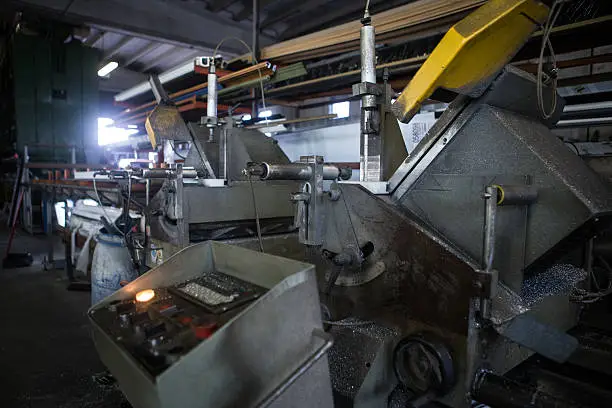
High-pressure injection of liquid metal into hardened steel dies is how die casting for aviation works. This method makes complex aviation components that can be made over and over again. Aluminium alloys are heated to about 660°C at the start of the process and then pushed into mold cavities at speeds of up to 100 meters per second. When pressure is applied quickly, fine-grained microstructures are made that have better mechanical properties than those made by sand casting or gravity casting. This level of accuracy is needed in aviation because parts like turbine housings, structural brackets, and instrument enclosures have to be able to handle high temperatures, vibrations, and stress cycles for many years.
Why Aluminum Dominates Aerospace Casting
Aluminium die casting for aviation is used in aircraft because it has a great strength-to-weight ratio. Its density is about 2.7 g/cm³, which is about one-third that of steel. This weight advantage directly leads to more payload space and less fuel use. For every kilogram taken off the structure of an aircraft, operational costs go down over the life of the vehicle. Aluminium alloys are also very good at transferring heat (about 120 W/m·K), which makes them perfect for use in aircraft housings and electronic component cases where heat management keeps equipment from breaking down during flight operations.
Real-World Aerospace Applications
Die-cast Aluminium is used by top aircraft manufacturers to make engine mounting brackets that keep powerplants in place while allowing for thermal expansion during operation. The process can combine mounting bosses, ribs, and lightning pockets into single castings, which means that welding joints that could fail don't have to be used for structural parts in landing gear assemblies. Aluminium's electromagnetic shielding properties and die casting for aviation's ability to make thin-walled sections as thin as 2 mm help cockpit instrument panels and communication system housings meet weight goals without sacrificing structural integrity or signal protection.
Materials and Technologies in Aerospace Die Casting
Critical Aluminum Alloys for Aviation
The choice of material has a big impact on how well a die casting for aviation works. The anodising properties of A360 alloy are better for protecting against rust in coastal or marine activities. However, because it has less silicon, it needs to be carefully controlled during the process to avoid hot cracking. A380 is still the most popular metal. It is easy to cast and doesn't change shape much, and its 8.5% silicon content makes it easy to fill molds with complicated shapes. Specialised alloys, such as DMA (which has 5% silicon and controlled iron levels), are used in places that need the best surface quality and weldability. This is especially true for fuel system parts that need to be safety-certified with leak-proof joints.
Advanced Casting Technologies
Today, vacuum-assisted die casting is used in aircraft production to get rid of porosity that is caused by trapped air during high-velocity injection. This technology lowers the chamber pressure to 50 millibars before injecting metal. This makes the inside of the part sound enough for pressure-tight parts like hydraulic valve bodies and pneumatic system manifolds. Another improvement is squeeze casting, which uses extra pressure during solidification to squeeze dendrite structures and reduce shrinkage defects. This makes the metal's mechanical properties more like those of forged aluminium while keeping the benefits of die casting for aviation's geometric complexity.
Quality Control and Defect Management
Porosity, which can be caused by gas entrapment or solidification shrinkage, is still the biggest problem in die casting for aviation uses. To fix this, we've improved the gating systems so that they encourage gradual solidification. This way, shrinkage is directed toward the stairs instead of the vital load-bearing parts. Using cavity pressure sensors to watch the process in real time can find incomplete fills or early solidification. This sets off automatic changes to the injection settings before the defective parts get to the next step in the process. X-rays and computed tomography scans check the internal integrity of production samples to make sure they meet aerospace standards, which usually say that primary structural zones can't have any holes bigger than 0.5 mm.
Comparing Aluminium Die Casting with Other Manufacturing Methods
Die Casting Versus Traditional Forging
Forging has the highest ultimate tensile strength. For example, worked aluminium alloys can reach 400 MPa or more through grain flow alignment, while die casting for aviation only gets to 320 MPa on average. Die casting for aviation, on the other hand, doesn't need the lengthy machining that comes after forging, where up to 60% of the billet material is turned into chips to get the finished shape. Die-cast parts come out almost net-shaped and only need minor machining for the sealing faces and fastener holes. This cuts down on manufacturing lead times from weeks to days and greatly reduces the amount of waste. Forging is best for landing gear struts and wing attachment fittings that are under a lot of stress, while die casting for aviation is best for bracket assemblies, housings, and secondary structures that need to be strong but have a complicated shape.
Investment Casting and Precision Machining Alternatives
Investment casting has a better surface finish and tighter standards than sand casting, but it takes hours per component instead of minutes for die casting for aviation to make one. Investment casting is only cost-effective for small amounts of production or special high-temperature alloys that can't be used with die casting for aviation dies because of the time it takes to make the wax pattern, build the ceramic shell, and let the metal solidify. Tolerances of up to ±0.01mm can be reached with CNC machining from billet, but the process wastes a lot of material and takes a long time. We see procurement teams choose machining for prototyping and low-volume beginning production. When production levels reach more than 5,000 units per year, they switch to die casting for aviation because the cost per piece drops by a huge amount.
Emerging Hybrid Manufacturing Approaches
Aerospace companies that are on the cutting edge now use both die casting for aviation and CNC machining to make critical parts. This balances cost and performance. In a typical hybrid workflow, structural envelopes are die-cast and come with built-in mounting holes. Bearing bores, threaded inserts, and sealing surfaces are then precision-machined to meet aerospace tolerances. This method cuts down on machining time by 70% compared to billet machining while still maintaining dimensional control when engineering requirements call for it. It's the best compromise that procurement professionals should look at when trying to balance performance needs with limited budgets.
How to Choose Your Aerospace Die Casting Supplier
Essential Certifications and Standards Compliance
Suppliers of aerospace die castings for aviation must show that they have AS9100 approval. This is the aircraft industry's quality management standard, which adds to ISO 9001 by requiring more control over configurations, tracking, and managing risks. When a supplier is NADCAP-accredited for non-destructive testing, it means that their inspection methods meet the needs of aerospace prime contractors. These inspection methods include fluorescent penetrant inspection, radiographic examination, and dimensional verification. These certifications are more than just pieces of paper; they confirm methodical approaches to process validation, measurement system analysis, and the implementation of corrective actions that keep nonconforming parts from getting into aircraft assemblies, where they could fail in terrible ways.
Manufacturing Capabilities Assessment
To check out possible sources, you need to look at the tonnage capacity of die casting machines. For aircraft parts, the tonnage capacity ranges from 400 to 4,000 tonnes, and bigger machines can make structural housings and gearbox cases in one operation. Vertical integration, which cuts down on the time and quality risks that come with moving casts between sites, is shown by CNC machining capabilities that are built in. We keep high-speed machining centers that can hold tolerances of ±0.05mm and CNC lathes for finishing rotating features. These help us deliver the whole component, from the raw casting to the finished part, along with full measurement reports and material certifications.
Supply Chain Resilience and Partnership Approach
When buying aerospace products, suppliers need to have good backup plans. These plans should include qualified other die providers for fixing tools and extra production capacity in case the schedule needs to be sped up when the rate of aeroplane production goes up. Long-term partnership orientation is also very important. Suppliers who take the time to understand what the customer wants and take part in early design reviews deliver optimised parts that meet both performance and manufacturability requirements. Our engineering team works with aerospace customers to come up with new ideas. They suggest changes to the designs that will improve the quality of the castings and lower the costs of the tools that are used. This creates mutual value that goes beyond just buying things.
Procurement Best Practices for Aluminium Die Cast Aerospace Components
Defining Requirements and Collaborative Design
To successfully buy die casting for aviation, you need detailed requirements that include more than just size tolerances and material lists. These should also include information about the working conditions, how many parts will be loaded, and how long they should last. Manufacturability optimisation can be achieved by involving suppliers in the design process. For example, wall thicknesses can be changed to promote regular solidification, draft angles can be added to make mold release easier, and weight can be reduced without sacrificing strength by adding coring. This way of working together usually cuts down on tooling changes by 40% and speeds up the time it takes to start production. This means that parts get to the assembly lines faster, and expensive design changes don't have to be made after the tooling commitment.
Supplier Audits and Quality Monitoring
On-site audits are done on a regular basis to make sure that suppliers keep up with process controls and equipment calibrations in between certification renewals. Effective audits look at what really happens on the production floor, like making sure that die temperature tracking happens at regular times, that X-ray systems are checked for performance every day, and that nonconforming materials are kept separate from acceptable ones so they don't get mixed up. By using statistical sampling plans and incoming inspection protocols, you can catch process drift before a lot of defective parts build up. Working together with suppliers to do root cause analysis also fixes systemic problems instead of just getting rid of individual nonconforming lots.
Market Intelligence and Strategic Sourcing
The price of aluminium changes with the London Metal Exchange, which can affect the cost of die casting for aviation when long-term contracts don't allow for adjustments. Smart procurement teams keep an eye on these indicators and work out pricing plans that make sure that both the buyer and the supplier share the risk of the commodity fairly. This keeps the supplier's finances from getting too tight, which could hurt the supplier's ability to stay in business. Dual-sourcing strategies for critical components lower the risk of supply disruptions, but aerospace has strict approval processes that mean qualifying alternate suppliers takes 12 to 18 months for testing and validation. This means that procurement must start planning ahead of time, before supply constraints appear.
Conclusion
When it comes to making aerospace parts, aluminium die casting for aviation has the best benefits. It combines lightweight construction with complicated geometries and scalable production that meets the needs of modern flying. To be good at buying, you need to know the basics of material science, carefully check the credentials and skills of suppliers, and form partnerships with them that help you make plans that are as efficient as possible for production. By using these tips, procurement professionals can find reliable, high-performance die-cast parts that meet the strict standards of aerospace while keeping costs low throughout the lifecycles of those parts.
FAQ
What makes die casting superior to other methods for aviation components?
Die casting for aviation keeps the dimensions of parts within ±0.1mm across production runs, gives them better surface finishes while cutting down on secondary operations, and speeds up the cycle time from hours to minutes. The process makes nearly net-shape parts that use 50–70% less material than machining from billet, and built-in features like mounting bosses and ribs get rid of the need for assembly. Because of these benefits, the total cost of acquisition is lower when more than a few thousand units are made each year. This makes die casting for aviation the best method for making brackets, housings, and structural parts for modern aircraft.
Can die-cast aluminum components meet aerospace strength requirements?
With the right heat treatment, modern aluminium die casting alloys can reach tensile strengths of 280 to 340 MPa, which is enough for most secondary structures in aerospace and many primary components. The final strength of die-cast parts is still lower than that of forged aluminium, but the optimised geometry—strategic ribs and section thickness variations—makes up for it. Before they are approved for use in the air, parts are put through a lot of tests, such as static load checks, fatigue cycling to model service life, and external exposure checks to make sure they are resistant to corrosion. These tests make sure the parts meet or exceed technical standards.
Partner with Fudebao Technology for Aerospace Die Casting Excellence
Zhejiang Fudebao Technology is ready to help you with your needs for aircraft parts. They have a wide range of die casting for aviation skills and an advanced manufacturing infrastructure to back them up. Our factory has both low-pressure and high-pressure die casting machines, as well as precise CNC machining centers that keep an accuracy of ±0.05mm. This means that we can send parts from molten aluminium all the way through to finished, tested parts. We provide strict quality systems to international aerospace suppliers that include tracking materials, checking dimensions, and non-destructive testing protocols that are in line with aviation industry standards.
As a certified aluminium die casting supplier that has worked with automakers and companies that make industrial equipment, we know how important it is for aerospace applications, where the safety of parts depends on how well they work. During the whole development process, our engineering team works with customers to make sure that designs are optimised for castability while still meeting performance goals for the structure. Get in touch with Hank Shen at hank.shen@fdbcasting.com to talk about your unique aerospace die casting needs and find out how our one-stop production can help your supply chain by delivering reliable, precise parts on time.
References
1. American Foundry Society (2021). Aluminum Casting Technology Handbook: Theory and Practice for Die Casting Operations. Des Plaines: AFS Publications.
2. Campbell, J. (2015). Complete Casting Handbook: Metal Casting Processes, Metallurgy, Techniques and Design (2nd ed.). Oxford: Butterworth-Heinemann.
3. North American Die Casting Association (2020). Product Specification Standards for Die Castings Produced by the Semi-Solid and Squeeze Casting Processes. Wheeling: NADCAP Publications.
4. SAE International (2019). AMS2772: Heat Treatment of Aluminum Alloy Castings. Warrendale: SAE Technical Standards Board.
5. Sully, M. & Harrison, N. (2018). "Lightweight Materials for Aerospace Applications: Aluminum Die Casting Advancements." Journal of Materials Processing Technology, 256, 112-128.
6. Aerospace Industries Association (2022). AS9100 Quality Management Systems: Requirements for Aviation, Space and Defense Organizations. Arlington: AIA Standards Division.



YOU MAY LIKE