
Precision Aluminium Die Castings for Custom Engineering Solutions
2026-08-10
Precision aluminium die castings represent a critical manufacturing technology that transforms molten aluminium alloys into complex, near-net-shape components through high-pressure injection into precision steel molds. This process delivers exceptional dimensional accuracy, typically within ±0.05mm tolerances, combined with excellent surface finishes that minimize secondary machining requirements. Industries ranging from automotive to aerospace rely on aluminium die castings to produce lightweight yet structurally robust components such as transmission housings, motor enclosures, and structural brackets. The technology addresses key engineering challenges by reducing component weight by up to 60% compared to steel alternatives while maintaining mechanical integrity.
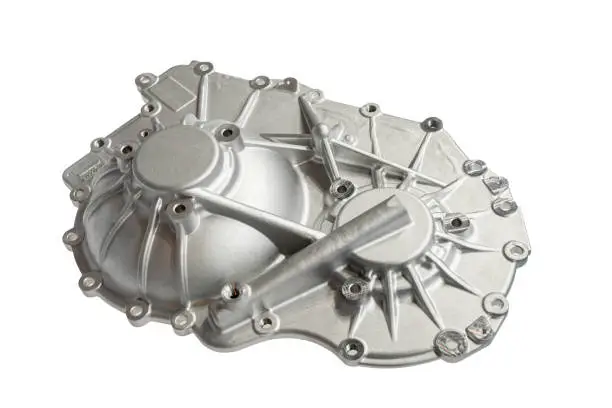
Understanding Aluminium Die Casting and Its Engineering Advantages
Learn about aluminium die casting and the engineering benefits it offers. Melting an aluminium alloy and forcing it into hardened steel dies at pressures between 10,000 and 25,000 psi is the basic idea behind aluminium die casting. This high-pressure process pushes the metal into very precise holes, making exact copies of even the most complicated shapes. Aluminium die casting, on the other hand, has fast solidification rates that create fine-grain microstructures, which directly leads to better tensile qualities.
The Core Manufacturing Process
At Fudebao Technology, the production process starts with precise mould creation. This is where engineers make tools that take heat shrinking and part ejection angles into account. The process goes through a number of important steps that determine the quality of the final product.
As part of mould preparation, dies are heated to the right temperature, which is usually between 150°C and 250°C based on the metal chosen and the complexity of the part. This heat management stops solidification before it's time and makes sure that all the holes are filled. Molten aluminium that is kept at a temperature of 660°C to 700°C goes through a degassing process to get rid of hydrogen porosity, which is a common flaw that weakens the structure.
During filling, fill speed and pressure patterns are controlled by computers. Fast injection speeds, which are often higher than 5 meters per second, reduce turbulent flow and make sure that the mould is fully filled before solidification starts. Holding pressure keeps the metal's shape stable as it cools and contracts. Modern aluminium die casting tools can make moderately sized parts in as little as 60 seconds, which makes high-volume production efficient.
Material and Engineering Benefits
When used in aluminium die casting, aluminium alloys like A380, A383, and ADC12 work very well because they are easy to make and have good strength-to-weight ratios. As-cast, these metals have tensile strengths between 280 and 320 MPa, which means they can be used in most construction situations without being heated. The material naturally doesn't rust because it forms a protective oxide layer. This layer makes parts last longer in tough settings.
Another important benefit is that aluminium conducts heat about four times better than steel, making it a better material overall. In electrical housings and motor enclosures, where heat management directly affects performance and longevity, this property is very useful. When designing components, coefficients of thermal expansion are carefully thought through so that dimensions stay stable across a wide range of working temperatures.
Addressing Common Casting Defects
Aluminium die castings still have a lot of problems with porosity, which can be either gas porosity from trapped air or shrinking porosity from not feeding the aluminium die casting enough. We get around these problems with vacuum-assisted casting methods and improved gating systems that help solidification go in the right direction. Overflows and vents are placed in a way that lets gas exit and guides the flow of metal.
When two metal streams meet without properly joining, they can cause cold shut defects. These create weak areas inside the part. Engineers stop this from happening by using thermal analysis software to model the steps needed to fill a mould and then changing the gate locations and injection settings to match. Surface flaws like blisters or flow marks are caused by using the wrong mould release or heating the mould too much. These problems can be fixed by tightening up the process controls.
Comparing Aluminium Die Casting with Alternative Manufacturing Methods
To figure out when aluminium die casting is the best value, you need to look at how it compares to other methods. Depending on the production volume, size requirements, and material specifications, each way of making something has its own benefits.
Precision and Surface Quality Analysis
Sand casting makes inexpensive tools for small-scale production, but the surface is usually rough (200–400 Ra microinches), which means a lot of cutting is needed. Aluminium die castings can get surface finishes of 60 to 125 Ra microinches right out of the mould, which cuts down on finishing steps by up to 70%. Because the surface is so smooth, parts can fit together perfectly without having to be ground or polished. This lowers the overall cost of production by a large amount in medium to large quantities.
Material Properties and Application Suitability
Investment casting is just as accurate in terms of dimensions as aluminium die casting, but it takes a lot longer to do. A typical investment casting cycle takes 5–10 days from making the pattern to shakeout. Aluminium die casting, on the other hand, can finish parts in minutes after the tooling is put into service. When yearly production levels go above 5,000 units, the amortised tooling costs of aluminium die casting become more cost-effective, even though the original mould investments are higher.
When you compare aluminium die casting to zinc or magnesium options, you can see how the qualities of the materials and the way they are processed are different. Zinc die castings have better bearing surface properties and tighter tolerances, but they cost more and are denser. Even though magnesium is 35% lighter than aluminium, it can be hard to work with because it can catch fire and doesn't fight corrosion well without protective coatings.
Cost-Effectiveness and Production Scalability
Steel castings are stronger and harder than other materials, but they are heavier, which has a direct effect on fuel economy in cars and carrying capacity in aeroplanes. A typical steel gearbox housing that weighs 12 kg can be swapped out for an aluminium die casting equivalent that weighs about 4.5 kg. This saves 62% of the weight while still meeting structural load requirements by making the ribbing and wall thickness distribution better.
Plastic injection moulding and aluminium die casting are both used in situations where weight reduction and resistance to corrosion are important. But engineering plastics are not as strong as aluminium alloys; their elastic moduli are usually 20 to 30 times smaller. Aluminium die castings can keep mechanical qualities up to 200°C and beyond with the right alloy selection, whereas high-temperature uses above 150°C exceed most plastics' ongoing service limits.
When procurement teams look at different ways to make things, they need to think about the total cost of ownership, not just the price of each part. Aluminium die casting requires a big investment in the tools up front. Depending on the complexity and number of cavities, precision moulds can cost anywhere from a modest to a large amount of money. When production volumes hit economic limits, which are usually between 2,000 and 10,000 units, based on the shape of the part, this investment pays for itself over time.
Lead times are another important thing to think about. The first round of tooling development and sampling takes 8 to 12 weeks, but after that, production runs are completed in a surprisingly short amount of time. Once the process has been tested and proven to work, aluminium die casting companies can go from making a few prototypes to making a lot of them with very little change to the process. This gives the supply chain more options than sand casting or investment casting.
Design Considerations and Application Insights for Precision Aluminium Die Castings
When designing an aluminium die casting part, it's important to keep manufacturing limitations and functional needs in mind. To get the best performance from a part and the most efficient production, engineers need to think about draft angles, wall thickness consistency, and rib placement.
Essential Design Principles
Wall width has a direct effect on the quality of the casting and the cycle time. The best wall sections are usually between 1.5 mm and 4.5 mm thick. Thinner sections risk not being fully filled, while bigger sections keep cooling processes going longer. Even solidification is helped by walls that are the same thickness all the way through the part. This reduces internal pressures and physical distortion. When changes in thickness are needed, gentle tapers keep stress concentrations and hot tearing flaws from happening.
Draft angles make it easier for parts to come out of moulds without damaging the surface. The minimum draft ranges from 1° to 3°, based on the depth of the hollow and the texture of the surface. Surfaces on the outside usually need less air than things on the inside, like bosses or pockets. Side-action mechanisms make undercuts possible, but they make tools more complicated and cycle times longer, so it's important to do a careful cost-benefit analysis during design reviews.
Alloy Selection for Specific Applications
Ribbing techniques make structures more rigid without adding too much material. The most stiffness gains come from ribs that are the right size and spacing, usually 50 to 60% of the thickness of the wall next to them and three times the thickness of the wall between them. If the ribs are too thick, they leave sink marks on the opposite surfaces when the metal cools and shrinks locally. This makes the shape and appearance less accurate.
A380 alloy is often used in automotive applications because it is cost-effective, easy to cast, and has good mechanical properties. The 8.5% silicon percentage of this metal makes thin-wall sections fluid while keeping the tensile strength good enough for non-structural and semi-structural parts. A380 is often used for engine supports, gearbox housings, and steering system parts because it meets the ASTM B85 standards that tier-1 suppliers demand.
Real-World Application Examples
Alloys that improve electrical conductivity are useful for parts used in the energy and electricity sectors. Even though aluminium die casting alloys aren't as good at conducting electricity as pure aluminium or copper, they work well enough for many motor housings and electrical enclosures and have better mechanical properties as well. Aluminium's ability to conduct heat well helps keep working temperatures safe for parts that need to get rid of heat, like LED housings or power electronics enclosures.
For aerospace uses, alloys must meet strict standards for strength and stability. A356-T6 is usually used for sand casting, but it can also be used for low-pressure aluminium die casting to make aerospace brackets and structural parts. After the T6 heat treatment, this alloy has tensile strengths of more than 280 MPa and elongation values that support the dynamic loading conditions that are common in aircraft service settings.
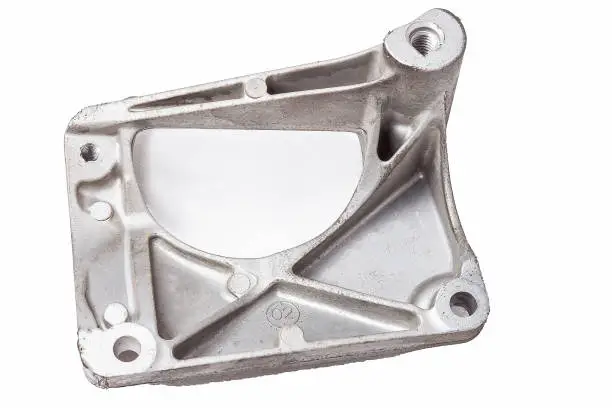
An automotive OEM recently switched engine mount brackets from being made of steel to being made of aluminium die castings. This resulted in a weight reduction of 58% while keeping the same stiffness. The redesign added built-in wire routing and mounting bosses, getting rid of six separate parts and cutting setup time by 40%. When you make 250,000 units a year, the investment in tools is worth it because you save money on materials and production costs within 18 months.
Procurement Implications of Design Decisions
Manufacturers of industrial tools use aluminium die-cast pump housings for hydraulic systems because the metal doesn't rust and stays sealed under pressure. Complex internal passages for fluid routing that are cast integrally instead of being machined from solid billets cut manufacturing time by 65% and get rid of the leak paths that come with mechanical joints. Surface treatments like powder coating or anodising make things last longer in harsh chemical processing environments.
Minimum order numbers and equipment amortisation are directly affected by how complicated the design is. Low MOQs, usually starting at 1,000 to 2,000 units, are possible with simple shapes that have only one parting line and few side actions. To get competitive unit economics, you need to make more complex parts that need multiple slides or complicated internal passages. This drives up the cost of the tools used a lot.
Lead times depend on how ready the plan is and how complicated the tools are. Tooling development for projects with mature CAD models and clear requirements can be finished in 8–10 weeks. On the other hand, designs that need iterative development or prototype proof may take 14–16 weeks. Using design-for-manufacturability knowledge to improve both performance and production efficiency, procurement teams should work with casting suppliers early on in the product development process.
Procuring Custom Aluminium Die Castings: A Guide for B2B Buyers
To choose skilled aluminium die casting providers, you need to look at more than just the prices they offer. To make sure a partnership works in the long term, procurement professionals need to look at technical skills, quality systems, and the strength of the supply chain.
Supplier Evaluation Criteria
Quality certifications are the first thing that suppliers must meet in order to be qualified. ISO 9001 approval sets the basic standards for a quality management system, while IATF 16949 compliance is required of automotive suppliers. This standard is specific to the automobile industry and requires strict process controls, such as paperwork for the Production Part Approval Process (PPAP), measurement systems analysis (MSA), and the use of statistical process control (SPC).
Aerospace and defence companies need AS9100 certification, which makes sure that material licenses and tracking systems meet strict requirements for buying things. The suppliers that work with these industries keep detailed records for each output lot that include records of the alloy's science, its heat treatment, and its dimensions. This tracking is necessary for figuring out what went wrong and following the rules throughout the service life of the component.
OEM experience shows that a seller can meet strict requirements and deadlines for delivery. Procurement teams should ask for case studies or references of customers who work in similar fields and with parts that are of similar levels of complexity. Site visits show skills in managing tools, controlling processes, and working well with others that paper qualifications alone can't show. You can tell how mature an operation is by looking at how the work floor is organised, how upkeep is done, and how engaged the employees are.
Understanding Pricing Structures and MOQ Requirements
The price of aluminium die casting includes the cost of the tools, the cost of making each piece, and the cost of finishing the casting. Tooling is a one-time investment in capital that is paid back over the life of the production run. Piece-part costs go up as production runs more. Most suppliers set their prices so that there are price breaks for bigger orders or longer-term agreements. These breaks are meant to encourage buyers to commit to larger orders or longer-term agreements.
Minimum order quantities are a way for buyers and sellers to work together to make sure that both parties are happy. The best way for aluminium die casting processes to save money is to have long production runs with few changes so that machines are used as much as possible. In general, MOQs are between 1,000 and 5,000 units, but this depends on the size and complexity of the part. Buyers who only need a few items may be able to arrange sample runs or prototype tools, agreeing to pay more per unit in exchange for a lower overall investment during the development stages.
Logistics and After-Sales Considerations
When negotiating lead times, both the development of tools and the schedule for production should be taken into account. Standard production parts with approved tools usually ship in three to five weeks. Parts that need to be inspected as a first article or go through special testing may take six to eight weeks longer. Setting up blanket purchase orders with scheduled releases helps suppliers make the best use of their production schedules while giving buyers more control over their inventory and more predictable delivery patterns.
Shipping logistics, customs compliance, and the need for an inventory buffer must all be taken into account in global sourcing strategies. Ocean freight is the most cost-effective way to ship large restocking orders, and it takes between 18 and 25 days to get from Asian suppliers to US ports. When there are pressing needs or new products to be released, air freight can be used, but the shipping costs are much higher, which affects the total landed price.
The rules for packaging keep metals safe from damage and rust during transport. The right form of the dunnage keeps parts from touching each other, which scratches the surface, and moisture shields and desiccants keep humidity exposure in check. When you already have a supplier, returnable packing systems cut down on waste and shipping costs, but they need reverse logistics planning and tracking systems.
Support after the sale is what sets strategic suppliers apart from transactional ones. Quick expert help fixes production problems, lowering the risk of line-downs and quality escapes. Suppliers should keep enough of key components in stock to protect against supply problems, while buyers handle changes in demand. Clear communication protocols, such as named technical contacts and escalation procedures, make sure that problems are dealt with and resolved in the right way.
Why Precision Aluminium Die Castings Are the Preferred Choice for Custom Engineering Solutions
More and more, the market wants lightweight, high-performance parts that can only be made by aluminium die casting. Lightweighting efforts in cars, prompted by rules for better gas mileage and maximising the range of electric vehicles, speed up the use of aluminium die casting structural parts. Analysts in the industry think that the demand for aluminium die casting will continue to rise, especially for complex integrated assemblies that combine several parts into a single casting.
Performance Advantages Across Industries
In shipping uses, reducing weight is still very important. For conventional powertrains, every kilogram of vehicle mass lost leads to a 0.3% increase in fuel economy. For electric vehicles, the same amount of weight loss leads to an increase in range. Aluminium die castings make this possible without lowering the safety or longevity, which supports both legal requirements and customer value propositions.
Corrosion protection makes parts last longer, which lowers upkeep costs and raises reliability over time. The natural oxide layer on aluminium protects it, but surface processes like chromate conversion coating or anodising make it more resistant to salt spray and industrial atmospheres. Components keep their structural integrity for 10 to 15 years in automotive settings and 20 to 30 years in industrial equipment settings.
Cost optimisation includes more than just piece-part price. It also includes costs for assembly and the end of a product's life. Integrated designs that combine multiple functions into a single aluminium die casting get rid of the need for screws, cut down on assembly work, and lower the chance of precision stack-up problems. Fewer parts mean fewer places where something could go wrong, which makes the whole system more reliable. Aluminium die castings frequently beat alternatives when looking at the total cost of ownership, despite possibly higher upfront costs.
Strategic Supplier Partnership Value
Aluminium die casting companies with a lot of experience offer technical advice throughout the whole process of making a product. Early involvement of suppliers helps find manufacturing limitations before the design freeze, which keeps costly redesigns from happening during the tooling phases. When engineers work together with suppliers, they can use their process skills to make plans that work better and are easier to make.
Quality assurance skills set capable providers apart from average operations. Coordinate measuring machines (CMM), computed tomography scanning, and spectrographic analysis are some of the high-tech tools used for checking that make sure parts meet the required dimensions and metal properties. Statistical process tracking finds process changes before it leads to errors, so the quality of each production run is the same.
Innovation partnerships speed up the process of making new products and making improvements all the time. When suppliers invest in new technologies, like vacuum die casting to improve mechanical properties or modelling tools to find the best gating design, these technologies can be used by customers. Collaborative problem-solving takes a methodical approach to field problems, fixing the causes of the problems instead of just fixing the symptoms.
Conclusion
In conclusion, precision aluminium die castings offer great value in a variety of industries, including aircraft, automotive, industrial, and electrical. They do this by being very accurate in size, reducing weight, and producing large quantities at low cost. With its ability to handle complicated geometry, high-quality surface finish, and short cycle times, the technology is the best way to make unique engineering solutions that need to work well and be cost-effective. Procurement strategies that work well balance the technical skills, quality systems, and ways of working together as a partnership of suppliers. Getting experienced aluminium die casting manufacturers involved early on in the product development process makes designs easier to make and protects the supply chain. As companies continue to put more emphasis on making products lighter, more environmentally friendly, and with more combined parts, the use of aluminium die casting will grow. This is because it is the only material that can meet all of these changing needs.
FAQ
What dimensional tolerances can aluminium die castings achieve?
Most of the time, standard aluminium die casting processes keep tolerances of ±0.1mm, and critical dimensions can be kept to ±0.05mm with precise tooling and process controls. If the tolerances are too tight, you may need to do more cutting, but this is still cheaper than making the whole part from billet stock. When there is good process tracking, linear measurements are very repeatable across production runs.
How do alloy selections impact component performance?
A380 has great all-around qualities that make it useful for a wide range of automobile and industrial uses. Its strength, castability, and cost are all well-balanced. A383 has better die-filling properties for thin-wall sections with complex shapes. Stainless steel alloys with copper, like 384, are stronger but not as resistant to corrosion. For important structural parts, aerospace uses may call for high-quality alloys like A356 that have been made using low-pressure or squeeze casting techniques.
What production volumes justify die casting investments?
Depending on the complexity of the parts and the availability of cheaper options, economic breakeven usually happens between 2,000 and 5,000 pieces. For cost amortisation, simple shapes may allow tooling to be done at lower volumes, but complicated multi-cavity moulds need higher production volumes. When figuring out the economics of a manufacturing path, buyers should look at the total program volumes over the lifetime of a product, not just the original order quantities.
Can die castings meet automotive PPAP requirements?
Full PPAP paperwork is usually provided by qualified providers. This includes control plans, process capability studies, dimensional inspection reports, and material certificates. Aluminium die casting plants that make parts for cars have IATF 16949 certification that specifically addresses these needs. For the first sample approval process, it usually takes two to three rounds of changes to the tools to get the right size and finish on the surface.
Partner with Fudebao Technology for Superior Aluminium Die Casting Solutions
Delivering precision-engineered parts to the automotive, industrial machinery, electrical equipment, and aerospace industries worldwide, Zhejiang Fudebao Technology is a leading manufacturer of aluminium die castings. Our fully integrated manufacturing process includes the whole production process, from melting the alloy to treating the surface, making sure quality control at all stages. With high-tech high-speed machining centers, CNC lathes, low-pressure casting machines, and aluminium die casting tools, we can meet the strictest requirements with measurement accuracy of ±0.05mm. Our engineering team works with clients from the idea stage all the way through production, making sure that designs are optimised for ease of production while still meeting performance standards. Fudebao Technology has full certification credentials and direct supply links with well-known foreign names. They can give your projects the technical know-how and production capacity they need. Email our team at hank.shen@fdbcasting.com to talk about your custom aluminium die casting needs and find out how our services can help you speed up the development of your product while still delivering high-quality products on time.
References
1. American Foundry Society (2021). Aluminum Casting Technology Handbook. Des Plaines: AFS Publications.
2. Kaufman, J.G. & Rooy, E.L. (2018). Aluminum Alloy Castings: Properties, Processes, and Applications. Materials Park: ASM International.
3. North American Die Casting Association (2020). Product Specification Standards for Die Castings. Wheeling: NADCA Standards Committee.
4. Bralla, J.G. (2019). Design for Manufacturability Handbook (3rd Edition). New York: McGraw-Hill Professional.
5. Campbell, J. (2022). Complete Casting Handbook: Metal Casting Processes, Metallurgy, Techniques and Design. Oxford: Butterworth-Heinemann.
6. SAE International (2020). Aerospace Casting Quality Standards AMS 2175. Warrendale: SAE Technical Standards Board.



YOU MAY LIKE