
Why Are Sand Casting Advantages Important for Heavy Industrial Components?
2026-08-10
The sand casting advantages large parts remain indispensable for heavy industrial manufacturing because this process uniquely balances cost efficiency with technical capability when producing massive components. Unlike die casting or investment casting, sand casting eliminates prohibitively expensive tooling investments, supports component weights ranging from several pounds to over 100 tons, and accommodates high-melting-point materials such as ductile iron, steel, and other engineering alloys. These sand casting advantages large parts make the process highly suitable for heavy machinery, power generation equipment, mining systems, marine components, and large industrial castings where size, strength, and design flexibility are critical. The ability to produce complex geometries, oversized parts, and customized components without costly molds provides manufacturers with greater production flexibility. These characteristics address key challenges in industries that require robust, large-scale metal components, where dimensional freedom, material versatility, and cost control are often more important than the tighter tolerances achieved through alternative manufacturing methods. By combining low tooling costs, broad alloy compatibility, and excellent scalability, sand casting continues to be a reliable solution for large component manufacturing and heavy-duty industrial applications.
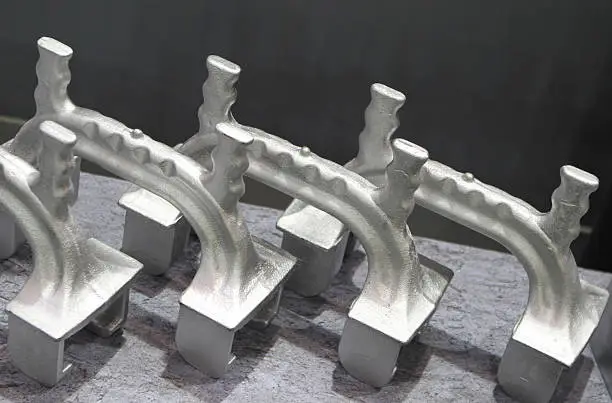
Understanding Sand Casting in Large Parts Manufacturing
Sand casting is the most common way to work with metal in industry; it makes up more than 60% of all metal casts made in the world. This process for making disposable moulds uses bonded sand mixtures, usually green sand with clay binders or chemically-bonded resin sand, to make complex holes that molten metal can flow into. The sand moulds can handle temperatures above 1600°C, so they can be used for both ferrous and non-ferrous metals.
Why Sand Casting Dominates Large Component Production
Heavy industries depend on sand casting advantages large parts because it can easily go from small prototypes to full production runs without having to buy permanent moulds. Companies that make mining equipment need huge pump cases, energy companies need huge valve bodies that weigh several tonnes, and companies that make building equipment need counterweights and structural housings. Sand casting is useful for all of them because it can make forms with a lot of angles and still keep their shape under high operating stresses.
Compared to fixed mould ways, this method can handle changes to the design pretty quickly. Pattern changes don't take months, but weeks. This lets engineering teams make changes to designs during the development phase without having to pay huge fines. This flexibility is especially helpful when working with OEM clients who want specific performance parameters to be customised.
Material Versatility Across Industrial Applications
With cast iron, malleable iron, steel alloys, aluminium, bronze, and specialised superalloys, sand casting works flawlessly. The choice of material is based on how strong it needs to be, how resistant it needs to be to corrosion, and how well it works with thermal treatment. Ductile iron is great for making gearbox housings because it is easy to shape and doesn't break easily when hit. For high-pressure valve parts, steel metals have better mechanical strength. Aluminium metals make moving equipment lighter while still providing good structural performance.
Because sand moulds are collapsible, they don't tear when they cool, which is very helpful when making metals with high solidification shrinkage rates. As the metal shrinks, the sand breaks down instead of pressing down on the part. This keeps the inside from becoming stressed, which could shorten its useful life in tough situations.
Core Advantages of Sand Casting for Heavy Industrial Components
When you compare different ways to make something, sand casting advantages large parts stand out right away. For die casting to work, you have to buy steel moulds up front, which can cost hundreds of thousands of dollars. Sand casting patterns, on the other hand, can be made from wood, resin, or metal and cost a lot less. This makes low- to medium-volume production possible. If you only need to make fifty pump housings a year instead of 50,000, sand casting is the only way to make money.
Design Flexibility and Complex Geometry Capabilities
Engineers like that sand casting can handle complicated internal passages, undercuts, and odd shapes that would be hard to do with other methods. Internal sand cores make cooling paths inside engine blocks or ways for fluid to flow through valve bodies. When these cores are cast, they dissolve or break off, leaving hollow parts that can't be machined from solid billets.
Scalability Across Production Volumes
Differences in wall thickness do not create major limitations in sand casting. While die casting often struggles with parts that are thinner than 3 mm or thicker than 6 mm, sand casting can produce sections ranging from approximately 5 mm to several inches thick within the same component. This design flexibility is one of the key sand casting advantages large parts, allowing engineers to optimize material distribution by adding strength in high-stress areas while reducing unnecessary weight in low-load sections. This capability is especially valuable for heavy machinery components, industrial equipment, energy systems, and large metal castings that require both structural performance and design freedom.
The process can support both rapid prototyping and planned production runs. A company developing a new compressor design can order three test castings to verify performance before investing in additional tooling or production equipment. Once the design is validated, the same patterns can be reused for ongoing manufacturing without significant additional capital expenses. These sand casting advantages large parts reduce development risks and eliminate the all-or-nothing commitment often associated with high-volume manufacturing processes.
Batch flexibility is also highly valuable for procurement managers who need to balance product costs with supply chain reliability. Minimum order quantities remain practical—often as low as ten pieces for complex geometries—allowing manufacturers to adopt just-in-time production strategies that reduce inventory costs and working capital requirements. With benefits such as large component capability, low tooling investment, material versatility, and scalable production options, sand casting provides an efficient solution for custom castings, oversized industrial parts, and low-to-medium volume manufacturing applications.
Addressing Challenges and Limitations of Sand Casting for Large Parts
Perfection is impossible, and sand casting advantages large parts have their own technical problems that need to be carefully managed. The surface finish quality is usually between 6.3 and 12.5 Ra microns, which is rougher than the 1.6 to 3.2 Ra range for die casting. Dimensional limits are usually between ISO 8062 CT10 and CT13 grades, which are good enough for most industrial uses but need to be CNC machined later to make sure surfaces fit perfectly and accurately.
Porosity Prevention and Quality Control Measures
The main problem is gas porosity, which happens when trapped gases make holes in the solidified metal. Foundries keep this under control in a number of ways, including making sure the sand is permeable enough to let gas escape, designing moulds with venting channels, and degassing liquid metal before pouring. Vacuum-assisted pouring or pressurised mould systems are used in modern facilities to keep the air clean.
Different types of shrinkage pores form when there isn't enough food during solidification. If the riser is designed correctly, molten metal will keep flowing into the parts as they cool, covering any gaps before they become permanent flaws. Engineers can now make the best feeding systems before they make the cutting patterns by using simulation software to make models of thermal gradients and solidification patterns.
Process Control Through Advanced Materials
Green sand casting works well for mass production when standard tolerances are acceptable. Resin-bonded sand systems provide large components weighing more than a few hundred pounds with improved dimensional accuracy and smoother surface finishes. These capabilities are important sand casting advantages large parts, especially for heavy machinery, industrial equipment, energy systems, and oversized metal components that require reliable performance and complex designs. Chemical binders increase mold strength, allowing molten metal to flow without damaging the mold surface and enabling the production of more complicated core geometries. Although resin sand materials typically cost 30–50% more than green sand, the improved quality, better surface finish, and reduced need for additional machining often offset the higher material cost. These sand casting advantages large parts allow manufacturers to achieve greater design flexibility, lower overall production costs, and consistent quality for custom castings, large industrial parts, and low-to-medium volume manufacturing projects. By combining material versatility, enhanced accuracy, and the ability to produce complex geometries, resin sand casting provides an effective solution for demanding large-scale casting applications.
Another step forward is shell moulding, which uses heated resin-coated sand against metal patterns to make thin, rigid moulds. This method gets close tolerances to CT7–CT9 grades and a smooth surface, filling the gap between regular sand casting and investment casting for medium-sized parts where cost and quality are important.
Sand Casting Advantages Driving Procurement Decisions for B2B Clients
Sourcing directors look at providers through a number of different views, including total landed cost, quality stability, technical ability, and supply chain reliability. When compared to machining big components from solid stock, sand casting advantages large parts significantly lower unit costs. It could take 200 hours of CNC time to machine a gearbox housing from billet, which creates a lot of chip waste and tool wear. It only takes 15 hours to finish machine critical areas on the same housing that was sand cast to a nearly net shape. This cuts down on both cost and wait time.
Supplier Evaluation Criteria
Quality management systems are generally safe if they have ISO 9001 certification, but procurement teams should look into it further. Foundries that have done a lot of big casts can show this through case studies that show how they can control the dimensions of parts that weigh many tonnes. Ask them about their biggest successful casting, how they keep their wall thickness differences normal, and how they create patterns from CAD models.
Suppliers who can do advanced inspections are better than those who can't. Optical Emission Spectrometry is used to make sure that the alloy's composition meets the requirements before it is poured. Tensile strength, yield strength, and elongation qualities are checked mechanically by casting sample bars next to production parts. Non-destructive testing methods, such as ultrasonic testing for internal integrity, magnetic particle inspection for surface cracks, and X-ray radiography for porosity assessment, make sure that hidden flaws are found.
Lead Times and Customization Flexibility
Pattern production usually takes two to six weeks, depending on how complicated it is. This is a lot less time than the three to six months it takes to make die casting tools. This advantage in time means that new goods can hit the market faster or design changes can be made faster based on data from the field.
There are more ways to customise than just changing the sizes. When you heat treat something, like annealing, normalising, or quenching, the material features change so that it can be used in different ways. Surface treatments like electroplating, powder coating, or anodising make things less likely to rust. When precise fits are needed, machining margins are lowered to ±0.05mm. When costs are low, as-cast surfaces are left.
Future Outlook and Innovations in Sand Casting for Heavy Industrial Components
Sand casting advantages large parts are changing all the time as technology improves. With additive manufacturing, sand moulds can now be made directly from CAD files, so patterns don't need to be made at all for low-volume or complicated shapes. With these 3D-printed moulds, you can get a level of detail that isn't possible with traditional pattern-making, and wait times are cut from weeks to days.
Automation and Process Simulation
Robotic mould handling and automated filling systems improve accuracy while lowering the amount of work that needs to be done. Real-time sensors check the properties of the sand and change the amount of water and binder to keep the best moulding properties. This closed-loop control cuts down on batch-to-batch differences that used to need a lot of measuring and adjusting.
Simulation software has grown up and become an important part of design. Before doing actual tests, engineers make models that show how the mould will fill, how it will solidify, and where defects might appear. With this virtual prototyping, development iterations are cut down, which saves time and money on materials and increases the success rate of the first article.
Sustainability Initiatives
Environmental duty is becoming more and more important in purchasing decisions. Foundries use sand recovery systems to get rid of binders in used sand. These systems can do this mechanically or thermally, and the sand can be used more than 95% of the time. This greatly lowers the amount of raw materials needed and the amount of trash that needs to be thrown away. Cupola systems are being replaced by induction melting furnaces, which use less energy and produce less pollution. They also make it easier to control the temperature and make sure the metal is uniform.
Water-based binders and low-emission plastic mixtures help improve the air quality in the workplace and meet stricter environmental rules. These eco-friendly materials keep the performance needed for large castings while lowering the amount of volatile organic compounds that are released during the moulding and pouring processes.
As part of evaluating long-term partnerships, procurement teams should look at how providers handle sustainability. Companies that spend money on cleaner processes and tools for recycling show that they are committed to operating excellence, which is linked to quality performance and business stability.

Conclusion
The sand casting advantages large parts make big industrial manufacturing possible by making it possible to make large, complicated parts at low cost, which other methods can't really do. The process strikes a balance between being affordable and having the technical ability to meet the needs of the automobile, machinery, energy, and aircraft industries. It does this by allowing for design freedom, material variety, and volume scalability. Problems like controlling porosity and managing dimensional limits need careful management, but new materials, robotics, and simulations keep making things better. If procurement workers understand these dynamics, they can use the strengths of sand casting to improve supply lines, lower total costs, and stay ahead of the competition in tough industrial settings.
FAQ
What distinguishes green sand from resin sand casting for large components?
Green sand is made with clay and water as binders. It is cost-effective for larger amounts and has standard limits between CT11 and CT13. Resin sand casting advantages large parts use chemical agents that harden at room temperature. It gives better surface finish, more accurate measurements (CT9–CT11), and the higher mould strength needed for big, heavy casts that weigh more than 500 pounds. Even though resin systems make materials 30–50% more expensive, they often get rid of the need for extra finishing steps, which makes them cost-effective for applications that need to be precise.
How do foundries prevent gas porosity in large sand castings?
Maintaining sand permeability between 80 and 120 AFS units lets trapped gases escape through the mould; strategically placing vents in mould designs creates dedicated gas escape pathways; degassing treatments remove hydrogen from molten metal before pouring; and vacuum-assisted or pressurised pouring systems reduce atmospheric contamination during mould filling.
Can sand castings meet aerospace-grade quality requirements?
With advanced sand casting and resin-bonded systems, along with strict checking methods like ultrasonic testing, X-ray radiography, and coordinate measuring machine verification, quality levels can be reached that are good enough for many aircraft uses. If a part needs to be very precise or have a tolerance of zero defects, it may need to be investment cast or machined from a billet. However, sand casting works well for structural housings and parts that aren't needed for flight because it saves weight and money.
What minimum order quantities apply to large sand castings?
MOQs are different for each part and pattern investment. For simple shapes, you can place an order as little as five pieces, but for complicated designs with many parts, you usually need ten to twenty units to cover the cost of the pattern. These limits are still much lower than those for die casting, which needs hundreds or even thousands of pieces to cover the cost of the tools.
Partner with Fudebao Technology for Superior Sand Casting Solutions
Zhejiang Fudebao Technology Co., Ltd. has been a foundry for many years and has advanced manufacturing skills that help them offer sand casting advantages large parts in the energy, industrial machinery, and automobile sectors. Our combined center handles the whole production process, from melting to surface. Accurate CNC machining on HAAS automation equipment keeps tolerances to ±0.05mm. We offer ISO-certified quality assurance, flexible minimum order quantities, and full PPAP documentation to support your most demanding applications. We are a trusted sand casting advantages large parts supplier to international brands such as ESS energy storage systems. Email engineering manager Hank Shen at hank.shen@fdbcasting.com to talk about how our services fit with your needs for parts and your goals for buying them.
References
1. American Foundry Society. (2021). Sand Casting Process Fundamentals and Quality Control Standards. Des Plaines: AFS Technical Publications.
2. Campbell, J. (2015). Complete Casting Handbook: Metal Casting Processes, Metallurgy, Techniques and Design (2nd ed.). Oxford: Butterworth-Heinemann.
3. Beeley, P. R., & Smart, R. F. (2017). Foundry Technology (3rd ed.). London: Butterworth-Heinemann Scientific.
4. International Organization for Standardization. (2019). ISO 8062-3:2007 - Geometrical Product Specifications (GPS) - Dimensional and Geometrical Tolerances for Moulded Parts. Geneva: ISO Standards.
5. Brown, J. R. (2018). Foseco Ferrous Foundryman's Handbook (11th ed.). Oxford: Butterworth-Heinemann.
6. Stefanescu, D. M. (2020). ASM Handbook Volume 15: Casting - Sand Casting Technologies. Materials Park: ASM International.



YOU MAY LIKE