
How Do Aluminium Die Castings Support Automotive Manufacturing?
2026-08-10
Aluminium die castings deliver critical advantages to automotive manufacturing by enabling the production of lightweight, dimensionally accurate components that reduce vehicle weight while maintaining structural integrity. This high-pressure manufacturing process injects molten aluminium alloys into precision steel molds, creating complex geometries for engine blocks, transmission housings, and structural brackets that would be prohibitively expensive or impossible to machine from solid billets. The process simultaneously addresses three pressing industry demands: fuel efficiency mandates through weight reduction, cost containment via near-net-shape manufacturing that minimizes machining waste, and scalability to meet high-volume production requirements. Automotive OEMs rely on these castings because they offer repeatable dimensional tolerances within ±0.1mm, corrosion resistance for long service life, and excellent thermal conductivity for heat-sensitive applications like electric vehicle battery enclosures.

Understanding Aluminium Die Casting in Automotive Manufacturing
The Core Process Mechanics
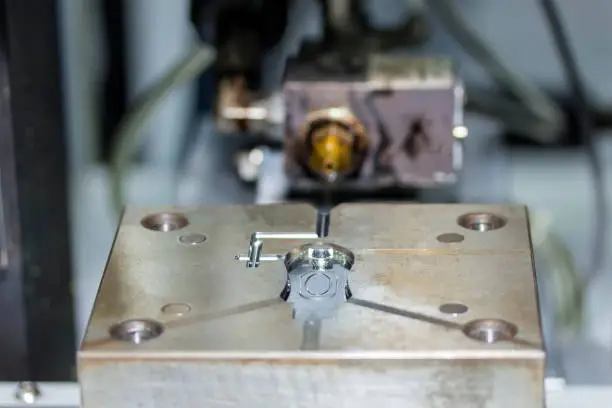
There is a simple but complex idea behind how die casting works. Under pressures between 10,000 and 25,000 psi, molten aluminium alloy that has been heated to about 700°C is pushed into hardened steel dies. The metal hardens quickly—often in seconds—because the walls of the die are cooled by water. The final part is then ejected automatically. At this speed, the microstructure is thick and fine-grained, which gives aluminium die castings better mechanical qualities than sand-cast ones.
Alloy Selection for Performance
Three groups of alloys are mostly used in automotive applications. The basic metal, A380, still has great fluidity for thin-wall sections and good corrosion protection for uses under the hood. A383 has similar properties but a slightly better ability to fill dies, which makes it perfect for making complicated bracket shapes. The other type, A356-T6, has better strength and bending qualities, but it needs to be heated to make it work. It is usually used for structural parts that are loaded and unloaded many times. Each metal choice has an effect on how heavy the part is, how long it lasts, and how easy it is to make. Because of this, engineering teams have to weigh these trade-offs against data from stress analyses and weather exposure data that are specific to the application.
Why Automotive Engineers Specify Die Castings
People who work in the auto industry like aluminium die castings because it solves basic design problems. It is possible to make complex internal paths for coolant or lubricant flow right in the mould, without having to do any extra cutting. Bosses, ribs, and fastening parts all fit together perfectly, so there are no steps needed to put it together. The process works with wall widths ranging from 0.8mm to 6mm, which lets engineers put materials exactly where they are needed to be strong while removing mass from areas with low stress. Because of this, designers can make cars that are lighter and meet stricter fuel economy standards without sacrificing safety or speed.
Aluminium Die Casting vs. Alternative Manufacturing Methods
Sand Casting: When Volume Doesn't Justify Tooling
Sand casting is still useful for making prototypes in small quantities or for making large structural parts that are too big for a die casting machine to handle. In this method, sand is packed around a pattern to make a hole that molten metal can flow into. However, the surface finish is usually between 250 and 500 RMS, while die casting only needs 63 to 125 RMS. This means that closing surfaces need a lot of cutting. Dimensional limits loosen up to at least 0.5 mm, and the slower cooling rates make the grain structures rougher and weaker in the tension direction. Automotive companies only use sand casting for test builds or special heavy-duty housings when they don't need to make more than 5,000 units a year because the cost of die tooling is too high.
Permanent Mold and Gravity Die Casting
In gravity die casting, metal moulds are used over and over again, and no pressure is applied. Instead, the moulds are filled by gravity. This method works well for making simple shapes in middle quantities, like cylinder heads or intake pipes. The cost of the tools is about the same as for sand casting and pressure die casting, but the process can't make the thin walls or complex internal features that high pressure can. Cycle times are several minutes instead of seconds, which slows down production. The mechanical properties are better than with sand casting, but they are still not as good as with pressure aluminium die castings because the solidification rates are slower and there may be holes in thicker sections.
Forging and Plastic Alternatives
Forging is better for grain flow and dynamic qualities, but it's not good for complicated shapes. The process needs more than one die and cutting steps, which raises the cost of each part. Even more weight can be saved by using plastics, but they can't handle temperatures above 150°C or be stiff enough for load-bearing structural applications. Aluminium die castings are the best of both worlds because they are lightweight, stable at temperatures up to 200°C, and allow for a lot of different design options that neither forging nor polymers can match for large-scale automotive parts.
Key Factors for Quality and Performance in Automotive Aluminium Die Castings
Common Defects and Prevention Strategies
Porosity is the most common casting flaw. It happens when trapped gas or shrinking gaps make the material less dense. We get around this problem with vacuum-assisted die casting methods, which remove air from the cavity before the metal is injected. This makes it possible to get porosity levels below 2% even in thick parts. The right design of the gates makes sure that the material solidifies gradually from the edges toward the gate. This stops hot spots from forming that lead to shrinking holes. When metal solidifies too quickly before the cavity is fully filled, cold shuts and flow marks appear. When you optimise the injection speed and metal temperature, you get rid of these surface flaws that could lead to fatigue cracks in cyclic-load situations.
Design Guidelines for Manufacturability
Wall thickness uniformity stops different cooling rates that cause warping. To keep stress from building up in one place, we suggest keeping nominal walls between 2.5 mm and 4.0 mm thick and making sure that changes are no greater than 3:1. Draft angles between 1 and 3 degrees make it easier to eject parts without damaging the surface. Fillet angles at internal corners should be the same as wall thickness to help metal move smoothly and cut down on stress risers. The production yield rates and part stability are directly affected by these design principles. When parts are developed without input from manufacturers, they often need more than one round of tooling, which delays production and raises development costs by 15 to 30 percent compared to parts that are optimised up front through joint engineering.
PPAP Documentation and Quality Systems
The contracts between car suppliers and original equipment manufacturers (OEMs) are based on the Production Part Approval Process documents. This includes material certificates that prove the chemistry and mechanical properties of the alloy, dimensional inspection reports that show that all features meet the limits set out in the plan, and process capability studies that show Cpk values of 1.33 or higher for key characteristics. Through statistical process control, our quality systems keep an eye on these parameters and take corrective actions before differences reach the limits set by specification. The 99.99966% defect-free delivery rates that just-in-time car supply lines need are kept up by this proactive method with aluminium die castings.
Procurement Considerations for Automotive Aluminium Die Casting
Certification Requirements and Supplier Vetting
IATF 16949 certification shows a strong dedication to quality management systems for the automotive industry. It includes verification of designs and support after the sale. The procurement team should check that the approval is still valid and read the scope statement to make sure that it covers aluminium die castings operations as well as assembly and distribution. In addition to basic certification, you should also look at how well the provider can create and make moulds. When a supplier builds their own tools, they can usually make changes more quickly during the pilot phase and keep better process knowledge throughout the production timeline. Having machining and surface treatment capabilities under one roof makes logistics and accountability easier than managing a lot of different subcontractors.
Cost Structure Transparency
Aluminium die castings prices are based on four main factors. The highest upfront cost is the tooling amortization. Precision dies can cost anywhere from $15,000 for simple brackets to $150,000 for complex gearbox housings. This cost is spread out over the expected amount of production, which makes multi-year projects more cost-effective. Prices for raw materials change with the price of metal around the world. Right now, the price of the main ingot is between $2,800 and $3,200 per metric tonne. The processing costs depend on the cycle time, the machine's tonnage, and any extra work that needs to be done, such as coating, trimming, or machining. The picture is finished with the overhead and border. Transparent sellers break down costs in a way that makes it easy to compare prices and find ways to save money by changing the design or combining orders.
Lead Time Planning and Inventory Strategies
From the time of the purchase order to the first samples of the finished product, tool design and fabrication usually take 10 to 14 weeks. It takes an extra 4 to 6 weeks for production samples and PPAP approval. Because of these deadlines, suppliers need to be involved early on in vehicle development programs. Production wait times for standard parts are between 4 and 8 weeks, based on how many are ordered and how hard they are to machine. Keeping contract inventory at source sites or using kanban replenishment systems cuts down on pipeline inventory and makes sure that assembly plants get what they need quickly. The most advanced partnerships include EDI integration to see demand in real time and automatic replenishment triggers that are in sync with OEM production plans.
Sustainability and Industry Trends Impacting Aluminium Die Castings in Automotive
Circular Economy Benefits
Aluminium recycling only needs 5% of the energy that is needed to turn bauxite rock into raw aluminium. Die casting operations often use 30 to 50 percent recycled content from old industrial waste without changing the mechanical properties. A closed-loop system is created when scrap from gates, spills, and rejected parts melts back into the furnace. As automakers work toward carbon neutrality goals and regulatory systems like the European Union's Carbon Border Adjustment Mechanism punish materials with high embodied carbon, this recycling edge becomes more valuable. Aluminium die castings are better than other materials in lifecycle assessments because they can be recycled over and over again without losing any of their properties.
Electrification is bringing about new uses
Because electric vehicle architecture is built differently, they need special die-cast parts that weren't needed for combustion engines. Battery cases need housings with thin walls that don't leak and that have cooling ducts and electromagnetic shielding built in. Motor housings need to be able to quickly get rid of heat and have accurate areas for fitting bearings. Power technology covers need to be able to conduct heat well and keep electrical signals from getting through. These uses push the limits of die casting technology, leading to new developments in vacuum-assisted methods, hybrid casting methods that use aluminium with inserts made of different materials, and advanced simulation tools that can predict fill patterns and thermal stresses before the physical tooling commits.
Automation and the integration of Industry 4.0
Robots are now used to remove parts from die casting machines, automated visual inspection systems that use machine learning algorithms, and sensors that are built into the machines to monitor the process in real time. These tools make things more consistent while cutting down on the cost of labour. For each shot, our production systems record injection pressure curves, metal temperature profiles, and cycle time data. This creates digital twins that help us figure out what maintenance is needed and how to best set the process settings. Customers can also be connected through secure portals that let them track shipments, see quality documents, and see how much capacity is being used. With this integration, die casting goes from being a separate step in the manufacturing process to being an intelligent point in connected car supply networks.
Conclusion
Aluminium die castings are the structural and functional backbone of modern car making. They give today's vehicles the unique mix of light weight, design freedom, and production scalability they need. Through the use of advanced metals, process automation, and environmental efforts that are in line with the goals of the industry to reduce carbon emissions, the technology keeps getting better. For car programs to work, providers need to have strong quality systems, technical know-how, and quick customer service. When engineering managers and sourcing professionals understand the manufacturing principles, quality factors, and procurement considerations listed here, they can make choices that improve car performance while minimising supply chain risk and total cost of ownership.
FAQ
What tolerances can aluminium die castings achieve for automotive applications?
Die casting limits are usually between ±0.1mm and ±0.3mm, but this can change based on the size and complexity of the features. To get ±0.02mm to ±0.05mm accuracy in critical measurements that need better control, secondary CNC machining is used. This meets the needs of mounting interfaces and bearing surfaces in car parts. These limits are kept even during high-volume production runs with the right tool design and process controls.
How long does aluminium die casting tooling last in automotive production?
Die casting tools that are well taken care of can usually go through 100,000 to 300,000 rounds before they need to be fixed up. How long a tool lasts depends on the shape of the part, the alloy used, and the casting factors. Cores and slides wear out faster when they have complex thin-wall shapes or abrasive metals. Preventive maintenance, such as surface treatments and thermal cycle management, makes tools last longer, which protects the investment in tools for multi-year car projects.
Can aluminium die castings meet automotive crash safety requirements?
Aluminium die castings are often used in structural applications such as shock towers, subframe parts, and door entry beams. Some alloys, like A356-T6 and special mixes, can have tensile strengths higher than 280 MPa and still stretch enough to absorb energy safely. During design confirmation, finite element analysis makes sure that parts meet crash load cases, and before production approval, actual testing makes sure that they work.
Partner with an Experienced Aluminium Die Castings Manufacturer
For automotive programs to work, suppliers must be able to meet the complex technical needs of both prototypes and large-scale production. Zhejiang Fudebao Technology Co., Ltd. has facilities just for casting and machining that are equipped with high-pressure die casting machines, CNC machining centers, and surface treatment systems that are built in. We keep our IATF 16949 certification and offer full turnkey solutions, from raw materials to finished parts that are accurate to within 0.05 mm in size. Our engineering team works together on optimising mould designs, choosing alloys, and analysing how easy it is to make parts. This makes sure that your parts meet performance requirements while keeping prices low. We can help you at every step of the value chain, whether you need solid housings for battery systems in electric vehicles, precision engine parts, or complex bracket assemblies. Email our technical team at hank.shen@fdbcasting.com to talk about how our knowledge of aluminium die castings can help you with your next car project. We give quick quotes with clear breakdowns of costs and keep our capacity flexible so that we can handle builds from prototypes to a million units a year.
References
1. American Foundry Society. (2021). Aluminum Casting Technology Handbook. Des Plaines: American Foundry Society Publications.
2. Kaufman, J.G. & Rooy, E.L. (2018). Aluminum Alloy Castings: Properties, Processes, and Applications. Materials Park: ASM International.
3. Society of Automotive Engineers. (2020). High Pressure Die Casting for Automotive Applications: SAE J452 Standard. Warrendale: SAE International.
4. North American Die Casting Association. (2019). Product Specification Standards for Die Castings: NADCA Publication #403. Arlington Heights: NADCA.
5. Beeley, P.R. & Smart, R.F. (2017). Investment Casting and High Pressure Die Casting in the Automotive Industry. Cambridge: Woodhead Publishing.
6. International Journal of Metalcasting. (2022). Recent Advances in Aluminum Die Casting for Lightweight Automotive Structures. Vol. 16, Issue 3, pp. 1247-1268.



YOU MAY LIKE