
OEM aluminum die casting services are a complete production solution that uses high pressure die casting techniques to turn raw aluminum alloy into precisely tailored components. From the first design consultation and quick prototyping to the last delivery and quality control, this integrated method covers it all. Leaders in the modern foundry sector use decades of experience and cutting-edge casting simulation technology to produce lightweight materials that satisfy the demanding requirements of the electrical, automotive, aerospace, and industrial equipment industries.

Understanding OEM and ODM Excellence in Metal Casting
When choosing a partner for aluminum die casting projects, it becomes important to understand the difference between Original Equipment Manufacturing (OEM) and Original Design Manufacturing (ODM). OEM services concentrate on producing parts in accordance with customer requirements, while ODM includes both production and cooperative design creation.
In today's competitive environment, deep personalization is crucial. The complicated needs of contemporary applications are seldom met by traditional solutions, as engineering managers and sourcing directors are aware. Manufacturers are able to get improved performance characteristics via the use of precision aluminum die casting procedures, custom aluminum alloy compositions, and specialist surface finishing techniques.
The car industry is a prime example of this necessity. Tier-1 suppliers need parts that strike a compromise between structural integrity and weight reduction. Each product is guaranteed to fulfill strict dimensional tolerances while retaining long-term durability under rigorous working circumstances thanks to heat treatment procedures and sophisticated casting design concepts.
Fudebao Technology's Manufacturing Strengths
Modern machinery such as CNC lathes, low pressure casting machines, high-speed machining centers, and sophisticated die casting molds are housed at our facilities. The whole manufacturing cycle, from melting to casting, finishing, and surface treatment activities, is supported by this extensive system.
Quality control systems at Fudebao Technology maintain precision tolerances up to ±0.05mm. This accuracy level satisfies the demanding requirements of automotive precision parts, medical device housings, and aerospace components. Our inspection protocols include dimensional verification, material property testing, and comprehensive PPAP documentation for automotive clients.
Research and development capabilities enable continuous improvement in casting processes. We regularly optimize aluminum die casting process parameters to minimize porosity in casting while enhancing mechanical properties. Before production starts, advanced casting simulation software aids in the prediction and prevention of casting problems.
Timely delivery and dependable material procurement are guaranteed by supply chain management. Flexible batch production capabilities support a range of order amounts, from prototype quantities to high-volume manufacturing runs, and strategic connections with suppliers of aluminum alloys ensure continuous material quality.
Comprehensive Customization Across Industries
Physical design customization begins with collaborative engineering support. Our technical team works closely with mechanical engineers and project leaders to optimize component geometry for both functionality and manufacturability. This approach reduces material usage while maintaining structural performance.
Functional feature development addresses specific application requirements. Industrial machinery applications often demand enhanced heat resistance and corrosion resistance properties. We achieve these characteristics through specialized aluminum alloy selection and controlled cooling processes during casting.
Branding customization includes custom surface finishing options, logo integration, and specialized marking techniques. Electrical housing applications often require specific conductivity characteristics combined with aesthetic requirements for consumer-facing applications.
Adherence to industry-specific standards is guaranteed by compliance management. Comprehensive traceability documentation and certification systems are necessary for aerospace customers.Our quality management protocols satisfy these stringent requirements while maintaining production efficiency.

The Strategic ODM Advantage
Co-developing new aluminum casting solutions provides clients with access to accumulated expertise spanning multiple industries. Our engineering team brings insights from automotive lightweighting initiatives, aerospace structural optimization, and industrial equipment durability enhancement projects.
Collaborative design development often reveals opportunities for cost reduction through design optimization. Component consolidation strategies can eliminate assembly steps while improving overall system reliability. This approach proves particularly valuable for complex housings and structural elements.
Analyzing market trends aids in projecting future needs. Innovation in recycling-friendly aluminum alloy compositions and energy-efficient casting techniques is fueled by the increased focus on sustainable manufacturing. Competitive advantages come from early adoption of these technologies.
Innovation collaborations include whole system solutions rather than just individual parts. Our experience with power equipment applications enables holistic approaches to thermal management and electromagnetic compatibility requirements.
Our Streamlined Process Journey
Initial consultation involves comprehensive requirements analysis including performance specifications, volume projections, and timeline expectations. Technical discussions cover material selection, casting methodology, and finishing requirements to ensure optimal results.
Design validation utilizes advanced simulation tools to predict casting behavior and identify potential issues. This computational approach minimizes physical prototyping iterations while ensuring first-time success rates in production tooling.
Decades of experience with aluminum die casting molds are used in tooling development. Our tooling engineers increase efficiency while upholding quality standards by optimizing cooling arrangements, runner systems, and cavity design. Consistent performance across manufacturing runs is ensured by routine maintenance procedures.
Lean manufacturing concepts are incorporated into production planning to reduce waste and increase productivity. Just-in-time manufacturing processes are supported by scheduled delivery coordination, which guarantees components arrive exactly when required.
Incoming material inspection, in-process monitoring, and final verification processes are all included in quality assurance. Statistical process control techniques guarantee consistent performance across all deliveries by spotting patterns before they affect product quality.
Quantifiable Benefits for Your Organization
When compared to conventional sourcing methods, cost optimization usually results in savings of 15–25%. While volume leverage offers advantageous price structures, consolidated supplier relationships simplify procurement.Design optimization often reveals additional material and processing cost reductions.
Timeline acceleration results from integrated design and manufacturing capabilities. Project complexity and communication overhead are decreased when various vendors are not coordinated. Development times are greatly shortened by concurrent engineering techniques and rapid prototyping.
Controlled production settings and thorough process documentation lead to increases in quality. Improved field dependability and lower warranty costs are closely correlated with less variability. Problems with assembly and downstream quality are eliminated by consistent dimensional correctness.
Technical assistance is provided over the duration of a product's lifespan. Services for design modifications adapt to changing needs while preserving interoperability with current systems. This adaptability comes in very handy when performance standards and market circumstances change.

Conclusion
With integrated design, production, and quality assurance capabilities, Fudebao Technology's all-inclusive aluminum die casting services provide quantifiable value. Our multidisciplinary knowledge enables creative solutions that satisfy changing market expectations. We provide the technical assistance and superior production that your projects need from the very beginning to the very end. Collaborate with us to turn your needs for aluminum casting into benefits that will propel your company forward.
FAQs
1. What industries benefit most from aluminum die casting services?
Aluminum die casting has major advantages for the automotive, aircraft, industrial equipment, and electrical industries. These sectors need components that are strong, lightweight, and precisely dimensionally accurate. Aluminum castings are used in aircraft for weight-critical components, while engine housings and structural brackets are used in automotive applications.
2. How does precision casting differ from standard casting methods?
Superior tools, improved quality management systems, and sophisticated process controls are all used in precision casting. This method reduces the need for additional machining while achieving improved surface finishes and tighter tolerances. Components that satisfy strict requirements with little post-processing are the end product.
3. What advantages does aluminum alloy offer over other casting materials?
Aluminum alloy has exceptional heat conductivity, improved corrosion resistance, and great strength-to-weight ratios. Because of these qualities, aluminum is perfect for electrical applications that need to dissipate heat, automobile lightweighting projects, and aerospace components where weight reduction is essential.
Partner with Fudebao Technology Today
The quality, pricing, and delivery performance of a project are all influenced by the choice of aluminum die casting manufacturer. Fudebao Technology produces exceptional solutions for difficult applications by combining innovative production capabilities with established experience.
From the first idea to the last delivery, every detail is covered by our all-inclusive approach. Coordination issues are resolved by this integration, which also guarantees constant quality standards all along the way. Our adaptable capabilities adjust to your needs, whether you need high-volume manufacturing or prototype development.
Ready to explore how our aluminum die casting expertise can enhance your next project? Our engineering team stands ready to discuss your specific requirements and develop customized solutions that exceed expectations. Contact us at hank.shen@fdbcasting.com to begin your partnership with a leading aluminum die casting supplier.



_1756348711711.webp "anti surge turbo housing")
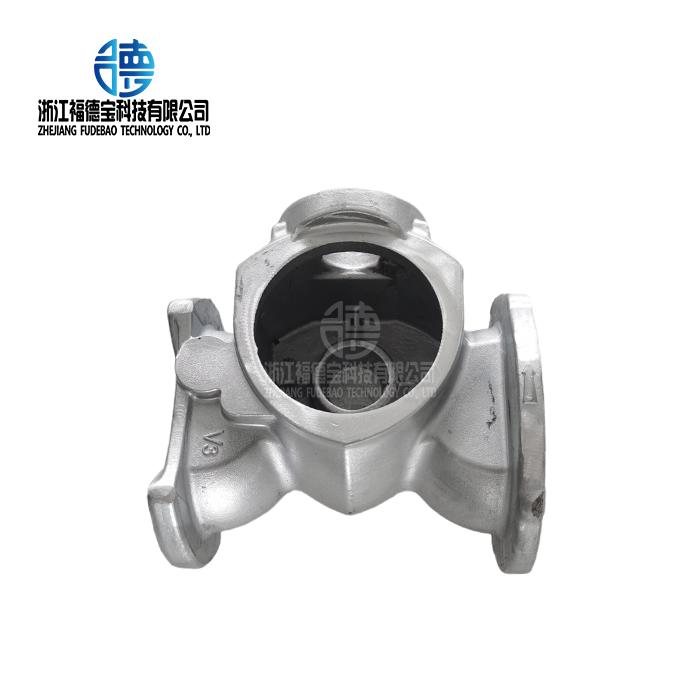
_1756346259673.webp "heavy duty hinges")
_1756346043433.webp "guardrail connecting block")