



Low Pressure Die Castings Provide Strength for Automotive Applications
2026-08-25
Low pressure die castings have revolutionized how automotive manufacturers achieve exceptional structural integrity in weight-sensitive components. This controlled casting method forces molten aluminum alloys upward into precision molds under regulated pressure—typically between 20-100 kPa—creating dense, defect-minimized parts that outperform gravity-fed alternatives. The automotive sector increasingly relies on low pressure die castings for wheel rims, suspension components, and powertrain housings, where material consistency directly impacts vehicle safety and longevity. Our expertise at Fudebao Technology combines advanced low-pressure casting systems with CNC finishing capabilities, delivering automotive-grade components that meet PPAP documentation standards and dimensional tolerances within ±0.05mm for tier-1 suppliers worldwide.
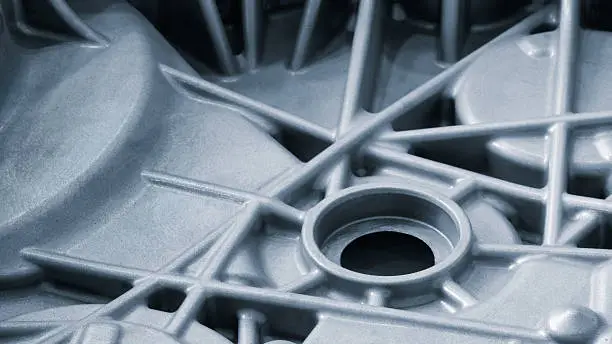
Understanding Low Pressure Die Casting and Its Role in Automotive Strength
The way the process works is different from other methods because low pressure die casting fills from the bottom up. Molten aluminum flows smoothly through a refractory tube into the mold cavity above, thanks to a sealed furnace chamber that applies pressure. This prevents turbulence and gas entrapment. When compared to high-pressure methods, this managed solidification gives better mechanical qualities.
How the LPDC Process Enhances Material Integrity
In high-pressure die casting, metal is injected at speeds of more than 40 m/s. Low pressure die casting methods, on the other hand, keep filling speeds between 0.5 and 1 m/s. This lower turbulence stops oxide film entrapment, which is a main reason why materials fail after a while in cyclic-load car use. The path of solidification from bottom to top makes it possible for stronger material to form as the casting cools more toward the riser. This forces porosity into areas that will be machined away later. This is a feature that automotive wheel makers really like because it concentrates the material's strength right where impact loads are most concentrated during cornering forces.
Material Selection for Automotive Strength Requirements
Because they are strong for their weight, aluminum alloys are most often used in low pressure die casting. The standard in the industry is still A356-T6, which has a tensile strength of over 280 MPa and an elongation of 6%. These are important properties for suspension brackets that are subject to dynamic stresses. A380 alloy is used in less demanding situations where cost-effectiveness is important, while new alloys like A365 contain up to 5.5% magnesium to make them more flexible in structures that are vulnerable to crashes. During the melting process, we keep a close eye on the chemistry and make sure that the silicon content stays between 6.5-7.5% to get the best flow without losing solidification properties.
Production Workflow and Cycle Efficiency
A normal LPDC cycle has four separate steps: preparing the mold by applying a release agent, filling the mold with controlled pressure ramping (15–30 seconds based on shape), solidifying under maintained pressure (30–90 seconds), and releasing the pressure and ejecting the part. The whole process for making a medium-complexity auto part takes about three to five minutes on average, which means it can be used for production runs of 5,000 to 50,000 units per year. Fudebao Technology has a number of low pressure die casting machines that can be set up for both small batches of prototypes and mass production. These machines give the company more flexibility than dedicated high-pressure die casting lines that need minimum order quantities.
Comparing Low Pressure Die Casting with Alternative Casting Methods
To choose the best casting process, you need to know how to balance quality, cost, and the ability to make more products. Each way solves a different problem in the production process within the automotive supply chain.
LPDC Versus High-Pressure Die Casting
Cycle times for high-pressure die casting are faster—often less than 60 seconds—which makes it a cost-effective way to make very large quantities—more than 100,000 units. But the abrupt injection makes internal holes, which limits the types of heat treatments that can be used and lowers wear resistance by about 30% compared to low pressure die casting equivalents. Safety-critical parts of cars, like the steering knuckles and transmission housings, can't stand this kind of compromise. At 1.6 to 3.2 Ra, the surface finish quality of both methods seems about the same. However, low pressure die casting parts have better subsurface integrity that can be seen with an X-ray, which is required for PPAP submissions to major OEMs.
Gravity Die Casting and Permanent Mold Comparisons
Because gravity die casting only uses atmospheric pressure, it takes longer to fill, and there is a chance of cold-shut flaws happening when the molten metal gets to thin-wall parts. The cost of tools is 20–30% less than that of low pressure die casting equipment, but rejection rates usually go up by 5–8% because of incomplete fills in complicated geometries. This can be fixed with permanent mold casting that uses tilt-pour methods, but it doesn't have the advantage of directional solidification that low pressure die casting systems do. We've seen that automotive customers who care about first-pass yield rates always choose low pressure die casting methods over gravity methods, especially for parts with multiple mounting bosses and internal reinforcement ribs.
Sand Casting for Prototyping and Small Batches
For very small orders (less than 500 units) or fast prototyping, where the cost of replacing tools over time becomes too high, sand casting is still a possible option. The surface is usually rough (12.5-25% Ra), which needs a lot of work, and the differences in size are more than 0.5mm without any extra steps. Even tho the tools are easier, lead times go up because pattern making and sand core preparation take an extra two to three weeks compared to permanent mold methods. Our combined method uses both sand casting for design validation and low pressure die casting for production ramp-up. This makes sure that the shift is smooth and that the geometry stays the same throughout the development stages.
Design Considerations and Quality Assurance for Automotive Low Pressure Die Cast Parts
When you create parts so they work best with the low pressure die casting method, you can get the most strength and efficiency from your manufacturing. Engineers have to think about how solids will behave and how pressure will be distributed inside mold holes.
Wall Thickness and Structural Reinforcement Strategies
Keeping wall parts the same length and width, between 3 and 8 mm, stops differences in cooling rates that cause leftover stresses. Where structural loads require thicker sections, smooth transitions over distances greater than three times the wall thickness keep stress from building up in one place. Ribbing makes things stiffer without adding extra weight. For clean ejection, we suggest rib thickness at 60–80% of adjacent walls and draft angles between 2–3 degrees. Using these ideas in the design of automotive brackets can make them up to 40% stiffer when bent and cut the weight of the parts by 15–20% compared to polished options.
Common Defects and Prevention Protocols
Porosity is still the most important quality issue in any casting process. Gas porosity is caused by hydrogen dissolved in molten aluminum. Degassing with rotating nitrogen injection lowers the hydrogen level to less than 0.15 ml/100g, which lessens the porosity. Porosity that shrinks gathers in thermally separated areas; good feeding design keeps these areas away from areas of critical stress. When metal streams meet without fusing, this is called a cold stop. This can be avoided by making the gate move faster and raising the temperature above 200°C. Our quality system uses real-time tracking of the furnace and automatic refusal triggers when the melt temperature is more than ±5°C off from what is expected.
Inspection Standards and Testing Protocols
Automotive clients need more than just a visual inspection to be sure of something. Coordinate measuring tools are used to check the tolerances listed in the PPAP paperwork. These are usually ±0.2mm for casting as-cast and ±0.05mm after machining. We test parts that hold fluid at 1.5 times the working pressure to find leaks, and we check the mechanical qualities of witness samples to make sure they meet the minimum requirements. For A356-T6 heat-treated parts, this usually means 240 MPa yield strength. With X-ray radiography, you can see internal breaks that are wider than 0.8 mm, and with dye penetrant inspection, you can see surface-breaking cracks that are as small as 0.1 mm.
When procurement teams look at a supplier's skills, these thorough quality measures give them confidence. Traceability systems that connect each casting batch to records of the furnace melt, pressure curves, and inspection reports meet the audit requirements of ISO 9001 and IATF 16949.
Choosing the Right Low Pressure Die Casting Supplier and Equipment
Choosing a supplier has a direct effect on the continuity of production and the consistency of the parts. Strategic buying teams should look at more than just the mentioned piece price when judging a company's capabilities.
Critical Supplier Evaluation Criteria
Lead time response is what sets flexible providers apart from rigid businesses. Usually, it takes 8 to 12 weeks to make a tool for a fairly complicated automotive part. On top of that, production sampling takes an extra 2 to 3 weeks for PPAP approval processes. Suppliers with spare capacity can handle urgent restocking orders without stopping planned runs. We've made this possible by setting up flexible equipment in a way that supports parallel processing. Batch flexibility is very important when a new car comes out and demand predictions aren't clear. Our minimum order quantity of 100 pieces lets you use just-in-time inventory strategies without having to pay more.
Equipment Brands and Technological Capabilities
Leading low pressure die casting machine makers such as Bühler, Italpresse, and Fill GmbH offer different levels of automation and process controls. Bühler systems use advanced pressure profiling and closed-loop feedback to change the fill parameters in real time based on mold temperature sensors. This keeps the scrap rate below 2% during serial production. Integrating an induction heater into Italpresse equipment makes it more energy efficient, which cuts costs by 15 to 20 percent during long production runs. We bought Bühler Evolution series machines with ABB robots to make sure they can be handled consistently. This has allowed us to achieve consistency that keeps the difference in size to less than 0.15 mm across more than 10,000 unit production runs.
Leveraging Integrated CNC Machining Services
To get the final specs and surface finishes, raw casts need to be machined again. When suppliers offer integrated CNC capabilities, transportation problems are solved and wait times are cut by one to two weeks. Our machining center has HAAS automation systems that allow it to do multi-axis tasks like milling, drilling, and tapping with a positional accuracy of ±0.02mm. This vertical integration is especially helpful for car parts that need to have datum surfaces made in a single setup. This keeps tolerances from building up as casts move from one facility to another. Single-source responsibility and easier quality escalation processes are good for procurement teams.
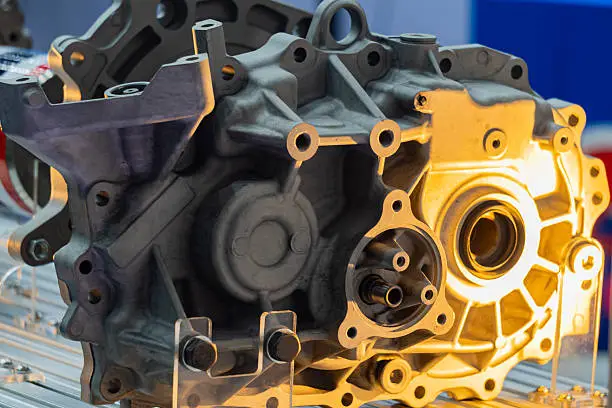
Future Trends and Optimization Techniques in Automotive Low Pressure Die Casting
As technology keeps getting better, low pressure die casting capabilities keep growing to meet new needs in the automotive industry for electrification and sustainability.
Simulation Tools Driving Design Optimization
Advanced casting simulation software, such as MAGMA and ProCAST, lets you test the process virtually before investing in real tools. With 85–90% accuracy, these programs can guess where defects will be by modeling fluid flow, temperature gradients, and solidification processes. During the quotation phase, we use simulation to find changes to the design that will increase yield. For example, recent projects saved 12% of the material they needed by moving gating systems based on flow analysis. This technology is especially useful for electric car battery housings, which have a lot of complicated cooling pathways inside that need accurate predictions of how the cells will fill up and solidify.
Emerging Alloy Development and Surface Treatments
Higher-strength aluminum alloys with scandium and zirconium micro-additions are being looked into because of stresses to make cars lighter. With these grain refiners, T7 heat treatments can produce yield strengths above 320 MPa while keeping ductility above 8%. This is similar to the performance of cast steel at a third of the density. Modern surface coating techniques go beyond the old powder coating methods. Ceramic-reinforced anodizing methods now achieve wear resistance good enough for direct sliding contact uses, so suspension parts don't need to have extra bushings installed.
Sustainability and Circular Economy Considerations
Environmental laws have a bigger impact on choosing materials and designing processes. Low pressure die casting makes less dross trash than high-pressure methods—usually less than 3% versus 6-8%—which means that less raw material is used to make each final part. Our closed-loop aluminum recycling system remelts both internal scrap and customer returns. It keeps the chemistry specs and cuts the carbon footprint by about 95% compared to making aluminum from scratch. Automotive OEMs that want carbon-neutral supply chains give higher sourcing scores to foundries that can prove they recycle more than 40% of their materials. We've surpassed this threshold by properly sorting our scrap and working with certified recyclers.
Conclusion
Low pressure die casting gives modern automotive parts the structural integrity and precise dimensions they need. It does this by combining material efficiency with mechanical performance that can't be achieved with other methods of production. The controlled filling process reduces flaws while allowing for complicated geometries that are needed for efforts to make passenger cars and business transportation lighter. Selecting the right supplier, making the best designs possible while taking into account the limitations of the process, and making sure the quality is up to standards set by the automobile industry are all necessary for a successful adoption. As the designs of electric vehicles change, so do the requirements for their parts. At the same time, environmental laws change the goals of the supply chain. low pressure die casting technology keeps improving through simulation tools, advanced alloys, and built-in automation that make it more capable and efficient.
FAQ
What aluminum alloys work best for automotive low-pressure castings?
A356-T6 alloy is most often used in automotive applications that need high strength-to-weight ratios. It has a tensile strength of about 280 MPa and is easy to cast. A380 is best for less demanding parts where cost-effectiveness is important, while newer A365 alloys make structures more flexible for crash-sensitive situations. Which material to use relies on the load cases, the chance of rust, and how well it works with heat treatment.
How does LPDC strength compare to forged components?
If you create your low pressure die castings right, they can reach 80 to 85% of the strength of a similar forged part while also being able to make complicated shapes that can't be made by forging. low pressure die casting's directed solidification creates grain patterns that are similar to those of forged materials in areas of high stress. Castings are often better for uses that need to be light because they can be made to almost any shape without a lot of wasteful cutting.
What lead times should we expect for custom automotive parts?
Depending on how complicated the mold is, making the tools takes 8 to 12 weeks. After that, it takes another 2 to 3 weeks to make the PPAP samples and make sure they are correct. For moderate batch sizes, serial production usually keeps replenishment cycles of 4 to 6 weeks. Suppliers with safety stock programs can cut emergency lead times for common parts that are already in production to 10 to 14 days.
Partner with Fudebao Technology for Superior Low Pressure Die Casting Solutions
Fudebao Technology's integrated skills, which include melt processing and final machining, help automakers find reliable low pressure die castings vendors. Our ISO-certified factory has both advanced low pressure die casting machines and precise CNC machining centers. This lets us regularly make parts that meet PPAP standards and the tight tolerances needed for tier-1 car supply chains. We have customers all over the world who need batch freedom from small prototypes to mid-volume series production. We do this while keeping quality standards that meet the strictest engineering requirements. Contact our technical team at hank.shen@fdbcasting.com to talk about your specific application needs and get detailed quotes backed by our years of experience making cars. You can see all of our casting and machining services made for car excellence at fdbcasting.com.
References
1. Campbell, J. (2015). Complete Casting Handbook: Metal Casting Processes, Metallurgy, Techniques and Design. Butterworth-Heinemann, Oxford.
2. Kaufman, J.G. & Rooy, E.L. (2004). Aluminum Alloy Castings: Properties, Processes, and Applications. ASM International, Materials Park, Ohio.
3. Divandari, M. & Vahedi, H. (2019). "Effect of Pressure on Microstructure and Mechanical Properties of A356 Aluminum Alloy Produced by Low Pressure Die Casting," Transactions of Nonferrous Metals Society of China, 29(9), 1835-1843.
4. Bonollo, F., Urban, J., Bonatto, B., & Botter, M. (2005). "Gravity and Low Pressure Die Casting of Aluminium Alloys: A Technical and Economical Benchmark," La Metallurgia Italiana, 97(6), 23-32.
5. SAE International (2020). Casting Design and Performance Standards for Automotive Applications, SAE J452 Technical Report, Warrendale, Pennsylvania.
6. European Aluminium Association (2018). Environmental Profile Report for the European Aluminium Industry: Life Cycle Inventory Data for Aluminium Production and Transformation Processes, Brussels, Belgium.



YOU MAY LIKE
