
Aerospace Aluminum Castings Enable Lightweight Aircraft Components
2026-08-24
Aerospace aluminum castings represent a cornerstone of modern aviation manufacturing, delivering the essential combination of reduced weight and structural integrity that aircraft design demands. These specialized components are produced through precision casting processes using high-grade aluminum alloys, enabling manufacturers to create complex geometries that would be impossible or cost-prohibitive through other fabrication methods. The strategic value lies in their ability to decrease overall aircraft mass while maintaining the mechanical properties necessary for safe flight operations, directly translating to improved fuel efficiency and extended operational range across commercial and defense aviation sectors.
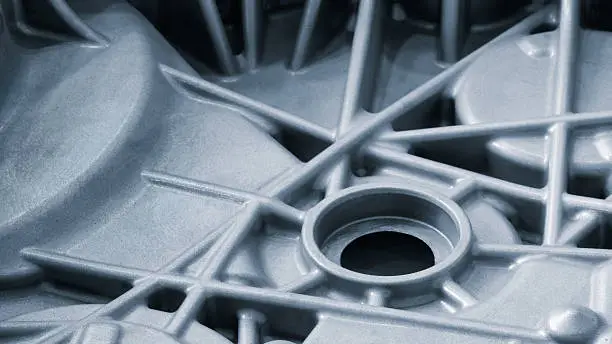
Understanding Aerospace Aluminum Castings and Their Benefits
What Defines Aerospace-Grade Aluminum Castings
Aerospace aluminum castings differ fundamentally from regular industrial castings because they have strict requirements for the materials they are made of and how they can be tracked. These parts are made from high-quality aluminum alloys that were designed to work in aviation environments with changing temperatures, vibrations, and stress cycles that require high reliability. The casting process makes one-piece structures that don't have weak spots like bonded parts do. This means that the material properties are the same all the way throughout the part.
Common Aluminum Alloys in Aircraft Applications
Aviation experts choose aluminum alloys based on how well each system in an aircraft needs to work. The 7075 alloy is very strong for its weight, which makes it perfect for structural members and load-bearing brackets that are put under a lot of stress during flight. The 2024 alloy, on the other hand, has great fatigue resistance, which is very important for parts like control linkages and mounting brackets that are loaded and unloaded many times. Another useful alloy is A356, which is very easy to cast and has good mechanical qualities after being heated. This makes it ideal for complex housing designs and non-structural enclosures.
Each alloy has its own benefits that manufacturers have to weigh against the needs of the application. The main alloying element in the 7075 series is zinc, and after the right heat treatment, it can reach tensile strengths of over 70,000 psi. On the other hand, the 2024 series depends on copper additions to provide crack propagation resistance that is necessary for uses that need to be very resistant to fatigue. When procurement teams look at casting sources, it's important to understand these metallurgical differences to make sure the parts will work.
Material Advantages That Drive Aerospace Adoption
Aluminum's natural properties make it perfect for the challenges of making aircraft. Corrosion protection is very important in flight because deicing fluids, moisture, and the weather are always attacking metal surfaces. Aluminum naturally creates an oxide layer that protects the base material from environmental damage. This means that it needs less maintenance and lasts longer than ferrous alternatives.
Weight reduction is still the main reason why aerospace uses aluminum casting. As a result of aluminum being about one-third as heavy as steel while still being about as stiff, every kilogram saved in structural parts directly leads to more cargo space or less fuel used over the life of the aircraft. When you add up these savings over thousands of flight hours, the effect on the economy is big, even if the starting costs of materials are higher than other choices.
Machinability represents another practical benefit often overlooked in discussions about material choice. Precision CNC machining works well on aerospace aluminum castings, so manufacturers can get close tolerances for mounting interfaces and sealing surfaces without having to use a lot of tools. This feature speeds up the finishing process, which cuts down on production time while keeping the accuracy of measurements that are important for aircraft assembly tolerances.
Typical Use Cases Across Aircraft Systems
Cast aluminum parts are used in many parts of aircraft because their special qualities make them useful for solving technical problems. Structural framework parts like bulkhead fittings, rib connectors, and fuselage brackets use aluminum's strength while keeping weight down as much as possible. Aluminum is good for engine parts like gearbox housings, pump bodies, and valve manifolds because it doesn't conduct heat well and doesn't react with oil-based fluids.
Landing gear systems use aluminum castings for secondary structures and fairings because they are lighter and better at retracting without lowering safety standards. Aluminum's electromagnetic shielding qualities and great dimensional stability across the temperature ranges experienced during flight operations make it a good choice for avionics boxes and radar equipment housings.
Aerospace Aluminum Casting Process and Standards
Manufacturing Methods for Aviation Components
Sand casting is still used for bigger aerospace parts and prototypes where the cost of the tools needs to be kept as low as possible. Molds are made from bonded sand mixes in this traditional method. This lets makers make complex internal passages and undercuts that would be hard to do with other methods. Sand casting is flexible enough to support low-volume production runs that are common in aerospace, where different types of aircraft need different part configurations.
Investment casting, which is sometimes called "lost-wax casting," makes small, complicated parts with a smoother surface and more accurate dimensions. In this method, wax designs are used to make clay molds, which are then melted away before putting molten metal into them. The castings that are made usually don't need much machining, which saves material and makes it possible to get tolerances that are hard to achieve with sand casting. Investment casting is often used for parts of aircraft engines and flight controls, where accuracy has a direct effect on performance.
Permanent mold and die casting are good for making a lot of parts, so the cost of the tools can be spread out over thousands of parts. Under pressure, these methods press molten aluminum into steel dies, making consistent sizes in a short amount of time. Tooling costs more than sand casting, but the economics of each unit become better for parts that are used on more than one plane or in long production runs. Zhejiang Fudebao Technology Co., Ltd. uses high-tech die casting tools that can make aerospace-quality parts with wall thicknesses as low as required while still maintaining structural integrity.
Quality Standards Governing Aerospace Castings
Aviation authorities have strict rules about the materials and processes that are used to make aerospace aluminum castings different from commercial-grade goods. The Aerospace Material Specifications (AMS) say what the aluminum casting alloys can and can't have chemically, what their mechanical properties must be, and how they should be heated. These standards are often included in procurement specs to make sure that sellers deliver materials that meet certified performance criteria.
ASTM standards lay out ways to test casting properties like tensile strength, elongation, and hardness to make sure they are correct. These standard processes make it possible to compare suppliers in an unbiased way and make sure that all production batches are the same. The Society of Automotive Engineers (SAE) has added to the ASTM standards by adding requirements for aerospace uses. These requirements cover a wide range of topics, from the cleanliness of melts to non-destructive testing methods.
Addressing Technical Challenges in Casting Production
Porosity is the main problem with aluminum castings because it lets gas get trapped or causes them to shrink, which damages their mechanical properties. For aerospace uses, specific methods are needed to reduce porosity, such as vacuum-assisted pouring, controlled solidification rates, and smart riser placement. Radiographic inspection and computed tomography scans are used by manufacturers to find problems inside parts before they are put into service, where they could fail in disastrous ways.
Hot tearing happens when the casting structure gets stress cracks from not getting enough feed while it's solidifying. This metalworking problem gets worse when the shapes are complicated, like in aircraft parts where different section widths cause different cooling rates. Foundries can use advanced simulation software to guess how metal will solidify and improve gating designs before they make the cutting tools. This cuts down on development time and raises the success rate of the first product.
To keep tolerances, heat treatment can distort dimensions, so fixtures need to be carefully designed and the process needs to be carefully controlled. Solution heat treatment and controlled aging give aluminum alloys their full mechanical properties. If these steps are not managed properly, they can cause warping. At Fudebao Technology, our facility uses precise heat treatment furnaces with multi-zone temperature control to make sure that all parts are heated evenly. Custom fixtures keep the shape of the parts stable during thermal cycles.
Comparing Aerospace Aluminum Castings with Alternative Materials and Methods
Material Performance Trade-offs
Titanium alloys are stronger, lighter, and can handle higher temperatures better than aluminum. This makes them essential for engine parts that are heated up and structural parts that are under a lot of stress. However, titanium is five to ten times more expensive than aluminum as a material, and it is very hard to machine, which makes the cost of production much higher. If the performance standards allow it, aerospace aluminum castings can be 60–70% as strong as titanium at a fraction of the cost. This makes them a good choice for secondary structures and moderate-temperature uses.
Casting Versus Forging Process Selection
Steel is stronger and stiffer than aluminum, so it is still needed for parts of the landing gear and engine mounts that need to hold more weight than aluminum can handle. Steel is stronger than other materials, but its bulk makes it less useful in many situations. An aluminum casting with the right section width can hold the same amount of weight as steel while being much lighter. This makes the aircraft fly better without sacrificing safety. Protecting steel parts from corrosion makes them more complicated because they need coatings or stainless alloys that cost more and need more maintenance.
Composite materials are increasingly being used in the main parts of aircraft because they have great strength-to-weight ratios and allow for a lot of design freedom. Composites work great for large panels, but they don't work as well where loads are introduced in a concentrated way. This is where aluminum castings shine, as they are stronger and can handle more damage. More and more, hybrid designs use both composite skins and metal cast fittings at connection points, making the most of the best qualities of each material while minimizing the worst.
Forged aluminum parts have better mechanical qualities because the bending process improves the grain structure. Forgings are used by aerospace engineers for the most important jobs, like wing connection fittings and main landing gear components, where extra strength and resistance to wear are worth the extra cost. But forging needs a lot of raw materials, and the buy-to-fly ratio is often more than 10:1 because extra material has to be cut away to get the finished shape.
Alloy Selection Guidance for Specific Applications
Castings can be made into almost any shape, which reduces material waste and makes it possible to include complex internal features that can't be forged. When a part's geometry includes internal passages, undercuts, or complex external details, the only way to make it is by casting. When parts don't need to be machined very much, the economic crossing point usually happens. This is when casting's material efficiency beats forging's property benefits.
Design engineers are using a mix of methods more and more, casting parts of assemblies that aren't very important while making connections that are heavily loaded. This plan makes the whole part work better and cost less by only using high-end manufacturing methods when they are really needed. Before finishing component standards, procurement teams should work with suppliers early in the design phase to weigh the pros and cons of different ways of making the product.
To choose the best aluminum alloy, you have to weigh the application needs against the alloy's functional qualities, resistance to corrosion, and ease of manufacture. After being heated to T6, the 7075 alloy has great tensile and yield strength, making it the most popular choice for high-strength applications where static loads drive design. Its weakness is that it is easily stressed and corroded, so it needs protective finishes in wet areas or types that are more resistant to rust.
The 2024 alloy has better resistance to crack growth, which is important for situations where fatigue performance is more important than peak strength. Damage tolerance properties in 2024 help parts of control systems, actuator housings, and flight control frames keep catastrophic failures from spreading. This metal is very easy to make and can handle the tight tolerances needed for precise valve seats and bearing bores.
For relatively stressed parts, cast alloy A356 has the best mix of being easy to shape, having good mechanical qualities, and not rusting. Its great fluidity fills in thin areas and details while staying stable after it hardens. A356 can be heated to the T6 state, which gives it the mechanical qualities needed for most secondary structures and enclosures. The versatility of this alloy makes it easier for procurement managers to keep track of inventory when they need to buy parts for a number of different aircraft systems.
Procuring Aerospace Aluminum Castings: What B2B Clients Should Know
Supplier Selection Criteria
Certification standing is the first thing that is looked at when deciding which aerospace aluminum castings providers to use for aerospace projects. Registration with AS9100 shows that aerospace quality control systems are being used, and registration with NADCAP for related goods shows that the process is capable through an independent audit. These certifications require big investments that set serious aerospace suppliers apart from general industrial foundries that want to get into the market.
An evaluation of a company's manufacturing capabilities should look at its available tools, process controls, and metalworking skills that go beyond basic certifications. Does the seller have vacuum melting devices that make clean materials? Can they do heat treatment in-house with documented temperature uniformity surveys? What kinds of non-destructive tests can be done on-site instead of sending the work to outside labs? If a foundry has the technical knowledge needed to make aircraft parts, the answers to these questions will show.
Along with technical skills, financial security and supply chain resilience should also be looked at. Long-term responsibilities for spare parts in aerospace projects mean that suppliers must stay in business. To find possible supply problems before they affect aircraft production plans, procurement teams should look at how suppliers are owned, how they diversify their customers, and how they get their raw materials.
Custom Versus Standard Casting Considerations
Custom casts offer designs that are optimized and perfectly fit the needs of the application. They get rid of extra material and weight while adding features that make assembly easier. Because casting methods give engineers a lot of design freedom, they can combine several made parts into a single part. This cuts down on assembly work and gets rid of interface tolerance stack-ups. Custom tooling, on the other hand, costs money up front and must be justified by higher production volumes or better performance that can't be found in catalog parts.
Standard casts from well-known patterns are easy to get and don't cost as much at first when the right shapes are available. A lot of suppliers keep libraries of standard clamp shapes, housing shapes, and mounting blocks that can be used in a lot of different situations with little modification. This method speeds up prototyping and lowers program risk in the early stages of development, before the design freeze that justifies spending money on custom tools.
Pricing Factors and Order Volume Economics
When planning the lead time, you need to take into account that pattern or die construction can take anywhere from 8 to 16 weeks, depending on how complicated the part is and how busy the supplier is. Custom investment casting models take less time to make than fixed mold or die casting tools, which affects the choice of process when time is of the essence. Before committing to production quantities, procurement schedules should include cycles for inspecting the first article and possible design changes.
The main factor that affects prices is the cost of materials, which changes based on the world aluminum market and alloy fees for copper and zinc. Aerospace-grade material costs more than market metals because it has stricter chemical requirements and better paperwork for tracking. Managers of procurement should set pricing systems that take into account changes in commodities while keeping budgets stable over multiple years.
Tooling amortization spreads one-time engineering costs over a larger number of units produced, with less of an effect on each unit as production counts rise. Suppliers usually spread the cost of tools out over the agreed-upon amounts, lowering unit prices when they reach the point where they can break even. When buyers understand these cost structures, they can negotiate better terms for long-term plans while also being aware of the limits suppliers have on specialty things that aren't bought in large quantities.
Quoted prices are affected by process yields and scrap rates because providers build expected losses into their business plans. The price reflects the fact that complex forms with difficult solidification patterns produce more scrap than simple shapes. Buyers can sometimes save money by agreeing to design changes that make the product easier to make. This is called a "win-win" situation because it benefits both parties from better process economics.
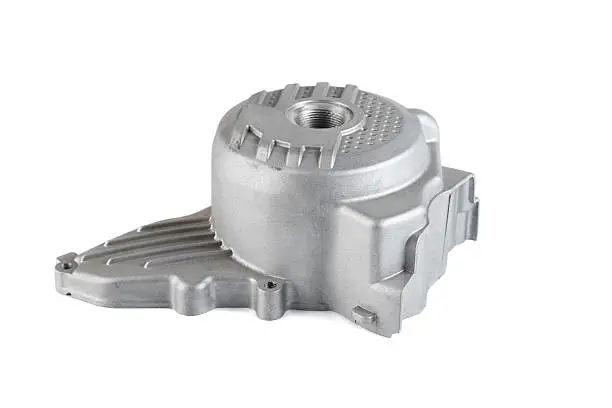
Future Outlook: How Aerospace Aluminum Castings Enable Innovation in Lightweight Aircraft
Emerging Casting Technologies
Using vacuum to help counter-gravity casting, which pulls molten metal up into molds instead of gravity or pressure, is an evolving technique. This method makes it possible to make walls thinner and add more intricate details than other methods while reducing defects caused by turbulence. Controlled fill dynamics can improve the mechanical qualities and surface finish of materials used in aerospace aluminum castings. However, the high cost of the tools means that these techniques are only used in a few specific situations for now.
In the mushy zone between liquid and solid states, aluminum behaves in a way that can be changed by semi-solid casting methods. Manufacturers make thixotropic slurries that flow like liquids under pressure but harden quickly with less shrinking by carefully controlling temperature and stirring. The final castings have fine grain structures and few holes, which makes their qualities similar to those of forged materials while still allowing for geometric freedom. As we learn more about the process, semi-solid casting may be used for more than just cars. It could also be used to make parts for spacecraft.
Environmental and Economic Benefits
When additive manufacturing is combined with other methods, it makes mixed parts that have both cast bases and 3D-printed parts. This method uses the speed and accuracy of casting to place large amounts of material, and then uses directed energy deposition or powder bed fusion to add complex surface features or targeted strengthening. This synergy also helps repair applications, where old cast parts are rebuilt with additives instead of being replaced completely. This increases their service life and decreases waste.
Fuel costs make up most of an aircraft's operating costs, so even small weight losses add up over the lifecycle of a fleet. When hundreds of planes are used for decades, every kilogram taken off the main structure saves about 3,000 liters of fuel each year on medium-range business planes. Weight reduction is important, and aluminum castings help producers meet their efficiency goals while still meeting the safety standards set by licensing authorities.
Aluminum is better for the environment than composite materials that are hard to recycle because it can be reused. A lot of recycled materials are already used in the casting business. For example, aircraft foundries keep separate lines of scrap that keep the alloy's chemistry so it can be remelted. As the idea of a circular economy grows, aluminum's ability to be recycled over and over again without losing any of its properties makes it a good material for green manufacturing projects.
Strategic Advantages of Established Manufacturing Partners
When making aluminum molds, the amount of energy used is lower than when cutting, where 80–90% of the raw material is removed as chips. Near-net-shape casting creates useful geometry with few subtractive processes, which cuts down on waste and energy use per finished part. When you consider that aluminum can be recycled, its overall environmental impact is often lower than that of other materials, even though making metal requires a lot of energy.
Long-term relationships with suppliers provide stability that is very important for aerospace programs where parts must be available for 30 to 40 years after the first aircraft is delivered. Companies that have been making castings for a long time keep pattern files, process paperwork, and metallurgical knowledge that are special to legacy components. This makes sure that spare parts still meet the original specs decades after production stopped. As programs get better and original engineering resources are spread out, this institutional knowledge can't be replaced.
When aircraft makers and casting suppliers work together on development projects, they speed up innovation by bringing industrial knowledge into the early stages of design. When foundry engineers review the designs of parts, they find ways to cut costs and improve performance that design engineers who aren't familiar with the casting process wouldn't see. Through manufacturing-enabled design innovations, these partnerships have led to the creation of ground-breaking parts that have changed the architectures of aircraft systems.
Consistency in quality over high volumes of production separates capable suppliers from companies that want to get into the aerospace market. Getting 100 good casts made is very different from keeping process control over 100,000 units over several years. Established suppliers show this stability through recorded process capability studies and years of deliveries without any problems. This gives purchasing managers the trust they need when choosing partners for important aircraft parts.
Conclusion
Aerospace aluminum castings give modern aircraft the strength and light weight they need while also meeting the strict quality and performance standards that set flying apart from other industries. Because of the way the material works, how easily it can be made, and how cheap it is, aluminum casts are essential parts of many aircraft systems, from structural parts to engine accessories. As the aviation industry continues to look for ways to be more environmentally friendly and efficient, new alloys, improved processes, and creative ways to make things are being used to advance aluminum casting technology. Aircraft manufacturers will need to form strategic partnerships with certified suppliers who can consistently show high quality and technical know-how in order to stay ahead of the competition in the global aerospace markets, where performance and cost goals are becoming stricter.
FAQ
What certifications should aerospace aluminum casting suppliers possess?
As a base approval, aerospace aluminum casting suppliers must keep their AS9100 quality management system registration up to date. When a casting process is accredited by NADCAP, it means that the technical competence of the process has been independently checked. This is done through thorough facility audits that look at equipment, procedures, and staff qualifications. Even though ISO 9001 approval isn't as strict as AS9100, it still shows that a basic quality system is in place. Instead of relying only on what suppliers say, procurement teams should check the current status of certifications directly with registrars. This is because certifications need to be renewed on a regular basis and can expire.
How long do custom aerospace aluminum castings take to produce?
Lead times for custom aerospace aluminum castings are usually between 12 and 20 weeks from the time an order is placed until it is delivered. This schedule includes 8–12 weeks for making the pattern or die, 2–4 weeks for making the first item and inspecting it, and 2–4 weeks for making more items after getting approval. Complex shapes that need a lot of non-destructive tests or parts that need to be heat treated in a difficult way may make deadlines even longer. During the planning phase, procurement managers should work with suppliers to find long-lead items and set realistic production plans.
Can aluminum castings meet strength requirements for critical aircraft components?
When aluminum castings are designed and made correctly, they have the mechanical properties needed for many important aircraft applications. After being heated, aerospace-grade metals like 7075 and 2024 have tensile strengths of over 70,000 psi, which is about the same as cast aluminum in these alloys. When designing castings, you have to take into account that they are less flexible than wrought goods. You can do this by using the right safety factors and stress analysis. Passing qualification tests like static strength, fatigue, and weather exposure shows that the part is fit for purpose, and certification officials approve castings used in aircraft structures based on proven performance data.
Partner with Fudebao Technology for Aerospace Aluminum Casting Excellence
Zhejiang Fudebao Technology Co., Ltd. has all the skills that aircraft manufacturers and defense contractors looking for a reliable supplier of aerospace aluminum castings need. We have low-pressure casting machines, high-precision CNC machining centers, and certified heat treatment systems all in one place. This lets us offer full casting solutions with accuracy of up to ±0.05mm. As an OEM partner, we work with foreign aircraft names and provide full traceability paperwork, material certifications, and process controls that meet strict aviation standards. Get in touch with our technical team at hank.shen@fdbcasting.com to talk about your specific component needs and find out how our expertise in aluminum casting can turn engineering concepts into flight-ready hardware. Our dedication to quality has made Fudebao a leading company in China's aluminum foundry industry.
References
1. Campbell, John. "Complete Casting Handbook: Metal Casting Processes, Metallurgy, Techniques and Design." Butterworth-Heinemann, 2015.
2. Kaufman, J. Gilbert and Rooy, Elwin L. "Aluminum Alloy Castings: Properties, Processes, and Applications." ASM International, 2004.
3. SAE International. "Aerospace Material Specification AMS2770: Heat Treatment of Aluminum Alloy Castings." Society of Automotive Engineers, 2019.
4. Mouritz, Adrian P. "Introduction to Aerospace Materials." Woodhead Publishing in Materials, 2012.
5. American Foundry Society. "Aluminum Casting Technology: Second Edition." Des Plaines: American Foundry Society, 1993.
6. ASTM International. "ASTM B618: Standard Specification for Aluminum-Alloy Investment Castings for Aerospace Applications." West Conshohocken: ASTM, 2020.



YOU MAY LIKE