
Low Pressure Die Castings Enable Reliable Aluminum Component Production
2026-08-25
Low pressure die castings represent a precision-driven manufacturing method where molten aluminum alloys enter permanent steel dies under controlled low pressure—typically 0.3 to 1 bar—creating components with superior mechanical integrity and dimensional consistency. Unlike turbulent high-pressure processes, this controlled metal flow minimizes turbulence and gas entrapment, delivering parts that meet the rigorous demands of automotive, industrial machinery, electrical systems, and aerospace applications. We've spent years refining this technology at our facilities to deliver parts that don't just meet specifications but exceed expectations for reliability.
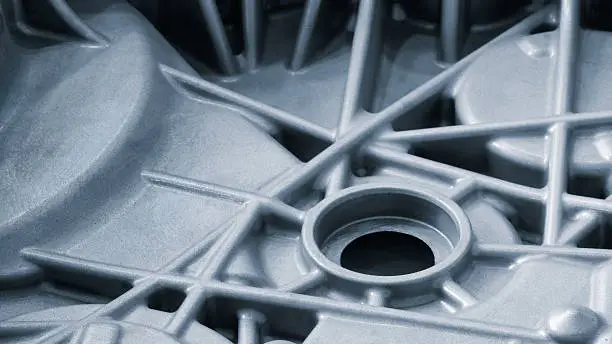
Understanding Low Pressure Die Casting and Its Process
How the Low Pressure Casting Process Works
The process starts with a closed oven that keeps melted aluminum at a temperature of 680°C to 750°C, based on the type of alloy. A riser tube links the burner to a steel die that is set up on top of it. Controlled pressure slowly pushes the liquid metal up into the die hole. The steady rise keeps the flow smooth, so there is no splashing or rusting. Once the metal has solidified, which can take anywhere from 30 seconds to several minutes based on the thickness of the wall, the pressure drops, and any leftover liquid metal drains back into the furnace to be used again. Compared to traditional gravity methods, low pressure die castings greatly reduce the amount of waste material.
Alloy Compatibility and Material Selection
Due to their good fluidity and solidification properties, aluminum alloys like A356, A357, and AlSi7Mg work very well with low pressure die castings. A356 is made up of about 7% silicon and 0.3% magnesium. After being heated to T6, it has a tensile strength of more than 240 MPa, which is strong enough for structural automotive brackets and industrial pump housings. A357 has greater purity and beryllium added to it, which gives it better mechanical qualities that make it suitable for use in aircraft structural elements. The choice of material has a direct effect on how well it can be cast, machined after casting, and resistant to corrosion in working settings.
Temperature Control and Metallurgical Benefits
Keeping accurate thermal parameters stops solidification before it's time and makes sure the die is fully filled. The die heats up to 200°C to 300°C to prevent thermal shock and help the material solidify slowly and steadily from the edges toward the gate. This thermal management lowers the risks of porosity and hot tearing, making parts with fine, even grain structures. The metallurgical quality that is produced is as good as or better than forgings in many situations. It can stretch up to 12% and has great fatigue resistance when loaded and unloaded many times.
Comparing Low Pressure Die Casting with Other Casting Methods
People who make decisions about manufacturing often look at more than one casting technology before deciding on production tools. Knowing the differences in strengths makes it clear why many engineering teams choose low pressure die castings for making important metal parts.
High Pressure Die Casting Versus Low Pressure Techniques
High-pressure die casting pushes liquid metal into dies at speeds of more than 50 m/s. This makes cycle times very short, which is great for making a lot of things. But this turbulence creates gas pores that weaken the mechanical qualities and stop heat treatment from working. High-pressure parts usually have lower tensile strengths (20–30%) than low pressure die castings of the same size, and they can't be heated in a solution without blistering. Low pressure die castings slow down production a bit, but the parts it makes are good for welding, heat treatment, and tough structural uses where internal soundness is important.
Sand Casting and Permanent Mold Alternatives
Although sand casting gives you a lot of design options and low-cost tools, the finished product has a rough surface (usually 250–500 Ra micrometers), which needs a lot of machining. As long as the dimensions aren't tight (usually ±0.5mm or more), this route isn't good for making tight-fit assemblies. When compared to sand methods, permanent mold gravity casting has better surface quality and better control of dimensions. However, it doesn't have the feeding pressure benefits that get rid of shrinkage porosity in thicker sections. Low pressure die castings technology fills in these gaps, giving almost perfect net-shape accuracy within ±0.2mm ranges while keeping the mechanical integrity of the whole cross-section of the component.
Investment Casting and Squeeze Casting Considerations
Investment casting gives you a smooth surface and fine details, but each part costs more because the ceramic shells are disposable. When you mix casting with forging pressure, you get excellent mechanical properties. However, you need to spend a lot of money on tools, and your designs can't be too complicated. Low pressure die castings methods are the best way to balance quality, cost, and manufacturing efficiency for medium- to high-volume production that needs structural reliability without being too complicated.
Addressing Common Challenges and Solutions in Low Pressure Die Casting
Porosity Prevention Through Process Optimization
Porosity is still the most important flaw to watch out for in low pressure die castings. Shrinkage porosity happens when not enough metal feeds areas that are shrinking in volume as they solidify. Gas porosity happens when hydrogen is absorbed, or air gets trapped. We deal with these problems by planning when to apply pressure (keeping it there until the aluminum is completely solidified) and using argon or nitrogen purging to lower the amount of hydrogen dissolved in the aluminum to less than 0.15 ml per 100 g. By placing feeders and risers in a smart way, solidification will go in the direction of these pools, stopping any single shrinking holes.
Design Considerations for Component Reliability
Wall width consistency has a big effect on how well a low pressure die castings works. Sudden changes cause stress concentrations and feeding problems. For metal parts, we suggest moderate changes in thickness with ratios no higher than 1:1.5, and wall thicknesses of at least 3–4 mm. Draft angles between 1 and 3 degrees make it easier to remove parts without damaging the surface. Metal speed and temperature distribution can be controlled by gating systems that are built correctly. These systems are often side-gated or bottom-gated. Simulation software, such as MAGMASOFT, can predict where defects might happen during the planning process. This lets the shape be changed before the tooling is made.
Monitoring Techniques and Quality Assurance
Monitoring the process in real time keeps an eye on important factors like the melt temperature, the rate of pressurization, the holding time, and the die temperature. Statistical process control charts find changes in parameters before they cause problems. Post-casting inspection includes checking the dimensions with coordinate measuring machines (CMM), using X-rays to check the internal soundness, and mechanically testing sample castings to make sure they have the right tensile and elongation properties. When parts are made for cars, they have to go thru the Production Part Approval Process (PPAP), which includes studies that show they can do what they're supposed to do and show that their Cpk values are higher than 1.33 for important measurements.
Procurement Insights: Choosing the Right Low Pressure Die Casting Partner
Evaluating Manufacturing Capabilities and Certifications
Quality certifications show that a company is dedicated to controlling the whole process in a planned way. IATF 16949 certification shows quality systems that are good enough for cars, and ISO 9001 certification shows basic quality management. For specialized processes, aerospace applications need AS9100 certification and NADCAP certification. Our facility is IATF 16949 certified, which means that everything can be tracked from the time we receive the raw materials to the time they are inspected for quality. To make sure your providers can keep up with your growing demand, you should look at their furnace capacity, the number of low pressure die castings cells, and the yearly tonnage output.
Technological Sophistication and Service Flexibility
Modern makers use modeling software during the quote process to find problems that might arise with low pressure die castings before they spend money on tools. Rapid prototyping, which includes 3D-printed sand models or investment patterns, lets you test your idea quickly. We use high-speed CNC machining centers and precision lathes that can hold tolerances of ±0.05mm, which lets us do integrated production from casting to finished part. This vertical merger cuts down on wait times and makes managing the supply chain easier. Flexible batch production can handle small quantities for prototypes up to large volumes for series production, and there are no minimum order requirements that are too high.
Cost Drivers and Quotation Considerations
Tooling is the most expensive thing to buy up front. Depending on the complexity of the part and the size of the die, it can cost anywhere from five to six figures. Piece-part economics are greatly affected by spreading the prices of tools out over the expected number of uses over their lives. Costs of materials change with the price of aluminum on the market. Right now, they are averaging around the applicable rates per kilogram for virgin A356 alloy. Heat treatment, machining, and surface finishing are examples of secondary processes that add to the cost of the parts but make them ready to be put together. Asking for detailed cost breakdowns during the quotation process makes it easier to compare suppliers and find ways to save money.
Thru design-for-manufacturability reviews done early in the development process, we've helped procurement teams at tier-1 car suppliers cut the prices of parts by 18%. Before tooling agreements lock in designs, early supplier involvement finds ways to simplify shapes, lower the need for machining, and make the best use of materials.
Future Outlook and Trends in Low Pressure Die Casting for Aluminum Parts
Automation and Advanced Process Control
With Industry 4.0 technologies, traditional low pressure die castings operations are turned into data-rich, connected manufacturing spaces. Automated ladling systems get rid of the need to move metal by hand, which improves accuracy and worker safety. Robotic part extraction and trimming cut down on cycle times and the need for human labor. Predictive maintenance algorithms look at the vibration and temperature patterns of equipment to plan maintenance before problems happen and stop production. We've streamlined the handling of materials in all of our casting rooms, which cuts down on the number of times they have to be touched by hand and makes it easier to track them.
Lightweighting and Sustainability Initiatives
Electrification in cars increases the need for lightweight structural parts that make vehicles go farther on a single charge. Because aluminum is denser than steel and is about 35% lighter while still being strong, low pressure die castings are necessary for battery housings, motor mounts, and suspension parts. Closed-loop aluminum recycling during the casting process reduces the amount of trash. Remelting scrap aluminum uses 95% less energy than making aluminum from scratch. These benefits of sustainability are in line with companies' environmental pledges and cut down on material costs.
Simulation Software and Design Optimization
Casting simulation technology keeps getting better by adding artificial intelligence tools that suggest changes to the design that will get rid of expected flaws. Topology optimization tools find designs that use the fewest materials possible while still meeting structure standards. This cuts the weight of parts by 20–40% while keeping their performance. During the development stages, we work with design engineering teams to run models that make sure the product can be made and predict its mechanical features before investing in prototype tools. This collaborative method shortens the time it takes to build something and lowers the cost of each update.
Conclusion
Automotive, industrial, electrical, and aerospace applications need parts that are accurate in size, reliable mechanically, and cost-effective. Low pressure die castings meet these needs. The controlled flow of metal in this process keeps flaws to a minimum while making parts with mechanical properties that are similar to those of wrought materials. For program launches to go smoothly and long-term supply security, it's important to choose manufacturing partners that have the right certifications, technological skills, and service flexibility. As new robotics and simulation technologies keep improving the process, this way of making things is becoming more and more important for businesses that need lightweight, high-performance aluminum parts.
FAQ
What aluminum alloys work best with low pressure casting?
A356 and A357 metals are the most common because they are very flexible, don't shrink too much, and react well to heat treatment for low pressure die castings. A356 is good for general automotive and industrial uses that need to be resistant to corrosion and easy to weld. A357 is better for aircraft and high-stress parts because it has higher strength and flexibility. AlSi7Mg is used in European cars because it has properties similar to A356. Choosing the right alloy takes into account the casting properties, the engineering needs, and the finishing needs after casting.
What lead times should we expect for production parts?
Designing and making tools usually takes 8 to 12 weeks, depending on how complicated the die is. PPAP clearance and the first sample take an extra 4 to 6 weeks. Once approved, production wait times are between 3 and 6 weeks, depending on the size of the order and the amount of work that needs to be done. We keep capacity buffers that let us deliver quickly for urgent needs while standard scheduling gives us the best throughput at the lowest cost.
How do minimum order quantities impact project feasibility?
MOQ rules depend on the maker and the difficulty of the part. To test designs before committing to large numbers, prototype sizes often accept higher costs per piece. As production orders rise above a few hundred pieces per year, they usually become more cost-effective because the amortization of tools is spread out over a larger number of orders. We can handle batches of different sizes, so we can support research projects thru serial production without having to meet minimum orders that make it take too long to get into the market.
Partner with Fudebao Technology for Superior Low Pressure Die Casting Solutions
You can trust Fudebao Technology as your low pressure die castings supplier because they have decades of experience casting aluminum and state-of-the-art manufacturing infrastructure. Our fully integrated factory handles the whole production process, from melting the metal to precise CNC cutting and surface treatment, giving us finished parts that are ready to be put together. We use advanced machining centers to get tolerances as close as ±0.05mm, which meets the exacting needs of precision parts for cars, industrial equipment, and electrical housings. Our engineering team can help you with joint design and fast prototyping, whether you're looking for structural brackets for electric cars, pump housings for industrial machinery, or heat dissipation parts for power equipment. Email us at hank.shen@fdbcasting.com to talk about your unique needs and get thorough technical quotes that are made for your application.
References
1. American Foundry Society. (2021). Aluminum Casting Technology: Fundamentals and Best Practices. Schaumburg: AFS Publications.
2. Kaufman, J. G., & Rooy, E. L. (2018). Aluminum Alloy Castings: Properties, Processes, and Applications. Materials Park: ASM International.
3. Campbell, J. (2015). Complete Casting Handbook: Metal Casting Processes, Metallurgy, Techniques and Design. Oxford: Butterworth-Heinemann.
4. Bonollo, F., Urban, J., Bonatto, B., & Botter, M. (2019). "Gravity and Low-Pressure Die Casting of Aluminium Alloys: A Technical and Economical Benchmark." International Journal of Metalcasting, 13(2), 308-323.
5. Tiryakioğlu, M., & Campbell, J. (2014). "Quality Index for Aluminum Alloy Castings." International Journal of Metalcasting, 8(3), 39-42.
6. SAE International. (2020). Aerospace Casting Quality Standards: AMS2700 Series Specifications. Warrendale: Society of Automotive Engineers.



YOU MAY LIKE