Low Pressure Die Casting: Guide to Efficient Metal Forming
2026-05-12
Low pressure casting is a precise way to shape metal. Melting aluminium or magnesium alloys run into mould holes while controlled pneumatic pressure, usually between 0.02 and 0.1 MPa, keeps the pressure steady. In contrast to gravity pouring or high-pressure methods, this counter-gravity method uses a riser tube to connect a pressurised holding furnace directly to the mould. This creates smooth flow that reduces noise and oxide inclusions. This controlled filling method solves important problems in the industry by reducing porosity, improving feeding efficiency during solidification, and producing materials that are over 90% pure—much higher than the 50–60% typical of traditional gravity methods.
Understanding Low Pressure Die Casting: Basics and Process
What Defines the Low Pressure Casting Process
Basically, this way of making things works by pushing molten metal up through a refractory tube and into the die hole with pressurised gas. Compared to high-pressure die casting, this low pressure casting method works at much slower speeds, which lets the metal fill the mould gradually without splashing or trapping air. This soft filling design makes a dense microstructure that is important for safety-critical parts in the aircraft and automobile industries. During solidification, the holding pressure stays in place, which lets liquid metal keep flowing into shrinking zones from below.
Core Equipment and Mold Design Elements
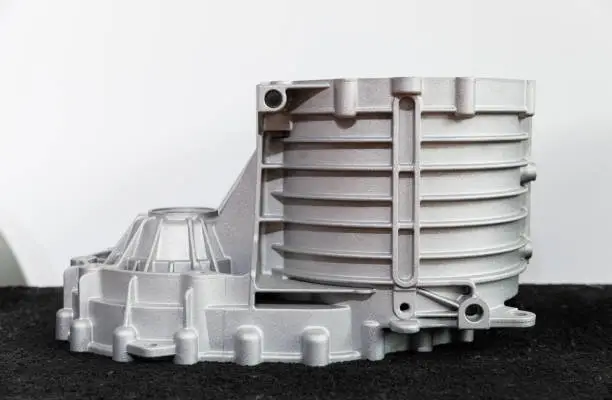
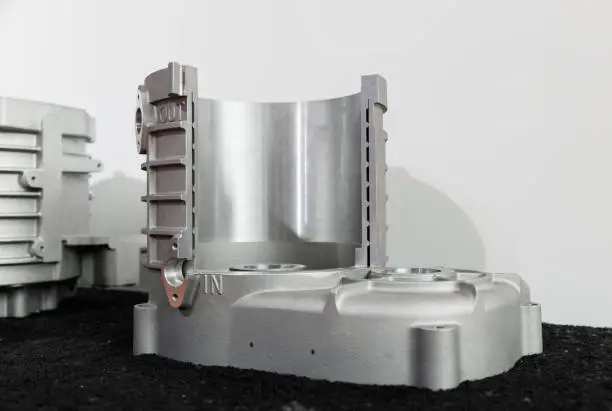
A sealed holding furnace, precise pressure control systems with PID loops, and permanent steel moulds made from H13 tool steel are common parts of modern production sets. Mould assemblies have planned venting pathways, the best gate arrangements, and cooling circuits that manage the solidification processes. Temperature tracking tools keep an eye on both the furnace and the mould temperatures, keeping aluminium metals between 680°C and 720°C, based on their make-up. The machine can put in resin-bonded sand cores to make complex internal shapes. This is a unique feature that makes it especially useful for making cylinder heads and motor housings with complicated cooling pathways.
Common Alloys and Their Applications
A356 aluminium alloy is still the most popular choice for low pressure casting because it has the best mix of mechanical qualities, castability, and heat treatability. This metal has 7% silicon in it to make it more fluid, and it goes through a T6 heat treatment to get tensile strengths of more than 280 MPa and 5-8% expansion. Magnesium metals like AZ91D are used in situations where weight reduction is important, but they need to be cast in a safe atmosphere. Copper metals are used in specific electrical uses that need better conductivity. This is especially true in power transmission parts and motor housings, where controlling heat is very important.
Typical Defects and Prevention Strategies
Even though the method is managed, it could still have problems with quality. When feeding pressure isn't enough or when cooling rates cause hot spots that aren't connected to the rest of the material, shrinkage porosity usually shows up in thick parts. Flow lines show up as bumps on the surface when oxide films form on the melt front because filling speeds are too slow or the metal temperature is too low. Gas porosity happens when hydrogen dissolves in the melt or when the opening isn't set up correctly. To avoid problems, you have to carefully control the process. This means making sure that the pressure-rise curves are optimised to keep the gate speeds consistent, that degassing steps are taken before casting, that the right venting paths are planned, and that the mould temperatures are set so that solidification rates are even across the shape of the part.
Comparing Low Pressure Die Casting to Other Casting Techniques
How LPDC Differs From High-Pressure Die Casting
Even though both methods use lasting moulds, the way they work produces very different results. In high-pressure die casting, metal is injected at speeds of up to 50 m/s and pressures of up to 100 MPa. This creates a turbulent flow that catches gas and oxide films. This trapped porosity stops heat treatment because the gas increases during solution heat treatment, which blisters the surface. The low pressure casting method is more gentle. They fill at controlled speeds under 1 bar of pressure, making casts that can go through full T6 heat treatment processes. Cycle times are longer—usually 2–5 minutes compared to 30–90 seconds for high-pressure—but the better mechanical qualities and structural stability make this trade-off worth it for safety-critical uses.
Advantages Over Gravity and Sand Casting
Gravity permanent mould casting uses the same kinds of tools, but it only uses hydrostatic head to fill in the gaps. This means that filling is less reliable during solidification, and there are more defects. The pressurised feeds in low pressure casting ensure that the liquid metal constantly makes up for shrinkage. This makes casts that are denser and have fewer holes, which meets ASTM E155 standards. For small quantities, sand casting saves money on tools, but it has worse limits for size (usually ISO 8062 CT9–CT11 vs. CT6–CT7 for low pressure casting), rougher surfaces, and needs a lot of cutting. Due to big risers and gating systems, material output in sand casting rarely goes above 50%. In low pressure setups, on the other hand, the pressurised pool sends metal that hasn't been used back to the furnace.
When Investment Casting Makes More Sense
Investment casting is very good at making very complicated shapes with undercuts that can't be done with fixed moulds. It can achieve tolerances of about ±0.13mm and surface finishes as fine as Ra 1.6 µm. But these benefits come at a much higher cost per piece because the design and shell moulds have to be made over and over again. If you only need to make a few hundred pieces a year, investment methods may be best. For mid to high volume needs, between 10,000 and 500,000 pieces, low pressure casting methods work best. The choice depends on how complicated the part is, what limits are needed, how much is being made, and the budget. This is clearly shown in the production of car wheels: low pressure casting is the usual choice because of its modest complexity, high volume demand, and strict structural requirements.
Benefits and Business Value of Low Pressure Die Casting
Superior Mechanical Properties and Structural Integrity
This low pressure casting method's controlled filling and pressurised feeds directly lead to quality changes that can be seen and felt. Castings don't have many holes in them, and an X-ray usually shows ASTM E155 severity levels of 1-2, while it's more normal for gravity castings to show levels of 3–4. This dense internal structure helps parts have higher yield strengths, better resistance to wear, and better elongation qualities. These are important for chassis parts, suspension parts, and structural housings. The process also allows full heat treatment steps, which makes it possible to process T6, which raises the tensile strength of A356 aluminium from about 180 MPa when it is cast to over 280 MPa while also making it more flexible. Parts made this way are more likely to meet strict car PPAP rules and aerospace traceability standards than parts made the old way.
Cost-Efficiency Across Production Volumes
Several things in the industrial chain work together to create economic benefits, including low pressure casting. When compared to sand casting's normal 50% yield, material yield rates above 90% cut remelting costs and raw material use by a large amount. Permanent moulds can make 30,000 to 50,000 shots before they need to be refurbished. If they are kept in good shape with refractory coats, the cost of the tools is spread out over many large production runs. The near-net-shape feature cuts down on secondary processes, which speeds up the cycle time and protects the tools. When the surface finish is between Ra 3.2 and 6.3 µm, rough cutting passes are usually not needed at all. Because of these long-term saves, the method is especially appealing for medium to high volume production situations that are popular in parts for cars, industrial pump housings, and electrical equipment enclosures.
Environmental Benefits Supporting Sustainability Goals
More and more, factories are putting an emphasis on methods that are in line with their environmental goals, and this technology has real benefits for sustainability. The high material output directly lowers the amount of energy needed to melt down scrap metal again. Permanent mould reusability gets rid of the need to throw away sand and clean up after using disposable mould. When compared to high-pressure devices, low working temperatures use less energy per casting cycle. When you need to do less grinding, you use less coolant, lose fewer chips, and use fewer cutting tools. These environmental benefits go along with the business case and help procurement managers meet both performance standards and sustainability requirements set by company leadership and government agencies.
Real-World Applications Demonstrating Value
The most well-known use is in automotive metal wheels, which are used to make almost all high-end and mid-range passenger car wheels. The process makes it possible to make complicated spoke designs with thin walls that meet standards for impact protection while still keeping air out. Electric car motor housings use the technology's ability to include sand cores for complex cooling pathways, which is important for controlling temperature in electric drivetrains with a high power density. To meet the high strength-to-weight ratios and low flaw levels needed by AS9100 quality systems, this process is used to make aerospace parts like actuator housings and structural braces. The method is used in the industrial machinery sector to make pump housings, compressor parts, and gearbox cases that need to be pressure-tight and stable in size while they are working.
Procuring Low Pressure Die Casting: What B2B Buyers Need to Know
Evaluating Supplier Certifications and Quality Systems
To find the right production partner, you need to carefully look at their quality infrastructure and industry certifications. Getting IATF 16949 certification shows that you know how to use standard PPAP processes, control plans, and measurement system analysis in the car supply chain. ISO 9001 is a general standard for quality management, but standards specific to certain industries, like AS9100 for aircraft or ISO 13485 for medical products, show more advanced skills. Supplier facilities should keep written quality procedures that include checking incoming materials using spectrographic analysis, keeping an eye on process parameters with statistical process control, and doing a full final inspection that includes X-rays, leak tests, and measurements. Investments in coordinate measuring machines, X-ray systems, and tension testing equipment found during site checks show that low pressure casting quality is valued in more ways than just certification paperwork.
Critical Lead Time and Production Planning Factors
Understanding realistic deadlines keeps plans from getting thrown off. Depending on how complicated it is, making a new mould usually takes between 8 and 16 weeks. This includes validating the design, getting the tool steel, milling it, and taking samples. Within two to four weeks after mould approval, production sampling provides PPAP paperwork. For standard parts, the production wait time is usually between 4 and 8 weeks, which includes getting the raw materials, casting, heat treating, cutting, and finishing the parts. In rush situations, timelines may be shortened by using faster tools or setting priorities, but quality risks rise. During the early stages of design, procurement teams should involve suppliers. This will allow parallel engineering to optimise part shape for manufacturability while tools are being made. When compared to linear processes, this parallel method often cuts the total time to production by 30 to 40 percent.
Balancing In-House Versus Outsourced Production
Several key factors affect the choice of whether to make in-house or work with specialised foundries, including low pressure casting. In-house production gives you more control over the process, better security for your intellectual property, and no more seller margin, but it costs a lot of money. Depending on how automated it is, a full production cell with a kiln, casting machine, moulds, heat treatment tools, and quality systems can cost anywhere from $500,000 to $2,000,000 to buy. As process optimisation needs metallurgical understanding and years of experience, operating skill becomes just as important. When you outsource to well-known companies like Fudebao Technology, you can get access to tried-and-true methods, well-established quality systems, and flexible capacity right away, without having to commit any cash. Volume is a very important factor. Annual needs below 50,000 pieces rarely explain internal operations, but amounts above 200,000 pieces may warrant captive production analysis.
Key Equipment Manufacturers and Technology Trends
Leading manufacturers of casting machines, such as Fudebao Technology, Bühler, Kurtz Ersa, and Fill, make machines with advanced process control features. Modern machines have servo-controlled pressure regulation that keeps the filling curves accurate, automatic die cleaning systems, and quality tracking built in through thermal imaging and pressure monitors. As furnace technology has improved, it now has electromagnetic stirring for even spread of melt temperature and automatic degassing systems that lower the hydrogen content to less than 0.15 mL/100g aluminium. As mould technology improves, things like curved cooling lines help keep temperatures under control and make tools last longer. Robotic part extraction, in-process checking, and material handling systems can be used together with automation to cut down on labour needs and improve accuracy. When purchasing teams look at different providers, they should check the equipment's age and functionality, because places that use new, controlled equipment show they are committed to making things better in terms of quality and efficiency.
Designing and Optimizing Low Pressure Casting for Best Results
Essential Mold Design Considerations
For low pressure casting to go well, the tools need to be carefully designed so that they can handle heat, metal flow, and air flow needs. H13 tool steel is still the standard material for moulds because it has enough thermal fatigue strength to last for 30,000 rounds or more if it is properly kept. Mould split lines should reduce parting line flash while making it easier to place the core and remove the part. Gating design critically influences filling behavior—gate placement, size, and geometry control metal velocity entering the cavity. Oversized gates slow down the solidification process and lower yield, while undersized gates speed things up and cause turbulence. Venting tubes placed at expected last-fill points let stored air escape without letting metal through. The design of a cooling circuit sets up patterns of solidification that feed shrinking towards gates. Design evaluation using computer software that includes flow analysis and thermal modelling finds mistakes in the design before the expensive process of making the tool starts.
Controlling Process Parameters for Consistent Quality
Good casts can be told apart from average results by keeping tight control over working variables. To keep the melting point of A356 aluminium within ±5°C, the temperature needs to be kept between 700 and 720°C so that it flows smoothly without absorbing too much gas or getting grainy. Mould temperature has a direct effect on surface quality and the rate at which it solidifies. If the temperature is too low, cold shuts and misruns happen, and if the temperature is too high, the cycle time is longer and sticking may happen. Pressure-rise profiles need to be carefully optimised in low pressure casting: the starting pressure rises slowly until the metal hits the gate, then fills the cavity at a controlled speed, and finally stays at its highest level throughout solidification. The speed of a cycle includes the time it takes to fill, hold, and cool before the mould opens. Process monitoring tools keep an eye on these factors in real time and make changes automatically to keep things consistent between production runs. Strong quality systems that meet PPAP and AS9100 standards are built on documented parameter setpoints, control limits, and corrective measures.
Industry Best Practices for Defect Reduction
Systematic problem-solving and ongoing growth methods are needed to keep defect rates low. Degassing methods, like rotating degassing or pill treatments, lower the amount of dissolved hydrogen that stops gas porosity. Adding titanium-boron to grains or changing their chemical makeup can make them better for feeding and improving their mechanical features. Regular inspections are set up by mould maintenance programmes to look for heat breaking, erosion, and coating decay before they lead to casting flaws. Statistical process control charts that keep an eye on key measurements, mechanical test results, and X-ray grades find process drift before parts that don't meet standards are shipped. When applied to defect cases, root cause analysis methods stop repetition by fixing the core causes instead of just treating the symptoms. Facilities with mature quality systems, problem-solving histories, and ongoing efforts to improve themselves are lower-risk buying partners for procurement teams that are in charge of key component supply chains.
Conclusion
This in-depth look at low pressure casting shows that it is a manufacturing method that has clear benefits for parts that need to be structurally sound, have precise measurements, and be made in medium to large quantities at a low cost. The technology fills the gap between low-volume investment casting and high-volume die casting. It gives mechanical qualities that can be changed by heat that can't be achieved with high-pressure methods and keeps tolerances tighter than sand or gravity casting methods. Knowing the basics of the process, its comparative benefits, buying factors, and optimisation strategies helps engineering managers, sourcing directors, and quality teams make smart choices that match the manufacturing skills with the needs of the components. As performance requirements rise and concerns about sustainability shape manufacturing strategy, the method is increasingly being used in the automobile, aircraft, industrial machinery, and electrical industries.
FAQ
1. What Metals Work Best With Low Pressure Casting?
Most of the time, people use aluminium alloys for low pressure casting, especially A356 and A380, because they are easy to cast, treat with heat, and are strong for their weight. Alloys made of magnesium, like AZ91D, are used in situations where weight reduction is important. Copper alloys are used in electrical parts that need to be very good at conducting electricity. The area it will be used in, its motor needs, and its thermal requirements will all affect the choice of material.
2. How Does This Method Compare Mechanically to Other Processes?
Controlled filling and pressurised feeding make casts with a lot less porosity than those made by gravity, which means they have higher tensile strengths and better resistance to wear. In contrast to high-pressure die casting, parts can be heated without cracking, which allows T6 processing that greatly improves mechanical qualities. After being heated, most A356 castings reach a tensile strength of 280 MPa or more and an expansion of 5 to 8 percent.
3. What Production Volumes Make Economic Sense?
The technology works best for producing between 10,000 and 500,000 pieces per year at the lowest cost. The cost of the tools is spread out evenly over these amounts, and the fixed moulds last a long time. Low-volume casting (sand or investment casting) may be better to save money on tools, while very high-volume casting (high-pressure die casting) may be better even though it has technical problems.
Partner With Fudebao Technology for Expert Low Pressure Casting Solutions
Zhejiang Fudebao Technology Co., Ltd. is a leading aluminium foundry that uses cutting-edge tools and years of experience to serve customers in North America in the automobile, aircraft, industrial machinery, and electrical industries. From melting to finishing, our factory has everything needed, including low pressure casting machines, high-speed machining centres, CNC lathes, and surface treatment systems. This means that we can supply everything from blank parts to finished ones all in one place. To keep exact tolerances of ±0.05mm, we use strict quality systems that support PPAP paperwork, dimensional verification, and mechanical testing methods. Our engineering team works with your design and sourcing specialists to make sure that the shape of the parts you need can be manufactured while still meeting your cost and time goals. This is true whether you need structural housings, precision brackets, motor parts, or safety-critical chassis parts. As a low pressure casting maker with years of experience working with global OEMs and tier-1 suppliers, we know how important it is for your projects to have accurate measurements, certified materials, and on-time deliveries. Visit fdbcasting.com or email hank.shen@fdbcasting.com to talk about your unique component needs and get full technical advice that fits your application.
References
1 .American Foundry Society (2021). "Low Pressure Permanent Mold Casting: Process Fundamentals and Quality Control." AFS Casting Process Handbook, 8th Edition, Des Plaines, Illinois.
2 .Campbell, J. (2015). "Complete Casting Handbook: Metal Casting Processes, Metallurgy, Techniques and Design." Butterworth-Heinemann, Oxford, United Kingdom.
3 .ASTM International (2020). "ASTM E155-15: Standard Reference Radiographs for Inspection of Aluminum and Magnesium Castings." West Conshohocken, Pennsylvania.
4. SAE International (2019). "Low Pressure Casting Process Guidelines for Automotive Structural Components." SAE Technical Paper Series, Warrendale, Pennsylvania.
5. Davis, J.R. (2018). "Aluminum and Aluminum Alloys: Cast Alloy Designations and Chemical Composition Limits." ASM Specialty Handbook, ASM International, Materials Park, Ohio.
6. North American Die Casting Association (2022). "Comparison of Permanent Mold Casting Technologies: Process Selection for Automotive Applications." NADCA Technical Publication, Wheeling, Illinois.



YOU MAY LIKE
_1756348780785.webp "porting turbo compressor housing")
_1756346043433.webp "guardrail connecting block")