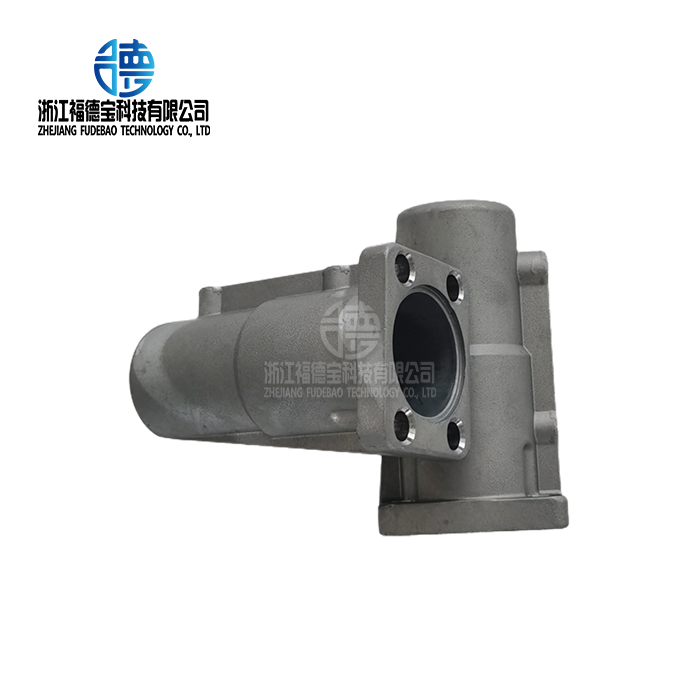
Low Pressure Casting Project for EV Motor Housing
2026-05-22
Choosing the right casting method for an EV motor housing project is important for both long-term dependability and production efficiency. In low pressure casting, liquid aluminum is pushed into mold holes by controlled pneumatic pressure, which is usually between 20 and 100 kPa. This method works against gravity. This method gets rid of turbulence during filling, which leads to better mechanical integrity, less porosity, and very accurate measurements—all of which are very important to car OEMs and tier-1 suppliers when they're looking for parts for electric vehicle powertrains.
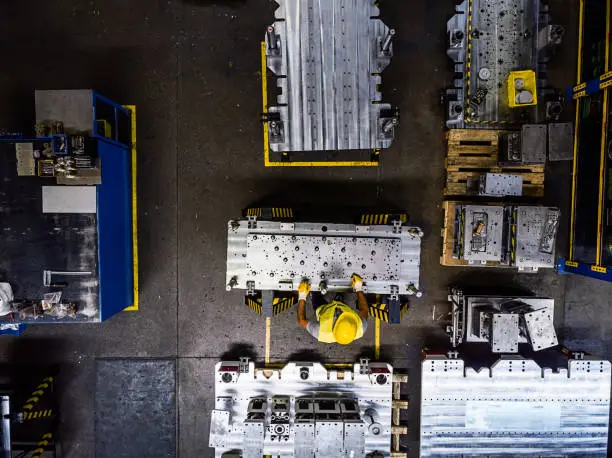
Understanding Low Pressure Casting and Its Role in EV Motor Housing
The Core Principle of Counter-Gravity Filling
Using a riser tube to connect a heated holding furnace straight to the mold is what makes this casting method unique. This method keeps the smooth flow going during the filling process, unlike gravity casting that uses hydraulic head or high-pressure die casting that uses very fast injection speeds. Metal enters the mold cavity smoothly from below, which reduces the formation of oxide films and keeps air from getting stuck, two common flaws that weaken structural integrity in safety-critical car applications.
This method of controlled filling has clear benefits that can be measured. The holding pressure stays in place while the metal solidifies, which lets the liquid metal keep shrinking in areas with thick walls. Concerns about porosity that come up with regular gravity dumping ways are taken care of by this feeding efficiency.
Material Selection for Thermal Management
Aluminum metals are most often used for EV motor housings because they are light and good at transferring heat. The industry standard for aluminum alloys is still A356-T6, which has the best strength-to-weight ratios after being heated. In luxury grades, the iron content stays below 0.15%, and strontium modification improves the elongation qualities. These are important factors when parts need to be able to handle thermal cycles and mechanical stress over the course of a vehicle's lifespan.
Electric motor housings need complex cooling channels inside to get rid of the heat that is made when the motor is running. The process lets resin-bonded sand cores be put in to make these complicated shapes without breaking the cores, because the working pressures are lower than in die casting. This feature is very important for creating housings that don't leak at all when pressure is applied and get rid of heat as efficiently as possible.
Dimensional Accuracy and Tolerance Achievement
When putting together an EV motor, getting the specifications very close is very important. Our casting process always meets the requirements of ISO 8062 CT6–CT7, and smaller sizes can hold ±0.3mm without a lot of extra work. The surface finish is usually between Ra 3.2 and 6.3 µm, which means that a lot less work needs to be done after casting than with sand casting.
Temperature control during mold filling has a direct effect on the quality of the end part. Process optimization includes changing the pressure-rise curves using PID loop control and keeping the velocity at the gate constant to stop solidification or flow line formation before it's time. When making parts with different wall thicknesses, where uneven cooling could cause internal pressures, this accuracy is even more important.
Key Considerations in Low Pressure Casting Projects for EV Motor Housing
Strategic Material and Alloy Selection
Not only does the choice of aluminum metal affect how well it works mechanically, but it also affects how easy it is to make and how much it costs. For most motor housing uses, A356 is the best choice because it is flexible, can be heated and shaped, and doesn't rust. When better heat conductivity is very important, A360 or copper-aluminum alloys are thought about, even though they cost more to make.
Before you start thinking about the things that have been listed, it's important to know that each metal has its own processing needs. Here are the most important things that affect the choice of metal for EV motor housing projects in low pressure casting:
- Fluidity and Mold Filling: A356 has great flow properties at normal pouring temperatures of 700–730°C, so full cavity filling is possible even in thin-walled sections as thin as 2.5 mm.
- Heat Treatment Response: These parts can go through full solution and age hardening, reaching tensile strengths of over 280 MPa and elongation rates of over 6%. This is different from high-pressure die cast parts that can't go through T6 treatment because gas gets trapped.
- Corrosion Resistance: Controlling the right amounts of chemicals, especially magnesium and silicon, naturally protects against galvanic rust when housing parts touch copper windings.
These features of the material directly address worries about long-term dependability and warranty risk during procurement. Parts made this way always pass the 10,000-hour salt spray tests that automakers demand.
Mold Design Complexity and Thermal Management
To make lasting models for EV motor housings, you have to find a balance between how well they conduct heat and how long they will last. Standard tool steel is still H13, which can usually handle 30,000 to 50,000 production runs before it needs major repairs. Directional solidification must be taken into account in the design of the mold so that the largest parts stay connected to the pressurized metal container while it cools.
The cycle times and consistency of the nanostructures depend on where the cooling channels are placed inside the mold. Putting these lines in the right place speeds up the removal of heat from important areas while preventing early shell formation that could trap liquid metal and cause shrinking porosity. Regularly using refractory coats makes molds last longer and makes sure that the release properties stay the same throughout production runs.
Defect Prevention Through Process Control
When fixed mold casting is done, the main quality issues that need to be thought about are porosity and flaws. Oxide layers form when melt fronts move too slowly or when pouring temperatures drop below what they should be. We deal with this by keeping an eye on the temperature, pressure, and fill rates of the furnace in real time and making changes as needed to keep the process stable.
The gas gap comes from hydrogen being absorbed by the liquid aluminum. We use argon for rotating degassing and strict moisture control in holding furnaces to melt aluminum. This lowers the amount of hydrogen dissolved in the aluminum to less than 0.15 ml/100 g. Spectral analysis equipment checks the chemical makeup every four hours during long production runs. This makes sure that the mechanical properties are the same across big batches.
Comparing Low Pressure Casting with Other Casting Methods for EV Motor Housing
Mechanical Strength and Metallurgical Quality
Knowing the pros and cons of each casting method helps engineering teams make smart decisions about where to get materials. High-pressure die casting speeds up the cycle time, but it creates turbulence that holds gas, which stops heat treatment and lowers the final tensile strength. Gravity casting saves money on tools, but it has trouble with porosity in thick parts because the solidification process isn't sped up enough.
In key places, the counter-gravity method gives microstructural density that is similar to that of cast parts. Using ASTM E155 standards for X-ray inspection shows few internal flaws, usually passing aerospace-grade porosity requirements when process factors are controlled correctly. This metal's integrity means that its mechanical behavior will be reliable under changing loads for the whole life of a car in low pressure casting applications.
Surface Finish and Machining Allowances
As the parts come out of the machine, their surfaces are finished so that they can be put together directly in non-critical areas. For mounting sides and bearing surfaces, only 0.5 to 1 mm of stock needs to be removed per surface, compared to the 3 to 5 mm that is usually needed for sand casting. Cutting down on machining steps lowers the cost of each part while also increasing material yield rates, which are often higher than 90%.
The surface quality of investment casting is better, but it costs a lot more to make the tools and takes longer to get them to customers. Sand casting can handle very complicated shapes by using models that can be thrown away, but it needs a lot of finishing work. When making things in medium to high volumes, the fixed mold method strikes a good balance between the original investment and the ongoing production costs.
Tooling Economics and Production Scalability
Making an investment in tools is a big commitment up front. Permanent molds for complicated motor housings usually need 8 to 12 weeks to make. The cost depends on how complicated the space is, how many cores are needed, and how much the mold is expected to be used. However, this starting cost is spread out in a way that makes it worth it over production runs of more than 10,000 units.
Depending on the size of the part and how fast it needs to cool, production rates run from 6 to 12 parts per hour per mold. Even though it takes longer than die casting, which can make more than 100 parts per hour, the method is still cost-effective for making middle-sized electric vehicles where quality parts are more important than speed. When production rates are high enough to support the extra investment in tooling, multiple-cavity molds improve output proportionally.
Executing a Successful Low Pressure Casting Project for EV Motor Housing
Selecting Qualified Casting Partners
The success of a project depends on picking the right production partner. Engineering managers should give more weight to providers with quality systems that can be checked, especially those with IATF 16949 certification for car uses. When you sell to tier-1 car buyers, you have to include Production Part Approval Process (PPAP) paperwork. This includes full dimensional verification, material approval, and process capability studies.
We suggest that you look at possible partners on a number of technical levels. How well a provider can use solidification modeling software like ProCAST or MAGMA to improve gating systems before tool cutting starts shows how deep their technical knowledge goes. When projects need both low pressure casting and precise CNC processes, having the ability to do both in-house is very important because it means that one source is responsible for making sure that the end dimensions are met.
Quality Assurance Protocols and Inspection Standards
Radiographic testing is the most important part of checking the quality internally. Critical housing parts are checked using X-rays one hundred percent of the time, and they must meet the acceptance standards set by ASTM E155 severity levels that are right for the job. Leak testing with pneumatic pressure loss confirms that a component is airtight, which is important for housings that have cooling circuits or need to shut off the environment.
Mechanical testing isn't just done on normal discount bars. After T6 heat treatment, we take test pieces straight from production casts and test their yield strength, final tensile strength, and elongation percentages by tensile. Instead of using separately cast test bars that might not show the real features of the part, this method really confirms the mechanical properties as given.
Project Timeline and Budgeting Considerations
Chemical spectrum analysis is done at all stages of production, and samples are kept for historical reasons to make sure they can be tracked. This paperwork is very helpful when submitting PPAPs, and it also solves any problems that might come up in the field by letting you keep track of lots. Statistical process control charts find trends before they become out-of-spec situations. This lets you take corrective steps that keep production stable.
A realistic schedule takes into account more than one stage of a job. After 10 to 14 weeks of design review and mold development, the first item inspection and PPAP paperwork take another 4 to 6 weeks. Getting production up to full speed usually takes two to three weeks, during which time process settings are fine-tuned based on feedback from measuring dimensions and mechanical results.
When making a budget, you should include the cost of amortizing tools over the expected number of production runs. Maintenance plans for mold refurbishment happen at regular times, and the costs are about 15 to 20 percent of the original investment in the tools. The prices of raw materials change with the price of aluminum around the world, but long-term supply deals keep prices stable for long production plans.
Future Trends and Innovations in Low Pressure Casting for EV Motor Housing
Automation and Industry 4.0 Integration
Robotic part handling and automatic checking systems are being used more and more in modern foundries. Vision systems now check the sizes of parts as they come out of molds in real time, and the data goes straight into databases for statistical process control. This integration cuts down on worker costs and improves consistency, which is especially helpful during factory shifts when there are no lights on.
Predictive maintenance algorithms look at data from sensors on equipment to see when things like furnace lining failures or pressure system degradation might happen before they affect production. We saw repair costs drop by more than 25% after installing these monitoring systems for low pressure casting operations. They also got rid of unplanned downtime that messed up delivery plans, which was an extra bonus.
Sustainability and Green Manufacturing Practices
Modern casting processes are shaped by a concern for the environment. Aluminum is naturally sustainable because it can be recovered over and over again. In our melting processes, we regularly use 40 to 60 percent recycled material without changing the mechanical qualities. Energy-efficient burner designs use less natural gas per kilogram of metal they handle, which lowers their costs and their impact on the environment.
Water recycling devices get cooling water back to be used again, and centralized dust gathering keeps the air clean. These investments in the environment are very important to OEM customers who are adopting business sustainable standards. They could have an impact on supplier selection choices in ways other than quality and cost.
Market Evolution and Buyer Expectations
The fast growth of the electric car market creates a need for casting providers who are technically flexible. More and more, procurement teams want partners who can provide technical support at the same time during the design phase. These partners should be able to offer design for manufacturability ideas that help improve both cost and performance of components at the same time.
Because demand forecasting is hard to do for new EV systems, being able to change the amount you buy is helpful. Strategically, suppliers that can support low-volume production at first and then switch to high-volume production as car projects mature are very valuable. To be this flexible, you need to be able to plan your production well and be willing to spend money on customer-specific tools before your purchase orders hit full-rate production numbers.

Conclusion
To complete an EV motor housing casting project successfully, you need to pay close attention to the quality assurance methods, process selection, and source qualification. The low pressure casting method gives electric car uses the metal integrity, accuracy in size, and design flexibility they need. When engineering teams know the technical trade-offs between casting methods, they can make choices that are in line with production volume, price, and performance requirements. As the electric vehicle (EV) industry continues to grow quickly, the best long-term value will come from manufacturing partners who combine proven casting skills with cutting-edge technology and eco-friendly practices. Purchasing managers who take the time to learn these technical basics set up their companies for good relationships with component suppliers.
FAQ
What advantages does this method offer over high-pressure die casting for motor housings?
The main difference is how well it can be treated with heat. When you use high-pressure die casting, you create turbulence that holds gas inside the casting. This means that the parts can't be heated to T6 because they will boil. The counter-gravity process fills molds slowly and without turbulence, which lets the full solution and age hardening happen, which increases strength and extension the most. This is very important for structure housings that have to deal with mounting loads and vibrations over the course of a vehicle's life.
What are typical lead times compared to other casting methods?
There are two parts to lead times: developing tools and making things. It takes 10 to 14 weeks to make a permanent mold, which is about the same amount of time as die casting tools but a lot less time than investment casting patterns. It takes about 5 to 10 minutes to make each part, which is longer than die casting but shorter than sand casting. From engineering release to PPAP approval, the whole job usually takes 16 to 20 weeks.
What minimum order quantities and tooling costs should buyers expect?
To make a permanent mold investment worthwhile, you usually need to make at least 1,000 to 2,000 units. However, prototypes and low-volume production can use semi-permanent molds, which cost more per part. The cost of tools depends on how complicated the part is and how many cavities it has. Single-cavity molds for fairly complicated housings are a good middle-ground investment, and multi-cavity designs get more expensive as you go up. These costs are spread out in a way that makes the process economically appealing for proven EV platforms when production numbers are higher than 10,000 units.
Partner with Fudebao Technology for Your Low Pressure Casting Needs
At Zhejiang Fudebao Technology, we are experts at providing precise aluminum alloy casting solutions that are made to fit the needs of electric and gas-powered vehicles. Our facility combines the whole production process, from melting to finishing and surface treatment, so we can send the whole thing from a blank to a finished part in one trip. We regularly achieve dimensional precision up to ±0.05mm thanks to our advanced CNC machining centers, specialized casting tools, and quality systems that are in line with standards in the car industry.
Our engineering team has a lot of experience with making molds, improving processes, and writing up PPAP documents. They help North American automakers and tier-1 suppliers with difficult motor house projects. As a reliable low pressure casting maker, we know how important it is to control heat, make sure structures are strong, and have a reliable supply chain when getting parts for electric vehicles.
We want engineering managers, buying leaders, and quality teams to talk to us about how our skills match up with what you need for your motor housing. Get in touch with Hank Shen at hank.shen@fdbcasting.com to talk about technical details, look at case studies from similar projects, and get full quotes that are based on your production numbers. You can find out more about our full range of casting and grinding services at fdbcasting.com.
References
American Foundry Society. (2021). Aluminum Casting Technology: Principles and Applications for Permanent Mold Processes. Des Plaines: AFS Publications.
Campbell, J. (2015). Complete Casting Handbook: Metal Casting Processes, Metallurgy, Techniques and Design (2nd ed.). Oxford: Butterworth-Heinemann.
SAE International. (2020). Aluminum Alloys for Automotive Applications: Material Properties and Manufacturing Processes (Technical Paper Series J2807). Warrendale: SAE Publications.
Kaufman, J.G., & Rooy, E.L. (2018). Aluminum Alloy Castings: Properties, Processes, and Applications. Materials Park: ASM International.
Zhang, L., & Gu, X. (2019). Optimization of low pressure casting process parameters for electric vehicle motor housings. Journal of Manufacturing Processes, 45, 318-327.
European Aluminium Association. (2022). Automotive Casting Standards and Best Practices for Electric Vehicle Components. Brussels: EAA Technical Committee Report.



YOU MAY LIKE
_1756348543350.webp "Automotive Turbine Casting")
_1756352822273.webp "Stainless steel plugs")
_1756348300182.webp "Aluminum die-cast housing")
_1756346668222.webp "Aluminum castings Decorative buckles")