Low-pressure Casting A Comprehensive Overview
2026-05-16
Low-pressure casting is a precise way to cast metal. Melting metal, usually an alloy of aluminium or magnesium, is pushed into a mould hole under controlled air pressure, which is generally between 0.02 and 0.1 MPa. This counter-gravity filling method uses a rising tube to connect a pressurised holding furnace straight to the mould. This is different from gravity casting, which uses a hydrostatic head, or high-pressure die casting, which uses very fast injection speeds. The laminar flow reduces turbulence, which makes oxide inclusions and caught air much less likely to form. These are two big problems with standard pouring methods. This method gives better metal features, accurate measurements, and casting rates that often go above 90%. Because of this, it is essential for making safety-critical parts for cars, factories, and spacecraft.
Understanding Low-Pressure Casting: Definition and Process
The Core Technology Behind Counter-Gravity Filling
Traditional foundry methods are very different from low-pressure fixed mould casting in how they work. At the start of the process, a covered holding burner is put under the mould assembly. When PID loops are used to control the pneumatic pressure in the furnace room, molten metal rises through a rising tube lined with refractory into the mould hole. The flow going up will keep going at a steady rate until the hole is full.
The pressure is usually between 20 and 100 kPa, which is just right to keep the laminar flow qualities while still being strong enough to beat gravity and feed the casting while it solidifies. This controlled filling gets rid of the splashes and air trapping that happen when you pour by gravity. When the metal has solidified, the pressure drops, and any liquid metal that is still in the riser tube runs back into the furnace to be used again. This greatly increases the amount of material that can be made compared to older ways that need big feeders.
Material Selection and Thermal Management
This process is mostly done with aluminium alloys, especially A356 and A357 compositions, which are valued for being easy to cast and having good mechanical qualities after being heated. It's important to keep a close eye on the chemical composition: for high-end uses, the iron content usually stays below 0.15%, and the amounts of strontium modification are watched to make sure the best elongation qualities. The temperature of the metal during filling—which is usually kept between 680°C and 720°C—has a direct effect on how flexible it is and how many defects form.
Controlling the temperature of the mould is also very important. Permanent steel moulds, which are usually made from H13 tool steel, need to be heated to 200–300°C before they can be used to avoid solidification too soon and cold shuts. When ceramic coats are put on mould surfaces, they keep heat in and make it easier to release parts. This makes the tool last for 30,000 to 50,000 rounds before it needs major repairs.
Step-by-Step Process Flow
The steps in the production process are organised in a way that lets engineering teams make it work best for each part. Once the mould is ready and the furnace is preheated, it is slowly pressedurized, often by following a preset pressure-rise curve that keeps the speed at the gate opening constant. This method stops an oxide film from forming on the melt front, which happens a lot when the filling speed is too slow or the metal temperature goes below the ideal ranges.
While the mould is being filled, the holding pressure keeps adding liquid metal to make up for the shrinking that happens as the casting hardens from the mould walls inward. This steady flow fixes porosity problems in thick-walled parts that gravity casting can't always fix. The whole cycle time depends on the shape of the part, but it's usually between two and five minutes. This is done to balance production with the quality benefits of controlled solidification.
Comparing Low-Pressure Casting with Other Casting Methods
Performance Benchmarks Against High-Pressure Die Casting
When it comes to high-volume uses, high-pressure die casting is a good choice because it can make walls as thin as 1.5 mm and achieve amazing production speeds. But the very high pumping speeds—often more than 40 metres per second—make a lot of turbulence that keeps the gas inside the casting. Because these gases are caught, the parts can't go through the T6 heat treatment process because the heat causes the gas pockets inside to grow, which damages the surface and changes the shape of the parts.
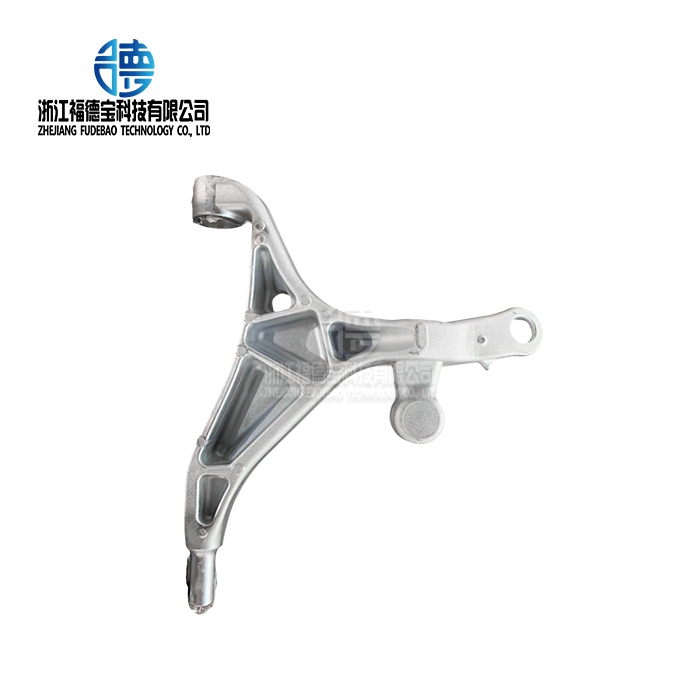
Low-pressure systems fill at much slower speeds, so there is no movement at all. This difference is very important for structural parts of cars like control arms and knuckles, which need to be fully heated to the T6 state to get the strength and flexibility needed for safety approval. While cycle times are longer than high-pressure options, the ability to make heat-treatable, pressure-tight parts with better wear resistance makes this trade-off worth it in situations where failure of a component would be too dangerous.
Advantages Over Gravity and Sand Casting
Traditional gravity casting uses hydrostatic pressure from a filling pan and feeder system. Because of the large gating and lift systems needed, material rates are usually between 50% and 60%. During pouring, the rough flow adds oxide films and trapped air, which weakens the material's mechanical qualities and interior strength. Controlled filling with low-pressure casting technology gets rid of these problems and achieves material utilisation rates above 90%, which greatly lowers the costs and energy use of remelting.
Sand casting is flexible for making prototypes and small batches, but it's hard to get consistent sizes and a good finish on the outside. The Ra surface finish from sand moulds is usually between 12.5 and 25 µm, which means that a lot of work needs to be done to smooth it out. Low-pressure fixed moulds provide surface finishes between Ra 3.2 and 6.3 µm, which greatly cuts down on secondary processes and keeps tolerances of ±0.3mm on smaller dimensions over thousands of production cycles.
Total Cost of Ownership Considerations
When procurement workers look at casting methods, they need to think about more than just the cost of each part. They need to know what the total costs will be. The starting cost of low-pressure equipment is higher than that of gravity setups but lower than that of high-pressure die casting tools. Long-term economics are better because there is less waste, less secondary machining, and tools last longer. This is especially true for medium to high-volume production runs where quality consistency directly affects assembly processes and guarantee costs.
Energy saving is another thing that needs to be thought about. The covered furnace system keeps the melted metal at the casting temperature with little oxidation and dross formation. This uses less energy than open melting methods. When the high material output is added, the environmental impact is greatly reduced. This is becoming a more important factor as companies are pushed to meet sustainability goals.
Advantages and Challenges of Low-Pressure Casting
Core Performance Benefits
Because this method is controlled, it has a number of benefits that work together to meet important business needs. The laminar filling pattern makes casts with fewer oxide inclusions than turbulent filling methods, which means they have better mechanical qualities. After the T6 heat process, parts often have tensile strengths above 280 MPa and stretch values above 8%. These are performance levels that gravity-cast alternatives have a hard time matching.
Internal soundness represents another significant benefit. Continuous feeding under steady pressure during solidification gets rid of shrinkage porosity in heavy sections. This makes it possible for parts to meet strict radiography inspection standards like ASTM E155 Level 1 requirements. This ability is very important for uses that need to be pressure-tight, like cylinder heads with complicated cooling pathways inside, where even small holes could let a lot of coolant leak out.
The process also accommodates complex geometries through the use of sand cores. Because the applied pressure remains relatively low—approximately 1 bar—standard shell sand cores or cold box cores can create hollow interiors without being crushed or displaced. This feature lets parts be made with internal features that would be impossible or too expensive to make with other fixed mould methods, bridging the design flexibility gap between sand casting and die casting.
Common Defects and Practical Solutions
Low-pressure casting technology has some benefits, but it also has some problems that workers and quality teams need to solve. Gas porosity can happen when hydrogen that was dissolved comes out of solution during solidification or when air gets stuck in the mould hole because there isn't enough air flow. To lower these risks, make sure the liquid metal is properly degassed with rotating degassing tools and make sure the mould has enough venting. Testing the density index on a regular basis to check the hydrogen level helps keep the quality of the melt within acceptable limits.
Cold shuts and flow lines show up when the front of the metal partially hardens before the hole fills all the way. These flaws usually mean that the speed of filling is too slow or that the temperature of the metal has dropped below what is ideal. Process engineers fix these problems by changing the pressure-rise curve to keep the speed constant at the gate entrance and by making sure that the mold's temperature distribution is just right so that thin parts don't cool down too quickly or at points where flows meet.
Mold coating degradation represents an ongoing maintenance concern. When heated and cooled many times, the refractory wash that was put on the die surfaces wears away over time. This changes how heat moves through the die and how parts come out. Setting regular inspection and reapplication schedules for coatings—every 50 to 100 cycles, based on the shape of the part—keeps thermal management constant and stops quality from changing over production runs.
Quality Control Framework
To get regular results, quality must be carefully watched throughout the whole production process. At the start of each shift, chemical spectral analysis makes sure that the metal makeup stays within the limits set by the specifications. Statistical process control and early discovery of drift before errors happen are made possible by process parameter logging, which includes keeping track of pressure curves, metal temperature, and cycle times.
Using coordinate measuring tools for dimensional checking makes sure that tolerance bands for important features stay the same across production batches. Cutting mechanical test bars straight from production parts instead of separately cast pieces for destructive testing of sample castings gives accurate information on the properties of the real parts. Radiographic examination finds any internal flaws, and leak testing confirms that fluid-handling parts are pressure-tight. This comprehensive approach builds confidence that every casting meets the high standards required for safety-critical applications.
Procurement Guide: Selecting Low-Pressure Casting Machinery and Suppliers
Essential Equipment Components and Capabilities
Low-pressure casting systems are made up of a number of interconnected parts that buying teams should carefully look over. The holding furnace needs to keep the temperature just right so that very little dross forms. It usually has a ceramic liner and electrical or gas heaters with programmable controllers. The shape of the riser tube affects how metal flows and needs to be replaced every so often as refractory materials wear away. The mould locking system needs to have enough force to keep the mould halves sealed against the pressure inside while they're being filled, and it also needs to be able to change moulds quickly so that production plans can be flexible.
Modern equipment increasingly incorporates automation and data collection capabilities. PLC-controlled pressure regulation systems can fill with complicated patterns over and over again, which is impossible to do by hand. Monitoring important factors like furnace temperature, applied pressure, fill time, and mould temperature in real time lets workers spot process changes right away. Advanced systems integrate this data with statistical process control software, providing early warning of quality drift before defects reach downstream operations.
Machine capacity must align with your production volume requirements and part size envelope. Smaller machines with 50-100 kg furnace capacities suit job shop environments and prototype development, while high-volume automotive applications may require systems handling 500 kg or more. The physical footprint and utility requirements—electrical power, compressed air, cooling water—also factor into facility planning and total implementation costs.
Supplier Evaluation Criteria
There is a lot more to doing than just comparing piece prices when choosing a casting source or service provider. The people doing the technical skill review should look at their inspection tools, process control systems, and quality management certifications. Suppliers to the aircraft and car industries usually have IATF 16949 and AS9100 certifications, which show that they follow a structured process for managing quality and always making things better.
Manufacturing capacity and scalability become critical considerations when launching new programs. Site trips show real production conditions, how to maintain tools, and the skill levels of the workers in a way that written records can't. Check to see if the provider has enough machines to meet your current volume needs and any acceptable growth plans, without affecting delivery times or quality standards.
Supply chain resilience has gained prominence following recent global disruptions. Assess the supplier's raw material sourcing strategy, inventory management practices, and contingency planning. Suppliers who have built relationships with multiple metal providers and kept safety stock positions demonstrate greater ability to weather supply problems that could stop your production lines.
After-sales support infrastructure deserves careful attention, particularly when procuring casting equipment rather than finished components. Manufacturers of equipment should give your operators and repair staff thorough training, keep spare parts on hand, and offer quick technical help to keep downtime to a minimum when problems do happen. Local or regional service centers substantially reduce response times compared to relying solely on overseas support.
Negotiation Strategies and Contract Considerations
Negotiations that work well combine the need to cut costs with the need to meet high standards and lower risks. Instead of just talking about the unit price, you should also talk about other parts of the total cost, such as the amortisation of tools, the specs for packaging, the ways to handle inventory, and the payment terms. Volume commitments often unlock preferential pricing tiers, but verify that the supplier has genuine capacity to fulfill those volumes without quality compromises.
Tooling ownership and management terms require clear definition in supply agreements. Clarify who owns the moulds, who is in charge of repairs and maintenance, and what happens to the tooling if you move providers. Performance guarantees covering dimensional capability, defect rates, and delivery reliability hold the seller accountable and give you options if they don't meet the standards you agreed upon.
Conclusion
It has become clear that low-pressure casting is the best way to make parts whose internal integrity, mechanical qualities, and exact dimensions can't be compromised. The controlled counter-gravity filling process fixes major problems with the gravity and high-pressure methods. It makes castings that are more metallurgically sound, have higher material output, and can take full heat treatment for maximum strength.
Procurement professionals and engineering managers face complex decisions when selecting casting processes and suppliers. Success requires understanding not just the technical capabilities but also the practical considerations of equipment maintenance, supplier relationships, and total cost implications. The insights we've shared throughout this overview provide a foundation for making informed choices that enhance your operational efficiency and product excellence across automotive, industrial, aerospace, and electrical applications.
FAQ
How does low-pressure casting compare to gravity casting for structural components?
Low-pressure ways are very good for structural parts because they make them more internally sound and improve their mechanical properties. When you use gravity casting, the filling process creates turbulence that traps air and oxide films that weaken the structure and make failure places that are hard to predict when dynamic stress is applied. Controlled laminar filling in low-pressure casting methods gets rid of these flaws, making casts that always have higher tensile strength and elongation values after being heated. Higher material yields—from 50–60% with gravity methods to over 90% with low pressure—also lower part costs, even though they require more expensive tools.
What wall thickness limitations should I consider for component design?
Minimum wall thickness typically ranges from 2.5 mm to 3 mm, depending on the alloy fluidity and flow distance from the gate. While this doesn't match the 1.5 mm capability of high-pressure die casting, it exceeds what most sand casting methods can reliably make. Early on in the development process, design engineers should talk to their casting source about how to best distribute the wall thickness. This will ensure that enough metal flows while still keeping the structural integrity required for the application. Uniform wall thickness wherever possible promotes directional solidification and minimizes defect risk.
Can I use sand cores to create complex internal features?
Low-pressure casting works well with sand cores because the pressure used (about 1 bar) stays low enough that normal shell sand cores or cold box cores don't get crushed or moved. This feature lets you make parts with complicated internal passages, like cooling jackets in cylinder heads or hollow sections in structural brackets, combining the design flexibility of sand casting with the superior surface finish and dimensional accuracy of permanent mold processes. Proper core venting becomes critical to ensure gases escape without creating porosity or back pressure that impedes filling.
Partner with Fudebao Technology for Superior Low-Pressure Casting Solutions
Fudebao Technology has become a leading aluminium foundry company that focuses on high-precision low-pressure casting and CNC milling for tough projects around the world. Our facility integrates advanced low-pressure casting machines with high-speed machining centers and CNC lathes, supporting complete production from molten metal to finished components with tolerances of up to ±0.05mm. We work with original equipment makers (OEMs) in the automobile, industrial, and aerospace sectors who need parts that meet strict quality standards without any compromise.
Our expertise spans aluminum alloy, copper alloy, and stainless steel castings, backed by comprehensive capabilities covering melting, casting, finishing, and surface treatment under one roof. Whether you require prototype development, medium-volume production, or high-volume supply with PPAP paperwork, our engineering team can help you make sure that your ideas are the most cost-effective and easy to make. Connect with our low-pressure casting specialists at hank.shen@fdbcasting.com to discuss how we can support your component requirements with reliable quality and on-time delivery.
References
American Foundry Society. Aluminum Casting Technology: Principles and Applications. Schaumburg: AFS Publication, 2018.
Campbell, John. Complete Casting Handbook: Metal Casting Processes, Metallurgy, Techniques and Design. Oxford: Butterworth-Heinemann, 2015.
Kaufman, J. Gilbert and Elwin L. Rooy. Aluminum Alloy Castings: Properties, Processes, and Applications. Materials Park: ASM International, 2004.
International Organization for Standardization. ISO 8062-3:2007 Geometrical Product Specifications (GPS) - Dimensional and Geometrical Tolerances for Moulded Parts. Geneva: ISO, 2007.
ASTM International. ASTM B618-14: Standard Specification for Aluminum-Alloy Investment Castings. West Conshohocken: ASTM, 2014.
Bonollo, Franco, Jasper Urban, Björn Bonatto, and Matteo Botter. Gravity and Low-Pressure Casting of Aluminium Alloys: A Technical and Economical Comparison. Journal of Materials Processing Technology, 2005.



_1756346259673.webp "heavy duty hinges")