Investment Casting vs Sand Casting for Turbine Components: Which Is Better?
2026-06-08
When obtaining turbine components, investment casting or sand casting relies on performance, manufacturing volume, and budget. Sand casting is ideal for medium- to high-volume production of large, strong turbine housings and structural parts. For complicated blade geometries and components subjected to intense temperature cycling, investment casting provides unrivaled accuracy and surface finish. The best way depends on your operating needs, each process's technological capabilities, and economic realities.
Understanding Investment Casting and Sand Casting Processes
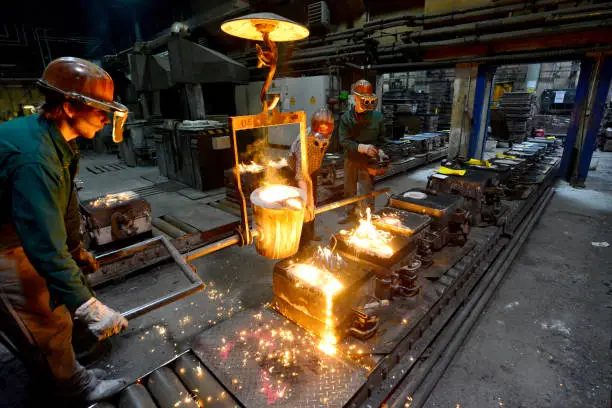
Investment casting and sand casting are common turbine component manufacturing techniques with different procedures and material compatibilities. Investment casting uses wax patterns to create a ceramic mold for complicated, high-precision superalloy parts for turbine components. Sand casting employs sand molds and is used for bigger, less complicated pieces because of its versatility with metal alloys and cost efficiency in higher numbers.
The Investment Casting Workflow
Investment casting starts with a wax model of the part. A core sprue and many wax patterns form a tree assembly that is repeatedly dipped in ceramic slurry. After the ceramic shell solidifies, producers melt the wax, leaving a hollow chamber. Turbo blade cooling channels require complicated internal pathways and thin-walled parts, which this lost-wax method achieves. In turbine operation, superalloys like Inconel and Hastelloy preserve structural integrity at temperatures above 1000°C.
Sand Casting Fundamentals
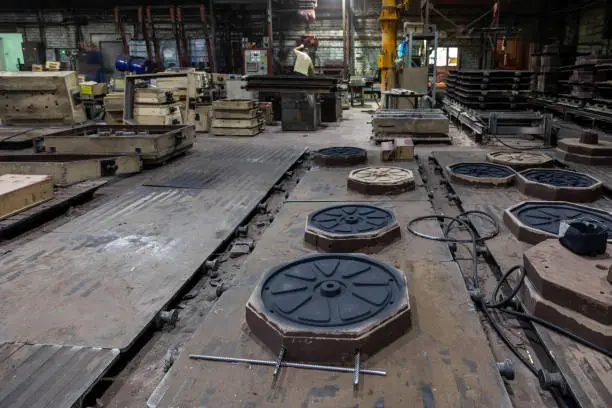
Sand casting uses rigorously bound sand mixtures—usually green (clay-bonded) or resin (chemically-bonded)—to build throwaway molds for molten metal. The foundry industry relies on sand casting to make approximately 60% of metal castings, solving important production problems that other technologies cannot. This method allows casting weights from ounces to over 100 tons, removes die casting's unacceptably expensive initial tooling costs for low-to-medium volume runs, and offers unequaled alloy versatility. The procedure casts high-melting-point ferrous and non-ferrous metals including steel, iron, and titanium that permanent molds cannot handle.
Material Compatibility Considerations
Investment casting excels with nickel-based superalloys, cobalt alloys, and titanium—essential materials for hot-section turbine components. Sand casting works with aluminum alloys, bronze, and different steel grades for turbine casings, frames, and bearing housings. Understanding these process pathways and applications helps procurement experts match casting methods to production goals and part requirements. Material choice affects thermal fatigue resistance, oxidation, and long-term dimensional stability under operating stress.
Performance and Quality Comparison for Turbine Components
Investment casting has better dimensional accuracy and surface polish for high-stress and aerodynamic components. This improves microstructure control and mechanical strength and fatigue resistance.
Dimensional Precision and Surface Quality
Investment castings generally have tolerances of ±0.13mm to ±0.25mm with surface polishes of 1.6 to 3.2 Ra microns from the mold. This accuracy greatly lowers downstream machining. Sand casting commonly achieves ISO 8062 CT10-CT13 dimensional tolerances and 6.3–12.5 Ra micron surface finishes. Sand casting is cheaper but produces rougher surfaces and broader tolerances, making it suited for less critical items if post-machining meets tolerance requirements.
Mechanical Properties and Defect Control
Material adaptability and structural qualities form sand casting's technological profile. High-refractoriness silica or synthetic sands in the molds may endure temperatures beyond 1600°C without fusing. Collapsibility prevents hot ripping in alloys with significant solidification shrinkage by breaking down the sand mold during cooling. Different processes have different fault rates—porosity, inclusions, or shrinkage—which impact maintenance cycles and component longevity. Sand casting requires precise permeability management to avoid porosity, while investment casting's controlled solidification reduces gas entrapment.
Testing and Validation Protocols
Using standardized testing and industry norms helps procurement teams evaluate quality trade-offs. Optical emission spectrometry for chemical composition, witness bar tensile and yield strength testing, and non-destructive testing techniques validate both processes. Ultrasonic and radiographic tests show interior discontinuities, whereas magnetic particle inspection finds surface fractures. These quality checks guarantee turbine components fulfill aerospace, power generation, and industrial requirements before installation.
Cost and Production Efficiency Considerations
Due to its accuracy and adaptability for complicated products in low to medium numbers, investment casting requires greater initial tooling and setup costs. Sand casting is good for big batches or simpler geometries because of reduced upfront costs and faster tooling.
Tooling Economics and Lead Times
Complex investment casting designs require precise machining and repeated refining, which might take eight to twelve weeks to manufacture tooling. Sand casting patterns take two to six weeks, depending on intricacy, whereas die casting molds take months. This timeframe advantage speeds prototype validation and production. Investment casting takes longer owing to mold manufacture and processing, but sand casting is faster and more scalable when demand changes.
Volume-Based Cost Dynamics
Investment casting's per-piece cost is competitive despite higher equipment investment because minor secondary processes minimize labor costs at production rates below 500 pieces per year. Tooling amortization extends across bigger batches, making sand casting cheaper above 1,000 pieces. Each turbine application's component complexity, material prices, and tolerance requirements affect the break-even threshold.
Post-Processing Requirements
Machining and heat treatment affect cost and time-to-market. Sand casting require more material removal to reach final dimensions than investment castings, which simply need finish machining on mating surfaces. Investment cast superalloy components undergo solution annealing and precipitation hardening cycles to enhance grain structure, whereas sand cast iron components receive stress relief. This is crucial when reconciling budgetary limits with production deadlines and quality criteria to ensure project profitability.
Choosing the Right Casting Method for Your Turbine Components
Considering part complexity, operating pressures, and environmental factors helps choose the best casting technique. Decision-makers must balance cost and performance to ensure components fulfill durability criteria within procurement budgets.
Application-Specific Selection Criteria
Investment casting must mimic aerodynamic curves and internal cooling passageways without distortion for turbine blade and vane applications. Centrifugal loading maintains structural integrity for wall thicknesses below 2mm. Sand casting can create sections weighing several hundred kilos with appropriate dimensional control for bolted assemblies, which benefits turbine casings, bearing housings, and mounting brackets. Corrosive atmospheres, thermal shock, and vibration exposure influence material and process choices.
Real-World Implementation Examples
In leading turbine manufacturer case studies, linking casting technique selection with component function and production volume generates operational success. A large industrial gas turbine manufacturer switched compressor casing manufacturing from fabricated assemblies to single-piece sand castings, lowering part count by 73% and assembly labor by 60%. A renewable energy turbine maker used investment casting for difficult blade root designs, saving 40% weight and 25% fatigue life over machined forgings. The strategic strategy helps procurement personnel optimize supplier connections and get long-term return from casting expenditures.
Hybrid Strategies and Multi-Sourcing
Innovative turbine OEMs use investment casting for performance-critical hot-section components and sand casting for structural parts. Performance optimization and cost control are balanced. Establishing ties with foundries that use both technologies allows for design flexibility across product lifecycles. Technical collaboration throughout design guarantees castability study guides component geometry, minimizing iterations and expediting certification.
Future Trends and Innovations in Casting for Turbine Components
Automation, additive manufacturing integration, and improved material compositions, especially in investment casting, are enhancing accuracy and lowering waste in the casting business. Improved refractory sand compositions and eco-friendly molding procedures help sand casting meet sustainability goals.
Digital Transformation in Foundry Operations
Modeling mold filling, solidification, and residual stress creation with high precision in simulation software allows virtual optimization before tooling investment. These computational methods detect defects, allowing engineers to make proactive gating, riser, and cooling adjustments. Real-time monitoring systems measure temperature profiles, alloy chemistry, and dimensional changes throughout production runs, enabling statistical process control to decrease scrap and enhance batch consistency.
Sustainable Manufacturing Practices
In line with worldwide environmental requirements and consumer expectations, turbine component production is shifting toward lean manufacturing and energy efficiency. Foundries are recycling sand media, lowering landfill waste by 95%. Investment casting uses closed-loop chemical processes to reduce toxic waste. These material conservation and energy efficiency enhancements meet business sustainability goals and save operational expenses.
Advanced Material Development
OEMs and procurement professionals may predict technology transitions and stay competitive by following these trends. Next-generation turbine designs at greater temperatures and efficiencies benefit from new alloy compositions' high-temperature strength, corrosion resistance, and oxidation stability. Additive manufacturing creates complicated cores that cannot be cast, enabling turbine-efficient internal cooling designs. These advancements increase design options while keeping the cost advantages that make casting essential for turbine component manufacture.
Conclusion
In turbine component production, investment casting and sand casting have various benefits for different operating needs. Investment casting provides accuracy, surface quality, and complicated geometries for aerodynamic components and high-stress applications where performance justifies premium pricing. Sand casting produces big structural pieces at low cost with material flexibility and fast tooling for medium to high-volume manufacturing. Successful procurement strategies acknowledge that component function, production volume, tolerance requirements, and overall lifecycle costs determine casting technique selection, not universal superiority. Working with skilled foundries to guide turbine component selection ensures performance requirements are met while optimizing manufacturing investment.
FAQ
Which casting process delivers superior quality for complex turbine parts?
Geometrically complicated components like turbine blades with elaborate interior cooling tunnels benefit from investment casting's precision and surface polish. Tighter tolerances and microstructural control are needed for parts under intense heat and mechanical stress. Sand casting handles complexity well for larger structural components where post-machining meets tolerances.
How do lead times compare between these casting methods?
Pattern production takes two to six weeks and manufacturing cycles are days in sand casting. Investment casting needs eight to twelve weeks for tooling development and lengthier production cycles owing to ceramic shell construction and firing. Rush orders and prototype numbers effect schedules differently for each option.
Can sand castings reliably perform under high-stress turbine conditions?
Sand castings function well in appropriate applications with correct material selection, quality control, and post-processing. Sand castings are used in turbine casings, bearing housings, and structural frames to withstand operating stress. For safety and performance, investment casting's exceptional metallurgical characteristics and dimensional precision are needed for rotating and hot-section parts.
Partner with Fudebao Technology for Your Turbine Casting Requirements
Combining decades of metallurgical knowledge with sophisticated production, Zhejiang Fudebao Technology delivers turbine components that satisfy your most stringent demands. Our integrated facility handles the whole manufacturing process, from melting to precise machining, assuring ±0.05mm dimensional accuracy for turbine applications. We manufacture aluminum alloy, copper alloy, and stainless steel castings for automotive, industrial equipment, and machinery manufacturers worldwide.
Our high-speed machining centers, CNC lathes, low-pressure casting machines, and die casting systems provide one-stop blank-to-finished component supply. We help clients choose materials, optimize processes, and verify quality as a sand casting provider with experience in both classic and sophisticated casting methods. Our technical team works with you to determine the best production method for your project, whether it requires investment casting or sand casting. Talk to our turbine component experts at hank.shen@fdbcasting.com about how our casting solutions may improve product performance and procurement efficiency.
References
Campbell, John. "Complete Casting Handbook: Metal Casting Processes, Metallurgy, Techniques and Design." Butterworth-Heinemann, 2015.
Brown, John R. "Foseco Ferrous Foundryman's Handbook." Butterworth-Heinemann, 2000.
ASM International Handbook Committee. "ASM Handbook Volume 15: Casting." ASM International, 2008.
Beeley, Peter R. "Foundry Technology." Butterworth-Heinemann, 2001.
Jain, P.L. "Principles of Foundry Technology." Tata McGraw-Hill Education, 2009.
Stefanescu, Doru Michael. "Science and Engineering of Casting Solidification." Springer, 2015.



_1756352472762.webp "steel threaded plug")
_1756349957728.webp "metric v belt pulley")
_1756346205762.webp "hinge casting")