
How to Select a Reliable Aluminum Die Casting Auto Parts Supplier?
2026-07-15
To find a reliable supplier for aluminum die casting auto parts, you need to carefully look at their technical skills, quality systems, and ability to run their business well. The best partner should have a track record of success with high-pressure die casting, keep up-to-date quality certifications like IATF 16949, and provide full support from design to delivery. Along with low prices, you should look for suppliers that have state-of-the-art machinery, full control over the whole process, from melting to surface treatment, and a history of working with auto OEMs. A reliable supplier balances precise machining skills with quick communication, making sure that your parts meet tight tolerances and delivery dates while also helping the partnership grow over time.
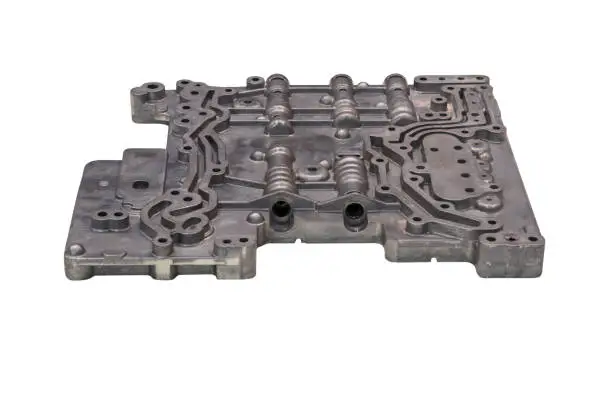
Understanding Aluminum Die Casting Auto Parts and Their Importance
To handle important performance and sustainability issues, modern car engineering increasingly leans on aluminum die casting. Under pressures higher than 1,500 psi, this manufacturing method turns molten aluminum alloy into complicated, nearly net-shaped parts. This makes parts that standard machining can't make easily on a large scale.
Why Aluminum Die Casting Matters for Automotive Applications
As the auto industry moves toward electric vehicles and more fuel-efficient cars, reducing weight has become very important. The low density of aluminum (2.7 g/cm³), which is about one-third that of steel, makes it a good choice for manufacturing aluminum die casting auto parts without affecting the strength of the structure. This quality makes the material lighter, which is beneficial for engine housings, gearbox cases, battery boxes for electric cars, and structural braces. In addition to being lightweight, aluminum alloys such as A380 and ADC12 offer excellent thermal conductivity (96 to 120 W/m·K), which is important for cooling down powertrains and electronic control units. The natural oxide layer also provides corrosion resistance, helping parts maintain longer service life in challenging environments.
Core Alloys and Their Strategic Advantages
For cars, different types of aluminum are better for different tasks. The A380 is the most popular plane in North America because it is very fluid and easy to cast, which makes it perfect for shapes with a lot of small parts. ADC12 is widely used in Asian markets because it has better die casting properties and a little more mechanical strength. A356 is usually only used for low-pressure casting, but it is also used in safety-critical situations where it needs to be more flexible. Understanding these differences between materials helps buying teams choose the best alloy for their needs, taking cost and functional qualities into account.
Addressing Industry Pain Points Through Advanced Casting
The complexity of modern vehicles makes traditional ways of making them hard to use. Welding together several stamped pieces adds time to the assembly process and creates possible weak spots. Even though CNC machining is very accurate, it wastes a lot of material and is too expensive for mass production. These problems can be solved by aluminum die casting, which can make complicated shapes with built-in fixing parts like bosses, ribs, and mounting points in just one casting cycle. This consolidation cuts down on the number of steps needed to put together parts, minimizes the number of possible leak paths in sealed parts, and makes sure that the dimensions stay the same across hundreds of thousands of production runs.
Defining Your Procurement Needs and Requirements
Finding the right supplier starts long before you start talking to potential partners. Making your specific needs clear sets the stage for a useful evaluation and stops mistakes during production that cost a lot of money.
Segmenting Product Type and Volume Expectations
Figure out if your needs for aluminum die casting auto parts are based on OEM standards, which call for PPAP documentation and close tolerances on size, or aftermarket uses, where saving money may be more important than tight tolerances. Volume forecasts have a big effect on which suppliers are best because tooling needs are very different for trial runs of 50 to 500 pieces versus yearly numbers over 100,000 units. For low-volume needs, temporary or aluminum molds may work. For high-volume production, however, hardened steel dies with a 100,000-cycle life or more are a good investment. Be clear about how you expect your business to grow, because sellers with scalable capacity will keep your buying from being interrupted in the future.
Establishing Quality Benchmarks and Certification Requirements
Set the level of quality that is acceptable before hiring suppliers. Statistical process control and a mindset for zero-defect manufacturing are often needed in automotive applications. List the certifications that are needed, such as IATF 16949 for quality management in the automotive industry, ISO 9001 for general quality systems, and standards specific to the industry, such as NADCA dimensional tolerances. If your parts connect to electrical systems, make sure you know what the EMI/RFI protection standards are. For parts that will be exposed to extreme thermal cycling, list the testing and heat treatment parameters. Write down the requirements for the surface finish, such as as-cast, powder-coated, or anodized, as these processes affect both how the part looks and how well it works.
Mapping Delivery Timelines and Logistical Constraints
Knowing the wait times keeps production from getting stuck. Initial tooling development usually takes 8–12 weeks, depending on how complicated it is. For aluminum die casting auto parts applications, PPAP cycles add another 4–6 weeks. Find out if these stages can fit into your project's schedule or if they need to be developed faster. Think about where the suppliers are—suppliers that are closer to your assembly facilities will save you money on shipping and lead times, and make it easier to solve quality problems. But proximity should never be more important than ability; a technically better supplier with slightly longer transit times often provides better overall value than a nearby partner lacking key expertise.
Core Criteria to Evaluate When Selecting a Reliable Supplier
To tell the difference between truly capable suppliers and barely qualified candidates, you have to look at many aspects of their operations. Assessments that only look at the surface level miss important signs of long-term dependability.
Technical Capabilities and Manufacturing Infrastructure
A supplier's list of tools shows how advanced their work is. High-pressure die casting machines with capacities between 180 and 3000 tonnes can handle parts of different sizes and levels of complexity. Having vacuum-assisted die casting tools means that high-quality parts with few holes can be made, which is important for parts that need to be welded or used in pressure-tight situations later on. 5-axis CNC machining centers make it possible to do complex post-casting tasks with tolerances as low as ±0.05mm. Suppliers who control the whole process chain, from the melting furnaces to the finishing operations, keep quality from changing too much when they outsource process steps. Look for quality inspection areas with CMM (Coordinate Measuring Machine) systems, spectrometers for checking the material, and X-ray or CT scans for finding flaws inside the metal.
Quality Management Systems and Certification Depth
Certifications are a good starting point for peace of mind, but you should also look for proof of implementation. Not just capability words, but also real SPC (Statistical Process Control) charts should be shown. Look at their PPAP packages from similar projects and make notes on how complete and well-thought-out they are. Suppliers who are truly committed to quality do regular internal audits, keep their measuring tools calibrated and up to date with written schedules, and hire quality staff who are solely responsible for quality issues instead of giving them other tasks. Find out how many defects they have in terms of parts per million (PPM) and look over their corrective action plans. Top suppliers use methods for ongoing improvement, such as Six Sigma or Lean Manufacturing. You can tell they do this by how well-organized their production floors are and how many recorded process optimization projects they have.
Design Support and Engineering Collaboration
Commercial Terms and Value-Added Services
Look at the total value proposition, not just the base price. Transparent suppliers give you detailed cost breakdowns that separate the costs of tools from the costs of each piece, which helps you figure out what causes costs to go up or down. Talk about who owns the tools—whether the dies stay with the source or are given to you—because this affects your future buying options. Look into services that add value, like inventory management programs, where sellers hold extra stock to reduce your need for operating capital. Some advanced partners offer VMI (Vendor Managed Inventory) systems or consignment plans. Check to see if they offer powder coating, anodizing, and assembly as secondary operations. Getting all of these services from the same casting supplier makes it easier to coordinate and lowers the chance of quality issues between steps in the process.
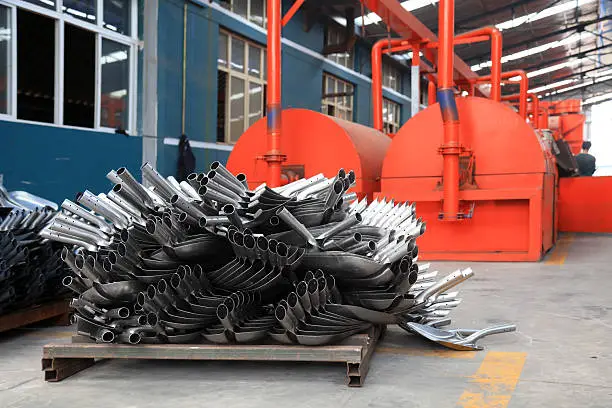
Comparing Aluminum Die Casting Suppliers: What Sets the Best Apart?
Even if the exact specs are the same, not all casting providers offer the same value. To find truly exceptional partners, you need to look beyond statements of capability and at proof of performance.
Industry Experience and Application Expertise
Years in business are a sign of stability, but knowledge in the specific field is more important. A supplier with extensive experience in the automotive industry understands PPAP requirements, change management protocols, and the importance of on-time launches for aluminum die casting auto parts. They have handled quality issues that escalated during production and developed strong problem-solving skills through practical experience. Ask for references from customers who have purchased similar products. For example, if you're looking for gearbox housings, references from companies that manufacture similar parts are more reliable than those from customers purchasing decorative goods. Review case studies that demonstrate how suppliers solved specific technical challenges, such as reducing porosity in thick components or ensuring that mounting areas maintain extremely tight flatness tolerances.
Flexibility and Responsiveness Differentiators
Unexpected problems always come up in manufacturing partnerships, like changes to the design, changes in the volume, and faster deliveries. Better sellers show they are flexible by giving quotes quickly, being willing to make changes to the design without charging too much, and being able to handle large increases in sales. When evaluating a supplier, you can see how responsive they are by sending them technical questions and watching how quickly and in-depth they answer. Talk about how they will handle engineering changes once production starts, including how they will document changes and how much it will cost. Suppliers who keep small capacity gaps instead of going at full capacity can better meet your immediate needs.
Sustainability and Corporate Responsibility
Practical Steps to Onboard and Collaborate with Your Supplier
Intentional steps are needed in addition to just sending buy orders to build good relationships with suppliers. Structured onboarding keeps projects from getting derailed by misunderstandings.
Crafting Comprehensive RFQs
Implementing Pilot Runs and Sample Validation
Do not go straight to full production until you have confirmed that the supplier can do what they say they can do by sending sample parts. The first samples show the quality of the casting, the accuracy of the dimensions, and the finish on the surface. Send these parts to your engineering team to be tested for fit, form, and function in situations that are similar to how they will be used. Do destructive tests on small samples to check the quality inside—cross-sections show levels of porosity that can't be seen from the outside. Full PPAP protocols for automotive use, including dimension reports, material certifications, and process capability studies. This part of validation finds problems that can be fixed before the expensive tooling is fully ready for production. This protects your start date and your image for quality.
Building Long-Term Partnership Frameworks
Transactional relationships with suppliers miss chances to keep getting better. Set up regular business reviews where you can talk about performance measures like on-time delivery rates, quality problem trends, and efforts to cut costs. Set up rules for how to communicate that spell out who should answer technical questions, quality issues, and business issues. Talk about how accurate you expect the forecast to be and how long you need to wait for order changes. The best partnerships have joint cost-cutting roadmaps that show specific ways to save money, such as by improving the design or the way things are done. You might want to make agreements official by signing multi-year contracts with volume commitments. This will give your supplier the information they need to justify capacity investments and help you get better pricing terms.
Conclusion
Choosing a trustworthy supplier of aluminum die casting auto parts has a big impact on the quality of your products, how much they cost, and how competitive you are in the market. In addition to comparing prices, the evaluation process looks at technical depth, quality systems, the ability to work together, and the possibility of a long-term relationship. Suppliers who show complete manufacturing control, proven experience in the automotive industry, and real engineering support provide value that goes beyond just cost. By taking the time to carefully evaluate suppliers, set up structured onboarding processes, and encourage collaborative relationships, you can make your supply chain strong enough to handle the problems that are bound to come up. The right provider acts as an extension of your engineering team, adding knowledge that makes your goods better and making sure that they are delivered on time, as promised by your customers.
FAQ
What advantages do aluminum die-cast parts offer compared to steel alternatives?
Die-cast aluminum parts are about 66% lighter than steel ones of the same strength, so they can be used in most automotive applications. This weight savings directly makes gas-powered cars use less gas, and electric cars have longer ranges. Aluminum is great for heat dissipation because it conducts heat about four times better than steel. This makes it perfect for motor housings and electronic enclosures. The natural resistance to corrosion of the material gets rid of the problem of rust that steel parts have in harsh environments. Die casting makes geometries that are very close to net shapes, which means that less secondary machining is needed than with steel fabrication methods. But steel is still better for applications that need to be very strong and carry heavy loads.
How can I verify a supplier's quality certifications are legitimate?
Ask suppliers for copies of the certificates directly, and then use the issuing certification body's online database to make sure the copies are real. You can check the validity of an IATF 16949 certificate by searching for the company name in the IATF's official database. In the same way, ISO certifications show up in registrar databases. Schedule checks of your suppliers to look at how they've implemented your quality management system, including their paperwork, measured equipment, trained staff, and use of quality tools. Ask for examples from customers and call them to talk about how well the quality actually worked. Suppliers who are doing business legally welcome review and are happy to give proof of access.
Can suppliers accommodate custom small-batch prototype orders before committing to full production?
Suppliers with a good reputation know what needs to be done for prototype validation and can usually offer flexible solutions. For low-volume prototypes, aluminum or soft steel tooling may be used to save money on the initial investment, but the tools will not last as long. Some suppliers offer rapid prototyping services that use CNC to cut billet aluminum to make working samples that match the final casting geometry before the die is invested in. Talk about your prototype needs openly, including the number of prototypes you need, when you need them, and how much money you have. This will allow suppliers to suggest the best ways to meet your needs while keeping costs low.
Partner with Fudebao Technology for Your Aluminum Die Casting Auto Parts Requirements
Picking the best aluminum die casting auto parts manufacturer has a direct effect on the success of your project and your position in the market. Zhejiang Fudebao Technology Co., Ltd. has a wide range of skills that help automotive OEMs, tier-1 suppliers, and manufacturers in the electrical, aerospace, and industrial fields. Our building has high-tech high-speed machining centers, CNC lathes, low-pressure casting machines, and die casting equipment that control the whole manufacturing process, from melting to finishing the surface. We provide accuracy up to 0.05mm, which meets the strict needs of car parts, gearbox housings, and structural elements. We've worked with foreign names like American HAAS automation machine tools and ESS energy storage systems in the past, which shows that we can handle strict requirements and high-quality standards. Our engineering team works with you throughout the whole project lifecycle, whether you need PPAP-documented production parts, help making a prototype, or help optimizing your design. Get in touch with Hank Shen at hank.shen@fdbcasting.com to talk about your specific needs and find out how our one-stop manufacturing solution makes coordination easier while ensuring consistent quality and on-time deliveries.
References
1. North American Die Casting Association. (2021). Product Specification Standards for Die Castings Produced by the Semi-Solid and Squeeze Casting Processes. NADCA Technical Publications.
2. Davis, J.R. (Ed.). (1993). Aluminum and Aluminum Alloys (ASM Specialty Handbook). ASM International.
3. Kaufman, J.G., & Rooy, E.L. (2004). Aluminum Alloy Castings: Properties, Processes, and Applications. ASM International.
4. International Automotive Task Force. (2016). IATF 16949:2016 Quality Management System Requirements for Automotive Production and Relevant Service Parts Organizations. IATF Publications.
5. Bonollo, F., Urban, J., Bonatto, B., & Battaglia, M. (2005). Gravity and Low-Pressure Die Casting of Aluminium Alloys: A Technical and Economic Benchmark. Materials Science Forum, Vols. 492-493.
6. Totten, G.E., & MacKenzie, D.S. (Eds.). (2003). Handbook of Aluminum: Physical Metallurgy and Processes (Vol. 1). Marcel Dekker Inc.



YOU MAY LIKE