How to Choose Between Aluminium Die Casting and Sand Casting for Prototypes
2026-07-09
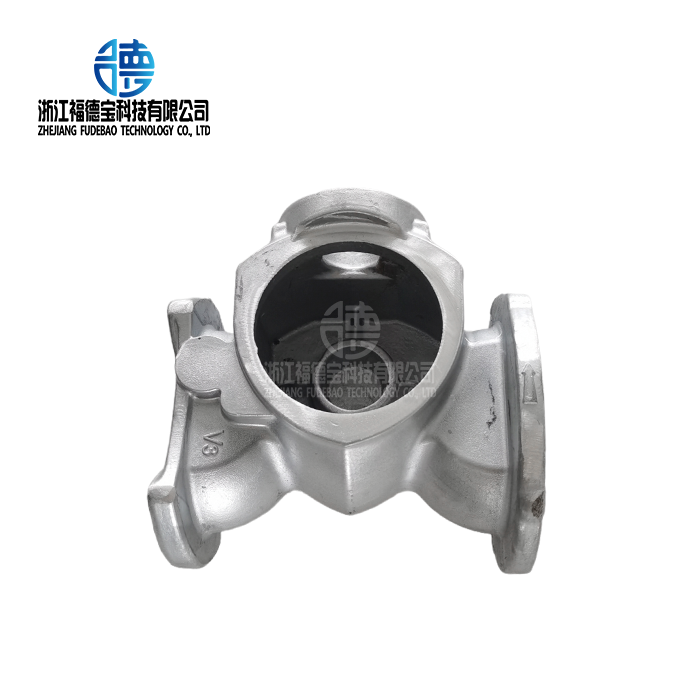
Choosing between sand casting and aluminum die casting relies on how complicated, large, expensive, and time-sensitive your sample is. For example, car parts and electrical housings are great examples of parts that can be made with high accuracy, smooth surfaces, and complex geometries in large quantities. Sand casting works best for small amounts of bigger, easier parts where the cost of the tools needs to be kept low. Purchasing managers and engineers can make prototype development and production more efficient by knowing the required level of accuracy in measurements, the production scale, and the qualities of the material.
Understanding the Prototype Casting Challenge
When making choices about prototype casting, you have to find balances between accuracy, speed, and cost, all of which affect the success of the project. People who work in procurement are under a lot of pressure to make sure parts meet technical standards, stick to budgets, and deliver working prototypes quickly. If you make the wrong choice, it could stall product starts, raise development costs, or lower quality in ways that affect production further down the line.
Process Fundamentals and Material Considerations
High-pressure die casting (HPDC) is how aluminum die casting works. At pressures above 10,000 psi, liquid aluminum metal is poured into hardened steel dies. This method makes parts that are almost net-shaped, with walls as thin as 1.5 mm and average measurement errors of only ±0.1 mm. Some common metals are A380, ADC12, and AlSi9Cu3. These are chosen based on their strength, ability to conduct heat, and resistance to rust.
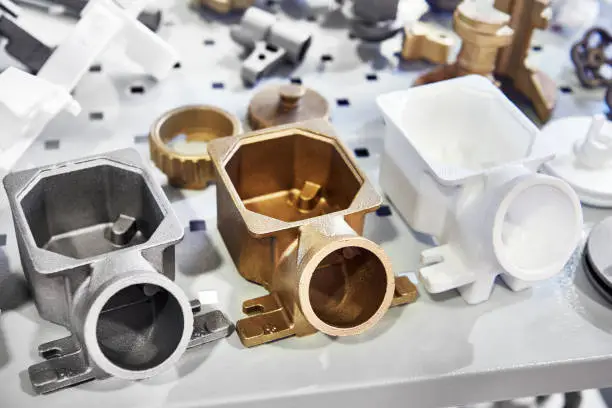
Packing sand around a design and then putting molten metal into the hole is how sand casting makes molds. This method can handle bigger parts and changes to the design without having to make expensive tooling changes. There are tolerances of ±0.5mm to ±1.5mm, which depend on the size and complexity of the part. Aluminum alloys like A356 and A319 work well with this process because they are easy to make and have good mechanical qualities after being heated.
Balancing Competing Project Requirements
Tooling lead times and sample release plans are in conflict because of development timelines. For die casting, it takes 4 to 8 weeks to make a precise mold, but 3D printing or CNC machining can make sand casting models in just a few days. Budget limits affect whether or not investing in tools up front makes sense based on the number of prototypes that are planned and the number of products that could be made.
Different businesses and uses have different quality standards. When it comes to automotive parts, they need PPAP paperwork and consistent measurements across various prototypes. Parts of industrial machines put mechanical strength and heat protection ahead of how they look. Knowing these requirements ahead of time can help you choose a casting method that meets the most important practical needs for your application.
Core Decision Criteria for Prototype Casting
Which casting method will give you the most value for your prototype project depends on a number of linked factors. These factors include professional performance, cost, and the ability to change how things are done.
Technical Performance Metrics
Leading time includes both the time it takes to make tools and the time it takes to make parts. Die casting tools take 4 to 10 weeks to make, depending on how complicated they are, but after that, parts are made quickly—often more than 100 per day. Because sand casting doesn't require long tool development, prototypes can be sent out within two to three weeks of the design being approved, but output rates are still lower at five to twenty parts per day.
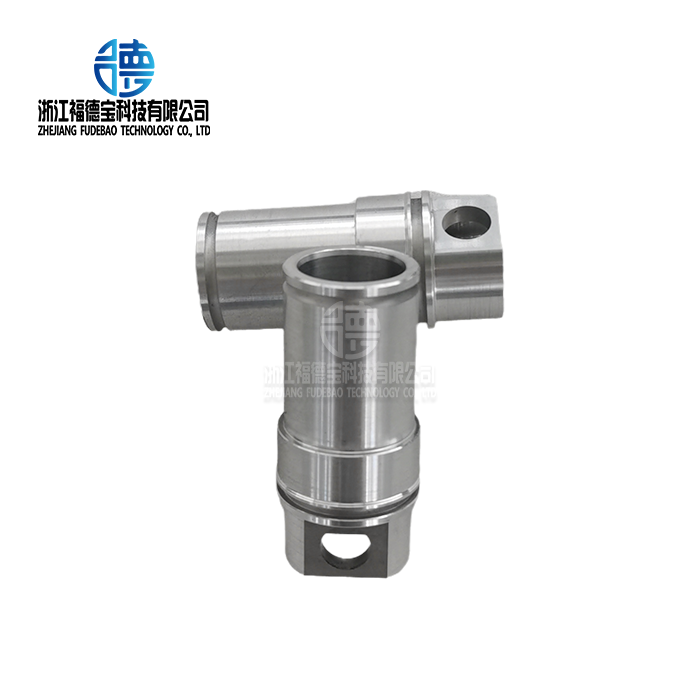
Accuracy in measurements has a direct effect on the need for secondary cutting and the fit of the unit. Aluminum die casting achieves tight tolerances, as die-cast aluminum parts can have limits of ±0.05mm to ±0.13mm on important features, which means that less work needs to be done after the casting is done. A lot of the time, sand-cast parts need more CNC cutting to get them to the right size and shape, especially on the sides that fit together and where they are mounted precisely.
The quality of the surface finish affects both how it looks and how well it works. Die casting makes surfaces that are smooth and have an average roughness (Ra) value of 1.6 to 3.2 μm right out of the block. Sand casting makes surfaces that are rougher, between 12.5 and 25 μm Ra. To meet standards for how exposed parts should look, they need to be shot-blasted, machined, or coated.
Economic Considerations and Scalability
The biggest difference in upfront costs between ways is the cost of the tools. Depending on the complexity of the part, the number of cavities, and the expected production life, steel dies for aluminum die casting can be modest to substantial. Patterns for sand casting are much cheaper, especially when using additive manufacturing to make test tools in small quantities.
The cost of each part changes a lot as the number changes. After 500 to 1000 units, die casting becomes more cost-effective because it has short cycle times and few secondary processes. For sample numbers below 100 units, where tooling amortization has a big effect on unit economics, sand casting stays cost-competitive.
Production scale affects planning for the change from making a sample to making a lot of them. Parts made for die casting can be made in large quantities with the same tools or tools that have been slightly changed. If new manufacturing methods are needed because of the amount of production, sand-cast prototypes may need to be redesigned.
Detailed Comparison: Aluminum Die Casting vs Sand Casting
Knowing how each process works and what qualities each one has helps you figure out which one will work best for your prototype.
Production Process and Capabilities
Precision-machined steel molds are used in die casting. These molds can be used over 100,000 times and still give the same dimensions every time. The high-pressure injection makes structures that are thick and free of holes. These are perfect for designs with thin walls and complicated shapes that have ribs, bosses, and fastening points built in. Cycle times depend on the size and thickness of the part walls and can be anywhere from 30 seconds to several minutes.
The process works well with parts that weigh anywhere from a few grams to about 10 kilograms. For bigger parts, you might need special tools and method changes. For undercuts and interior features, the tool needs to have side actions or slides. This makes it more complicated and expensive, but it lets you make complex patterns that you couldn't make any other way.
Sand casting is very flexible when it comes to shapes, and it can be used to make parts that weigh anywhere from 0.5 kg to several hundred kg. The process of using disposable molds makes it easy to make parts with holes inside, walls of different thicknesses, and design elements that would be hard to make with die casting. The rate of cooling is slower, which makes the grain structures bigger. For the best mechanical qualities, heat treatment may be needed.
Quality Outcomes and Defect Management
Gas porosity from stored air, cold shuts where metal streams don't properly fuse, and flash at splitting lines are all common flaws in aluminum die casting. These problems can be avoided by using the right gating design, vacuum-assisted fills, and the best injection settings. Parts usually reach 95–99% of their theoretical density, which means they have great strength-to-weight ratios.
Problems with quality in sand casting include sand particles, surface roughness, and differences in the size of the parts made from different molds. Defect rates are lower when the sand is properly prepared, the gates and risers are designed correctly, and the filling is managed. For important uses, non-destructive testing with X-rays or ultrasonic inspection makes sure that the inside is sound.
Quality control rules are different for each method. Die casting works better when chamber pressure, temperature, and cycle time are monitored by statistical process control. This keeps things consistent. To get good results with sand casting, you need to look at each casting closely, check the pattern, and test the sand's properties.
Aligning Casting Method with Your Procurement Needs
Your procurement team has to look at functional goals, price limits, and time constraints in order to match casting methods to specific project needs.
Functional and Material Requirements
Choosing the right alloy has a big effect on its mechanical performance and fit for a given purpose. A380 is great for making general-purpose parts because it is easy to make and doesn't rust. The ADC12 is better at die-filling thin-walled parts than other models. After being heated to T6, A356 is good for uses that need more strength, but it works best in sand casting or low-pressure casting.
Material and process decisions are based on the mechanical property needs. Die-cast aluminum usually has a tensile strength of 300 to 330 MPa for A380, which is strong enough for structural braces and housings. Heat-treated sand-cast A356 can reach 280–310 MPa and has a higher elasticity, making it good for parts that are subjected to dynamic loads or impact forces.
When used outside or in harsh situations, environmental defense is important. Die-cast parts naturally form an oxide layer that protects them from rust. Anodizing or powder treatment can make this layer even stronger. When exposed to harsh conditions, the thicker structure is better at keeping water out than sand casts, which may need to be sealed.
Supplier Evaluation and Partnership Considerations
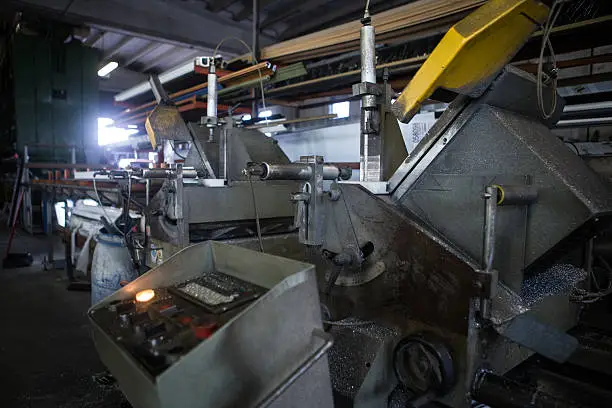
An assessment of a company's manufacturing potential should look at its technical know-how, quality processes, and the amount of tools it has. Suppliers with a good reputation keep at least ISO 9001 certification. Automotive sellers keep IATF 16949 certification, and aircraft partners keep AS9100 certification. Turnkey service is available if the company has high-speed machining centers, CNC lathes, and coordinate measuring machines in its equipment collection.
Zhejiang Fudebao Technology is a great example of full manufacturing integration because they have aluminum die casting machines, low-pressure casting equipment, and precise CNC machining centers all in one building. This vertical integration gets rid of the need for delays in coordination between the casting and finishing steps, while also making the process more tightly controlled. Their ability to give finished parts with an accuracy of ±0.05mm meets the strict needs of medical equipment housings and precision car parts.
Adding services besides simple casting is a big plus. Suppliers who offer design for manufacturability (DFM) advice help improve the geometry of parts so they can be made successfully and at a lower cost. Rapid prototyping services that use 3D-printed sand models or soft tools shorten the time it takes to make a product. Full finishing services, like CNC machining, surface treatment, and assembly, make supply lines easier to handle and lower the complexity of dealing with vendors.
Case Studies and Practical Insights
Real-life examples show how choosing the right casting method can change the results of a project in a variety of businesses and for a range of volume needs.
Automotive Component Success with Die Casting
A major car provider needed aluminum transmission housings for test electric vehicles that had to be made with exact measurements and be able to withstand pressure. They chose high-pressure die casting with A380 alloy because it gave them parts with important mounting areas that were within ±0.1mm of the required tolerances. The smooth as-cast finish cut down on secondary machining, and during confirmation testing, the process made 20 sample units every week.
Transitioning to production went smoothly because the sample tools were used as production tools after some small tweaks were made. Compared to other ways that needed new production tools, this method cut development times by three months. The consistent sizes made it possible to build assembly automation at the same time that parts were being tested, which sped up the total timeline for the vehicle program.
Industrial Equipment Flexibility Through Sand Casting
An industrial pump maker working on a new gearbox case had to deal with unclear design requirements and planned to make a lot of prototypes. Using 3D-printed models for sand casting let designers make quick changes without having to spend a lot of money on equipment changes. In eight weeks, they made 25 prototypes after five rounds of plan changes.
Even though there were several design cycles, development funds stayed within reach thanks to the lower cost per unit at low numbers. The strength needed for proof-of-concept testing was met by the thicker walls that are typical of sand molds. Once the design was stable, they switched to low-pressure casting to make the parts. They kept the same metal and general shape while making the surface finish and accuracy of dimensions better.
Electrical Component Precision Requirements
A company that makes power tools needed heat sink housings for green energy inverters that would protect against electromagnetic interference (EMI). The thermal transfer and tight precision of die-cast aluminum made it possible for electronics to be assembled reliably and heat to be removed efficiently. The process made fins with complicated shapes that could not be machined cheaply.
When parts were put together with gaskets, they got an IP65 grade for closing, which meant they could be used outside. The supplier's integrated machining skills made it possible to get fully finished parts with threaded inserts and precise mounting surfaces. This cut down on the number of secondary processes needed and simplified the supply chain during the prototype phase.
Conclusion
When picking between aluminum die casting and sand casting for samples, you need to think about how precise you need the parts to be, how many you want to make, and how much money you have. When prototype numbers are high enough to warrant investing in tools and designs profit from having complicated geometries, die casting provides the best accuracy and surface finish. Sand casting gives you the freedom to make changes over and over again, and it can be used for smaller quantities where tooling costs need to be kept low. Successful buying teams look at technical needs, cost considerations, and suppliers' skills to find the best way to improve prototype quality, speed up development, and plan the move to mass production.
FAQ
Which aluminum alloys work best for die-cast prototypes?
The A380 is still the most popular choice because it is easy to make, doesn't rust, and has good mechanical qualities for most uses. ADC12 has similar properties, but it's a little more fluid for thin-walled designs. For better die-filling in automotive uses, A383 is sometimes used. On the other hand, A356 is used in low-pressure or sand casting methods for parts that need to be stronger after being heated.
How do lead times compare between die casting and sand casting?
Patterns can be quickly 3D printed or made, so sand casting usually has the first samples ready within two to three weeks of the design being approved. It takes 4–10 weeks to make precise tools for die casting before the first items are made. Die casting, on the other hand, makes subsequent units much more quickly—possibly 100+ parts per day compared to 5–20 parts per day for sand casting—which makes it better for sample numbers above 50–100 units.
Can I get online quotes for custom prototype casting projects?
Many sellers let you get a rough quote by sending them CAD files and project details through their websites. To get accurate prices, engineers need to look at the shape of the part, the tolerances that need to be met, the expected surface finish, and the expected number. Reputable makers reply within 24 to 48 hours with budget figures and suggestions about how to make the process work best. Talking to technical sales teams directly makes sure that quotes are correct and take into account your unique needs and application limitations.
Partner with Fudebao Technology for Your Prototype Casting Needs
When you need to cast prototypes, work with Fudebao Technology. When you work with an experienced aluminum die casting maker that offers combined capabilities, it's easy to make choices about sample casting. Zhejiang Fudebao Technology offers complete solutions, from the original idea to finished parts. They mix decades of experience in casting with cutting-edge machining and finishing services.
Our building has CNC machining centers, high-pressure die casting tools, low-pressure casting machines, and full surface treatment capabilities all in one place. We work with original equipment makers (OEMs) of cars, companies that make industrial equipment, and suppliers of electrical parts all over North America and Europe. We help them with their procurement processes by offering PPAP paperwork, quality certifications, and technical support. Email our team at hank.shen@fdbcasting.com to talk about your prototype needs and get a thorough quote that fits your requirements, schedule, and budget.
References
1. American Foundry Society. (2021). Aluminum Casting Technology Handbook. Des Plaines: AFS Publications.
2. North American Die Casting Association. (2020). Product Design for Die Casting: Engineering Guidelines. Arlington Heights: NADCA Press.
3. Campbell, J. (2015). Complete Casting Handbook: Metal Casting Processes, Metallurgy, Techniques and Design (2nd ed.). Oxford: Butterworth-Heinemann.
4. Kaufman, J.G. & Rooy, E.L. (2018). Aluminum Alloy Castings: Properties, Processes, and Applications. Materials Park: ASM International.
5. Beeley, P.R. & Smart, R.F. (2017). Investment Casting: Processes and Materials. London: Institute of Materials Publishing.
6. Davis, J.R. (2019). Aluminum and Aluminum Alloys: Technical Guide. Materials Park: ASM International Technical Books.



_1756361323684.webp "column guide sleeve")
_1756350046757.webp "Heat sink aluminum casting")
_1756349696500.webp "Pulley aluminum casting")