How to Choose a Reliable Copper Casting Service Provider?
2026-05-26
To find a trustworthy copper casting service, you should look at their professional skills, quality certifications, production tools, and experience in the field. As a supplier, you need to show that you know how to use casting methods like sand casting and investment casting, keep your ISO and ASTM certifications, and have high-tech equipment for precise copper casting. You can be sure that the company you choose can deliver reliable, high-quality copper alloy parts that meet your exact technical requirements by looking at their track record in your field, their engineering support, and their dedication to dimensional accuracy.
Understanding Your Copper Casting Needs
Before hiring a copper casting partner, you need to make sure you have a clear idea of what the job is all about. This clarity keeps expensive misunderstandings from happening and makes sure that sellers can accurately figure out how well they can meet your needs.
Identifying Suitable Casting Processes
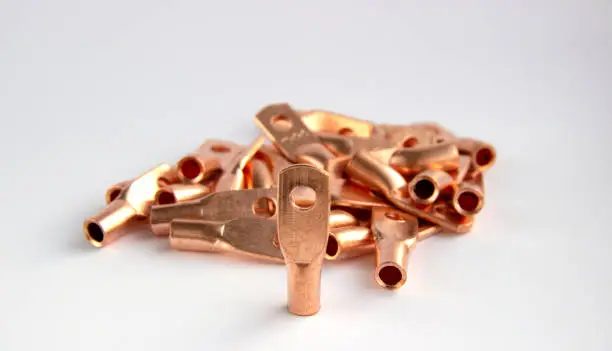
Based on the level of complexity, volume, and accuracy needed, different casting methods are best for different uses. For making big parts like pump housings, valve bodies, and industrial gearbox parts, sand casting is still the most flexible and cost-effective option. It can handle complex internal spaces and work with bronze, brass, and copper-nickel metals. Investment casting, also known as the "lost-wax" process, is great for making parts with precise dimensions and a smooth surface, like electrical connectors, motor parts, and aerospace-grade bushings. However, it usually has higher tooling costs that are justified by the fact that less secondary machining is needed. These methods can be combined into one: low-pressure casting. It has better mechanical qualities and less porosity, making it perfect for building parts in energy and car industries where dependability under stress is a must.
Specifying Material and Technical Requirements
Optional materials have a direct effect on how well and how long a component works and how easy it is to make. Copper alloys with high conductivity are good for electrical systems where low resistance is important. On the other hand, aluminium bronze is better at resisting corrosion in marine settings where saltwater and chemicals are present. It is very important to write down exact limits for dimensions, finishes, and heat treatment needs. For example, giving providers tolerances of ±0.05mm or surface roughness values like Ra 3.2μm lets them know what quality standards you have. Certifications in different fields, like ISO 9001 for quality management, ASTM B505 for copper alloy bars, and RoHS compliance for environmental standards, are all very important for reducing risks in the supply chain and making sure that all global markets follow the rules.
Determining Production Volume and Scalability
The amount of production has a big effect on both choosing a source and how costs change over time. For prototype runs and small amounts, you need suppliers who can work with your schedule and make tools quickly. For mass production, you need suppliers who can handle a lot of orders, have automatic finishing equipment, and use statistical process control. A good foundry should be able to shift smoothly from 50-piece pilot runs to 10,000-unit production numbers without affecting quality or delivery times. This will give you peace of mind as you move your product development from validation to full-scale production.
Key Criteria to Evaluate Copper Casting Service Providers
To find the best copper casting provider, you need to carefully look at their professional and operational skills. Working with automakers and companies that make industrial tools has taught me that careful testing stops expensive quality problems and delays in delivery.
Technical Capabilities and Equipment Modernization
Precision, output, and defect rates are all directly affected by more advanced casting tools. Check to see if possible providers use high-pressure die-casting machines, CNC-controlled low-pressure systems, or automated sand moulding lines. These technologies show how well they can keep tolerances tight and consistency high across production runs. These days, foundries should have high-speed machining centres that can do secondary operations like drilling, tapping, and milling to make finished parts. This way, you won't have to organise as many suppliers. Porosity and flaws are kept to a minimum in melting furnaces that can precisely control temperature and remove gas. These are important factors for parts that are exposed to mechanical stress or electrical current. Facilities with spectrometers for real-time metal testing make sure that materials are always the same, and 3D scanning and coordinate measuring machines (CMMs) allow for accurate measurements down to the micron level.
Industry Experience and Engineering Support
Suppliers who have worked in your industry for a long time know the specific problems you face and the rules that apply to your applications. Suppliers to the automotive industry should show that they know how to use PPAP documents, dimensional variation studies, and long-term reliability testing procedures. Partners in industrial tools need to know how to use sand casting to make heavy-duty parts and how to use heat-resistant metals in places where temperatures are high. Electrical professionals should know about the needs for conductivity, how to get rid of heat, and how to meet UL or IEC standards. In addition to the provider's past work, you should also look at their scientific support—can their metallurgists suggest changes to the material that will make it work better? Do they do design for manufacturability (DFM) research to find the best casting shape and cut costs? When sellers work together on technology ahead of time, they become strategic partners instead of just customers.
Quality Assurance and Testing Protocols
Excellent foundries are set apart from average ones by strict quality assurance procedures. Check to see if the providers use statistical process control, keep thorough records of inspections, and do root cause analysis when problems happen. Non-destructive testing methods, like X-ray radiography, ultrasonic inspection, and dye penetrant testing, find flaws and cracks in the surface that can't be seen with the naked eye. This is very important for flight and car parts that need to be safe. Pressure testing makes sure that casts that handle fluids, like pump housings and valve bodies, are solid. Suppliers should give material certifications that show how the metal was made and link them to the original mill certificates. These certifications should include test results for mechanical properties. Warranty policies and clear steps for handling defects show that you are confident in the quality of your products and ready to deal with problems right away, which protects your production plans and image.
Pricing Transparency and Lead Time Realism
Clear price models that break down the costs of things like tools, material, casting, finishing, and inspection make planning easier and make it easier to talk about ways to cut costs. Be wary of providers whose prices are much lower than the market average. They often cut corners on quality, skip important checking steps, or don't have the capacity to keep their delivery promises. Realistic lead times are based on how much production can actually handle, not on hopeful predictions. Usually, prototype casts take 3 to 6 weeks, which includes making the pattern or die. Production orders, on the other hand, take 6 to 12 weeks, based on how complicated they are and how many are needed. Scalability options should be able to keep up with your growth, and providers should be able to show that they have extra capacity or plans to expand to handle higher numbers without having to extend lead times in the same way.
Comparing Copper Casting Providers: What Sets the Best Apart
The best copper casting providers set themselves apart by using cutting-edge process improvements, environmentally friendly production methods, and the ability to make changes to fit specific needs. These things that set them apart directly lead to better performance from parts, lower total costs of ownership, and stronger supply chain stability.
Process Innovation and Customization Flexibility
Leading foundries are always putting money into process changes that make things better and more efficient. Simulation software like MAGMA or ProCAST lets you do virtual casting trials to find the best gating systems and predict solidification patterns before you buy real tools. This cuts down on development time and the number of times you have to try something and see what happens. Rapid prototyping with 3D-printed sand moulds or investment casting patterns shortens the time it takes to make a product and lets you try its functionality weeks before you could with traditional pattern-making methods. Customisation options go beyond standard catalogue items; some sellers can make complex internal openings for fluid flow, insert cast different materials together, and change the compositions of alloys to get certain property combinations. This freedom is very helpful when the parts you need don't come in normal sizes or shapes.
Material Advantages and Performance Optimization
Knowing when copper casting is better than other options helps you make better choices about planning and buying. Copper alloys are better at conducting electricity than aluminium (61% IACS for 6061 aluminium vs. 100% IACS for pure copper). This makes them essential for electrical busbars, switchgear terminals, and grounding parts where low resistance cuts down on energy loss and heat production. Bronze and brass casts are better than steel at reducing friction and wear in bearing surfaces, worm gears, and bushings. The copper-tin matrix stops galling and seizure even when there is border lubrication. Marine-grade aluminium bronze is used more in ship blades, underwater valve bodies, and offshore platform parts because it is better at resisting rust from salt water than stainless steel. Copper is great for motor housings and heat exchanges where thermal management keeps things from breaking down too soon because it can quickly lose heat.
Supplier Verification and Risk Mitigation
Using more than one way to check a supplier's trust lowers the risks of buying. Customer reviews and case studies show how well the company really does in the real world, not just what they say they do in ads. Ask about things like on-time delivery rates, defect numbers, and how quickly the company responds to quality problems. Factory checks let you see for yourself how well the workers are doing, how clean the workplace is, and how well the equipment is working. During trips, check to see if providers keep the flow of production organised, use visual management systems, and train their employees. In addition to ISO 9001, industry-specific standards like AS9100 for aircraft, IATF 16949 for automotive, or API specifications for oil and gas uses should also be looked at during certification reviews. Third-party quality reviews from groups like DNV or TÜV provide extra proof. Suppliers who commit to ongoing growth through methods like Lean manufacturing, Six Sigma, or regular equipment changes show that they can be relied on and work with in the long run.
Strategic Procurement Approaches for Copper Casting Services
Diverse suppliers, clear communication rules, and skilled contract negotiation are all parts of good buying strategies that get the best results and build long-lasting relationships with vendors.
Supplier Categorization and Selection Strategy
It's helpful for procurement teams to group sellers by the type of work they do and their ability to meet the needs of a particular project. Local foundries have benefits like shorter lead times, easier contact across time zones that are similar, and lower shipping costs for large casts. This is especially helpful during prototyping stages that need frequent design changes and in-person collaboration. International providers, especially those from well-known manufacturing areas, may be able to offer lower costs for large-scale production while still meeting quality standards through audits and certifications. OEM foundries that are vertically merged can provide complete solutions, from making patterns to finishing and putting them together. This makes project management easier but may limit freedom. Contract foundries that focus on certain metals or processes can offer a lot of technical know-how and may be able to handle smaller quantities or unique needs that bigger captive facilities can't.
Communication and Project Management Excellence
Setting clear communication routes and standards from the start is necessary to make sure that the supplier's skills match the exact needs of the project. Technical data packages with lots of information, like 3D CAD models, measurement drawings with GD&T callouts, material specs, and quality plans, clear up any confusion and set clear standards for acceptance. Using milestone tracking and progress dashboards to review projects on a regular basis keeps work on plan and finds problems early on, before they cause delays. Sharing inspection reports, production pictures, and shipping paperwork in real time on collaborative platforms builds trust and openness. When reviewing suppliers, think about their transportation infrastructure. For example, do they work with dependable freight forwarders who have experience with metal castings? Can they handle the paperwork for foreign shipping that needs to go through customs? After-sales help, such as managing warranties, looking into failures, and efforts to make things better all the time, turns business relationships into strategic partnerships that add value over time and across multiple projects.
Contract Negotiation and Intellectual Property Protection
A good deal strikes a mix between business goals and keeping relationships strong. Knowing important parts of a contract, like payment plans, shipping Incoterms, and liability limits, helps everyone stay safe and understand what is expected of them. It's important to write down how prices can change depending on the size and complexity of the batch. Setting up volume discount tiers or cost reduction roadmaps that are matched with learning curve improvements can help everyone grow. Protecting intellectual property is very important when sharing secret ideas, ways of making things, or apps for end use. To keep competitive benefits, companies use non-disclosure agreements, design ownership terms, and limits on reverse engineering and third-party disclosure. Quality escapes and rushing fees should be dealt with ahead of time to clearly define who is responsible and how costs are shared when mistakes happen or supplies need to be made quickly. This will help avoid arguments that hurt relationships during stressful times.
Conclusion
To find a trustworthy copper casting service provider, you need to weigh their technical skills, quality systems, pricing, and ability to match their business goals with your practical needs. To do successful buying, you must first clearly define your project's needs, such as your preferred casting process, material specs, dimensional tolerances, and expected volume. You should then carefully consider each provider based on these criteria. Give more weight to partners who can show they have up-to-date tools, knowledge in your business, strict quality standards, and open ways of communicating. Risks can be reduced by using certifications, customer references, and workplace checks to confirm information. Strategic negotiation, on the other hand, builds relationships that are good for both sides that go beyond individual deals. The given case studies show real benefits, such as lower costs, better quality, and shorter development times, that can be achieved by carefully choosing suppliers and working together.
FAQ
What are typical lead times for custom copper casting projects?
Lead times are very different depending on how complicated the job is, what tools are needed, and how much is being made. For prototype casts using existing patterns or fast tooling methods, the time between placing an order and receiving the finished product is usually between 3 and 6 weeks. This includes time for preparing the mould, casting, and basic finishing. It takes 8 to 12 weeks to complete production orders that need new fixed moulds or dies. This includes making the tools, inspecting the first product, and starting up production. It could take 12 to 16 weeks for large quantities or parts that need a lot of extra cutting and surface treatments. Reliable providers give you thorough schedules with important dates like when to approve the tools, send in the first product, and finish production. This lets you plan accurately and work with your overall manufacturing schedule.
How can I verify a copper casting supplier's certifications and reliability?
Multiple separate ways should be used for verification. Ask for copies of the most recent ISO 9001 quality management certificates, specific industry certifications like IATF 16949 or AS9100, and material compliance papers like RoHS or REACH statements. Check these credentials by calling the certification groups directly, using the contact information from their websites instead of the information given by the seller. Do factory audits to check the state of the tools, how well the process controls are being used, and the skills of the workers. Read reviews from past customers and ask for references from clients in similar industries who have similar technical needs. Then, get in touch with these references to talk about how well you meet deadlines, how often you fix problems, and how quick you are to quality issues.
Can copper castings be integrated with secondary manufacturing processes?
Copper casting often go through extra processes that make them more useful and improve their end performance. CNC machining adds precise features like bearing surfaces, threaded holes, and tight-tolerance mating contacts that can't be cast directly. On current machining centres, the accuracy can reach ±0.02mm. Surface processes like electroplating, powder coating, and chemical patination make things look better, last longer, and be less likely to rust. Solution annealing and precipitation hardening are two types of heat treatment that improve the mechanical qualities of a material so that it works best under certain stress conditions. During assembly, casts are joined to other parts by welding, brazing, or mechanically fastening. This makes subassemblies instead of free parts. When suppliers offer these value-added services, they make managing your supply chain easier and make teamwork less complicated.
Partner with Fudebao Technology for Your Copper Casting Requirements
Fudebao Technology is ready to help you with your most difficult copper casting projects. They have a wide range of skills, from choosing the metal to delivering the finished part. We have high-tech low-pressure casting tools, high-speed CNC machining centres, and precision inspection equipment that can hold tolerances of up to ±0.05mm. This means that we can meet the strict standards needed for precision parts for cars, electrical housings, and industrial machinery. We keep our ISO 9001 certification and follow strict quality procedures such as spectroscopic alloy proof, dimensional checking using CMM technology, and non-destructive testing to make sure that every casting meets your needs.
Our engineering team has decades of experience working with makers around the world in the energy, industrial equipment, and car industries, helping with everything from improving designs to increasing production levels. We offer variable batch sizes and open contact throughout the entire project lifecycle, whether you need a small number of prototypes for validation testing or a lot of products delivered just in time, we can meet your needs. In addition to copper casting, we also do aluminium die-casting, stainless steel investment casting, and full CNC milling. This makes us your one-stop shop for copper casting for complex systems made of more than one material.
Email us at hank.shen@fdbcasting.com to talk about your unique needs, share technical drawings, and get a full quote that fits your budget and schedule. You can learn more about what we can do by going to fdbcasting.com and reading case studies from happy clients all over North America. You can also find out how our dedication to quality and speed can help your supply chain. Let us show you why Fudebao Technology is the copper casting maker that top procurement workers choose for mission-critical parts.
References
American Foundry Society (2022). "Copper Alloy Casting: Properties, Applications, and Market Trends." Schaumburg, IL: American Foundry Society Technical Publications.
Davis, J.R. (ed.) (2001). "Copper and Copper Alloys." Materials Park, OH: ASM International Handbook Committee.
Campbell, J. (2015). "Complete Casting Handbook: Metal Casting Processes, Metallurgy, Techniques and Design." Oxford: Butterworth-Heinemann.
ASTM International (2021). "ASTM B505-19: Standard Specification for Copper Alloy Continuous Castings." West Conshohocken, PA: ASTM International Standards.
Modern Casting Magazine (2023). "Annual Census of World Casting Production: North American Trends in Non-Ferrous Alloys." Schaumburg, IL: American Foundry Society.
Beeley, P.R. & Smart, R.F. (1995). "Investment Casting." London: Institute of Materials, Minerals and Mining.



YOU MAY LIKE
_1756348356531.webp "Automobile engine oil pan")
_1756345858191.webp "Aluminum casting crafts")