How to Choose a CNC Machining Service Provider?
2026-04-15
Picking the right CNC machining service provider is important if you want your precision parts to meet strict requirements or break down on the production floor. CNC machining is basically a computer-controlled subtractive process that takes away material from solid blocks to make parts with complicated shapes and tight standards that aren't possible with traditional manufacturing. The choice is based on the provider's technical skills, quality systems, quick wait times, and ability to handle everything from prototype development to high-volume production runs while keeping the same level of accuracy and material integrity in every batch.
Defining Your CNC Machining Needs
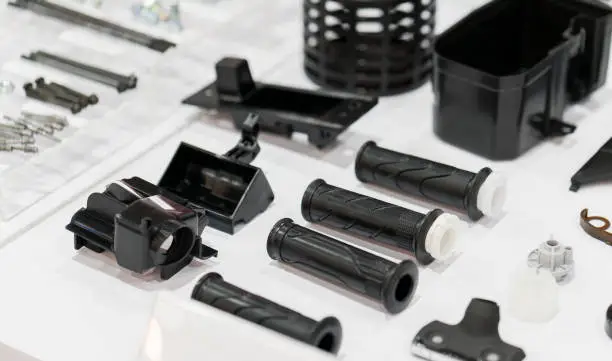
Before looking at possible partners, engineering managers and buying teams need to make sure that the project requirements are clear and match up with what the suppliers can do. This makes things clear, which cuts down on expensive rework and speeds up time-to-market.
Understanding Core CNC Processes and Their Applications
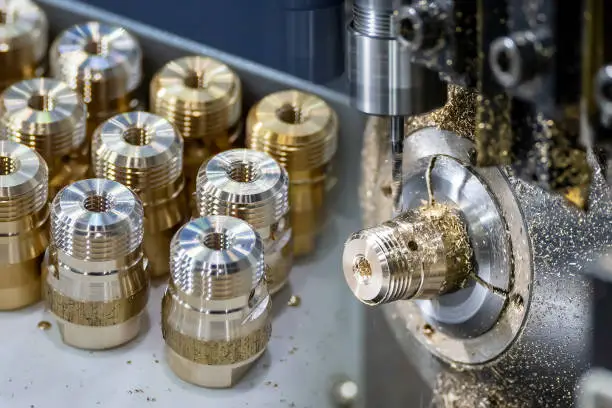
Based on the shape of the part and the performance requirements, each cutting method is used for a specific task. Using rotating multi-point cutting tools, milling processes are great at making flat surfaces, pockets, and complicated shapes. This makes them perfect for making electrical housings and car brackets. When you turn something, you turn it against a fixed tool. This is great for making cylinder-shaped parts like motor shafts and joints. Multi-axis machining, especially 5-axis continuous operations, lets makers make non-manifold forms and organic shapes in a single setup. This cuts down on cycle times and gets rid of the positional mistakes that come with using multiple setups.
For turbine parts that need a smooth surface, the aerospace industry counts on 5-axis skills a lot. For transmission housings, car suppliers often mix 3-axis milling with turning. Figuring out which process works best for your part design keeps you from paying too much for too much complexity or not giving your parts enough complexity. Choosing the right material also affects the process. For example, aluminum alloys like 6061-T6 work well with all ways, but superalloys like Inconel 718 need special tools and slower feed rates no matter how the axes are set up.
Precision Requirements and Tolerance Specifications
In high-stakes situations, dimension accuracy tells the difference between working parts and production mistakes. Standard milling limits usually meet ISO 2768-medium standards, which are about ±0.1mm for sizes less than 30mm and are fine for most industry equipment. For important mating surfaces and threaded features, automotive and medical device uses often need ISO 2768-fine or smaller tolerances, up to ±0.005mm. Surface finish requirements also affect the choice of provider. For internal structural parts, a normal Ra 3.2μm finish with obvious tool marks is fine, but sealing surfaces and cosmetic parts need Ra 0.8μm or finer through extra finishing operations.
The Geometric Dimensioning and Tolerancing (GD&T) standards make things even more complicated. For example, aerospace screws may need precise perpendicularity controls to keep them from coming loose when they're vibrated, and electrical connecting housings may need precise cylindricity to keep their conductivity. Providers who don't have advanced measurement tools like coordinate measuring machines (CMMs), optical comparators, and surface roughness testers can't check these parameters, so quality validation is based on guessing. Our production runs are usually accurate to within 0.05 mm, and we have thorough inspection processes that record every important measurement before shipping.
Volume Considerations from Prototypes to Mass Production
The amount of production has a big impact on the providers that are chosen and how much they charge. For prototype runs of 1 to 10 pieces, you need flexible code and quick-change tooling sets. The main cost driver here is engineering time, not material use. For batch production of 50 to 500 units, the process needs to be optimized to lower costs per unit while keeping quality consistent across the whole lot. When making more than 1,000 units, the focus moves to lowering cycle times, automating tool changes, and using statistical process control to keep capability indices (Cpk values) above 1.33.
A lot of the time, prototyping providers can't handle big orders, and high-volume shops may have minimum order amounts that are too high for small batches. The best partner is scalable, which means they can handle the creation of your first prototype and then move on to test runs and full production without lowering the quality or taking too long to retool. Our facility fills this gap by having dedicated prototype cells for quick iteration and high-speed CNC machining centers that can make repetitive parts without stopping. This way, you only have to work with one trusted partner throughout the lifecycle of the product instead of finding different suppliers at different stages.
Establishing Core Selection Criteria for CNC Machining Providers
When you do a technical capability review, you look at more than just marketing claims. You also look at real assets and performance records that have a direct effect on part quality and delivery reliability.
Machinery Sophistication and Technological Integration
A provider's collection of equipment shows how well they can handle complicated needs and keep wait times competitive. Modern high-speed machining centers with wheels that run at 10,000 RPM or higher cut cycle times for aluminum parts by a large amount compared to older machines that ran at 4,000 RPM. This means that parts can be turned around faster without sacrificing surface quality. The ability to do 5-axis simultaneous machining means that complicated aircraft parts can be made in a single setup instead of several. This cuts down on placement mistakes and labor costs.
Adding CAD/CAM tools makes it easier to go from designing something to making it. Advanced CAM platforms let providers directly import native CAD files, which instantly creates efficient toolpaths that cut down on waste and machining time. This technological skill stops the communication mistakes that come with hand programming and lets Design for Manufacturability (DFM) comments happen during the quoting stage. Our whole building is equipped with American HAAS automatic machine tools, which are known for being reliable and have advanced control systems that keep micron-level repeatability over long production runs. These investments show that we are committed to being able to handle both easy 3-axis tasks and complicated multi-axis needs in the same building.
Quality Management Systems and Certification Standards
ISO 9001:2015 approval is the minimum standard for quality management for B2B CNC machining providers. It sets out written steps for controlling the process, dealing with nonconformances, and making improvements all the time. Suppliers to the automotive industry should specifically look for IATF 16949 certification. This adds standards that are special to the automotive industry, such as documentation for the Production Part Approval Process (PPAP), Failure Mode and Effects Analysis (FMEA), and the creation of a control plan. For aerospace uses, you need AS9100 certification, which includes standards for tracking, first article inspection reports, and material certifications that can be used to find out what the raw materials were made of all the way back to the original mill test reports.
In addition to certificates, you should look into the quality standards that are actually used in the shop. Statistical Process Control (SPC) charts keep an eye on important measurements during production runs so that trends can be seen before parts start to go off-spec. Before moving on to the next batch, first article checking processes make sure that the first production pieces meet all the requirements in the drawing. In-process inspection methods find errors during machining instead of finding problems after the job is done. This lowers the amount of waste and keeps bad parts from getting to the assembly line.
Lead Time Performance and Production Scalability
Quoted wait times aren't as important as tracking how many things were delivered on time and how complicated they were. Request measurements that show what percentage of orders were delivered by the due date in the last six months. Reliable providers regularly get orders delivered on time 95% of the time or more. Understanding how much their capacity is being used helps predict how well they will do in the future. Shops that are operating at 90% or more of their capacity find it hard to handle rush orders or sudden jumps in volume, while providers that are operating at 70–80% usage show they have extra capacity for flexible scheduling.
Scalability is more than just the ability to make more basic materials. It also includes the ability to find materials and make sure that the supply chain is resilient. Companies that keep a strategic stock of common materials like aluminum 6061, stainless steel 316L, and engineering plastics can start making things as soon as they get an order confirmation. Companies that buy materials one at a time, on the other hand, have to add purchase wait time to every project. Our unified method includes the whole production process, from melting the raw materials to casting, precision CNC machining, and surface treatment, all under one roof. This means that there are no handoffs between different providers, which are common in supply chains that aren't well organized and can cause delays and quality problems.
Aligning Provider Selection with Your Procurement Needs
Strategic sourcing is more than just buying things one time. It builds relationships that help businesses reach their long-term goals and change with the times.
Matching Capabilities to Project Complexity and Volume
When compared to wholesalers who buy parts from catalogs or engineering companies that make unique solutions, OEM procurement teams have different needs. Automotive original equipment manufacturers (OEMs) look for suppliers that can handle whole projects, from the pilot stage to production. This includes handling paperwork, change, and coordinating starts that work with the plans of assembly plants. Manufacturers of industrial equipment like batch sizes that can be changed easily to accommodate changes in yearly demand. They also don't like rigid minimum order amounts that force companies to keep too much inventory on hand.
Buyers in the electrical and energy sectors need material certifications that show conductivity standards for copper metals and corrosion resistance checks for outdoor installs. For aerospace buying, full traceability is required through serialization, material certifications that can be traced back to the original mill heats, and keeping first article inspection records for as long as the product is made. If a provider doesn't have experience in your industry, they might send you technically compliant parts that are missing important paperwork or regulatory requirements, which can delay approval and production clearance.
Customization Flexibility and Engineering Support
With engineering support, sellers are turned into partners who help make products better instead of just carrying out plans. Design for Manufacturability (DFM) analysis finds possible production problems during the quoting stage. It does this by pointing out tight tolerances that make costs too high compared to functional benefits, suggesting different materials that perform similarly but cost less, or suggesting geometric changes that make the design easier to make without changing the intended purpose. This upfront cooperation cuts down on costly design changes made after production starts and speeds up the development process.
When normal alloys aren't accessible or project needs change in the middle of the process, being able to easily get new materials becomes very important. When there are problems with a supplier, companies that work with more than one can quickly change their plans, but companies that only work with one source have to wait longer. We can make custom aluminum and copper alloys that meet your specific needs for strength, conductivity, or corrosion resistance, so you don't have to choose from commercially available billet stock. We can then machine precise features directly from our cast blanks, giving you even more options.
Conclusion
In conclusion, When looking for a CNC machining service provider, you need to weigh their technical skills, quality systems, cost structures, and prospects for a relationship against your specific needs in terms of precision, volume, and timeliness. During the evaluation process, claims should be checked through pilot projects and reference checks, and the machinery's level of complexity, quality certifications, output scalability, and experience in the industry should all be carefully looked at. Providers that offer combined manufacturing capabilities, such as casting, precision machining, and surface treatment, make the supply chain simpler and respond faster than methods that use a lot of different vendors. Strategic relationships based on open communication, collaborative engineering, and constant improvement give your products long-lasting competitive benefits that go beyond transactional cost savings. This sets your products up for success in the market.
FAQ
What factors have the most effect on the price of CNC machining?
The main factor that affects cost is the choice of material. For example, titanium and superalloys cost ten times more per kilogram than aluminum alloys. The second-biggest cost factor is machining time, which is affected by the amount of material that needs to be removed, the surface finish that is needed, and the complexity of the geometry that needs more than one setup. When margins are less than ±0.02mm, feed rates have to be slowed down and more final passes have to be made. This can make cycle times twice as long as they are for normal precision work. Setup time amortization has a big effect on per-unit costs.
How can I check a supplier's quality standards without looking at their certificates?
Ask for specific proof, like recent inspection reports, Statistical Process Control (SPC) charts that show how well the process works, and records of corrective actions that show how they dealt with quality problems. Check out the production site to see how quality standards are actually followed.
How long does it usually take to make a sample compared to a production run?
For standard complexity parts, prototype orders of 1 to 10 pieces usually take 1-2 weeks. This time can go up to 3–4 weeks for parts with complicated shapes that need 5-axis machining or that are made of rare materials that take longer to get. This time frame includes reviewing the engineering, making the program, setting up, milling, inspecting, and any other secondary activities that need to be done. Batch production of 50 to 500 pieces usually takes two to four weeks, but this depends on the total number of hours spent on cutting and where the pieces are in the production plan.
Partner with Fudebao Technology for Precision CNC Machining Solutions
Zhejiang Fudebao Technology stands ready to support your precision component requirements through our integrated manufacturing platform combining advanced casting capabilities with state-of-the-art CNC machining. Our American HAAS automation machine tools deliver the accuracy and repeatability demanded by automotive, aerospace, industrial equipment, and electrical applications, maintaining tolerances to ±0.05mm across production runs. We cover the complete manufacturing sequence under one roof—from raw material melting through casting, finishing, and surface treatment—eliminating supply chain complexity while accelerating your time-to-market. Whether you need rapid prototype iterations, flexible batch production, or high-volume manufacturing, our technical team provides engineering support, DFM analysis, and transparent communication throughout your project lifecycle. Connect with our team at hank.shen@fdbcasting.com to discuss your specific requirements and receive a detailed quotation from a trusted CNC machining supplier committed to delivering quality components on schedule.
References
Brown, T. (2021). Advanced CNC Machining: Materials, Methods, and Quality Control in Precision Manufacturing. Manufacturing Technology Press.
Chen, W. & Martinez, R. (2022). Supplier Selection Frameworks for Automotive and Aerospace Components. Industrial Procurement Journal, Volume 34, Issue 2, pp. 118-145.
International Organization for Standardization. (2020). ISO 2768-1:2020 General Tolerances for Linear and Angular Dimensions. Geneva: ISO Publications.
Johnson, K. (2023). Integrated Manufacturing Systems: Optimizing Casting and Machining Operations. Production Engineering Quarterly, Volume 41, Issue 3, pp. 203-229.
National Institute of Standards and Technology. (2022). Geometric Dimensioning and Tolerancing: Principles and Applications. U.S. Department of Commerce Technical Publication Series.
Williams, D. & Zhang, L. (2021). CNC Technology Evolution: From 3-Axis to Multi-Axis Machining Centers and Their Industrial Applications. Journal of Manufacturing Systems, Volume 58, Part B, pp. 412-438.



YOU MAY LIKE
_1756352625880.webp "plug stainless")
_1756349957728.webp "metric v belt pulley")
_1756348780785.webp "porting turbo compressor housing")
_1756346668222.webp "Aluminum castings Decorative buckles")