How Mold Design Affects Aluminum Die Casting Quality?
2026-03-05
Mold creation is the most important part of good aluminum die casting, as it directly affects everything from the quality of the surface to the accuracy of the dimensions. When buying teams understand the complex link between mold engineering and the performance of the end product, they can make smart choices that lead to better manufacturing. Better mold design gets rid of common casting flaws, lowers costs, and makes sure quality stays the same across high-volume runs. This makes it an important factor in choosing a source and making sure the project succeeds.
Understanding the Impact of Mold Design on Aluminum Die Casting Quality
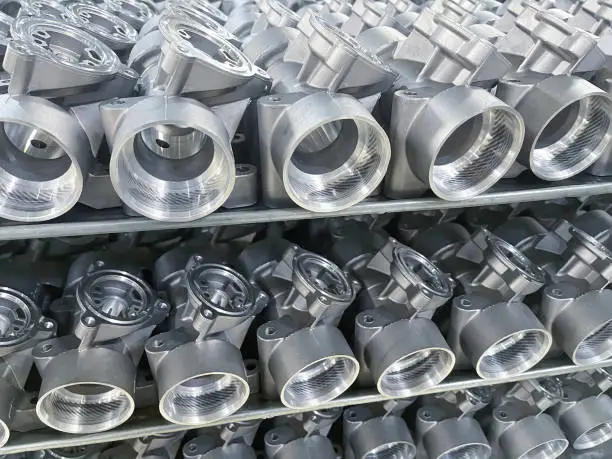
Mold design and casting quality are connected in a lot of ways, not just in terms of making shapes. Die casting models today are very complex engineering systems that manage how metal flows, how heat moves, and how solidifies during the casting process. Together, these design elements tell you if your final parts meet the strict standards needed for use in aircraft, automotive, and industry settings.
Surface Finish and Dimensional Accuracy
Preparing the mold's surface and designing the cavities have a direct effect on how the finished product looks and how close the dimensions are. Precision grinding and special finishes are some of the more advanced mold finishing methods that can get the surface roughness below 0.8 μm. This level of accuracy is very important when making parts for electrical cabinets or car housings, where both looks and function are important.
What makes cast parts stable in their sizes is how well the mold hole is formed and how well the heat is controlled. Aluminum metals usually shrink by between 0.3 and 0.7%, which can be taken into account by well-designed molds in aluminum die casting. This makes sure that the final numbers don't go outside the allowed range. When the temperature inside the mold changes, the material may shrink unevenly. This can cause the part to twist and change size, which lowers its quality.
Defect Prevention Through Smart Design
Common casting flaws are caused by bad decisions about how to build the mold. One of the worst flaws is porosity, which is often caused by bad venting or placing the gate in the wrong way, which traps air during filling. When metal streams don't join properly, which is usually because of bad runner systems or bad mold temperature control, cold shuts happen.
These problems can be fixed before they affect output by placing vents, overflows, and cooling pathways in a smart way. Ventilation systems that work well get rid of trapped gases and air, and cooling circuits that are built correctly keep the temperature even, which helps with full filling and sound solidification. When making thick-section parts or parts with complicated shapes, these design factors become even more important.
Core Principles of Effective Mold Design in Aluminum Die Casting
Knowing the basic rules for making a good mold helps procurement pros figure out what suppliers can do and make smart choices about where to get things. These concepts cover both the technical needs of the casting process and the real issues that come up when making a lot of things.
Gating System Optimization
The gating system is what moves the liquid metal to the mold hole, so the design of it is very important for the quality of the part. The right size and placement of the gates control the fill rate, reduce turbulence, and help the material solidify in a certain direction. If the gates aren't set up correctly, it can lead to hot spots, unfinished filling, or too much flash, which needs expensive extra work.
There are different locking methods for different part shapes and quality needs. Fan gates are good for thin-wall parts because they spread the flow of metal evenly over large areas. Pin gates reduce gate residue, but they need to be carefully sized to keep them from freezing too soon. Submarine gates can automatically separate ships, but they need to be machined with very tight standards. The best choice relies on the shape of the part, the amount that needs to be made, and the quality standards.
Cooling Channel Configuration
Managing heat through smart placement of cooling channels is one of the most important things to think about when designing a mold. Consistent mechanical qualities are supported by uniform cooling, which cuts down on cycle times and boosts output. When the cooling design isn't right, hot spots form that cause porosity, longer cycle times, and mold wear before it should.
Conformal cooling channels are used in modern mold designs because they fit the shape of the part better than standard straight-drilled channels. These systems, which are often made using additive manufacturing, can cut down on cooling times by 20 to 40 percent while making temperatures more even. Modern designs for cooling also include temperature tracking systems that give real-time data to help improve the process.
Material Selection for Mold Components
The choice of mold material affects both the quality of the casting and the life of the tool. Premium tool steels, such as H13, are very resistant to thermal wear and keep their shape over thousands of rounds. Surface treatments like nitriding or PVD coats make things less likely to wear out and require less upkeep.
Based on their specific working conditions, different mold regions need different materials. In aluminum die casting, premium tool steels work best in areas exposed to high temperatures, while cheaper materials can be used in structural parts without affecting performance. Insert design allows you to use high-quality materials only where they're needed, which saves money and improves performance.
Comparing Mold Design Strategies Across Aluminum Die Casting and Other Casting Methods
Die casting model creation is very different from other casting methods, and each has its own benefits for certain uses. When procurement teams know about these changes, they can choose the best producing method for their needs.
Die Casting Versus Sand Casting Design Approaches
Compared to sand casting designs, die casting forms need to be much more precise and last a lot longer. Because die casting tools are fixed, they require a bigger original investment but also allow for tighter tolerances and better surface finishes. While sand casting gives you more freedom to change the design, it can't match the consistent sizes that can be achieved with precise die casting models.
Different methods also have different needs for wall thickness. Die casting tools can make pieces as thin as 1.5 mm while still keeping their shape, which makes them perfect for making lightweight parts for cars and spacecraft. Sand casting needs walls that are at least 6 to 8 mm thick, which means it can't be used for uses that need to be light.
Investment Casting Versus Die Casting Considerations
Investment casting is great for making complicated shapes with small draft angles, but die casting is faster and more efficient for large-scale jobs. Investment casting methods take hours to finish a cycle, but die casting models can do it in 30 to 90 seconds. Because it can be done faster, die casting is the best option for industries that need hundreds of thousands of parts every year, like electronics and cars.
The ability to finish the surface also works in favor of die casting when forms are carefully thought out and made. When die casting molds are well-designed, the areas that are cast don't need to be machined again like they do with investment cast parts. This lowers the total cost of manufacturing.
Practical Mold Design Tips to Optimize Aluminum Die Casting Quality and Efficiency
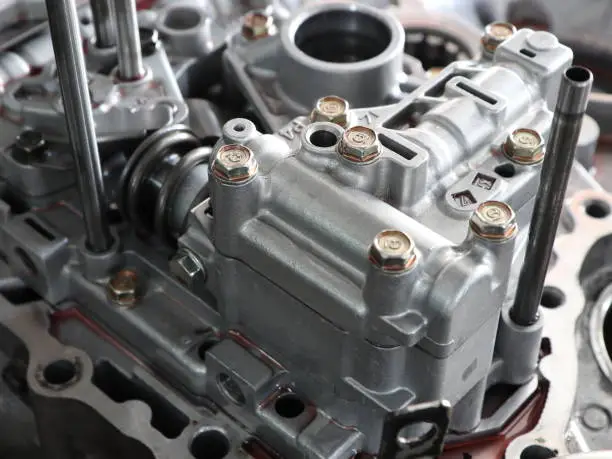
Using tried-and-true mold design methods can greatly enhance the quality of castings while cutting down on production costs. These useful solutions deal with problems that often come up in high-volume industry.
Advanced Cooling System Design
Paying close attention to channel placement, water flow rates, and temperature tracking is necessary to get the most out of a cooling system. Here are some of the most important things that top makers do to get better cooling performance:
- Conformal cooling channels that follow the shape of the part cut down on cooling time by 25–35% compared to regular straight-drilled channels. They also make temperature stability better across complex shapes.
- Increasing heat transfer coefficients by promoting turbulent flow through the right channel size and buffer placement lets cycle times go faster without lowering the quality of the parts.
- Zone-based temperature control lets different mold areas be cooled separately, which can handle complicated parts with different wall thicknesses and heat loads.
- Real-time temperature monitoring tools give you instant information about the temperature, so you can make changes to the process that keep quality the same throughout production runs.
These new ideas for cooling directly lead to higher productivity and lower production costs, while still keeping the tight limits needed for precise uses. Modern cooling systems also make molds last longer by lowering heat stress and reducing wear caused by temperature.
Defect Reduction Through Design Optimization
To get rid of common casting flaws, you have to pay close attention to mold design details that affect how the metal flows and solidifies. Defect prevention methods that work focus on finding the reasons of problems and putting in place design solutions that fix those problems.
To lower the porosity of aluminum die casting, you must first come up with an opening method that lets trapped air and gases escape as the space is filled. Vents need to be carefully put in the last places that need to be filled and be the right size so that gas can escape without metal leaking. Overflow wells catch the first run of metal, which could have air or other impurities in it. This keeps these issues from affecting the final casting.
To avoid a cold stop, the metal must be kept at the right temperature and speed during the filling process. When the runner and gate are set up correctly, the metal streams stay hot enough to bond together fully when they meet. When you place gates in a way that encourages smooth, straight filling, cold shuts and other flow-related flaws are less likely to happen.
CAD and Simulation Integration
Computer simulations are a big part of modern mold design because they help predict and stop quality problems before the tool is built. Problems like incomplete filling, air trapping, and thermal imbalances can be found with flow analysis tools. These virtual testing features cut down on development time and raise the success rate of first articles.
Mold flow modeling shows the best places for gates, runners, and cooling channels to be placed for certain part shapes. Thermal analysis predicts how things will solidify and finds places that need more cooling or changes to the wall thickness. Stress analysis makes sure that the mold's structure stays strong under working situations and makes the best use of materials.
Selecting the Right Aluminum Die Casting Partner for Superior Mold Design and Quality
To find the best manufacturing partner, you need to carefully look at their quality control systems, mold creation skills, and technical know-how. The best producers use cutting-edge tech tools and tried-and-true production methods that always produce better results.
Technical Capabilities Assessment
Before you can judge a possible provider, you need to know how they design molds and make things. Find partners who have invested in high-tech CAD/CAM systems, modeling tools, and high-precision machinery for cutting. More control over quality and delivery times is possible when mold creation, production, and change can all be done in-house.
Quality of manufacturing tools has a direct effect on how well and how long a mold works. Accurate measurements are made possible by high-speed machining centers that can compensate for temperature changes, and EDM skills let you make complex cooling channel shapes. Surface cleaning facilities let mold coats and finishes be made better for certain uses.
Quality Management and Certification Standards
Strong quality control methods make sure that the mold always works the same way during the whole production process. ISO 9001 certification is a basic way to make sure quality, but standards specific to an industry, like ISO/TS 16949 for the car industry, show a higher level of knowledge. Automobile companies that need full process proof for aluminum die casting must be able to record using PPAP.
Implementing statistical process control shows that you can keep an eye on quality in an advanced way. Suppliers who keep an eye on important mold performance measures like cycle time, temperature stability, and part dimensional change show that they are dedicated to quality excellence and ongoing growth.
Innovation and Continuous Improvement
Leading die casting partners are always putting money into new tools and better ways to do things. Additive manufacturing for conformal cooling channels, advanced modeling software for design optimization, and real-time tracking systems for process control are all cutting-edge technologies that give companies an edge over their competitors.
When suppliers are involved in the early stages of design as part of collaborative engineering methods, the results are often better than with traditional quote-based selection. Partners who offer ideas on how to improve designs and how to make them more likely to be manufactured add value above and beyond basic production skills.
Conclusion
The shape of the mold has a big impact on the quality of aluminum die casting, affecting everything from the accuracy of the dimensions to the number of defects and the speed of production. If procurement workers understand these technical connections, they can choose suppliers in a way that maximizes both quality and cost performance. The relationships that work best have suppliers who can create complex molds, have complete quality systems, and are dedicated to always getting better. By paying attention to these important factors, procurement teams can find manufacturing partners that can meet the needs of today's challenging uses for accuracy, dependability, and efficiency.
FAQ
How does cooling system design affect casting quality?
The right design of the cooling system makes sure that the temperature is the same all over the mold. This stops hot spots that can lead to porosity, warping, and uneven mechanical properties. Cooling lines that are well thought out cut down on cycle times while keeping the surface quality and steadiness of the dimensions. Not enough cooling can cause cycle times to be longer, more scrap to be made, and molds to wear out faster than they should.
What are the most common defects caused by poor mold design?
When mold design isn't right, the main problems that happen are porosity from trapped air, cold shuts from not enough metal fusion, flash from bad mold fit, and dimensional changes from temperature mismatches. Design flaws in the cooling, draining, or locking systems can also cause ejector pin marks, sink marks, and warpage.
How can I evaluate a supplier's mold design capabilities?
Check out suppliers based on their CAD/CAM skills, how well they use simulation tools, how accurate their machines are, and how well they handle quality. Ask for examples of similar projects they've worked on, look at their engineering staff's credentials, and see how they solve problems with complex shapes. Quality certifications and customer examples give you more information about what they can do.
Partner with Fudebao Technology for Superior Aluminum Die Casting Solutions
Fudebao Technology produces excellent aluminum die casting results by combining advanced mold design skills with a wide range of production skills. Our engineering team uses state-of-the-art modeling software and precise machine centers to make sure that every part of the mold design is perfect. This results in better parts and more efficient production. We can make precision parts that meet the strict needs of automobile, aerospace, and industrial uses. Our skills cover the whole production process, from melting to finishing. Get in touch with hank.shen@fdbcasting.com to talk about your needs as an aluminum die casting maker and find out how our advanced mold design services can help you with your next project.
References
Campbell, John. "Complete Casting Handbook: Metal Casting Processes, Metallurgy, Techniques and Design." Butterworth-Heinemann Engineering Materials Series, 2015.
Shivkumar, S., et al. "Influence of Mold Design on Aluminum Die Casting Quality Parameters." Journal of Manufacturing Science and Engineering, American Society of Mechanical Engineers, 2019.
Zhao, Huiping and Chen, Ming. "Advanced Cooling Channel Design for Aluminum Die Casting Molds." International Journal of Advanced Manufacturing Technology, Springer Publishing, 2020.
Thompson, Robert K. "Die Casting Mold Engineering: Principles and Applications for High-Volume Manufacturing." ASM International Handbook Series, 2018.
Kumar, Pradeep, et al. "Optimization of Gate Design in Aluminum Die Casting Through Computer Simulation." Materials and Manufacturing Processes, Taylor & Francis Group, 2021.
Williams, Sarah J. and Anderson, David L. "Quality Control Systems in Modern Die Casting Operations." Manufacturing Engineering Review, Society of Manufacturing Engineers, 2020.



YOU MAY LIKE
_1756348543350.webp "Automotive Turbine Casting")
_1756360265131.webp "Aluminum casting chair legs")
_1756352472762.webp "steel threaded plug")
_1756349071334.webp "HAAS mounting bracket")