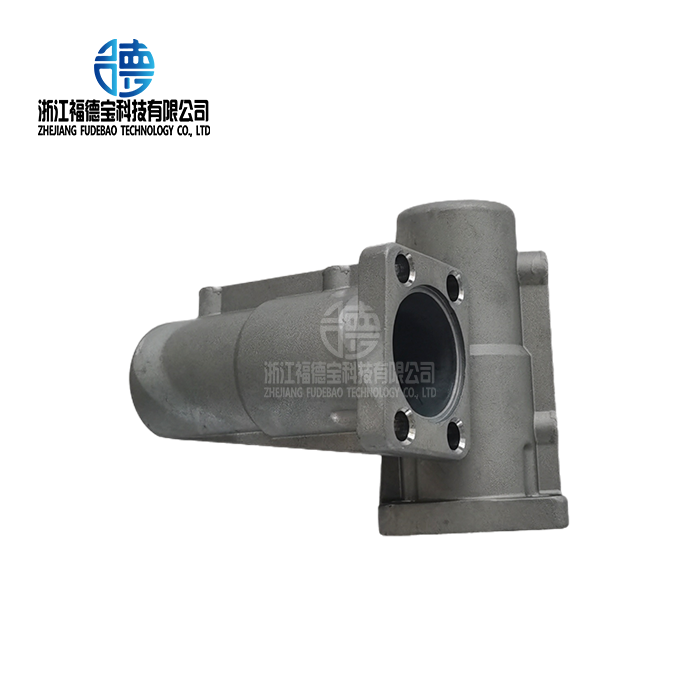
How Low Pressure Die Casting Works?
2026-05-13
Low pressure casting is a controlled way to shape metal. It uses pneumatic pressure between 20 and 100 kPa to push liquid metal, usually magnesium or aluminum alloys, up into a mold hole. This method is different from gravity casting or high-pressure die casting because it uses a riser tube to join a sealed holding oven straight to the die. The soft, counter-gravity filling cuts down on turbulence and oxide particles, making parts that are very strong inside. Because of this level of accuracy, the process is perfect for making wheels for cars, housings for electric motors, and suspension parts that must be safe and reliable.
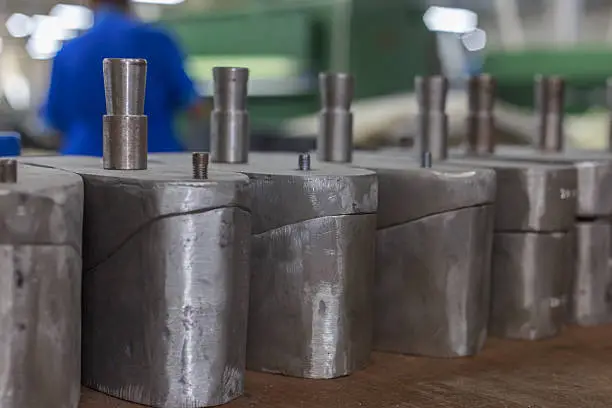
What Is Low Pressure Die Casting?
How do you explain low pressure die casting? There is a simple but complex idea behind how the process works. Under a fixed mold is a covered furnace that has molten metal in it. When compressed air goes into the furnace, it makes a difference in pressure that pushes liquid metal up through a tube lined with refractory into the mold. The pressure, which stays the same during solidification, makes sure that the material is fed consistently and accounts for shrinking without the need for big steps or feeders.
Core Principles and Equipment
Specialized low pressure ovens with precise temperature control systems are part of the setup. These keep aluminum alloys at temperatures between 680°C and 720°C. PID controllers are built into modern tools. They control pressure curves and let engineers change fill rates in real time. Permanent steel molds made from H13 tool steel can be used 30,000 to 50,000 times before they need to be fixed up. This makes them a good choice for medium to large production runs because they are cost-effective.
Commonly Used Alloys and Material Properties
The aluminum alloy A356 is most commonly used in low pressure casting situations because it is easy to make and has good mechanical qualities after being heated to T6. This metal is strong and flexible because it has magnesium in it and silicon in it. Its tensile strength is over 280 MPa and its stretch rate is about 6–8%. Copper alloys are used in power distribution parts that need to conduct electricity well, while magnesium alloys like AZ91D are used in places where weight reduction is very important.
Choice of material has a direct effect on the quality of casting. To keep top aluminum grades from becoming brittle, the iron level must stay below 0.15%. Adding strontium (usually 150–200 ppm) improves the structure of eutectic silicon, making it much more flexible. When buying from wholesalers, teams should check that they offer spectroscopic analysis and alloy tracking methods to make sure that the properties of the materials are the same from one batch of production to the next.
Process Flow and Cycle Parameters
At the start of the cycle, the mold is heated to 200–250°C to avoid temperature shock and solidification too soon. Controlled pressure is applied along a designed curve, starting slowly to avoid turbulence and then speeding up to keep the metal's speed at the gate steady. Fill times usually last between 30 and 90 seconds, but this depends on the shape of the part. Once the mold is full, the pressure stays on for 60 to 120 seconds so that the casting hardens from top to bottom.
When the solidification is done, the pressure drops, and any liquid metal that is still in the rising tube runs back into the furnace. With this one-of-a-kind feature, material returns are higher than 90%, which means a lot less waste than with traditional ways. Opening the mold, ejecting the part, and applying the die finishing finish the cycle, which can take anywhere from 3 to 8 minutes, based on the thickness and complexity of the part.
Benefits and Advantages of Low Pressure Die Casting
Knowing the specific benefits of this casting method helps sourcing leaders and engineering managers choose the right technology. The following perks directly deal with problems that often come up when making accurate parts.
Superior Mechanical Properties and Internal Soundness
The ordered pattern of solidification that comes with low pressure casting ways makes microstructures with few holes. Radiographic examination according to ASTM E155 guidelines always shows porosity levels below Grade 2, which meets strict aircraft requirements. Tensile testing of coupons cut straight from castings (not test bars that were cast separately) shows that after T6 treatment, the yield strengths are between 240 and 280 MPa, and the elongation is more than 6%.
This mechanical consistency comes from applying pressure while the metal is solidifying. As the casting cools and shrinks, constant pressure from the burner below sends liquid metal up to make up for the loss of volume. This bottom-up solidification gets rid of the centerline shrinkage that happens a lot in gravity casts. This is especially important in thick-walled parts of pump housings and gearboxes, where hidden gaps can cause catastrophic field failures.
Parts produced through this method usually pass tests that measure pressure loss. Automobile wheels need to be able to keep air in them for thousands of miles without leaking. This is a challenge that gravity-cast wheels often fail to meet. EV battery housings and motor casings need to be completely sealed to keep water out of the electrical parts. Controlled pressure filling creates a dense structure with no holes, which is what these uses need for durability.
Cost Efficiency Through Material Optimization
Rates of material output have a direct effect on the costs of production. Because low pressure casting doesn't use big lifters and feeders, more than 90% of the liquid metal turns into finished goods instead of scrap that needs to be remelted. In gravity casting, a 2.5 kg car control arm might need 4.5–5 kg of liquid metal, but in this method, it might only need 2.7 kg. Cutting the amount of materials used by 40 to 50 percent means big cost saves over production runs of hundreds of thousands of units.
Saving raw materials isn't the only benefit of using less energy. The sealed burner method keeps the temperature more stable than open-air melting, which uses less fuel. Permanent mold making costs more up front than sand molds, but the costs are spread out over tens of thousands of parts. When the yearly number of parts made is more than 5,000 to 10,000, tooling amortization calculations favor low pressure casting, as well as low pressure methods. This is a level that most car and industrial machinery uses easily pass.
Reduced cutting is needed, which makes cost structures even better. The as-cast surface finish with a Ra of 3.2 to 6.3 µm usually only needs light deburring and not a lot of cutting. In low pressure production, an electrical box that might need 0.5 mm of machine stock only needs 0.15 mm to 0.2 mm. This cuts the time needed for cutting by 30–40%, which speeds up production and lowers the cost of making each part.
Complex Geometry Capability
This process is unique in fixed mold technology because it can use sand cores. It is not possible to make cylinder heads with permanent cores alone because they need complex internal cooling passageways and combustion chamber designs. Shell-molded sand cores can handle the 0.1 MPa process pressure without breaking, which lets you make undercuts and empty sections. Simple mechanical shakeout gets rid of the core sand after casting, leaving precise interior features ready for the final cutting.
Thin-wall potential goes up to 2.5–3.0 mm, which is in between the limits of sand casting and the extremes of high-pressure die casting. This feature is used in automotive battery boxes and structure frames to keep rigidity while reducing weight. The controlled fill pattern keeps thin parts from solidifying too quickly, which makes sure that the mold is fully filled without any of the cold shuts or misruns that can happen with gravity-poured thin-wall casts.
Just-in-time manufacturing methods work when dimensions stay the same across production runs. When parts are within limits of CT6 to CT7 from batch to batch, assembly tasks don't need as much sorting or selective fitting. This makes things more repeatable, which cuts down on the costs of keeping inventory and supports lean production efforts that tier-1 automobile suppliers and OEM buying teams are asking for more and more.
Applications of Low Pressure Die Casting in Industry
Automotive and Transportation Components
Tens of millions of aluminum alloy wheels are made every year using low pressure casting ways, making them the most common use. The process makes it possible for spokes to have complex shapes while still maintaining the structural strength needed to handle potholes and kerb impacts over the life of the car. Its thick microstructure stops air from leaking and keeps the tire balanced, which is important for ride pleasure and tire life. OEMs choose low pressure casting for OEM wheels because other ways can't regularly meet quality and safety standards at prices that are affordable.
As more cars become electric and weight loss becomes more important, this technology is being used in more and more suspension parts. Low pressure casting makes it possible for control arms, knuckles, and subframe parts to have the strength-to-weight ratios needed for longer electric car range. T6 heat treatment, which can't be done with high-pressure die casting, gives yield strengths that meet crash safety standards while keeping the flexibility that keeps the metal from breaking easily. The need for PPAP paperwork from car quality systems pushes providers towards methods that offer statistical process control and consistent mechanical properties.
Aerospace and Defense Applications
Aerospace parts need to be able to be tracked, certified, and have quality levels of zero defects. Low pressure casting makes helicopter gearbox housings with complex internal shapes and thin walls, which keeps the weight down while keeping the rigidity under vibration and shock loads. Material approvals link the chemistry of a metal to specific heat lots, and before it is accepted, every casting goes through a full radiography and fluorescent penetrant inspection.
The process of low pressure casting allows the inclusion of sand cores for cooling channels in environmental control system housings and parts of auxiliary power units. If these internal pathways were made by drilling, they would need a lot of work to be done on them, which would raise the cost and possibly cause stress buildup. These worries are taken care of by cast-in features, which also meet the tight tolerances needed for bolt patterns and mating surfaces in aircraft assembly processes.
Defense uses like how the technology can make parts that consistently work well in firing tests. Attachment frames for vehicle armor and mounts for weapon systems need to have predictable mechanical qualities when they are subjected to high shock loads. The nanoscale is fine-grained and has no holes, so it can reliably absorb energy and meet military standards for important safety parts. Long-term material stability in harsh environments, from desert heat to arctic cold, relies on how well this casting method ensures internal health.
Electrical and Energy Sector Implementations
Aluminum's ability to conduct heat and prevent corrosion makes it a good material for motor housings in industrial drives and renewable energy uses. The frames of wind turbine generators have to get rid of the heat that is made when power is converted, and they also have to be able to handle salt spray from the coast for 20 years. Low pressure casting makes thick-section parts with consistent mechanical qualities and a great surface finish that reduces the number of places where rust can start. Integrated fixing features and wire routing lines make large-scale setups easier to put together.
Copper alloys that are made using low pressure methods are used in electrical switchgear and generator parts. To hold up heavy bus bars and resist short-circuit magnetic forces, these parts need to be both electrically and mechanically strong. The controlled solidification design stops segregation that could lead to weak spots in certain areas. This makes sure that key power distribution infrastructure works reliably.
Applications that use battery cooling plates for energy storage systems are growing quickly. For liquid coolant to run through these parts, they need internal flow paths, which can be made possible by integrating sand cores. Walls with thicknesses ranging from 3 mm to 15 mm must harden without any holes that could let pressure through. The process's ability to feed ensures thick material in different areas, meeting the needs for leak testing for high-voltage battery temperature management.
Industrial Machinery and Equipment Parts
Chemical processes and water treatment use pump housings that can handle toxic fluids and changes in pressure. Controlled pressure feeding keeps the inside of the structure sound, which stops cracks from starting that would cause catastrophic failures in settings where the machine is always running. This way of casting aluminum bronze alloys makes them more resistant to corrosion than ferrous materials while also making big frame pumps lighter.
The technology's thin-wall capability and leak-tight stability make compressor parts like impeller housings and passageways better. When natural gas compression equipment works at high pressures, holes in the material can cause safety issues. Low pressure casting can achieve pressure decay tests results below 1 cm³/min at 10 bar, which meet industry safety standards without the need for additional impregnation steps.
Hydraulic valve bodies and manifolds have many flow paths that cross each other in complicated three-dimensional designs. Sand cores allow these features to work on the inside while keeping the outside dimensions accurate for mounting connections. Surface porosity would let air leak in between pressure zones, which would make the system less effective. This casting method has a thick skin that stops these kinds of flaws, which lowers the amount of scrap during the hydraulic testing phases.
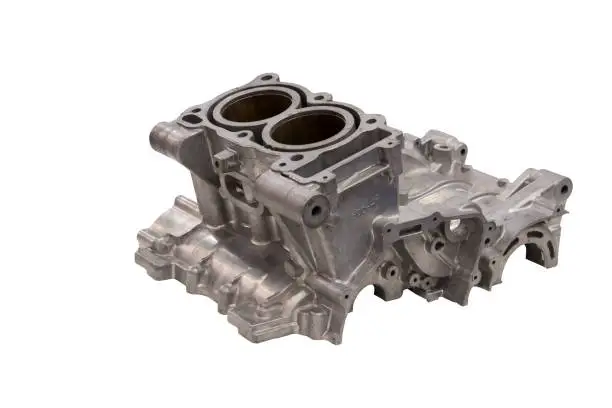
How to Choose a Low Pressure Casting Supplier
Certification and Quality System Assessment
The first step in choosing a supplier is to check their quality management system certifications. While ISO 9001 is the base, automotive suppliers must also have IATF 16949 certification, which shows that they follow quality procedures that are special to the car industry. For materials testing and non-destructive evaluation in aerospace uses, you need both AS9100 approval and NADCAP accreditation. Instead of quality approaches based on inspections, these certificates show a mindset of systematic low pressure casting process control and ongoing growth.
Check to see what the provider can do for testing and measuring. In-house spectrometers make sure that the makeup of each heat is checked. Tensile testing tools, hardness testers, and metallographic labs make it possible to validate processes and keep an eye on quality all the time. When applications need quality with no defects, X-ray or computed tomography tools can do a full internal check. Suppliers who don't have these skills have to rely on third-party testing, which can add to lead times and hide process problems.
Request proof that statistical process control is being used. Control charts that show important factors like metal temperature, pressure curves, and cycle times show that the process is stable and understood. Capability studies (Cpk values) for key dimensions show if industrial processes regularly meet requirements with some room for error. Suppliers who make their SPC data public during the quote process show that they are confident in the development of their process control.
Production Capacity and Technical Capabilities
Compare the equipment's ability to the amount of space you need. If a seller has five low pressure machines, they can handle sudden increases in demand and provide extra capacity while machines are being serviced. Knowing how much capacity a shop is currently using helps predict how stable lead times will be. Shops that are running at more than 85% capacity find it hard to handle urgent requests or volume increases. Ask how the production schedule is made and how long it usually takes from placing an order to receiving the first item.
Check out how well the company can create and make tools, including low pressure casting. With in-house tool rooms, changes can be made quickly during the start of production and in reaction to changes in engineering. When suppliers outsource tool making, communication can be slowed down and quality gaps may appear between die design and knowledge of the casting process. Ask about the use of computer software—mold filling and solidification modeling can predict flaws before the steel is cut, which cuts down on launch times and prototype changes.
Look over the methods for melting and moving materials. Automated metal handling from receiving the ingot to melting it down reduces the chance of contamination. The capacity of the furnace needs to meet the volume of output. If the holding capacity isn't enough, melting has to be done in batches, which causes temperature changes. Systems for degassing and filtering make sure the quality of the melt. Suppliers who treat the quality of the metal as a controlled process input instead of just taking whatever comes in show that the process is sophisticated, which is linked to reliable quality output.
Prototyping and Production Launch Support
Ask for details about the different sample tooling choices. Soft tooling made from aluminum or epoxy glue is a cheaper way to test designs that need to be changed. It's easier to plan development budgets when you know the changes in cost and wait time between trial and production tooling. Suppliers that offer stepwise tooling approaches—first runs with prototypes, then improvements to production tools based on what was learned—lower the total risk of the program.
Check out how well the provider helps with engineering during design optimization. During the design review process, experienced casting engineers look for problems that might make the product impossible to make. They then suggest changes to the wall thickness or draft angle that improve quality and lower costs. This way of working together during the quote and planning stages keeps expensive tool changes from being found after production has begun. Ask for examples of how they helped with design optimization in past projects.
Automotive-qualified providers are different from general casting shops because they understand the PPAP method. A lot of paperwork needs to be filled out for the production part approval process. This includes measurement reports, material licenses, process FMEAs, control plans, and capability studies. When suppliers know what PPAP needs are, they make sure that the right resources are used during the launch steps. This keeps things on schedule when the customer approval gates come up. Their experience makes it easier to meet the paperwork needs.
Conclusion
Manufacturers of cars, planes, industrial gear, and electrical equipment need low pressure casting to make sure that the metal stays solid, the dimensions stay the same, and the process is cost-effective. The controlled counter-gravity filling process gets material returns above 90% and minimizes flaws, making it perfect for safety-critical and pressure-tight parts. By learning about the basics of the process, the benefits of different suppliers, and how to choose the best one, procurement teams can safely request this technology, which improves both product performance and the total cost of ownership over the lifecycle of a component.
FAQ
1. What minimum order quantities do low-pressure casting suppliers typically require?
Minimum order amounts depend on how complicated the part is and how much the tools cost. Investing in permanent mold tooling usually pays off when the yearly number is more than 5,000 to 10,000 parts. Some suppliers offer shared tooling programs for smaller amounts or trial tooling, which makes it easier for new customers to join. When you're getting a quote, being honest about your number expectations lets suppliers suggest cost-effective ways to meet your production schedule and budget.
2. Can low-pressure casting accommodate tight tolerances without secondary machining?
With this method, limits of ±0.3mm are met for many features as they are made, meeting ISO 8062 CT6–CT7 standards. Important matching surfaces and threaded holes still need to be machined, but a lot of the cast shape meets the needs of the function without any extra work. Dimensional ability relies on the shape of the part, the material used, and how the tools are made. Through collaborative design reviews with casting engineers, you can find out which features meet the standards as-cast and which ones need to be machined to fit.
3. How does lead time compare to other casting methods?
For production molds, the wait time for tooling is between 8 and 12 weeks, which is about the same as other fixed mold processes but longer than sand casting. Between gravity casting and high-pressure die casting, production cycle times of 3 to 8 minutes are in the middle. Overall program timelines rely on how complicated the design is, how many prototypes are needed, and how much PPAP paperwork is needed. When they quote, experienced suppliers give you realistic schedules that take into account the steps of making the tool, sampling, and approval that are specific to your business.
Partner with Fudebao Technology for Your Low Pressure Casting Requirements
Zhejiang Fudebao Technology uses modern low pressure casting and CNC cutting to make precise parts out of aluminum and copper alloys. Our building has special low pressure casting machines, high-speed machining centers, and CNC lathes all in one place. This lets us do "melting-to-finished-part" production all in one place. This vertical integration makes sure that measurements are accurate to within 0.05 mm, and it keeps the material traceability and process documentation that customers in the automobile, aircraft, and industrial equipment industries need.
Contact us at hank.shen@fdbcasting.com to discuss your project requirements. We give you thorough technical assessments, cheap quotes, and samples to show that we can be your strategic casting partner. Visit fdbcasting.com to see all of what we can do and learn how precision low pressure casting technology can help you with your toughest part needs.
References
1 .Campbell, J. (2015). Complete Casting Handbook: Metal Casting Processes, Metallurgy, Techniques and Design. Butterworth-Heinemann Publishing.
2. American Foundry Society. (2018). Metalcasting Process Technology: Low Pressure and Vacuum Casting Methods. AFS Technical Publications.
3. ASM International Handbook Committee. (2017). ASM Handbook Volume 15: Casting - Processes and Equipment. ASM International Materials Park.
4. Davies, G.J. (2012). Solidification and Casting of Metals: Principles and Industrial Applications. Applied Science Publishers.
5. Kaufman, J.G. & Rooy, E.L. (2016). Aluminum Alloy Castings: Properties, Processes, and Applications. ASM International Technical Books.
6. Society of Automotive Engineers. (2019). SAE Technical Paper Series: Advances in Automotive Light Metal Casting Technologies. SAE International Standards Group.



YOU MAY LIKE
_1756352400994.webp "chassis enclosure")
_1756348780785.webp "porting turbo compressor housing")
_1756346421748.webp "Aluminum casting telescopic bracket Parts")
_1756344684491.webp "Explosion-proof lamp housing aluminum casting")