How Does Sand Casting Work?
2026-04-30
Sand casting is a way to shape metal by using bound sand mixes, usually green sand with clay or chemically-bonded resin sand, to make moulds that can be thrown away after the metal has been poured into them. This manufacturing method is used for more than 60% of all metal casts in the world. It is the most flexible way to make parts that weigh anywhere from a few ounces to over 100 tonnes. Die casting needs expensive permanent moulds, but sand casting doesn't have to. It also doesn't have to have such high start-up costs for low to medium volume production, and it can use high-melting-point metals like steel, iron, and titanium that permanent moulds can't.
Understanding Sand Casting Process: From Basics to Materials
Sand casting has changed over time from an old method used in metalworking to a complex way to make things that is used in many modern industries. The first step is making the pattern. The next steps are making the mould, pouring the metal, and finishing. At each step, careful control is needed to get solid results.
The Step-by-Step Sand Casting Workflow
Preparing the pattern is the first step in the whole process. To account for metal shrinking when it cools, a copy of the part that is wanted is made that is a little bigger than the original. This copy is generally made of wood, metal, or polymer. This pattern has draft angles that are usually between 1 and 3 degrees. This lets the mould hole be removed smoothly from the packed sand without hurting it.
In order to make the mould, carefully prepared sand is packed around the pattern inside a two-part flask. The bottom half, called the drag, is filled and pressed down by hand or a machine. Next, the top half, called the cope, is put in place and filled in the same way. Green sand moulds use clay binders that are triggered by water, while resin sand systems use furan or phenolic chemicals that cure at room temperature and give complex shapes better dimensional stability.
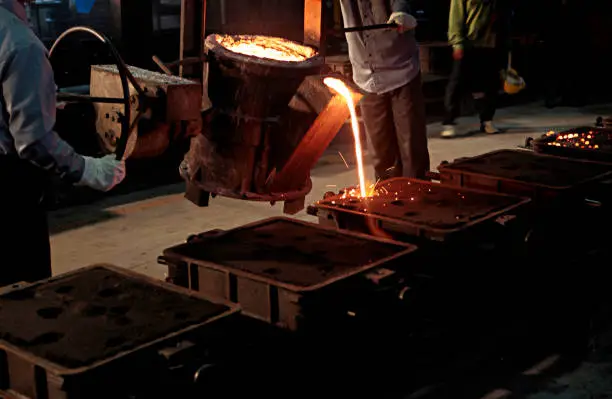
Depending on the metal and the amount needed, melting can happen in induction furnaces, cupolas, or crucibles. Cast iron needs temperatures above 1,400°C in order to melt, while aluminum alloys usually melt between 660°C and 750°C. Degassing agents get rid of the hydrogen that is dissolved in the powder, which would otherwise cause flaws in the final casting called porosity.
To pour, you need to carefully control the flow rate and temperature. The mould is filled through a locking system that is meant to keep air from getting stuck and turbulence to a minimum. The sprue, which is a vertical channel, is linked to runners, which are horizontal channels, that move molten metal to different spaces or parts of a single big casting. Risers are like containers that hold liquid metal to make up for the volume loss that happens as the casting hardens.
The time it takes to cool in sand casting depends a lot on the thickness of the part and the properties of the metal. Thick-walled aluminum housings can harden in minutes, but big steel gearbox cases need hours. When the casting is taken out of the sand too soon, which is called shakeout, it risks hot tearing because internal stresses form in metal that has only partly hardened.
Finishing steps include cutting or grinding off the gate system, shot blasting to get rid of any stuck-on sand, and heat treating as needed to get the right mechanical qualities. The next step is CNC machining for important areas that need tight tolerances that are beyond the powers of the as-cast method.
Primary Materials: Metals and Sand Types
Most heavy-duty uses are for ferrous metals. Machine bases and brake parts made of grey cast iron don't vibrate as much as other metals. Ductile iron is better for making car suspension parts and valve bodies for oil and gas equipment because it is stronger and can take more pressure. For tough structural uses where weld consistency and tensile strength are very important, steel castings are the best choice.
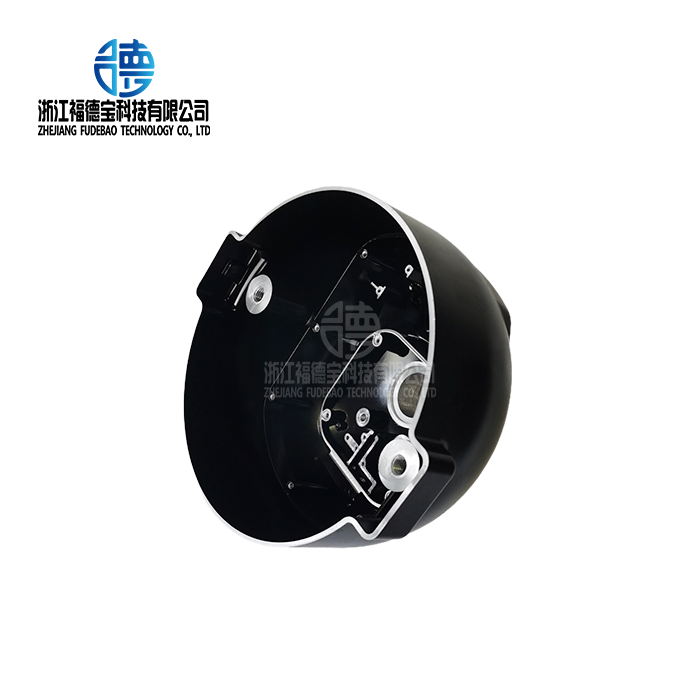
Different performance needs are met by non-ferrous metals. Aluminum-silicon alloys are great for electrical covers and transmission housings because they are low in density and easy to work with. Copper-based bronzes are better at protecting pump impellers and bearing parts from wear in naval settings.
The choice of sand has a big effect on the beauty of the casting. Silica sand is still the cheapest option for making iron because it doesn't melt at temperatures above 1,600°C. Chromite and zircon sands are better for steel casts that need more mould contact time because they are more refractory. When malleable iron is made, synthetic olivine sand cuts down on problems caused by heat expansion.
Binder systems decide how strong and easily collapsed a mould is. Green sand's bentonite clay offers enough bonding for large-scale car production while still being reusable—if it is kept in good condition, green sand can be recycled dozens of times. Even though they cost more, furan resin systems make it possible to make moulds with greater features and more accurate measurements for complex parts of industrial machinery. Phenolic urethane cold-box systems make it possible to make electrical housings and aircraft braces quickly and with great surface finishes.
Knowing how these materials work with each other helps procurement teams choose the right mixtures for their needs. A company that buys aluminum motor housings for cars would benefit from resin-bonded moulds made of fine silica sand, but a company that makes heavy equipment with big steel frames might choose cheaper green sand with bigger grains.
Comparing Sand Casting with Other Casting Methods: Making the Right Choice
To choose the best casting method, you have to weigh a lot of things, like the number of parts you need to make, how complicated the parts are, how accurate the measurements are, how smooth the surface is, how well the materials work together, and your budget. Each method has its own benefits that make it better for certain types of making.
Cost-Efficiency and Tooling Investment
For complicated car parts, die casting often requires an upfront investment of tens of thousands of dollars in precision steel dies. This cost is spread out well over production runs of more than 10,000 units, but it's too high for smaller amounts. Patterns for sand casting are much cheaper than die casting tools—sometimes only a tenth as much. This means that runs of 50 to 500 pieces can be made cheaply.
Production Speed and Volume Scalability
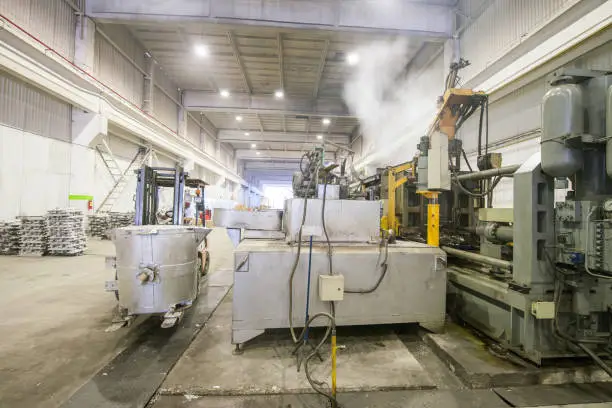
Every 60 to 90 seconds, automated die casting machines make thousands of zinc or aluminum parts every day for electronics and car trim. Sand casting moves more slowly. A few moulds can be made by hand every hour, or dozens of moulds can be made every hour in mechanized foundries that serve companies that make industrial equipment. This difference doesn't mean as much when the total number stays below 5,000 units per year or when the part size is bigger than what the die casting machine can handle.
Precision and Surface Finish Considerations
Most of the time, sand casting gets ISO 8062 accuracy grades CT10 to CT13, and the surface roughness is between 6.3 and 12.5 Ra (microns). Die casting can achieve tolerances of CT7 to CT9 and can make surfaces as smooth as 1.6 Ra, so secondary cutting is often not needed for features that aren't very important. Investment casting is very accurate, within a range of CT6 to CT8. This makes it especially useful for medical device housings and dental equipment that needs to be biocompatible and have little to no cutting that could contaminate the surface.
Procurement workers need to decide if the standards that come with as-cast parts are good enough or if the costs of machining will cancel out the initial process savings. Even though CNC work is needed after sand casting, the freedom of a pump housing with multiple mounting bosses and internal fluid channels might be worth it. On the other hand, die casting's consistent dimensions and smooth splitting lines are good for an electrical connection body with complex snap features.
When you match the method's powers to the needs of the application, the choice framework becomes obvious. Automotive gearbox cases that weigh 30 kilograms and have complicated cooling ducts inside them use the ability of sand casting to include complex sand cores. For lower unit costs, smaller bracket systems with simple geometries and yearly numbers of more than 20,000 units move towards die casting. Because fixed moulds can't handle the high melting point and reaction of duplex steel alloys, sand casting is the only way to make valve bodies for the energy sector that don't rust.
Troubleshooting Common Issues in Sand Casting
Quality problems in foundries happen when sand qualities, heat dynamics, and metallurgical factors all interact with each other. By noticing patterns of defects, you can make changes to the process that keep the castings solid and lower the amount of scrap that is produced.
Gas Porosity and Shrinkage Defects
Porosity shows up as empty spaces inside the material that can be seen with an X-ray or uncovered during cutting. Gas porosity happens when hydrogen is absorbed when the metal melts or when moisture in the mould creates steam that gets stuck in the metal as it hardens. Some solutions are to degas aluminum with argon or nitrogen lancing, keep the moisture level of the green sand between 3% and 5%, and make sure that mould can get out through permeable sand or carefully placed vent pathways.
Different things can cause shrinkage porosity to look different. When melted metal cools and hardens, it shrinks in size. Aluminum alloys shrink by about 6% to 7%, while steel shrinks by about 3%. Voids form when separate areas of liquid freeze without being able to access metal from risers that feeds them. This flaw can be avoided by designing the raise correctly based on the serving distance. Modulus estimates, which use volume-to-surface-area ratios, help engineers make sure that risers solidify last. This keeps the pressure high enough to push liquid metal into parts that are shrinking.
Surface Defects and Dimensional Issues
When mould erosion happens during pouring, sand inclusions show up as rough spots or pieces buried in the casting surfaces. High-speed metal flow cuts into the mould hole, freeing sand grains that are stuck inside. Some solutions for sand casting are improving the design of the gating system to lower noise, making changes to the resin to make the sand bond stronger, or using refractory coats that separate the metal from the base sand.
When two metal lines meet but don't join, a cold shut happens, leaving a seam or weak plane that can be seen. This happens when the temperature of the metal falls below the melting point of the combination before it fills the mould all the way. Most cold shut problems can be fixed by raising the pouring temperature within the limits of the metal, making the cross-sections of the runners bigger to speed up filling, or moving the gates to get rid of long flow paths.
Warping happens when temperature differences cause different parts of a material to contract unevenly. Thin parts quickly solidify while thick parts stay liquid, causing forces that change the shape of the geometry. Controlled cooling on thin sections using insulation materials or chills (metal blocks) that speed up the solidification of thick sections keeps thermal profiles in balance. After that, a stress-relieving heat treatment can fix small distortions in important situations like aircraft structural braces.
The cast iron engine housings of a heavy equipment maker we worked with kept getting holes in them. An investigation showed that the recovered green sand had too much water in it and that the dome wasn't degassing properly. We set up lance degassing stations and automatic moisture tracking with real-time adjustments. Within three production runs, we cut the number of porosity defects from 12% to less than 2%.
Procurement Insights: Buying Sand Casting Supplies and Choosing Suppliers
Setting up reliable supply chains for foundry materials and finding skilled casting partners have a direct effect on the consistency of output and the cost structures. To build strong manufacturing partnerships, procurement workers need to look at both technical specs and business factors.
Quality Criteria for Sand and Binders
Surface finish and porosity are affected by how tiny the sand grains are. According to the American Foundry Society (AFS), grain fineness numbers between 50 and 70 are good for most uses. Finer grains make surfaces smoother, but they also make it harder for gases to pass through, which can lead to cavities. Mesh distribution analysis makes sure that the packing density stays the same across production runs so that the dimensions stay stable.
For the best sealing, the amount of clay in green sand systems needs to be kept between 8% and 12%. Too little clay weakens the mould and leads to weathering problems. Too much clay, on the other hand, makes it harder for water to pass through and raises the moisture needs. Before the material is used on a large scale, it is tested in the lab for its shear strength and compression strength (usually 80 to 120 kPa for cope sand and 100 to 150 kPa for drag sand).
The choice of resin binder depends on the needs of the company and the rules about the surroundings. Furan systems are very strong and don't react badly to humidity, but they give off formaldehyde when they cure. Phenolic urethane cold-box binders make production go faster while putting out less pollution. Inorganic binders that use sodium silicate activated by CO2 gas are better for the environment, but they have a little less design fine precision.
Evaluating Foundry Suppliers
Certification methods show that a process is mature, such as sand casting. ISO 9001 quality management means having written processes and ways to keep improving. IATF 16949 approval means that there are rules for the car industry, such as the ability to do the Production Part Approval Process (PPAP). This is very important for tier-1 suppliers who need to validate dimensions, get material certifications, and do process capability studies. Through batch tracking and advanced inspection procedures, AS9100 approval meets the traceability needs of the aerospace industry.
Evaluation of production ability is more than just looking at the big numbers for tonnes. Visit foundries to see how moulds are made, how heating equipment is maintained, and how dimensions can be checked. Automated moulding lines show how much can be made and how well it can be done again and again, while trained hand-molding teams show that they can make prototypes or small amounts of special work. Metallurgical labs with spectrometers and mechanical testing tools show that they are dedicated to checking the properties of materials.
Supply chain problems can be avoided by being clear about lead times. Pattern-making usually takes between two and six weeks, based on how complicated it is. Production casting runs can last anywhere from one week for easy parts to several weeks for big, complicated systems that need a lot of core work. Set up clear rules for communication, such as how to report success and speed up processes for urgent needs.
Balancing getting from within and outside of the country requires making trade-offs. For prototyping and small batches, local foundries make it easy to communicate, cut down on wait times, and handle transportation. International providers, especially those from well-known production regions, may be able to offer lower prices for bigger orders while still meeting quality standards by following the right inspection and specification procedures.
When negotiating large orders, it helps to know how manufacturing economics work. Costs of materials, energy use, and labor are the biggest factors that can change. Suppliers can make the most of their inventory and staffing by signing multi-year deals with volume promises. This keeps prices stable. Include ways for engineers to help with design-for-manufacturability reviews and process optimization projects that lower the overall cost of the program by more than just piece price.
Conclusion
Sand casting remains an indispensable manufacturing process for B2B applications requiring design flexibility, material versatility, and economic viability across varied production volumes. Understanding the technical nuances—from sand preparation and metal flow dynamics to defect prevention and supplier qualification—empowers procurement and engineering teams to make informed decisions that optimize cost, quality, and delivery performance. As foundry technologies advance through simulation software, automated handling systems, and sustainable practices, the process continues evolving to meet demanding requirements in automotive, industrial machinery, energy, and aerospace sectors. Strategic partnerships with qualified suppliers who demonstrate technical capability, quality systems, and continuous improvement commitment form the foundation for successful casting programs.
FAQ
1. What metals work best for sand casting applications?
Heavy-duty tasks that need power and resistance to wear can be done with ferrous metals like grey iron, ductile iron, and carbon steel. Aluminum silicon alloys and other non-ferrous metals are great for making lightweight parts for cars and electronics, while copper bronzes work great in places where corrosion is a problem, like marine pump housings.
2. How long does the sand casting process typically take?
Depending on how complicated the pattern is, it takes two to six weeks to make. Casting processes range from hours for small orders to several weeks for big orders that need a lot of core work. Just the time it takes to cool can be minutes for thin aluminum parts or hours for huge steel parts.
3. Can sand casting scale to high-volume production?
With automated moulding lines that can make dozens of moulds an hour, sand casting can be used for tens of thousands of items each year. The process is most cost-effective when the number of pieces made is less than 10,000. This is because die casting tools are too expensive for larger orders, but it can still compete at higher levels for big or complicated shapes.
Partner with Fudebao Technology for Precision Sand Casting Solutions
Fudebao Technology is an expert in castings made of aluminum alloy, copper alloy, and stainless steel. They also offer precision cutting services that meet the high standards needed for aerospace, automobile, and industrial equipment. Our building has high-speed machining centers, CNC lathes, low-pressure casting machines, and die casting tools that cover the whole process, from melting the metal to treating the surface. This wide range of skills lets us give the whole thing in one go, from the blank to the finished part, with errors of up to ±0.05mm. This is very important for making precise parts for cars and medical equipment housings. As a company that makes sand castings for foreign names like American HAAS automation machine tools and ESS energy storage systems, we can handle even the most difficult projects with ease. Send an email to hank.shen@fdbcasting.com to talk to our engineering team about your unique needs and get thorough technical ideas backed by PPAP documentation and material certifications.
References
1. Brown, J.R. (2019). Foseco Ferrous Foundryman's Handbook (11th Edition). Butterworth-Heinemann.
2. American Foundry Society. (2021). Casting Quality Handbook: Metal Casting Processes and Guidelines. AFS Publications.
3. Campbell, J. (2015). Complete Casting Handbook: Metal Casting Processes, Metallurgy, Techniques and Design (2nd Edition). Butterworth-Heinemann.
4. ASM International Handbook Committee. (2018). ASM Handbook Volume 15: Casting. ASM International.
5. Beeley, P.R. & Smart, R.F. (2017). Investment Casting: Competitive Casting for Precision Products. Institute of Materials, Minerals and Mining.
6. Heine, R.W., Loper, C.R., & Rosenthal, P.C. (2020). Principles of Metal Casting (3rd Edition). McGraw-Hill Education.



YOU MAY LIKE
_1756346371362.webp "separator housing")
_1756350046757.webp "Heat sink aluminum casting")
_1756349696500.webp "Pulley aluminum casting")
_1756348300182.webp "Aluminum die-cast housing")
_1756344684491.webp "Explosion-proof lamp housing aluminum casting")