
How Does Die Casting Improve Aviation Components?
2026-07-24
Die casting for aviation transforms how aerospace components are manufactured by injecting molten aluminum or magnesium alloys into precision steel molds under extremely high pressure—often exceeding 10,000 psi. This process delivers remarkable dimensional accuracy, typically within ±0.002 inches, while producing lightweight structural parts that meet stringent safety requirements. Aviation manufacturers rely on this method to create housings, brackets, and complex structural elements that reduce aircraft weight by up to 40% compared to traditional steel equivalents, directly improving fuel efficiency and payload capacity.
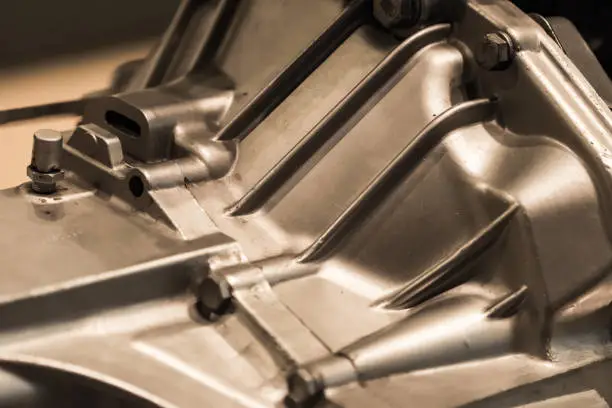
Understanding Die Casting in Aviation: Process, Materials, and Benefits
The Fundamentals of High-Pressure Die Casting for Aerospace
High-pressure die casting works by pushing liquid metal into moulds that have been carefully designed at speeds of up to 100 feet per second. The fast filling and cooling cycle—which is usually over in 30 to 90 seconds—makes thick, nearly net-shaped parts with few holes. For aviation uses, this level of accuracy is necessary because every gram counts when figuring out speed and range.
The first step is to melt aerospace-grade alloys in a controlled furnace. The temperature stays between 1,200°F and 1,400°F, depending on the type of material used. Automated systems check the quality of the melt for impurities that could weaken the structure. Once the metal is as fluid as it can be, it is pushed into the die hole by hydraulic systems that use runners and gates. Water-cooled pathways quickly harden the part.
Materials Engineered for Flight Performance
Most aircraft die casting is done with aluminium alloys, especially for the A356 and A380 models. The tensile strength of A356 is about 36,000 psi when it is as-cast, but it rises to over 48,000 psi after heat treatment, making it a better strength-to-weight metal. This metal has 0.3% magnesium and 7% silicon, which makes it easier to cast and improves its mechanical qualities.
A magnesium metal like AZ91D can save even more weight than aluminium because it has a specific gravity of only 1.81 g/cm³ instead of 2.7 g/cm³. But magnesium is reactive and needs to be handled in a certain way. It is usually used in internal parts or non-critical structural uses. Both materials naturally form protective oxide layers that make them resistant to rust, which is important for aeroplanes that fly in a variety of weather situations.
Copper alloys are sometimes used in electrical connectors and parts of aircraft systems that share heat. These materials have thermal conductivity rates above 200 W/m·K, which means they get rid of heat from power distribution and avionics devices very well. Which material to use depends on how well it needs to perform, how it will be exposed to the environment, how much it costs, and how long it needs to last.
Measurable Advantages in Aviation Manufacturing
When hundreds of thousands of parts are made at once, die casting for aviation keeps the dimensions the same and ensures consistent performance for aerospace components. Statistical process control data from aerospace suppliers shows that capability indices (Cpk values) regularly exceed 1.67, which means that there are almost no defects when the process is properly monitored. This high level of consistency is especially important in die casting for aviation applications, where lightweight structures, tight tolerances, and reliable mechanical properties are required. This uniformity gets rid of the variety that comes with making things by hand-welding or putting them together, while improving production efficiency and repeatability.
Die casting for aviation usually produces a surface finish quality range of 63 to 125 microinches Ra. This lowers the airflow drag on external parts and cuts down on the need for extra finishing steps. Smoother surfaces also cut down on stress points where fatigue cracks could start during the cyclic loading conditions that happen during flight operations. Advanced aerospace manufacturers combine precision mold design, aluminum alloy materials, vacuum die casting technology, and strict inspection processes to improve the quality of die casting for aviation components.
When more than 5,000 units are produced each year, the economic benefits of die casting for aviation become clear. Tooling for complicated dies can cost anywhere from $15,000 to $80,000, but compared to CNC machining cycle times of 20 to 45 minutes per part, this cost is quickly recouped. Die casting for aviation can make the same parts in less than two minutes, which cuts down on labour costs and facility costs by a huge amount. Additional advantages include reduced material waste, automated production capability, improved dimensional accuracy, and reliable quality control, making it an effective manufacturing solution for aerospace brackets, housings, structural components, and other high-performance aviation parts.
Comparing Die Casting to Alternative Aerospace Manufacturing Methods
Material Properties and Mechanical Performance Evaluation
Forging makes parts with better grain structure and tensile strength, which are often 15–20% higher than die casts. Forging uses mechanical work to line up metal pieces along stress lines, which makes them very resistant to wear. Forged parts, on the other hand, need a lot of work to get to their final size, which wastes 40–60% of the raw material as chips.
Investment casting can make complex shapes that can't be made with die casting because it can handle undercuts and internal pathways without the need for cores. When making small amounts of specialised parts, this method works well. However, it takes longer—often 5 to 10 days from design to finished casting—and there is more difference in the sizes of the parts, so they need to be machined with more precision.
When prototyping and making changes to the design, machined parts made from billet stock give you the most options. CNC machining can make any shape possible, with the only limit being the access of the tools. This makes it perfect for custom applications. This method is not cost-effective for making large quantities of flight parts because it wastes a lot of material and takes a long time to make. However, it is useful for making die casting tools and fittings.
Production Speed and Cost Analysis
Cycle times for die casting for aviation range from 60 to 180 seconds, based on how complicated the part is, the wall thickness, and the required aerospace specifications. One automatic cell can make 200 to 400 parts per shift with very little help from a human. In modern die casting for aviation production, robotic extraction systems, trim presses, automated material handling equipment, and built-in quality inspection systems allow manufacturing to continue continuously and efficiently while maintaining strict dimensional accuracy and repeatability. Advanced aluminum alloys, precision tooling, vacuum-assisted casting technology, and real-time process monitoring further improve the reliability of die casting for aviation components used in aircraft applications.
It takes two to five days to make one batch of sand casting, which includes making the mould, placing the core, filling, cooling, and shaking out the casting. It works well for making big structural parts that weigh hundreds of pounds, but it doesn't work well for producing the precise brackets, housings, and lightweight components required in current aeroplane assemblies because it requires a lot of manual labour and floor room. Compared with traditional casting methods, die casting for aviation provides better surface finishes, tighter tolerances, faster production rates, and more consistent mechanical properties for high-performance aerospace parts.
When you do a total cost study, you have to include secondary activities. For military and aerospace standards, die casting for aviation parts usually only need minor deburring, surface finishing, and drilling of connection holes, while investment castings usually need extensive machining operations. Fully-loaded costs, which include material, labour, overhead, inspection, and quality assurance, show that die casting for aviation can be 30–50% cheaper when production numbers are higher than 10,000 units per year. Additional benefits such as reduced material waste, automated manufacturing, improved production efficiency, and compliance with aerospace quality requirements make die casting for aviation a cost-effective solution for aircraft brackets, housings, electronic enclosures, and other critical aviation components.
Aluminum Versus Magnesium: Strategic Material Selection
Aluminium die castings have been used for decades in aviation applications and have been shown to be reliable. The material can handle temperatures up to 400°F without losing many of its properties, making it good for parts that will be near engines or in direct sunlight on tarmacs. Using chromate conversion coatings or anodising treatments that meet military standards can make aluminum's natural resistance to corrosion even better.
Magnesium is the best material for reducing weight—a 2.8-pound magnesium bracket can replace an aluminium bracket that weighs 4.1 pounds, saving 1.3 pounds per unit. By spreading this out over 200 brackets in a commercial plane, 260 pounds of weight can be saved, which can mean longer range or more cargo space. But magnesium needs protection coatings to stop galvanic corrosion when it comes into touch with metals that are not the same, and it is less resistant to impact when it is below -40°F.
The selection factors are based on the application setting. External parts, landing gear systems, and structural elements that are put under mechanical stress are made of aluminium. Magnesium is great for internal parts, instrument housings, and other uses where reducing weight as much as possible supports the higher cost of the material, which is usually 40–60% more than aluminium alloys.
Aerospace-Specific Design Guidelines and Quality Standards for Die Casting
Critical Design Practices for Flight Safety
A wall thickness that is the same all the way through, between 0.080 and 0.160 inches, stops different cooling rates that cause internal stresses and holes. Aerospace parts usually have a standard diameter of 0.120 inches, which gives them enough strength and makes sure that the whole die cavity is filled. If the sections are larger than 0.250 inches, the core could become shrinkage porosity if they are not built with ribs or hollow sections that keep the cross-sectional mass constant.
Draft angles between 1.5 and 3 degrees make it easier to eject parts without damaging the surface or changing their shape. To get rid of friction during ejection, surfaces on the outside need at least a 2-degree draft, while spaces inside need at least a 3-degree draft. Not enough draft leads to galling, which is surface tearing that needs expensive die repairs and part rejection.
At all internal corners, the fillet radii should be at least 0.060 inches wide. This will keep stress from building up and help the metal move better while the space is being filled. When you make sharp changes, the liquid metal stream gets turbulent, which traps air that shows up as holes in the formed casting. Generous arcs also increase the life of the die by transferring thermal stress away from corner shapes that are easily damaged by repeated heating and cooling.
AS9100 and NADCAP Certification Requirements
AS9100 certification shows that a supplier's quality control system goes above and beyond ISO 9001 requirements for the aerospace business. This certification requires configuration control procedures that make sure changes made by engineers are carefully considered, approved, and recorded. Traceability rules keep track of every casting, from the heat lot of the raw materials to the final inspection. This makes an audit trail that goes through the whole life of the part.
It is only through NADCAP accreditation that certain processes are approved, such as chemical processing, heat treatment, and non-destructive testing. Suppliers specializing in die casting for aviation must show that they know how to use coordinate measuring machines (CMMs) with a precision of 0.0001 inches for measurement inspection, penetrant inspection, and radiographic examination to find internal porosity as small as 0.001 inches on the surfac
Every shipment comes with a material certification that shows that the chemical composition was analysed, the mechanical properties were tested, and the product meets standards like AMS 4291 for A380 aluminium alloy. These certificates show that the materials are safe and meet engineering standards. They help the Federal Aviation Administration (FAA) and other foreign regulatory bodies with the airworthiness approval process.
Inspection and Traceability Protocols
Dimensional checking happens at several steps of the process. Spectrographic analysis is used to prove the alloy makeup of new material that comes in. First item inspection checks that the die worked properly by measuring all the important measurements and features with gauges that are calibrated and can be traced back to NIST standards. Samples from production lots are inspected according to AQL (Acceptable Quality Level) plans that are right for the level of criticality.
Non-destructive testing finds problems insides parts without breaking them. Under ultraviolet light, fluorescent penetrant analysis shows cracks that break through the surface and holes. X-rays are used in a radiographic study to find holes and spots inside a structure. Ultrasonic testing finds flaws below the surface and measures the thickness of walls. The NDT methods used depend on how important the part is and what the customer wants.
Serialisation makes it possible to track an item's life from the time it was installed until it is serviced. Permanent identification codes that can withstand tough weather conditions can be put on with laser etching or electrolytic marking. Database systems connect serial numbers to records of production, inspection results, and material certifications. This makes it easier to find the root cause of problems that happen in the field years after the product was made.
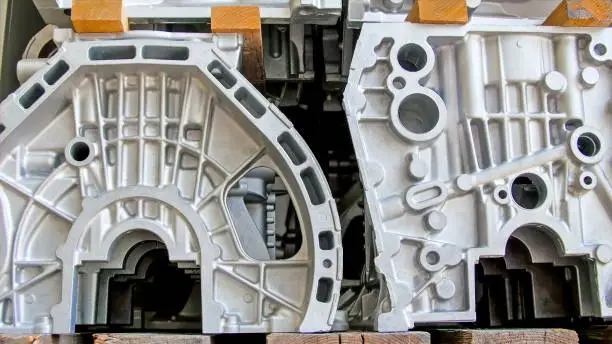
Procuring High-Quality Die Cast Parts for Aviation: Supplier Selection and Services
Essential Evaluation Criteria for Aerospace Suppliers
The first step in qualifying a source is to check their certification. Teams in charge of buying aerospace parts check out possible partners by looking at AS9100 certificates from authorised suppliers and NADCAP approvals that cover the necessary special processes. Site visits check the capabilities of production equipment, like seeing if die casting tools can handle the tonnes of weight and precise injection control needed for flight parts.
The technical skills go beyond simple casting tasks. Leading suppliers have their own tool design teams that use advanced CAE (Computer-Aided Engineering) software to model mould filling, guess where holes will appear, and make gating systems work better. This knowledge keeps production from being held up for months because of a bad die design, which would have been discovered months after the tools were made.
To have good infrastructure, you need measurement tools that are properly measured, environmental controls that keep the temperature and humidity within acceptable ranges, and people who know how to check aircraft systems. Supplier audits look at calibration records to make sure that micrometres, height gauges, and CMMs get regular certification that can be traced back to national standards. Temperature changes can't affect measurement accuracy at the 0.001-inch level needed by aircraft plans because inspection rooms are climate-controlled.
Advantages of Specialized Aerospace Die Casting Partners
Dedicated aircraft foundries know the rules that guide making things for the flight industry. The people who work on quality have certifications from groups like the American Society for Quality (ASQ) and stay up to date on new standards. This knowledge speeds up the approval process when parts are sent in for airworthiness certification, avoiding the delays that happen when sources don't know what the FAA wants.
Customisation options let you make designs that are best for casting. During product development, experienced aircraft suppliers work together to suggest changes that make the product easier to make without affecting its performance. Moving a mounted boss by 0.125 inches could lower the risk of porosity while keeping the assembly working. This is something that can only be learned by making similar parts for years.
By combining activities, value-added services make supply chains run more smoothly. Suppliers who offer combined CNC cutting drill and tap mounting holes with great accuracy, sending parts that are fully finished and ready to be put together. Coordinated surface treatment agreements offer coatings like chromate conversion, anodising, or powder coating that meet aerospace standards without the need to handle multiple vendors separately.
Strategic Procurement Questions for Building Partnerships
Effective conversations with suppliers look into different ways to control the process. People who work in procurement should ask sellers how they keep an eye on important factors like the temperature of the metal, the speed of the injection, and the temperature of the die during production runs. Instead of depending on regular manual checks, real-time statistical process control with sensors and automated data logging shows a dedication to consistency.
Being clear about lead times helps with planning production. Suppliers should give realistic plans that take into account the time it takes to create the tool (4-6 weeks), make the die (10-16 weeks), do samples and get approvals (2-4 weeks), and then start production. When procurement teams know these dates, they can work with engineering teams to make sure that costs don't go up because of unrealistic expectations.
Quality incident reaction methods show how mature the supplier is. Talking about how a provider would handle a nonconformance—for example, high porosity levels in a production lot of die casting for aviation—shows how well they can solve problems. Strong suppliers use tools like the 8D methodology to do systematic root cause analysis. They stop problems from happening again by taking corrective actions instead of just sorting and replacing broken parts.
Case Studies and Real-World Applications Demonstrating Die Casting Advantages
Weight Optimization in Regional Aircraft Applications
A regional aircraft manufacturer changed the design of an aluminium landing gear door assembly that was originally made from sheet metal parts that needed 47 rivets and 12 fasteners to hold them together. An engineering study found that die casting could be used instead, which would combine six different stampings into a single structure. The die-cast version weighed 8.4 pounds, while the assembled version weighed 11.2 pounds. This is a 25% weight loss.
In addition to saving weight, the consolidated design got rid of the 32-minute-per-door assembly work that was needed before. Even though $52,000 was spent on tools for the die casting mould, production costs went down by 18%. Warranty data collected over four years showed that the die-cast doors had no wear failures, while the manufactured doors would sometimes crack at the rivet holes. This shows that the die-cast doors are more durable and cost less.
The A356 aluminium metal that was used in this case had extra benefits because of how it handled heat. The temperature in the landing gear bay changes a lot. It can be -65°F at cruise level and 140°F when the plane is working on the ground in the sun. The uniform structure of the die-cast door's material and the lack of mechanical connections got rid of the problems with differential expansion that sometimes led to binding in multi-piece systems.
Improved Durability in Helicopter Transmission Housings
A helicopter maker that makes 180 planes a year had problems in the field where gearbox housings would crack after 1,200 to 1,500 flight hours. The first housings were made of investment moulds that had tiny holes in them near the fastening bosses, which caused stress to build up in those areas. The study of metals showed that the investment casting method created grain structures that were randomly orientated in relation to stress fields.
The porosity problems were fixed by switching to high-pressure die casting with A380 aluminium alloy. The fast solidification that comes with die casting made the grains smaller and more resistant to wear. Accelerated life testing showed that the die cast housings could last 2,800 hours before they started to crack. This is 87% longer than the investment cast predecessors.
The improvements in performance were matched by gains in production. Because the cycle time for die casting is only 90 seconds, compared to 6 days for investment casts, the maker was able to cut their safety stock from 240 housings to 60 units, which freed up $340,000 in working capital. Die casting's consistent dimensions cut CNC cutting time from 2.3 hours to 1.1 hours per housing by reducing the amount of stock that had to be removed.
Industry Trends Shaping Future Aviation Casting
The main goal of developing aerospace alloys is to make them work at high temperatures. For example, experimental aluminum-cerium alloys stay strong at temperatures 100°F higher than normal compositions. These materials make it possible for die-cast parts to work closer to engines and hot section structures, which means they can be used in more situations than before.
Automation integration changes the way die casting is done by using robotic cells to coordinate the removal, cutting, and checking of parts without having to do them by hand. Vision systems check all parts for surface flaws by comparing digital pictures to master standards. These pictures have enough detail to find flaws smaller than 0.020 inches. This automation makes things more consistent and helps with the shortage of workers in precision manufacturing.
Industrial Internet of Things (IoT) devices built into die casting machines are used for digital quality assurance. These sensors check hundreds of parameters every turn. This data is looked at by machine learning algorithms, which can tell when process drift could lead to faulty parts and make changes to stop that from happening before it does. When aerospace providers use these technologies, they report 40% lower rates of scrap and higher process capability scores.
Conclusion
Die casting for aviation is a highly effective manufacturing method for producing aircraft components because it offers excellent dimensional accuracy, repeatability, and cost efficiency compared with traditional production methods. By combining lightweight aluminum alloys, advanced mold design, precision control within ±0.002 inches, and rapid production cycles, die casting for aviation helps aerospace manufacturers achieve the industry's increasing demands for weight reduction, improved performance, and lower manufacturing costs. High-quality die casting for aviation components must be produced by qualified suppliers with aerospace certifications, strict quality management systems, advanced casting equipment, and proven experience in aircraft applications. Modern processes include vacuum die casting, automated robotic systems, CNC machining, CMM inspection, and non-destructive testing to ensure superior strength, reliability, and consistency. As material technology continues to advance and manufacturing processes become more automated, die casting for aviation will continue to play an important role in developing next-generation aircraft structures, engine components, electronic housings, and other critical aerospace parts.
FAQ
Which Alloys Perform Best in Aerospace Die Casting Applications?
The aircraft industry uses A356 aluminium alloy because it is easy to make, strong after T6 heat treatment (yield strength 24,000 psi, tensile strength 48,000 psi), and doesn't rust. The A380 is good at die-filling in complex shapes and can be used in situations where castability is more important than final strength. Magnesium metals like AZ91D are used when reducing weight as much as possible is worth the extra cost and need for a protected coating. The choice of material is based on mechanical loads, temperature ranges, weather exposure, and how the material will work with other parts.
How Does Die Casting Meet Stringent Aerospace Quality Standards?
Aerospace quality is reached through process controls that check important parameters in real time, thorough inspection protocols that include measuring and non-destructive testing, and strict supplier certification standards such as AS9100 and NADCAP. Material certifications keep track of the chemistry and properties of each production lot, which makes it possible to fully trace the materials. Before production starts, the performance of the tool is checked with a first item review. Statistical process control is then used to keep things consistent during production runs.
What Production Lead Times Should Procurement Teams Expect?
It usually takes 16 to 24 weeks for new tooling programs to go from design approval to sample delivery. This includes 4-6 weeks for optimising the tool design, 10 to 16 weeks for making the die and fixing bugs, and 2 to 4 weeks for sampling and approval rounds. Orders for repeat production using existing tools ship within 4 to 8 weeks, depending on the quantity and other tasks that need to be done. Through expediting fees, rush programs can cut down on time by 20 to 30 percent, but better quality and cost results come from planning ahead.
Partner with Fudebao Technology for Certified Aerospace Die Casting Solutions
By always focusing on quality and accuracy, Zhejiang Fudebao Technology has become known as a leading aluminium casting business. We have high-speed machining centers, CNC lathes, low-pressure casting machines, and advanced die casting tools at our plant. These machines help with the whole production process, from melting the metal to treating the surface. We keep our accuracy at ±0.05mm, which meets the demanding needs of aerospace parts, automobile precise parts, and medical equipment housings. Our thorough process control and quality systems that are in line with AS9100 make sure that every part meets your needs and can be tracked back to its source.
Certification and skill are important things to look for in a die casting for aviation provider. During design optimisation, our engineering team works together, drawing on decades of knowledge to improve castability while keeping speed high. We offer complete solutions, from casts that are just blanks to parts that are fully finished. We coordinate machining and surface processes to make your supply chain easier. Email Hank Shen at hank.shen@fdbcasting.com to talk about how our experience with aerospace die casting can help your parts work better and make the manufacturing process more efficient.
References
1. Campbell, J. (2015). Complete Casting Handbook: Metal Casting Processes, Metallurgy, Techniques and Design. Butterworth-Heinemann, Oxford, UK.
2. Kaufman, J.G. and Rooy, E.L. (2004). Aluminum Alloy Castings: Properties, Processes, and Applications. ASM International, Materials Park, Ohio.
3. SAE International (2016). Aerospace Material Specification AMS 4291: Aluminum Alloy, Die Castings, 7.5Si-0.3Mg (A380.0-F). SAE International, Warrendale, Pennsylvania.
4. North American Die Casting Association (2019). Product Specification Standards for Die Castings Produced by the Semi-Solid and Squeeze Casting Processes. NADCA, Arlington Heights, Illinois.
5. Federal Aviation Administration (2020). Advisory Circular AC 20-135: Powerplant Installation and Propulsion System Component Fire Protection Test Methods, Standards, and Criteria. U.S. Department of Transportation, Washington, D.C.
6. Viswanathan, S., Apelian, D., et al. (2015). "Perspectives on the Die Casting Process from an Academic Viewpoint." Die Casting Engineer Magazine, North American Die Casting Association, Vol. 59, No. 1, pp. 16-28.



YOU MAY LIKE