How Does CNC Machining Work?
2026-05-09
CNC machining is a type of computer-controlled subtractive manufacturing. To remove material from a solid workpiece, machine tools are moved precisely by pre-programmed software. The system understands digital CAD drawings, turns them into G-code directions, and then automatically cuts things out. This gets rid of the variation caused by people and lets complicated shapes and tight tolerances of ±0.005mm be made. During the cycle, the computer controls multiple axes of movement, tool changes, and feed rates. This way, raw blocks of aluminium, copper alloys, or stainless steel are automatically turned into finished parts.
Understanding CNC Machining: Definition and Core Principles
In its most basic form, CNC machining is a complex interaction between computer design and physical output. The process starts when engineering teams make three-dimensional CAD models that show the exact sizes, specs, and surface finish needs of the parts. The computer-aided manufacturing (CAM) programme then looks at these plans and makes numerical control code, or G-code, that tells the cutting tool exactly how to move along the paths that have been set.
How the Control System Coordinates Operations
The centre intelligence hub is the control unit, which takes digital orders and turns them into mechanical movements. When these orders are sent, servo motors move the workpiece or cutting tool in multiple directions at the same time, with accuracy measured in microseconds. Modern multi-axis systems can make complex cuts at right angles and curves in a single setup, which cuts production time by a huge amount compared to old-fashioned methods of moving.
Material Removal Mechanics and Tooling Selection
Cutting tools that rotate, like tungsten end mills, drill bits, or turning inserts, touch the object at set speeds and feed rates during CNC machining. What kind of tools to use depends on how hard the material is, what kind of surface quality you want, and how complicated the geometry is. Because they are soft, aluminium alloys can be machined at higher speeds. On the other hand, superalloys like Inconel need special coats and slower cutting speeds to keep the heat from building up. We've seen that choosing the right tools has a direct effect on both the accuracy of the measurements and the speed of production for electrical casings, industrial pump housings, and automobile brackets.
Reproducibility and Quality Assurance Integration
One important benefit is that the process can be repeated. Once the writing is checked, the same G-code file can be used to make the same parts for both a single sample and a run of 5,000 units. Integrated quality tracking systems check the sizes of parts while they are being machined and compare the real-time data to tolerance standards. This closed-loop input lets changes be made right away, making sure that every part meets the PPAP documentation standards that tier-1 car suppliers need.
Evolution of Machining: From Manual to CNC
To do traditional manual machining, skilled workers used handwheels and handles to control lathes and milling machines by hand. This way of doing things worked for decades in industry, but it had some problems. Dimensional differences between production runs were caused by tired workers, and complicated shapes needed a lot of time to set up using special jigs and fittings. As workers carefully measured and changed each cut, lead times grew. This made it economically impossible to scale up production for precision parts.
Automation's Impact on Precision and Throughput
When numerical control technology came along, it completely changed these limitations. With automated tool placement in CNC machining, the errors that come with doing things by hand were gone, and the accuracy was kept to within microns instead of hundredths of a millimetre. As machines worked constantly across shifts without losing performance, production speeds went up by a lot. This change in technology was especially helpful for aircraft parts that had to be made with the same tolerances across hundreds of turbine blade shapes.
Comparative Analysis: CNC Versus Alternative Manufacturing Methods
The main difference between CNC machining and additive production (3D printing) is how well the structures are held together. Printed parts have layer lines and holes that make them less load-bearing, but made parts keep all the mechanical qualities of solid metal stock. Injection moulding is good for making a lot of things quickly, but it costs a lot to buy the tools up front and doesn't allow for design changes. CNC machining is in the middle, allowing for both prototype development and medium-volume output without having to buy moulds.
When making lightweight gearbox housings, we've helped car engineers switch from casting to machined solutions. Development times were cut by several months because real-world mechanical qualities could be tested during experimental stages before forging dies were made. In the same way, medical device makers who used our precision skills got FDA-compliant surface finishes right off the machine, without having to do any extra cleaning.
Types of CNC Machining Machines and Their Applications
Milling Centers and Their Geometric Capabilities
Milling machines have multi-point cutting tools that rotate and move across fixed workpieces. This makes them great for making flat surfaces, pockets, holes, and complex shapes. Most general machining jobs can be done with three-axis mills. Five-axis mills can move around two extra directions and rotate. This extra feature lets you make undercuts and compound angles without having to move the tool by hand, which is very important for aircraft structural brackets and industrial valve bodies that need to access more than one face.
Turning Operations for Cylindrical Components
AIn fixed cutting tool CNC machining, the tool removes material while a turning centre spins the workpiece. This makes cylindrical shapes like shafts, pins, and threaded connections. Live tooling choices make things more useful by letting you do milling processes in the same CNC machining setup. This cuts down on handling time and makes the work more consistent. When we make precision motor shafts for green energy uses, where runout tolerances below 0.02mm are needed to make sure the rotor is balanced, we use our advanced turning capabilities in CNC machining.
Specialized Equipment for Niche Requirements
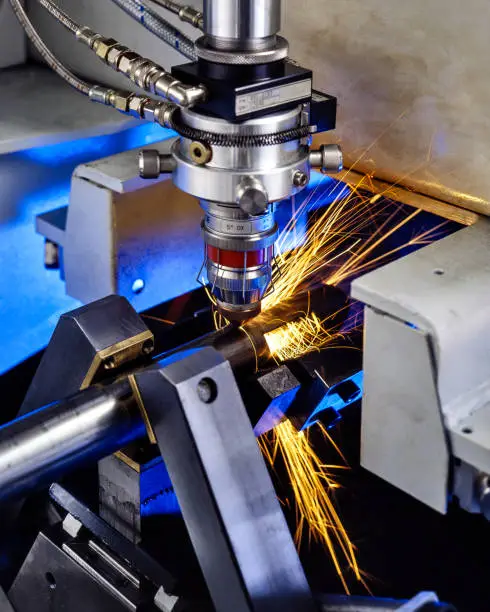
Electrical discharge machining (EDM) is a great way to make mould inserts with detailed cavity features because it uses controlled electrical sparks to wear away at hard metals. Laser cutting systems can remove material from thin-walled electrical housings without touching them. This is useful when mechanical forces could bend the housings. Router machines are good for working with softer materials and bigger projects, but industrial machining centres are better for cutting metal. The selection criteria depend on the expected batch size, the tolerances that must be met, and the properties of the material. Procurement teams should be clear about these issues during the RFQ process.
Benefits and Procurement Considerations of CNC Machining Services
For technical buying experts, the most important thing is that the dimensions are always the same. Automated processes keep standards that can't be maintained by hand across large production amounts. This lowers the number of rejects and problems with assembly later on. This dependability is very important when providing parts for safety-important car systems or precise gearboxes where the gear tooth shapes have to mesh correctly when the machine is loaded.
Evaluating Service Provider Capabilities
When looking at possible manufacturing partners, certification qualifications give you a quick look at how mature the business is. ISO 9001 approval shows that quality management systems are recorded, and AS9100 verification shows that process controls and traceability methods are unique to aerospace. Both certifications are kept up to date at our plant, and we help customers in the automobile, industrial equipment, and aviation industries by keeping production records that can be checked from the time we receive raw materials to the time of the final review.
In addition to licenses, buying teams should look at how well the equipment is maintained and how complex it is. With live tooling and pallet movers, modern high-speed CNC machining centres cut down on the time that they are not cutting, which has a direct effect on lead time responsibilities. Logistics costs and communication speed are affected by how close two places are to each other. However, when buying domestically, slightly higher cutting rates are often balanced against lower freight costs and better intellectual property protection.
Understanding Pricing Structures and Contract Terms
Cost estimates usually include the cost of materials, the time it takes to run the machine, the tools that are used, and any extra steps that need to be taken, like heat treatment or surface finishing. Tougher tolerances that need more expensive measuring tools and longer cycle times for shapes that are hard to work with are both normal ways that unit costs go up. When you commit to buying a lot of something, you can get economies of scale. This means that setup time is spread out over more batches, and buying materials is more efficient when you know exactly how much you will need.
Transparent providers give thorough breakdowns that separate one-time planning costs from production costs for each piece. This makes it possible to do a correct total cost of ownership study when comparing the number of prototypes to the number of expected production units. Costly change order disagreements later in the programme can be avoided by having flexible contract structures that allow for design changes during the development phase.

Best Practices and Safety Guidelines in CNC Machining
Design Optimization for Manufacturability
Design decisions made early in the development process can have a big effect on how much it costs to make something. Sharp internal corners need end mills with small diameters that cut slowly and wear out fast. Adding small radius fillets, on the other hand, lets you use bigger, more durable tools. For deep pockets with high aspect ratios, you need special long-reach tools that can bend, which could make wall thickness limits less accurate. During the pricing process, we work with design engineers to suggest changes to the geometry that keep the usefulness while making machining more efficient.
Standard hole sizes that match standard drill bit sizes cut down on the cost of making special tools. Setting reasonable surface finish standards, like Ra 3.2µm as-machined vs. Ra 0.8µm, which would require extra work, keeps costs from going up for no reason. Thread specifications should use standard taps instead of custom sizes, and when choosing a material, it's important to think about both how well it works mechanically and how easy it is to machine.
Workplace Safety and Regulatory Compliance
Automatic tool damage detection, proper machine guarding, water management systems, and CNC machining all keep workers safe while keeping production going. Ventilation devices get rid of the metal dust and mist that are made when cutting, so the air quality meets OSHA guidelines. Calibration and preventive maintenance plans for equipment make sure that tools work within their specifications. This stops tolerance drift, which could lower the quality of parts over long production runs.
Quality Control Integration and Inspection Protocols
Coordinate measuring tools (CMM), optical comparators, and handheld precise instruments are used at different steps of production to check the dimensions. Statistical process control (SPC) keeps track of important traits across production runs, finding patterns before they lead to parts that don't meet standards. We use first-article inspection processes to make sure that the first production samples match the engineering drawings. Shipments come with written reports to meet the inspection standards of the customer.
As companies try to reach their green goals, environmental concerns are becoming more and more important in their purchasing decisions. Modern machining practices stress recovering fluid, reusing chips to get money back from scrap, and running equipment in a way that uses less energy. These methods help the environment and lower the costs of doing business, which is something that responsible makers pass on to customers through competitive pricing.
Conclusion
CNC machining gives current industry making the accuracy, repeatability, and range of materials it needs. Computer-controlled processes eliminate the problems of consistency that come with manual tasks. This is true for both structural parts for cars that need PPAP paperwork and parts for spacecraft that need full tracking. Knowing what the technology can do—multi-axis positioning, tight tolerance achievement, and wide material compatibility—helps buying pros make smart decisions about where to buy things. Successful seller relationships are built on looking at possible partners based on their certificates, how advanced their equipment is, and how clear their price models are. As businesses keep asking for parts that are lighter, stronger, and more complicated, CNC machining is still the main way that these improvements are made in areas like aerospace, industrial gear, electrical systems, and cars.
FAQ
1. What materials work best with CNC machining processes?
Aluminium metals like 6061-T6 and 7075-T6 are great for making electrical enclosures and car housings because they don't chip easily and conduct heat well. Copper alloys are better at conducting electricity for power components, and stainless steel types don't rust in harsh settings. Engineering plastics, like PEEK and POM, are used in medical uses that need to be biocompatible and resistant to sterilisation.
2. How does CNC machining compare to 3D printing for prototyping?
In terms of making prototypes, how does CNC machining stack up against 3D printing? Machined prototypes are made from the same material that will be used in production. This means that they can accurately test mechanical properties that printed parts can't because they are built layer by layer. The surface finishes that come from cutting directly meet the needs of the end product, while printed parts usually need a lot of work done after they are made. However, additive methods are better at making internal lattice structures and biological shapes that are hard to machine.
3. What production lead times should procurement teams expect?
Getting the materials, code, and machining for simple parts with standard specs usually takes two to three weeks. It could take up to four to six weeks to make complex parts that need five-axis processes or very tight standards. Urgent needs can be met by rush services, but they charge more. Established programmes that use stock materials and tried-and-true methods cut down on the time it takes to make a lot of things, from weeks to days.
Partner with Fudebao Technology for Precision CNC Machining Solutions
Fudebao Technology has the technical skills and high-quality systems that rigors B2B buying needs. Our combined facility has high-speed machining centres, CNC turning equipment, and aluminium alloy casting equipment. This allows us to make parts from raw materials all the way through to finished products with errors of up to 0.05 mm. We serve car OEMs, industrial equipment manufacturers, and customers in the electrical sector who need certified quality and reliable delivery. We do this with American HAAS automation machine tools and a wide range of surface treatment options. Our engineering team works together on design optimisation and material selection to make sure that the product can be made and is cost-effective, whether you need a pilot or a larger production run. Email our team at hank.shen@fdbcasting.com to talk about your needs for precision parts with a CNC machining provider who is dedicated to the success of your project.
References
1. Kalpakjian, S. & Schmid, S.R. (2014). Manufacturing Engineering and Technology (7th Edition). Pearson Education.
2 .Groover, M.P. (2020). Fundamentals of Modern Manufacturing: Materials, Processes, and Systems (7th Edition). John Wiley & Sons.
3. Society of Manufacturing Engineers (2016). CNC Machining Handbook: Building, Programming, and Implementation. SME Publications.
4. American Society of Mechanical Engineers (2018). Dimensioning and Tolerancing: ASME Y14.5-2018. ASME Standards.
5. Machinery's Handbook (31st Edition, 2020). Industrial Press Inc.
6. Todd, R.H., Allen, D.K., & Alting, L. (2021). Manufacturing Processes Reference Guide (2nd Edition). Industrial Press Inc.



YOU MAY LIKE
_1756349071334.webp "HAAS mounting bracket")
_1756345858191.webp "Aluminum casting crafts")
_1756344684491.webp "Explosion-proof lamp housing aluminum casting")