
How Do Die Casting Aluminum Alloys Improve Component Performance?
2026-08-07
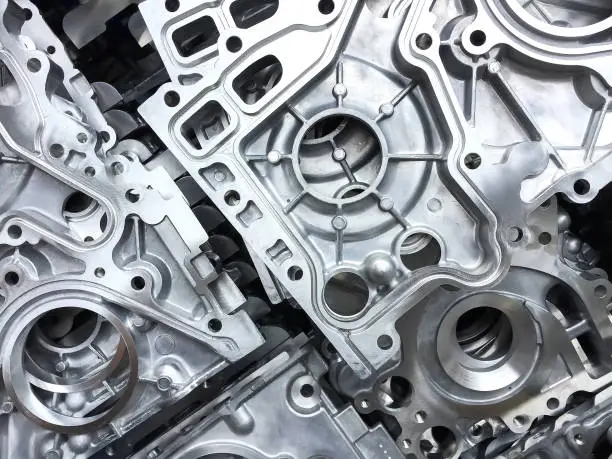
Die casting aluminum alloys make parts work better by producing very accurate measurements, strong, lightweight structures, and better thermal management all in one production process. These high-pressure cast alloys, like A380, ADC12, and A356, make parts with thin walls and nearly net shapes that don't need any welds and keep the strength-to-weight ratios that are important for use in automotive, aerospace, and industrial machinery. Because they don't rust and transfer heat well, they are essential for electrical housings and power equipment, where heat dissipation and environmental durability have a direct effect on how long the system works and how reliably it works.

Understanding Die Casting Aluminum Alloys and Their Properties
You need to know about the basic qualities of aluminum alloy that make it stand out in industrial manufacturing settings before you can understand how it improves performance.
Core Mechanical Properties That Define Performance
High-pressure injection, which is usually between 1,500 and 30,000 psi, forces liquid metal into steel molds that have been hardened. The parts made this way have a specific gravity of about 2.7 g/cm³, which makes them stronger and lighter than regular materials. Tensile strengths of the parts that are made range from 230 to 325 MPa, depending on the alloy and the heat treatment methods used. Hardness values are usually between 75 and 120 Brinell, which means that bracket systems and structure housings will last a very long time. Die casting quickly solidifies, which is different from gravity casting because it smooths out the metal's grain structure. This makes it more flexible while still keeping its shape over the thermal cycling that happens in engine compartments and other industrial equipment.
Thermal and Electrical Conductivity Advantages
Aluminum alloys are better at getting rid of heat than steel or plastic options because their thermal conductivity values are between 96 and 120 W/m·K. This trait is very important in electrical motor housings and power electronics enclosures where good heat transfer keeps parts from breaking. By itself, the oxide layer that forms naturally on aluminum surfaces protects them from corrosion. Anodizing or powder coating can make this even more durable, which can help it last longer in harsh environments. Even though it doesn't carry electricity as well as copper, it's still good enough for many connector uses and grounding parts where the weight savings make up for the slight loss in conductivity.
Popular Alloy Grades and Their Specific Applications
The most popular alloy in North American automotive and consumer goods applications is still A380 because it offers excellent castability, good corrosion resistance, and balanced mechanical properties. A380 is one of the most widely used die casting aluminum alloys for high-pressure die casting due to its reliability, cost efficiency, and consistent performance in large-volume production. ADC12, which is commonly used in Asian manufacturing, has similar characteristics but contains a slightly higher copper percentage, which improves strength and hardness. Because heat treatment can increase its tensile strength above 280 MPa, A356 is often selected for aerospace components and high-performance automotive applications. These die casting aluminum alloys provide different combinations of strength, durability, thermal conductivity, and machinability to meet the requirements of various industries. Each alloy complies with ASTM B85 and other international standards, ensuring consistent material quality throughout global supply chains. When selecting die casting aluminum alloys, purchasing managers must balance mechanical requirements, casting complexity, surface finishing needs, post-processing requirements, and total lifecycle costs. Choosing the correct aluminum alloy grade helps manufacturers achieve lightweight design, corrosion resistance, dimensional stability, and reliable performance for automotive parts, consumer products, industrial equipment, and precision aluminum die casting applications.
How Die Casting Aluminum Alloys Enhance Component Performance
Besides the qualities of the material, the way it is made also gives it performance benefits that can't be achieved with other ways of making things.
Dimensional Precision and Complex Geometry Capabilities
High-pressure die casting can get critical dimensions to within ±0.05mm of accuracy, which means that many features don't need to be machined again. With this level of accuracy, mounting bosses, cooling channels, and fastening points can be built right into the design of the casting. This feature turns what would normally be twelve stamped and welded steel parts into a single aluminum part, which makes automotive gearbox housings more efficient. In some places, wall thickness can be as low as 1.5 mm, which saves material without lowering structural requirements. The smooth as-cast surface finish is usually between 1.6 and 3.2 Ra, and it usually meets aesthetic standards right from the mold. This is especially helpful for medical device enclosures and frames for consumer electronics.
Weight Reduction Impact on System Performance
Parts made from aluminum alloys are about one-third the weight of similar steel parts. This has a direct effect on how much fuel is used in cars and how much weight is carried in spacecraft. A normal engine bracket assembly loses 4.2 kg of weight when it changes from cast iron to A380 aluminum, but it still meets the load-bearing requirements. Because every kilogram affects how well batteries work, this weight loss makes electric cars' range go up by a measurable amount. In the same way, industrial pump housings benefit because the lighter design reduces vibration and inertial loads on mounting systems while keeping pressure containment integrity through the choice of metal and wall thickness.
Corrosion Resistance and Component Longevity
The passive aluminum oxide layer that forms naturally on exposed surfaces protects better against galvanic corrosion in most industrial settings than steel that hasn't been coated. According to ASTM B117 testing guidelines, aluminum alloys that are properly specified can withstand over 1,000 hours of exposure with little damage. This means that they can be used for outdoor telecom infrastructure and mounting hardware for green energy sources. Cycles of heat treatment like T5 and T6 tempers make it even more resistant to corrosion while also making the yield strength higher. This dual improvement is most helpful for parts that are used in marine environments or chemical processing equipment because it increases the time between service intervals and lowers the total cost of ownership for end users.
Comparison of Die Casting Aluminum Alloys With Alternative Materials
When making a B2B purchasing choice, you need to compare materials objectively using performance metrics, production economics, and supply chain factors.
Aluminum Versus Magnesium Alloys
Magnesium is less dense than aluminum (1.8 g/cm³ vs. 2.7 g/cm³), which makes it a suitable choice for aerospace applications where weight reduction is critical. However, magnesium’s lower melting point limits the available operating temperature ranges, and its higher chemical reactivity makes the control of filling streams and production processes more challenging. In comparison, aluminum alloys are used across more industries because they offer stable supply chains, reliable material availability, and less volatile raw material costs. Many die casting aluminum alloys provide an excellent balance of lightweight performance, strength, corrosion resistance, and thermal conductivity, making them ideal for automotive components, aerospace parts, electronics housings, and industrial applications. Magnesium also requires advanced coating systems to prevent corrosion, increasing finishing costs and adding complexity to quality control procedures. As electric vehicle architectures continue to develop, die casting aluminum alloys are becoming increasingly important for structural components because they help reduce vehicle weight while providing effective heat management, impact absorption, and long-term durability. Their combination of mechanical performance, recyclability, and manufacturing efficiency makes aluminum alloys a preferred choice for high-pressure die casting, lightweight metal components, and next-generation transportation solutions.
Die Casting Versus Gravity Casting Methods
Gravity casting, which includes both sand and solid mold methods, works best for small batches of parts and very large parts where the cost of buying tools is too high to be worth it. Die casting has cycle times in seconds instead of minutes, which makes it possible to make more than 500,000 units a year without spending a lot of money. Because the microstructure is more refined and there are fewer holes, high-pressure die casting gives better mechanical qualities than gravity methods. Surface finish quality gets rid of the need for a lot of machining, which cuts the time it takes to make most industrial equipment housings by 30 to 40 percent. The repeatability and statistical process control of die casting are important for PPAP documentation and zero-defect shipping standards for procurement teams that manage tier-one automotive supply contracts.
Aluminum Alloys Versus Engineered Plastics
Plastics that are injected can compete in terms of original tooling cost and production speed, but they can't match the thermal stability, mechanical strength, or environmental sustainability of aluminum. Engineering plastics rarely work at temperatures higher than 150°C all the time, but aluminum alloys can keep their features at temperatures higher than 200°C. Aluminum is twenty times or more stiffer than plastic, so there are no worries about deflection in load-bearing uses. Recycling infrastructure for aluminum recovers more than 90% of the material without changing its properties. This meets the needs of corporate sustainability requirements that are becoming more and more important in procurement specifications. Electrical equipment housings that need EMI shielding naturally favor aluminum because they don't need the conductive coatings or metal inserts that are needed for plastic enclosures.
Selecting the Right Die Casting Aluminum Alloy for Your Application
To get the best performance from parts while keeping the supply chain reliable and lowering the total cost of acquisition, engineering specs and procurement strategies must match up.
Assessing Mechanical and Thermal Requirements
The first step in choosing a component is to look at the load, the working temperature range, and the environmental exposure conditions. Brackets for car engines need to have yield strengths above 160 MPa and enough elongation to absorb vibrations without cracks spreading. When thermal cycling, electrical motor housings focus on thermal transfer and maintaining their shape. AS9100 standards say that aerospace structural parts must be able to be tracked, have their lots controlled, and come with certification paperwork. Different types of heat treatment, from as-cast F temper to T6 solution and aging cycles, have big effects on the properties. The tensile strength of A356-T6 is close to 290 MPa, making it ideal for high-stress aerospace applications. On the other hand, A380 in F temper works well enough for consumer electronics at a lower processing cost.
Evaluating Supplier Capabilities and Certifications
When you work with qualified aluminum die casting suppliers, you get access to process knowledge, quality systems, and production capacity that matches the program volumes. IATF 16949 certification shows quality management at the automotive level, and ISO 9001 certification gives industrial users basic assurance. How well a supplier can design and build molds has a direct effect on how well parts work because the placement of cooling channels, vents, and gates affects how well porosity is controlled and how consistent the dimensions are. Lead times for prototype tools are usually eight to twelve weeks, and for production tools, they can be fourteen to eighteen weeks, depending on how complicated they are. Minimum order numbers depend on the size and complexity of the part, but for cost-effective production runs, they are usually between 1,000 and 5,000 pieces.
Balancing Cost and Performance Trade-offs
The prices of raw materials change with the London Metal Exchange, but processing costs remain mostly stable because of fixed production parameters and standardized manufacturing processes. Alloys with higher copper content, such as 383, generally cost more than standard A380, but they provide improved strength and performance for critical applications, making the additional investment worthwhile. Different die casting aluminum alloys offer specific advantages in strength, corrosion resistance, thermal conductivity, and machinability, allowing manufacturers to select the most suitable material for automotive parts, industrial components, and precision casting applications. Secondary processes such as CNC machining, surface treatments, and quality inspections can significantly increase the total cost of the final component. By designing parts with as-cast features in mind, manufacturers can reduce these additional operations while still achieving required performance standards. Purchasing strategies that include annual agreements with volume commitments help maintain price stability and ensure production capacity during demand increases in automotive manufacturing, electric vehicle production, and heavy machinery industries. Selecting the right die casting aluminum alloys together with efficient production planning helps companies achieve better cost control, consistent quality, and long-term supply reliability.
Common Challenges and Solutions in Die Casting Aluminum Alloys
Realistic specifications and good relationships with suppliers are made possible by knowing the limits of the process and how to deal with them.
Addressing Porosity and Internal Defects
The main quality issues are gas porosity from trapped air during mold filling and shrinkage porosity from not feeding enough during solidification. By emptying the mold cavity before injection, vacuum-assisted die casting systems keep gas from getting trapped and achieve porosity levels below 2% by volume. The tooling's overflow and venting design lets air escape while keeping the molten metal, which is very important for thin-wall sections and complicated shapes. When intensification pressure is applied during final solidification, it squeezes the casting, which reduces the number of shrinkage holes in heavy parts. X-ray inspection that follows ASTM E155 standards checks the quality on the inside of pressure-containing parts and safety-critical aerospace parts. It gives objective acceptance criteria and documentation for tracking.
Optimizing Surface Quality and Dimensional Consistency
Managing the temperature of the die has a direct effect on the surface finish and the security of the dimensions across production runs. Infrared monitoring systems keep mold temperatures within ±5°C of goal values. This stops soldering flaws and changes in the roughness of the surface. Using automated systems instead of human sprays to apply release agents makes them more consistent and has less of an effect on the environment. Thermal cycling of production tools causes dimensional drift over tens of thousands of cycles, so they need to be inspected and maintained on a regular basis. Statistical process control, keeping an eye on important dimensions, finds patterns before parts go beyond their tolerance limits. This lets maintenance be planned ahead of time, which keeps production running as smoothly as possible. For parts that need to look really good on the outside, secondary processes like vibratory finishing, bead blasting, or coating application can get the look you want while still meeting the size requirements.
Implementing Heat Treatment and Post-Processing Strategies
Solution heat treatment at 495°C, followed by controlled quenching and artificial aging processes, changes the properties of as-cast metal in a big way. This T6 temper raises the tensile strength by 40% and makes the metal easier to machine for other tasks. Stress-relieving treatments done at lower temperatures lower the leftover stresses that come from cooling quickly. This keeps the part from warping during later machining operations. Aerospace parts that need to be as strong as possible go through full heat treatment routines with written time-temperature profiles that keep track of each lot number. In industrial settings, T5 temper—artificial aging without solution treatment—is often required. This type of processing improves properties at a lower cost, making it good for pump housings and compressor parts where ultimate strength requirements are not as strict.
Conclusion
Die casting aluminum alloys truly improve the performance of parts because they have unique properties of the material, make production more precise, and give designers more design options than other ways of making things. Being able to make complicated, light structures with built-in features lowers the cost of assembly while increasing reliability in electrical, automobile, aerospace, and industrial machinery uses. To choose the right alloys, like A380 for low-cost consumer electronics or A356-T6 for high-stress aerospace parts, you need to know about the mechanical needs, the working environment, and the supplier's abilities. Using process control, improved tool design, and strategic heat treatment to solve common problems improves the performance of parts and makes production more efficient.
FAQ
What minimum wall thickness can be achieved in aluminum die castings?
As a general rule, the wall thickness should be above 2.0 mm to make sure that the metal flows smoothly and has good mechanical qualities. For certain uses, localized sections as thin as 1.5 mm are possible with the right gating design and mold temperature control. However, designers should talk to suppliers early on to make sure that certain geometries are possible.
Can aluminum die cast components be welded for repair or assembly?
It's hard to weld high-silicon alloys like A380 because they are prone to hot cracking and have holes in the area that gets hot. Repairs can be made using specialized TIG welding techniques and the right filler materials. However, mechanical fastening or adhesive bonding are often more reliable ways to join parts together for production units that need to be made up of more than one piece.
How does porosity affect pressure-tight applications?
Housings that hold pressurized gases or liquid can leak if they have internal porosity. This problem can be fixed with vacuum die casting and impregnation treatments that use sealant resins. This lets aluminum parts be used in hydraulic valve bodies and pneumatic manifolds that could only be made from machined materials before. Before production is released, testing according to ASTM E515 makes sure that the pressure is stable.
Partner With Fudebao Technology for Superior Die Casting Aluminum Alloys
To get the best performance from a component, you need to work with a die casting aluminum alloys maker that has high-tech tools, process knowledge, and quality control systems. Zhejiang Fudebao Technology has high-speed machining centers, CNC lathes, and both low-pressure and high-pressure die casting equipment that are used in the whole production chain, from casting to finishing. Our factory can make parts with dimensions that are accurate to within 0.05 mm, which meets the strict needs of medical device housings, aircraft parts, and precision parts for cars. We work with tier-one suppliers in North America's car industry as well as industrial equipment makers who need certified, reliable aluminum alloy parts. Contact our engineering team at hank.shen@fdbcasting.com to talk about your specific application needs, look over your material selection options, and find out how our integrated manufacturing capabilities can improve the performance of your parts while making your supply chain run more smoothly.
References
1. American Foundry Society. (2021). Aluminum Casting Technology: Design, Materials and Production. Des Plaines: AFS Publications.
2. Kaufman, J.G., & Rooy, E.L. (2019). Aluminum Alloy Castings: Properties, Processes, and Applications. Materials Park: ASM International.
3. North American Die Casting Association. (2020). Product Specification Standards for Die Castings (NADCA 401-421). Rosemont: NADCA Press.
4. Jorstad, J.L., & Apelian, D. (2018). "Pressure-Assisted Processes for High-Integrity Aluminum Castings." International Journal of Metalcasting, 12(1), 51-63.
5. Beals, R.S., & Witz, G. (2022). "Lightweight Materials Selection for Automotive Applications: Aluminum Versus Competitive Materials." SAE International Journal of Materials and Manufacturing, 15(3), 289-304.
6. Stojanovic, B., & Ivanovic, L. (2020). Application of Aluminum and Aluminum Alloys in Engineering Design. Boca Raton: CRC Press.



YOU MAY LIKE