
How Do Aerospace Aluminum Castings Meet Precision Requirements?
2026-08-20
Aerospace aluminum castings achieve precision requirements through a combination of advanced manufacturing techniques, stringent quality control protocols, and specialized alloy selection. These components meet exacting tolerances by employing high-pressure die casting, investment casting, and precision machining processes that control dimensional accuracy to within ±0.001 inches. The use of aerospace-grade alloys like A356, 7075, and 6061 ensures consistent mechanical properties and machinability, while non-destructive testing methods including X-ray radiography and ultrasonic inspection verify internal integrity and eliminate defects that compromise precision.
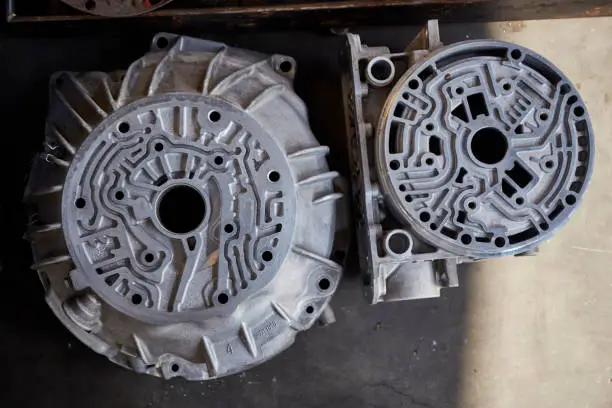
Understanding Precision Challenges in Aerospace Aluminum Castings
The aerospace industry needs parts that work perfectly in harsh circumstances, which means that manufacturing precision has to be very high. Tolerances in aluminum cast parts for airplanes and spacecraft are measured in thousandths of an inch. Surface finishes that keep stress from building up and material consistency that makes sure the parts will behave the same way from -65°F to 350°F are also important.
Meeting Demanding Tolerances and Surface Finish Standards
For aerospace uses, tolerances on sizes must often be ±0.002 inches or smaller, especially for areas that fit together and contacts for mounting. Specifications for surface finishes usually call for roughness levels below 125 microinches Ra to stop cracks from starting and make sure the seal is good. These rules are in place to make sure everyone is safe, because even small changes can cause problems with assembly, shaking, or a catastrophic failure during use. These standards are met by manufacturers using precise tools, controlling the cooling rate, and doing multiple stages of cutting that remove the casting skin while keeping the shape.
Regulatory Standards Governing Aerospace Castings
Base standards for aerospace parts are set by rules in the industry, such as ASTM B26 for aluminum alloy sand castings, AMS guidelines for aerospace materials, and ISO 9001 quality management systems. In addition to these standards, there are also specifications like AS9100 that deal with quality management in aerospace, and NADCAP certification that verifies special processes like chemical processing, heat treatment, and non-destructive testing. Following these guidelines makes sure that you can track a component from the raw material to the finished product, which is very important when a component failure could put lives at risk.
Common Defects Affecting Precision and Methods to Control Them
One of the most common flaws in aerospace aluminum castings is porosity, which happens when trapped gases make holes in the metal structure. When these flaws are put through cutting processes that might reveal hidden holes, they weaken the material's mechanical properties and its ability to stay the same size. Shrinkage defects happen when there isn't enough feeding during solidification, which leaves holes inside the material; hot tearing happens when there is too much thermal stress during cooling. These problems can be avoided by manufacturers using degassing treatments, proper gating design, controlled solidification rates, and vacuum-assisted casting methods that keep gases from getting trapped and make sure the metal structure is sound all the way through the part.
The Aerospace Aluminum Casting Process: Ensuring Precision at Every Step
Precision parts for aircraft use need to be made with great care at every stage of the production process, from the initial design to the final inspection. The casting method you choose has a direct effect on the tolerances you can achieve, the quality of the surface, and the strength of the material inside.
Precision Casting Methods and Their Dimensional Control Capabilities
Aerospace aluminum castings are produced through three primary methods, and each has its own benefits. Investment casting, which is also known as lost-wax casting, makes parts with a smooth surface and accurate dimensions. This makes it perfect for shapes with thin walls and lots of small details. With this method, most dimensions can be within ±0.005 inches of accuracy without the need for extra work. Even though it usually takes more work to get the final dimensions, sand casting is flexible enough to handle both larger parts and lower production volumes. High-pressure die casting is great for making parts that need to be made in large quantities and to very tight tolerances because it produces parts quickly and consistently. Using this method, molten aluminum is pushed into steel molds under pressures higher than 10,000 psi. This makes dense castings with few holes and great surface detail.
Selection of Aerospace-Grade Aluminum Alloys
The choice of material has a huge effect on both the accuracy and efficiency of the component. Alloy A356 is commonly used for structural aircraft parts because it is easy to cast, has good mechanical qualities, and can be machined easily. Silicon in it makes it easier to work with when casting, and magnesium helps it harden over time. Alloy 7075 is usually worked, but it can also be cast in situations where strength is more important than ease of casting. Alloy 6061 has a good mix of qualities, such as being resistant to corrosion and easy to weld. When a metal solidifies, it shrinks in different ways, expands at different temperatures, and cuts differently. Manufacturers have to take these differences into account when setting process parameters and making tools that can meet standards.
Advanced Technologies Maintaining Tight Tolerances
Precision is controlled by high-tech tools in modern aerospace casting facilities. CAD/CAM systems let engineers simulate mold filling and solidification in great detail. This lets them make the best gate systems and guess how much the material will shrink before they cut the tools. Directional cooling, chill placement, and timed mold movements are some of the controlled solidification techniques used to control grain structure and reduce defects. Digital radiography, ultrasonic inspection, and computed tomography scans are all non-destructive testing methods that check the quality inside of something without hurting any of its parts. At Fudebao Technology, we use high-speed machining machines and CNC equipment that can keep an accuracy of ±0.05mm. This way, we can make sure that cast parts meet the high quality standards of the aerospace industry by casting and milling them to perfection.
Process Control Case Study
A recent job involving airplane gearbox housings shows how very precise integrated process control can be. Holding positional limits of ±0.003 inches across multiple mounting bosses and wall thickness changes within 0.010 inches were requirements for the part. Engineers created a low-pressure casting method that uses the A356 alloy and lets them watch the temperature, fill rate, and number of pressurization cycles in real time. Statistical process control kept track of dimensions across production runs so that changes could be made before deviations got too big to handle. Optimized tool design, controlled metal supply, and precise machining all worked together to make parts with a capability index (Cpk) greater than 1.67. This showed strong process control that regularly met aircraft precision standards.
Comparison of Aerospace Aluminum Castings with Other Materials
When choosing a material, you have to weigh a lot of things, like weight, strength, cost, and how it will be made. When purchasing professionals know how aerospace aluminum castings stack up against other options, they can make smart decisions that meet the needs of the project.
Aluminum Versus Steel in Lightweight Applications
Steel is stiffer and stronger than aluminum in terms of tensile strength, but it is a lot heavier. Aluminum has a density about a third of that of steel, but its strength-to-weight ratio is about the same. This means that it saves fuel and can carry more. The natural oxide layer on aluminum makes it naturally resistant to corrosion, so it doesn't need protective coatings like steel parts do when they are subject to changes in temperature and wetness. When it comes to precision, aluminum's lower melting point and better fluidity make it possible to cast walls that are thinner and with finer details. Its excellent machinability also makes it easier to keep tight tolerances during secondary operations. Steel's higher modulus of elasticity can be useful in situations where rigidity is important, but for most aircraft structure and housing needs, aluminum castings work better at a lower weight.
Cost-Effectiveness and Machinability Compared to Titanium
Titanium alloys are the best choice for aircraft uses that need the highest levels of strength-to-weight ratio and performance at high temperatures. At temperatures where aluminum starts to lose strength, titanium keeps its mechanical properties. This is why it is needed for hot-section engine parts and high-stress airframe parts. All of these benefits come at a big price: titanium is usually five to ten times more expensive than aluminum to buy and work with. Titanium is hard to machine, hardens quickly, and tends to gall cutting tools, which makes production more expensive and takes longer. Aluminum castings are a great way to save money on parts that need to work in temperatures within the range of aluminum. They offer 70–80% of titanium's strength at a fraction of the cost. When procurement teams are looking at different materials, they should know that aluminum is very easy to machine and can help them achieve tighter tolerances more quickly. This lowers the total cost of the part while still providing enough performance for uses that don't need titanium's extreme capabilities.
Procurement Considerations When Choosing Aerospace Aluminum Castings
When buying aerospace parts, you have to think about more than just the price. You also have to think about quality systems, technical capabilities, and the possibility of a long-term partnership. To make sure that precision parts are delivered on time, engineering managers and sourcing directors must evaluate suppliers in a number of different ways.
Certifications Validating Supplier Compliance
AS9100 certification is the basic quality management system requirement for aerospace suppliers. It adds controls for configuration management, risk assessment, and first article inspection that are specific to aerospace to ISO 9001. Independent audits by trained technical experts make sure that NADCAP certification is good for important special processes like heat treatment, non-destructive testing, and chemical processing. These certificates show that suppliers are dedicated to quality systems, process control, and constant growth, all of which lower the risk of buying from them. In addition to checking for certifications, procurement teams should check that suppliers are registered with aerospace primes, look over the results of any audits done by customers, and see if the quality paperwork, such as process flow diagrams, control plans, and measuring system analysis, meets the standards of PPAP.
Evaluating Advanced Casting Technologies and Quality Management
Supplier technical skills have a direct effect on the quality of the parts and the success of the program. Simulation software is used in advanced facilities to improve casting processes before they are put into production. This cuts down on development time and the number of prototypes that need to be made. Real-time process tracking systems keep an eye on important factors like metal temperature, fill velocity, and cooling rates. This information helps with statistical process control and quick problem resolution. Coordinate measuring machines for checking dimensions, spectrometers for figuring out what the alloy is made of, and a wide range of non-destructive testing tools should all be part of the inspection process. Quality management systems need to have clear ways to handle problems when they happen, as well as effective ways to take appropriate action. Going to supplier sites is a great way to learn about how they make things, the state of their tools, and the culture of the company that a paper audit can't fully capture.
Lead Times, Scalability, and Pricing Strategies
Multiple providers have to work together very carefully on aerospace projects, and there are strict deadlines that must be met. Realistic wait times help buying teams set program deadlines that can be met. Depending on how complicated they are, making new parts' tools usually takes 8 to 12 weeks. Then, making the first part and getting approvals takes another 4 to 6 weeks. Lead times for production depend on the type of casting and the amount being made. Once the tools are made, high-pressure die casting has shorter cycle times, but it needs more parts to make the investment in the tools worth it. Effective RFQs spell out the tolerance needs, inspection standards, material approvals that are needed, and delivery goals. Building relationships with suppliers of aerospace aluminum castings lowers risk and helps lower costs over time by improving processes and using volume more efficiently.
Future Trends and Innovations Improving Precision in Aerospace Aluminum Castings
As technology improves and business goals shift, the aircraft casting industry continues to change. Purchasing professionals can predict future opportunities and judge supplier innovation better if they know about new skills that are coming out.
Additive Manufacturing Integration with Traditional Casting
When additive and casting technologies are used together, they can do things that neither process can do on its own. Engineers use 3D printing to make complicated sand molds and ceramic cores that can make internal shapes that aren't possible with regular tools. This method cuts down on lead times for prototypes and small-scale production while allowing design improvement that makes parts work better. Some manufacturers use additive methods to add features to cast blanks by only adding material where it's needed instead of cutting away extra stock. These combined methods cut down on waste, speed up the development process, and allow for more physical complexity, which gives flight engineers more design options.
AI-Powered Quality Monitoring and Alloy Development
Applications that use artificial intelligence and machine learning are changing how quality control is done in casting processes. Real-time tracking systems look at process data streams to find outliers that could mean there are problems. This lets problems be fixed right away, before parts that don't meet standards are made. Predictive maintenance algorithms look at patterns in how equipment works to plan maintenance before it breaks down. This cuts down on unplanned downtime. Advanced imaging systems and AI interpretation make it possible to automatically find flaws in X-ray and ultrasonic inspections. This improves consistency while cutting down on inspection time. Researchers use computer methods to speed up the development of alloys by analyzing how changes in makeup affect how well they cast, how strong they are, and how well they resist corrosion.
Sustainability and Supply Chain Transparency
As aerospace companies try to reach their sustainability goals, environmental concerns are becoming more and more important in their purchasing decisions. Aluminum's recyclability offers inherent environmental advantages, with recycled aluminum requiring only 5% of the energy needed to produce primary metal. Responsible providers set up closed-loop recycling systems, find the best ways to use energy, and keep track of environmental data throughout the whole process. Supply chain transparency programs let people see where materials come from, so they can be sure that raw materials don't contain conflict minerals and come from legal sources. In addition to technical qualifications, certifications in areas like worker safety, environmental management, and social responsibility help procurement teams build relationships with suppliers that are in line with the company's ideals. Aerospace aluminum castings procurement increasingly aligns with these stakeholder expectations and corporate values.
Conclusion
To get precise aerospace aluminum castings, you need to be very good at choosing materials, controlling the process, managing quality, and making sure that your suppliers can do their jobs. Because of the tight tolerances, high standards for surface finish, and government rules that must be followed, aerospace uses require production partnerships based on scientific know-how and organized quality methods. As improvements are made to casting technology, inspection methods, and alloys, procurement professionals must judge suppliers not only on how well they are doing now, but also on how committed they are to always getting better and using new technology. Selecting partners who demonstrate both technical expertise and quality system rigor ensures reliable delivery of components meeting the exacting standards aerospace applications demand.
FAQ
What industry standards must aerospace aluminum castings meet?
Aerospace aluminum castings must adhere to a number of regulatory frameworks, such as ASTM B26 for aluminum alloy sand castings, different AMS specifications that specify material properties and processing needs, and AS9100 quality management standards. For special methods like heat treatment and non-destructive testing, parts often need NADCAP approval. PPAP paperwork and other standards show that the process can work, and customer-specific needs may require even tighter limits than the industry standard.
How do costs compare between aluminum and titanium castings?
Titanium castings usually cost five to ten times more than similar aluminum parts because the materials are more expensive, the casts are harder to machine, and the finishing needs are more complicated. For uses within its performance range, aluminum is a very good value because it provides enough strength at a much lower cost. When looking at the total cost, you should think about not only the cost of casting, but also the cost of machining afterward. Aluminum is easier to machine than titanium, which can save you even more money.
What are typical lead times for custom precision aerospace orders?
Lead times depend on how complicated the part is and how it is made. It takes 8–12 weeks to develop a tool, and another 4–6 weeks for production and approval of the first product. Then, it will take 4–10 weeks to make the amounts needed, based on the casting method and the size of the order. Projects that need to qualify a new provider or get special approvals for a process may take longer than planned. When schedule needs are made clear during the RFQ, suppliers can commit to delivery dates that are realistic and meet the needs of the program.
Partner with Fudebao Technology for Aerospace Aluminum Castings Excellence
Suppliers for aerospace projects must be able to meet strict requirements for accuracy, quality, and dependability. Fudebao Technology blends advanced production skills with strict quality systems to serve uses in aerospace, industrial equipment, and cars that need very accurate measurements. Our facility has CNC lathes, high-speed machining centers, and full casting capabilities, including low-pressure casting, die casting, and precise finishing. We keep our accuracy to ±0.05mm and offer one-stop delivery from raw materials to finished parts. We know how important it is to be able to track products, get certifications, and make sure they always work because we work with aerospace aluminum castings makers and OEMs around the world. Email our team at hank.shen@fdbcasting.com to talk about your aerospace casting needs and find out how our proven expertise can help you with your precision part needs. Visit fdbcasting.com to explore our comprehensive capabilities.
References
1. ASM International. (2021). Casting Design and Performance. Materials Park, OH: ASM International Handbook Committee.
2. Campbell, John. (2015). Complete Casting Handbook: Metal Casting Processes, Metallurgy, Techniques and Design. Oxford: Butterworth-Heinemann.
3. Kaufman, J. Gilbert and Rooy, Elwin L. (2004). Aluminum Alloy Castings: Properties, Processes, and Applications. Materials Park, OH: ASM International.
4. SAE International. (2020). Aerospace Material Specifications for Aluminum Alloys and Castings. Warrendale, PA: SAE International Standards Division.
5. Tiryakioğlu, Murat and Campbell, John. (2014). Quality Index for Aluminum Alloy Castings in International Journal of Metalcasting, Volume 8, Issue 3, pp. 39-42.
6. Ye, Hongqun. (2016). An Overview of the Development of Al-Si-Alloy Based Material for Engine Applications in Journal of Materials Engineering and Performance, Volume 12, pp. 288-297.



YOU MAY LIKE