
Aluminum Car Parts Manufacturers Drive Lightweight Vehicle Design
2026-08-20
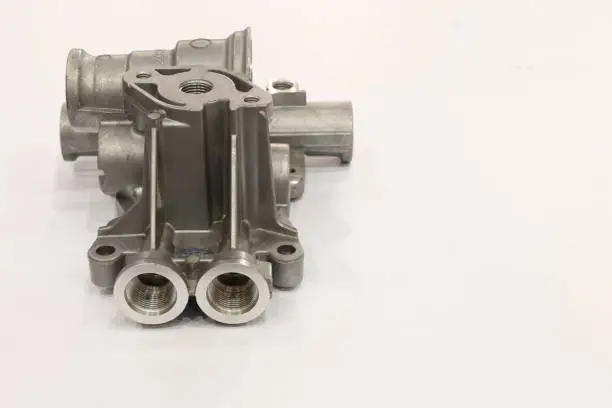
Aluminum car parts manufacturers are reshaping the automotive industry by enabling lightweight vehicle design that addresses fuel efficiency, emissions reduction, and performance enhancement. These manufacturers utilize advanced aluminum alloys and precision fabrication techniques—including high-pressure die casting, CNC machining, and extrusion—to produce components that reduce vehicle weight by up to 40% compared to steel alternatives. As automotive OEMs and tier-1 suppliers face stringent regulatory pressures and consumer demand for greener vehicles, the strategic partnership with capable aluminum casting specialists becomes a critical competitive advantage in achieving lightweighting targets without compromising structural integrity or safety standards.
Understanding the Role of Aluminum Car Parts in Lightweight Vehicle Design
Modern vehicle engineering needs materials that work really well and don't hurt the environment too much. Aluminum parts are now essential in this equation because they offer a strong value proposition that goes far beyond just saving weight.
Weight Reduction and Fuel Efficiency Benefits
There is constant pressure on the auto industry to get better gas mileage and lower carbon pollution. The fact that aluminum is only about 2.7 g/cm³ dense—about one-third that of steel—makes it immediately more useful. When body pieces, engine blocks, and suspension parts made of steel are replaced with aluminum ones, cars lose a lot of weight. This decrease in weight directly leads to better fuel economy. Studies have shown that for every 10% decrease in car weight, fuel consumption goes up by 6-8%. Manufacturers of electric vehicles really like this trait because it means lighter batteries that can go farther and speed up faster without having to be bigger and more expensive.
Superior Corrosion Resistance and Durability
Aluminum naturally forms a protective oxide layer that stops further oxidation. This makes these parts naturally resistant to corrosion. This quality is especially useful in difficult working conditions where things like road salt, water, and changes in temperature can damage the material. In contrast to steel parts that need thick protective coatings, aluminum parts keep their shape and appearance over long periods of time. When aluminum surfaces are improved through anodizing processes, they reach hardness levels close to 60–70 Rockwell C, which is about the same as hardened steel but lighter. This durability cuts down on repair needs and increases the lifecycle of parts, which lowers the total cost of ownership and is a key factor for engineering managers and sourcing directors when making buying choices.
Aluminum Alloys for Automotive Applications
Different parts of a car need different mechanical properties, which are met by makers by choosing the right alloys strategically. The 6000 series metals, especially 6061 and 6063, are great for making structural frames, body panels, and extruded parts because they are easy to shape and weld and have a modest level of strength. The tensile strength of these alloys is around 310 MPa in the T6 condition, which means they respond well to heat treatment. Compared to structural steel, the 7000 series, especially 7075, has a much higher strength (more than 570 MPa). Aerospace-grade 7075 is used in high-stress parts like frame reinforcements and suspension control arms, where weight savings must not come at the cost of strength. The choice of material has a direct effect on the manufacturing process. For example, each metal has its own properties that must be taken into account during casting, machining, and finishing operations so that performance and output efficiency are optimized.
The Aluminum Car Parts Manufacturing Process Explained
For advanced manufacturing skills and strict process control to be used in the production of high-quality aluminum automotive parts, aluminum car parts manufacturers apply a variety of manufacturing techniques to meet the needs of a wide range of applications while maintaining dimensional accuracy and material purity. Leading suppliers rely on these advanced processes to ensure consistent performance and reliability across different automotive components.
Casting Technologies and Quality Standards
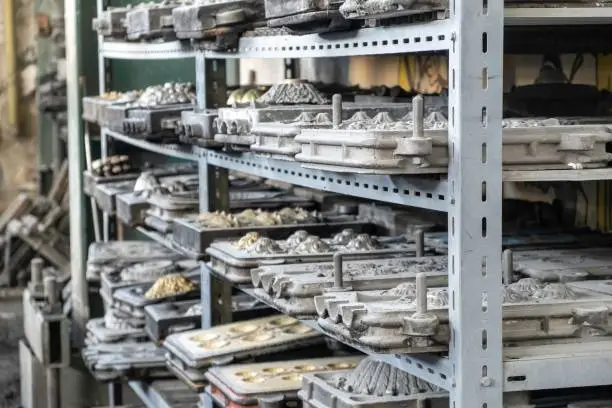
Die casting is the most common way to make large quantities of metal car parts because it can make complex shapes with a smooth surface and close tolerances. In high-pressure die casting, molten aluminum is poured into precise steel molds at speeds of more than 100 feet per second. This makes parts with walls as thin as 0.8 mm. Vacuum-assist die casting removes air from the mold body, which reduces porosity, which is important for pressure-tight uses like engine parts and transmission housings. International standards like ASTM B209 for sheet and plate, ASTM B221 for extruded profiles, and ISO 9001 quality control systems help manufacturers make sure that the quality is always the same. Optical Emission Spectroscopy (OES) checks the material's composition to make sure that its parts meet certification standards like EN 10204 3.1. This gives quality teams the traceability they need for PPAP paperwork and long-term reliability proof.
CNC Machining and Precision Finishing
A lot of aluminum car parts are CNC machined to get them to the final size requirements after they are cast. Modern machining centers with multiple axes can make features with tolerances as small as ±0.05mm, which is perfect for the exact needs of automobile precise parts. Aluminum can be machined at high speeds, which makes it easier to remove material quickly. This cuts down on cycle times and production costs compared to harder materials. Coordinate Measuring Machines (CMM) are used for geometric dimensioning and tolerance (GD&T) verification to make sure that key measurements match engineering requirements. You can finish the surface by bead blasting for a uniform roughness, hard anodizing for better wear resistance, or powder coating for color and extra rust protection. These finishing methods not only make things look better, but they also make them work better in certain situations, like engine compartments that are hot or undercarriages that are corrosive.
Automation and Sustainable Production Practices
Automation and robotics are used by advanced manufacturers to make production more consistent, efficient, and safe for workers. Automated material handling systems move parts between areas for casting, cutting, and finishing, which speeds up the process and reduces damage from handling. The quality of the edges is always the same across production runs when cutting and deburring are done by robots instead of by hand. More and more, manufacturing practices are being changed to be more environmentally friendly. In many applications, recycled aluminum content reaches 30 to 50 percent. Aluminum can be recycled over and over again and only needs 5% of the energy that is used for primary production. This is in line with circular economy ideas that automakers use to choose suppliers. Leading factories use closed-loop recycling systems that reuse scrap metal from cutting. This cuts down on trash and the damage it does to the environment while keeping costs low when buying in bulk.
How to Choose the Best Aluminum Car Parts Manufacturer for Your Business
Critical Evaluation Criteria
Quality assurance skills are the basis of evaluating a manufacturer. Prospective suppliers should show a full testing infrastructure that includes a CMM, measuring the roughness of the surface, and making sure the material composition is correct. As per the ASTM B117 standard, salt spray testing confirms that finished parts are resistant to corrosion. Good providers regularly achieve 1000+ hour performance in rapid testing. Certifications are a good way to show that a process is mature. For example, ISO 9001 certification means that quality management is systematic, and IATF 16949 certification covers the needs of the car industry, covering things like PPAP paperwork, production part approval processes, and methods for ongoing improvement. Mold development is another thing that sets us apart, since complex auto parts often need to have their tools tweaked over and over to get the best fill patterns, lowest porosity, and exact measurements.
Regional Manufacturing Strengths
When making choices about where to buy something, transportation needs, lead times, and the total landed cost are all affected by geography. Chinese makers have a lot of production capacity and lower prices. For example, Zhejiang, Guangdong, and Jiangsu provinces are well-known aluminum casting hubs that offer low prices for large orders. These providers are investing more and more in high-tech tools and quality systems, which helps them catch up with Western competitors in terms of technology. European manufacturers put a lot of effort into precision engineering and the development of high-quality alloys. They do this for uses where new materials and tight tolerances justify a premium position. North American suppliers are closer to U.S. automakers, which cuts down on shipping times and makes it easier for engineers to work together on new products. The best option takes into account factors like cost, quality, protecting intellectual property, and managing supply chain risk based on the specifics of the project.
OEM vs. Aftermarket Manufacturing Focus
Manufacturers usually focus on either OEM direct supply or aftermarket substitute parts, and each has its own set of skills and ways of providing service. OEM-focused suppliers support new car development programs with strict quality systems, lots of testing documents, and engineering tools that work together. From the early steps of design to the start of production, these partners help with DFM (Design for Manufacturability), which improves the shape of parts so they can be cast or machined more efficiently. As an aftermarket professional, you need to be able to reverse engineer parts, buy in different amounts, and get new parts quickly for a wide range of car makes and models. Understanding this difference helps buyers find providers whose business model fits with their buying strategy, whether it's for meeting long-term production goals or filling occasional refill orders.
Comparing Aluminum Car Parts Manufacturers: Quality, Price, and Service
To properly evaluate a supplier, you need to compare their quality metrics, business terms, and service capabilities in a planned way. Structured assessment frameworks that show real worth beyond initial unit prices are helpful for procurement pros.
Quality and Performance Metrics
Leading suppliers are different from commodity producers because they come up with new materials. Advanced makers are always making changes to metal compositions and heat treatment methods to improve temperature performance, corrosion protection, and strength-to-weight ratios. Testing how long a part will last, such as fatigue analysis, temperature cycle, and vibration resistance, gives engineering managers concrete performance data they need for confirmation. Dimensional uniformity across production runs is a sign of a stable process, and for important features, capable suppliers can get Cpk values above 1.67. Checking the surface quality with a dye penetrant or an X-ray finds casting flaws before the parts are put together, which keeps expensive failures from happening in the field. As part of the qualification process for suppliers, buyers should ask for material certifications, inspection reports, and process capability studies in order to set baseline quality expectations.
Commercial Considerations and Value Analysis
The starting price gets people's attention, but the total cost of ownership gives a more true picture of value. When buying in bulk or at wholesale, it's important to carefully negotiate big discounts, payment terms, and support with managing your goods. Some aluminum car parts manufacturers offer vendor-managed inventory programs that lower buyers' carrying costs while making sure they have enough materials to meet production plans. Pricing and lead times are both affected by customization. Manufacturers with adaptable tools and skilled engineering support can change standard designs to fit specific application needs without having to raise prices too much. Export readiness, which includes help with paperwork, better packaging, and established logistics partnerships, has a big impact on the success of foreign buying. Hidden costs like poor quality, late deliveries, and bad communication often go beyond the savings that low-cost bidders seem to offer. This is why seller trust is such an important part of value.
Service Excellence and Partnership Approach
Strategic partners are different from transactional vendors because they offer responsive technology help. The best suppliers give each project its own project manager. This person makes sure that there is clear communication and quick problem resolution between the customer's tech teams and the supplier's own production resources. Having samples available for testing and review lowers the risk of buying by letting buyers check quality and fit before committing to large orders. Changes in demand can be accommodated by flexible order volumes without charging extra. This is especially helpful during product launch periods or market changes. Global logistics capabilities, such as established shipping routes and knowledge of customs paperwork, make international purchasing easier for buyers who need to buy from faraway manufacturing regions. These service factors help build relationships that go beyond just supplying parts. These relationships support efforts to keep getting better and lower costs over time.
Future Trends and Innovations in Aluminum Car Parts Manufacturing
The fast change in the auto industry toward electric vehicles and sustainability is what keeps aluminum component manufacturing coming up with new ideas. Suppliers who are looking to the future invest in new technologies and processes that make them key partners in the development of the next wave of vehicles.
Electric Vehicle Design Requirements
The design of electric vehicles offers unique technical problems that aluminum parts can solve. To keep the cells safe from damage and keep the battery pack's temperatures at the right level, the housing needs to be light and good at managing heat. Aluminum's thermal conductivity is about 200 W/m·K, while steel's is less than 50 W/m·K. This means that aluminum effectively removes heat from power electronics and charging systems, preventing thermal throttling that lowers performance. When battery cases help make the frame rigid, structural battery integration ideas need metal castings with complicated shapes and the best wall thickness distribution. Motor housings have to meet both the needs for electromagnetic protection and heat escape. Aluminum alloys can meet both of these needs by carefully choosing the materials and finishing them. As the use of electric vehicles (EVs) grows, companies that make solutions specifically for these uses gain a competitive edge in a market area that is growing quickly.
Additive Manufacturing and Design Freedom
Three-dimensional printing technologies are becoming more and more useful in addition to traditional casting and machining methods. They make it possible to design shapes that can't be made in other ways. Topology optimization algorithms find the structures with the least amount of mass that still meet the strength and stiffness requirements. They do this by creating organic shapes with walls that are different thicknesses and built-in reinforcement. Selective laser melting (SLM) builds these optimized designs from aluminum powder layer by layer, so you don't have to spend money on tools to make prototypes or low-volume production parts that work. The current prices of additive manufacturing mean that it can only be used for a few specific parts. However, as technology improves, it becomes more economically viable. In the near future, hybrid methods that combine cast blanks with additively made features could improve performance while keeping production costs low. Modern companies buy additive technologies for both production and rapid prototyping during development. This shortens the time between iterations and speeds up the time it takes to get a product on the market.
Regulatory Compliance and Sustainability Mandates
Tougher rules on emissions around the world force automakers to use bold tactics to make their cars lighter, which directly benefits the use of aluminum parts. Corporate Average Fuel Economy (CAFE) rules in the US and CO2 pollution limits in Europe make it financially worthwhile for vehicles to be lighter, which measures the business case for using aluminum instead. Beyond use-phase efficiency, lifecycle analysis has a bigger impact on material choice. For example, aluminum can be recycled, which is better for the environment than making new steel. Extended Producer Responsibility policies are becoming more common in many markets. These policies require manufacturers to think about how to recover end-of-life materials, giving preference to materials like aluminum that have a history of being recycled and still have value. Leading suppliers write environmental product declarations (EPDs) that show how much carbon is released during the production of materials, the production of parts, and the recycling process. These EPDs help customers with their sustainability reporting and green purchasing efforts.
Conclusion
Aluminum car parts manufacturers are becoming more and more important to the overall success of lightweight vehicle design as speed, efficiency, and environmental concerns rise in the automobile industry. To do a good job of procuring things, you need to carefully look at each supplier's quality systems, manufacturing abilities, and willingness to work together. Accurate measurements, certified materials, and consistent processes are what set capable makers apart from commodity suppliers. Great service and expert support are what make a relationship work in the long run. As the number of electric vehicles on the road rises and government regulations tighten, aluminum parts become more and more important for making competitive vehicles. When engineering managers and sourcing directors build partnerships with innovative, quality-focused suppliers, they put their companies in a good position to take advantage of these changes in the industry while also lowering the total cost of ownership and controlling supply chain risk.
FAQ
What advantages do aluminum parts offer over steel in automotive applications?
When compared to steel versions, aluminum parts are about 65% lighter while still being as strong thanks to better design and metal choice. This weight loss immediately makes the car use less gas, accelerate faster, and handle better. Because aluminum doesn't naturally corrode, it doesn't need protective coatings. This makes manufacturing easier and extends the life of parts in harsh settings.
How long are typical lead times for bulk aluminum automotive part orders?
Lead times depend on the difficulty of the part, the need for special tools, and the number of orders. After an order is confirmed, standard parts made from existing tools usually ship within 4 to 6 weeks. Custom parts that need a new mold take an extra 10 to 14 weeks to make, which includes validating the design, making the tools, and inspecting the first product. For pressing needs, there may be choices for faster production.
How can buyers verify aluminum car parts manufacturer quality and certifications?
Ask for certifications of the materials you're interested in, such as reports on their chemical composition that have been checked by OES testing, their mechanical properties, and their dimensions as measured by a CMM. Verify ISO 9001 and IATF 16949 qualifications for cars by checking with the registry. Do supplier audits that look at the paperwork for the process, the production tools, and the infrastructure for quality testing. To find out about a product's capabilities and dependability, ask for customer references and look over PPAP documentation from similar applications.
Partner with Fudebao Technology for Your Aluminum Automotive Component Needs
Zhejiang Fudebao Technology Co., Ltd. offers complete aluminum casting and precision machining services that are made to fit the needs of automotive OEMs and tier-1 suppliers. Our combined production plant has high-pressure die casting, CNC machining centers, and advanced surface treatment tools. This lets us deliver parts from raw materials all the way through to finished products with a level of accuracy of ±0.05mm. We have strict quality standards that are backed up by ISO certifications and a full testing infrastructure that includes CMM inspection, material composition verification, and corrosion resistance validation. As a company that works with international automakers and makers of industrial equipment, we know how important it is to have accurate PPAP documentation, consistent production, and a reliable supply chain. Our engineering team works together from the initial design phase to large-scale production, whether you need transmission housings, structural brackets, or precisely made engine parts. Email our aluminum car parts manufacturers supplier team at hank.shen@fdbcasting.com to talk about your specific needs, get technical specs, or set up a sample evaluation. Visit fdbcasting.com to see all of our services and learn how our knowledge can help you reach your goals for lighter products while still giving your customers the quality and dependability they expect.
References
1. Aluminum Association. (2021). "Aluminum Alloys for Automotive Applications: Technical Guidelines and Material Selection." Washington, DC: Aluminum Association Technical Committee.
2. Society of Automotive Engineers. (2022). "Lightweight Materials and Manufacturing Processes for Automotive Applications." SAE International Journal of Materials and Manufacturing, Volume 15, Issue 3.
3. European Aluminium Association. (2020). "Sustainability of Aluminum in Vehicle Design: Life Cycle Assessment and Circular Economy Perspectives." Brussels: European Aluminium Association Publications.
4. American Foundry Society. (2021). "High Pressure Die Casting: Process Control and Quality Assurance for Automotive Components." Schaumburg, IL: AFS Technical Publications.
5. International Organization for Standardization. (2019). "ISO 9001:2015 Quality Management Systems – Requirements for Automotive Sector Implementation." Geneva: ISO Publications.
6. Automotive Industry Action Group. (2023). "Production Part Approval Process (PPAP) Manual, Fourth Edition: Requirements for Aluminum Component Suppliers." Southfield, MI: AIAG Publications.



YOU MAY LIKE