How CNC Machining Enhances the Precision of Aluminum Die Cast Parts
2026-07-02
CNC machining completely changes aluminum die-cast parts by getting rid of flaws in the casting process using a computer to control the removal of material. CNC machining, on the other hand, uses automatic multi-axis milling and turning systems that are led by CAD/CAM software to get tolerances as small as ±0.005mm. This precise manufacturing process fixes surface flaws, dimensional differences, and geometrical errors that happen naturally during high-pressure die casting. This makes sure that every part meets the exact requirements of applications in automotive, aerospace, and industrial machinery.
Understanding the Challenges in Aluminum Die Casting Precision
Inherent Limitations of the Die Casting Process
Aluminum die casting is still the only way to make large quantities of complex shapes, but the method itself limits how precise the parts can be. High-pressure injection pushes liquid aluminum into steel molds at speeds of more than 100 feet per second. This causes turbulence and changes in temperature that can't be avoided. When these things happen, the casts often cool unevenly, leaving surface porosity, flash lines along splitting surfaces, and changes in size. When raw casts don't meet the ±0.25mm tolerance window needed for important mounting features or bearing surfaces, it can be hard for engineering managers who are in charge of PPAP paperwork.
Cost Implications of Casting Defects
Surface finish flaws and wrong measurements have a direct effect on how well the parts are put together and how reliable the final product is. Sourcing directors say that refusing casts that don't meet standards can raise the number of scraps by 12 to 18% in normal production runs. Also, rework attempts that involve grinding by hand introduce human error that makes quality control problems worse. When quality teams check how well suppliers are doing, they know that fixing these problems at the source, through smart secondary operations, is cheaper than dealing with failures in assembly or guarantee claims later on.
Material Consistency and Tool Wear Variables
Different aluminum metals have different machinability properties. Some common die casting alloys, like A380 and ADC12, have silicon in them, which makes finishing operations more difficult because the tools wear out faster. On the other hand, structural alloys like A356 need different cutting settings to keep the work from hardening. In addition to these material problems, die wear decreases hollow sizes over tens of thousands of cycles, causing variation from part to part that can't be accurately measured or fixed across whole production batches by hand inspection.
How CNC Machining Overcomes Precision Challenges in Aluminum Die Cast Parts
Integration of Advanced CAD/CAM Software Systems
Digital accuracy is the first step in modern CNC machining. CAD models show the exact shapes of parts and include geometric dimensioning and tolerancing (GD&T) rules. CAM software, on the other hand, makes toolpaths that are the best fit for the material, cutting forces, and heat expansion. This digital process gets rid of mistakes made when measuring things by hand, and it lets procurement teams check that the dimensions are correct compared to the original design using ISO 2768-compliant inspection routines for coordinate measuring machines (CMMs).
Multi-Axis Milling and Turning Capabilities
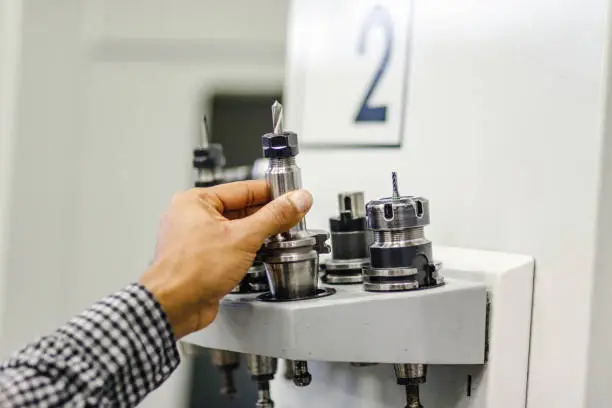
Three-axis CNC machining centers are good for simple tasks like cutting and facing, while five-axis simultaneous machining lets you make undercuts and compound angles that you couldn't do by hand. This feature is very important when finishing metal transmission housings with coolant channels inside or electrical motor housings that need exact fitting boss locations. High-speed machining centers often have automatic tool changers that can switch between roughing end mills, finishing cutters, and drilling tools without any help from a user. This keeps the setup accuracy stable during multiple operations.
Automated Quality Control and Repeatability
CNC machining makes things more consistent than finishing by hand. After the first article inspection (FAI) confirms that a program works, all future parts have the same measurements as the first one, as long as they stay within the statistical process control limits. High-volume auto providers that run manufacturing operations 24 hours a day depend on this stability to make thousands of brake system parts or engine brackets every day. In-process probing systems take care of tool wear automatically. This automation cuts down on human mistake to almost nothing while creating the traceability records that aircraft quality directors need for AS9100D certification checks.
Software accuracy, multi-axis flexibility, and automatic tracking all work together to solve the main problems that procurement professionals face when they are looking at die casting sources. Adding CNC machining as a planned secondary operation to aluminum casts turns them into precision-engineered parts that meet the strictest requirements, instead of taking the casting's limitations and trying to fix them later on.
Comparing CNC Machining to Other Post-Processing Techniques for Aluminum Die Cast Parts
Manual Machining and Grinding Limitations
Traditional mills and lathes depend on the skill of the person operating them, which causes variations in parts that make quality control efforts harder. It is common to use manual grinding to smooth splitting line flash, but this can lead to uneven surface finishes ranging from Ra 3.2μm to Ra 6.3μm. Also, hand-held tools have trouble keeping important features straight or centered. When trained machinists have to set up and measure each piece of work separately, lead times go up by a lot. This means that manual methods can't be used for orders over a few hundred units.
Laser Cutting and EDM Process Constraints
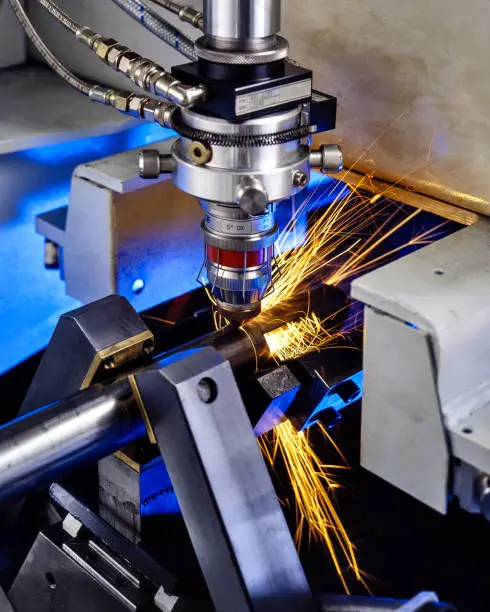
Laser cutting is great for making profiles in sheet metal, but it doesn't work well for die casts that need three-dimensional features. Wire EDM works well with sharpened tool steels but is too slow for finishing aluminum. It removes material at a rate of cubic millimeters per minute instead of the cubic centimeters per minute that high-speed milling can do. Both methods create heat-affected zones that change the properties of the material close to the cut surfaces. This is a problem for parts that are loaded and unloaded repeatedly, like in car powertrains or industrial gears.
Additive Manufacturing Versus Subtractive Precision
As 3D printing technologies improve quickly, parts made by selective laser melting or binder jetting have uneven strength and a surface roughness greater than 12μm when they are first printed. The mechanical qualities and thermal conductivity of wrought metals are kept in CNC machining-aluminum casts. The surface finishes reach Ra 0.8μm by precision cutting and controlled polishing. When mechanical engineers design parts for places with a lot of vibration or precise heat management, they always choose the tried-and-true material properties that come from combining casting and CNC machining.
It is important for strategic buying choices to take into account production volumes, quality standards, and the total cost of ownership. When part usefulness and long-term dependability depend on accuracy in dimensions, surface quality, and material integrity, CNC machining is the best post-processing method.
Selecting the Right CNC Machining Service Provider for Aluminum Die Cast Parts
Technical Expertise and Equipment Capabilities
When looking at possible machine partners, the first thing you should do is check out their tools and process knowledge. When suppliers use younger generation machining centers from well-known makers, it shows that they want to stay competitive. Spindles that spin faster than 12,000 RPM are best for cutting metal at high speeds, and rigid machine design keeps vibrations to a minimum during roughing cuts. In addition to knowing the right tools, shops that don't have expert teams that can optimize cutting settings for specific aluminum alloys (for example, by changing feed rates, spindle speeds, and coolant delivery based on the material makeup) don't get as good of results.
Certification Systems and Quality Documentation
Automotive tier-1 manufacturers need to see proof of IATF 16949 certification that shows statistical process control and approval steps for production parts. CNC machining processes must also be included in these quality audits, as tool wear, spindle speed, and coolant flow directly affect dimensional stability. Aerospace parts need to be compliant with AS9100D and be able to fully track their materials and be tested without damaging them. Companies that make electrical equipment that sells UL-certified goods need providers that have quality control systems that are in line with ISO 9001:2015.
Procurement managers should make sure that possible partners have up-to-date certifications that are relevant to the industries they want to work with. They should also back up these claims with written inspection procedures that include CMM measurement reports, surface roughness testing, and keeping track of material certifications throughout production runs.
Scalability from Prototype to Production Volumes
The best machine partner can do both low-volume development and high-volume production without lowering quality or speeding up delivery times. When a new product is being made, engineering managers like it when companies can make working samples quickly so that they can be tested for design validity. When a product goes from prototypes to mass production, the same supplier should show that they can handle scaling up operations, which could mean assigning more machines or setting up specialized production cells. They should also be able to keep the same size standards that were set during test runs. This consistency gets rid of the risk and delay that come with moving processes from suppliers of development to sellers of production.
For example, Fudebao Technology meets these selection standards because it has integrated skills that include both casting and precise CNC machining. The plant offers complete solutions, from molten aluminum to final parts. It uses American HAAS automation machine tools as well as its own low-pressure casting and die casting equipment. This vertical unity makes it easier to keep an eye on the whole process and react more quickly to changes in engineering than when providers outsource secondary tasks.
Real-World Applications and Case Studies Demonstrating CNC Machining Precision on Aluminum Die Cast Parts
Automotive Powertrain Components
Transmission housings are tough jobs where CNC machining has a direct effect on how well and how long a car lasts. These castings usually have multiple bearing holes that need to be concentricity within 0.05mm, joint surfaces that need to be flat within 0.03mm per 100mm, and threaded mounting holes that need to be located within a ±0.1mm range. Case studies from production show that CNC machining finishing operations lower gear noise by keeping the center distances between shafts exact. Also, controlled surface finishes on sealing surfaces stop oil leaks during service intervals of 150,000 kilometers.
Aerospace Structural Brackets and Fittings
Aluminum has a great strength-to-weight ratio, and aircraft structure parts use it. However, they have to be made with exact measurements and materials must be tracked. However, important connection features need CNC machining to meet aerospace tolerance standards. A380 and A356 aluminum castings benefit from lightweighting through organic forms designed for load paths.
When mounting holes line up within a 0.08mm position error, assembly operations improve greatly. This is because shimming operations are eliminated, and airplane assembly time is cut by a large amount. Precision grinding removes material and lets you check important areas without damaging them. Ultrasonic testing confirms that there are no holes or other problems below the surface that could weaken the structure.
Industrial Pump Housings and Compressor Components
Heavy equipment makers choose cast aluminum pump bodies because they don't rust and conduct heat well. However, the sealing surface's flatness and the alignment of the ports decide how well the pump works. CNC machining makes sure that the mating sides of the pump cover are smooth to within 0.02 mm and have a Ra 1.6 μm finish. This keeps the seal's integrity during pressure cycles. The inlet and outlet ports are precisely machined to fit pipe systems without putting stress on them during installation. Standard fasteners can be used with the threaded mounting features that are machined to a 6H tolerance class, so there are no cross-threading risks during field assembly.
There are measurable gains in performance and lower costs when CNC machining is strategically used on aluminum die cast parts, as shown in these examples. When purchasing managers look at a supplier's skills, they should ask for similar case studies that are related to their businesses and the types of parts they need.
Conclusion
In conclusion, with CNC machining, aluminum die cast parts are taken from being near-net-shape castings to precision-engineered parts that meet the high standards for stability, surface quality, and accuracy in size and shape that are needed in the automobile, aircraft, industrial equipment, and electrical industries. This production method fixes natural casting variations by using automatic multi-axis material removal led by CAD/CAM programming. Tolerances are close to ±0.005mm, and surface finishes can reach Ra 0.8μm. Procurement teams can improve the performance of the supply chain, lower the total cost of ownership, and make end products more competitive in tough global markets by choosing skilled machining partners with the right certifications, modern equipment, and integrated capabilities.
FAQ
Which aluminum alloys respond best to CNC finishing operations?
Die casting is mostly done with A356 and A380 aluminum metals because they have good mechanical qualities and can be cast easily. After being heated, A356 has a tensile strength of over 240 MPa, which makes it perfect for structural aerospace and automobile suspension parts. It is also easy to machine with normal carbide tools. A380 is great for complicated thin-wall castings because it fills dies well, but it has a higher silicon content that speeds up tool wear, so inserts need to be replaced every so often to keep dimensions accurate. The Asian market has a lot of ADC12, which is similar to A380 in terms of how easy it is to machine but a little less flexible, which makes thread-forming processes more difficult.
How does CNC machining impact production lead times?
Integrated suppliers that can both cast and machine parts usually deliver finished parts within three to four weeks of receiving a purchase order for sample numbers. This time frame includes setting up the tools and inspecting the first batch. Once programs are proven to work, production orders can be put in at a faster rate, based on how complicated the part is and how long it takes to machine each piece. Strategic suppliers keep extra capacity on hand so that they can offer 1-2 week expedited choices when design changes happen or demand goes up. This way, you can avoid the longer lead times that come with managing multiple subcontractors.
What tolerance levels can procurement teams reasonably expect?
Standard CNC machining gets general tolerances of ±0.1mm, which are in line with ISO 2768-m middle grade standards and good for most practical needs. Tighter controls are needed for important parts, and ±0.05mm tolerances are reasonable for bearing holes, mounting surfaces, and alignment features that are shown on engineering models. With temperature-controlled conditions and high-quality tools, precision machining can get as close as ±0.01mm on some features. However, these tight standards are more expensive and should only be used for really important measurements that affect performance or assembly.
Partner with Fudebao Technology for Precision Aluminum Machining Solutions
Zhejiang Fudebao Technology is ready to help you turn your problems with precision aluminum die casting into competitive benefits. Our vertically integrated plant has low-pressure casting, die casting, and modern CNC machining using American HAAS automation equipment. This means that the dimensions are always accurate to within 0.05 mm. From molten metal to finished parts, engineering managers and sourcing directors can be sure that they are only getting parts from one source.
Full PPAP paperwork and quality certifications support the needs of the automobile, industrial equipment, and energy sectors. Get in touch with our technical team at hank.shen@fdbcasting.com to talk about your needs, or go to fdbcasting.com to learn more about what we can do as a reliable precision CNC machining source dedicated to meeting your most difficult aluminum component challenges.
References
1. American Foundry Society. Aluminum Casting Technology Handbook. Des Plaines: AFS Publishing, 2021.
2. Kalpakjian, Serope and Steven Schmid. Manufacturing Engineering and Technology. 8th ed. London: Pearson Education, 2020.
3. SAE International. Casting Design and Performance Standard J452. Warrendale: SAE Technical Standards Board, 2019.
4. Dietrich, Joerg. CNC Machining Technology: Volume 2 - Aluminum Processing. Munich: Hanser Publications, 2022.
5. ASM International Handbook Committee. ASM Handbook Volume 15: Casting. Materials Park: ASM International, 2018.
6. Zhang, Weihong et al. "Dimensional Accuracy Improvement of Aluminum Die Castings Through Integrated CNC Post-Processing." Journal of Manufacturing Processes 68, no. 3 (2021): 445-458.



_1756361494985.webp "sliding block copper castings")
_1756352472762.webp "steel threaded plug")
_1756352400994.webp "chassis enclosure")