
How Can Sand Casting Reduce Costs for Large Industrial Parts?
2026-08-04
Sand casting advantages large parts by dramatically lowering tooling investments while accommodating massive component weights and complex geometries that other manufacturing methods struggle to achieve economically. This time-tested foundry process eliminates the prohibitive upfront costs of permanent molds, making it ideal for production runs ranging from prototypes to medium volumes. By utilizing recyclable sand materials and minimizing secondary operations, manufacturers can produce heavy-duty components weighing from several kilograms to over 100 tons while maintaining budget control and delivery flexibility that purchasing teams demand.
Understanding Sand Casting for Large Industrial Parts
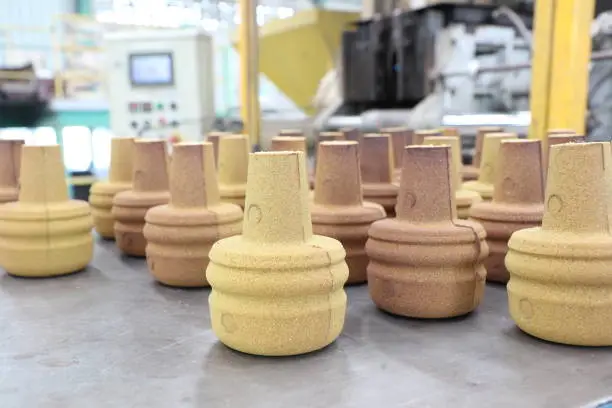
Sand casting advantages large parts by serving as a fundamental metalworking technique where liquid metal is poured into temporary molds made of sand mixtures that have been bonded together. This way of doing things has stayed useful across many fields because it solves certain problems that other methods cannot at similar costs.
The Sand Casting Process Explained
The first step in the manufacturing process is making a pattern, which is usually done by milling wood or metal to make the shape of the cavity. To make the mold halves, we pack specialized sand around the pattern. This sand can be either green sand with clay and water in it or chemically-bonded resin sand. Once the design is taken out, molten metal is poured into the hole. The metal cools down slowly and solidifies, and then the sand breaks away to show the final casting. This ability to collapse keeps metals with high solidification shrinkage from hot tearing, which is a major benefit over stiff molds.
Materials That Enable Large-Scale Production
Silica sand can handle temperatures above 1600°C without melting, and synthetic sands are even better at withstanding high temperatures. For high-volume work, bentonite clay is a cheap way to bond, but furan or phenolic resins are better for controlling the dimensions of precise uses. We cast non-ferrous metals like aluminum, copper, and even high-melting-point titanium along with ferrous alloys like ductile iron and carbon steel. This gives the materials more freedom than fixed mold processes can offer.
Why Scale Matters in Sand Casting
The process works with a wide range of sizes without making costs go up and up. It takes bigger flasks and more sand to make a 50-ton valve body, but the economics are still better than when these parts are machined from solid billets. Pattern tooling is much cheaper than die casting tools, and changes can be made quickly by making changes to the pattern instead of having to pay for expensive die repair.
Key Cost Advantages of Sand Casting for Large Parts
The economics of manufacturing change a lot when component dimensions are bigger than what standard equipment can handle. Engineering managers and sourcing heads can both benefit from sand casting advantages large parts through multiple interconnected methods for easing financial stresses.
Minimal Tooling Investment
Permanent mold systems cost a lot of money. Die casting tools alone can cost hundreds of thousands of dollars before they can be used to make a single part. In contrast, sand casting models can be made with simple cutting or 3D printing at much lower cost. This flexibility is one of the key sand casting advantages large parts benefits, especially when producing heavy components, oversized castings, and complex industrial parts. When making medium volumes, this cost gap is very important because die amortization often cannot recover the original tooling investment. We have seen procurement teams accept sand casting advantages large parts projects in just a few days because the financial risk is low enough that design changes during development do not create major losses. For large castings, custom machinery parts, and low-to-medium production runs, sand casting provides a cost-effective manufacturing solution with reduced tooling expenses and greater design adaptability.
Material Efficiency and Waste Reduction
After each casting, sand molds break down, but the sand can be reconditioned and used in other molds. This recycling capability is one of the important sand casting advantages large parts benefits, especially for industries producing heavy components and complex geometries. Foundries get back more than 95% of green sand by using machines to get rid of the fines and fix the structure of the grains. Resin sand needs more work to be cleaned up, but it can still be reused many times. This ability to be recycled is very different from subtractive machining, where chip waste from big forgings or billets is simply material loss. The metal melts with almost no oxidation loss, and the gating systems are reused and put back into the furnace. These features make sand casting advantages large parts especially valuable for large-scale manufacturing, heavy machinery components, industrial equipment, and oversized castings that require cost efficiency and sustainable production methods.
Accelerated Production Timelines
Pattern creation takes between two and six weeks, depending on how complicated the design is. This is much shorter than the time it takes to make die casting molds, which takes months of precise cutting. This speed advantage goes beyond just setting up. Pattern changes can be made quickly without having to throw away expensive tools when design changes come up. We work together with customers who need working prototypes quickly because we know that sand casting can make testable parts while other methods are still developing their tools.
Sand Casting vs Alternative Manufacturing Methods for Large Parts
To choose the best way to make something, you need to know how different methods work in terms of cost, skill, and quality. Strategic buying teams evaluate sand casting advantages large parts by weighing trade-offs against the needs of each application.
Machining Large Components From Solid Stock
TCNC machining is very good at making precise parts, but it is too expensive for large components, which is why the sand casting advantages large parts approach is often considered for heavy industrial applications. If you make a 200 kg gearbox case from a billet, you might end up with 70% of the material as chips, which wastes both raw materials and machine hours. For large sand casting parts, the process provides significant benefits, including lower material waste, reduced machining requirements, and better cost efficiency for oversized components. This method only makes sense when the production volume is too low to justify setting up other casting methods or when the tolerance standards are too high for casting to meet. We usually suggest a hybrid approach, in which sand casting for large parts is used to create the near-net shape and then CNC operations are used on critical surfaces to achieve the required precision without removing too much stock. By combining large part sand casting advantages with advanced machining, manufacturers can achieve a balance between structural strength, production efficiency, and dimensional accuracy.
Forging and Its Cost Implications
By deforming metal under high pressure, forging gives it unique grain structure and dynamic features. Heavy presses that can forge large parts are big investments that forge shops pay off over a long period of time by making a lot of parts. Tooling costs are as high as or higher than die casting, and design freedom is still lower than with cast geometries. When it comes to automotive connecting rods, forging is necessary for wear performance, which requires aligned grain flow. However, structural housings rarely need these qualities, so forging is not necessary for them.
Additive Manufacturing's Niche Role
Metal 3D printing is exciting because it gives designers more freedom, but it cannot be used for many things because of practical issues. Build room sizes limit the sizes of parts, output rates stay low, and the cost of materials per kilogram is much higher than the cost of casting alloys. The technology works well for expensive, geometrically complicated items like medical implants or complex rocket brackets, but it cannot compete when it comes to making heavy industrial parts. For the majority of big part uses, sand casting and selective machining provide better economics.
Overcoming Common Challenges in Sand Casting Large Parts
When talking about any casting method, quality issues are natural to come up. Modern sand casting advantages large parts through foundry practices and quality systems that have led to the development of complex controls that fix common casting flaws while keeping costs low.
Defect Prevention Through Process Control
The main quality risks in sand casting for large parts are porosity and shrinkage defects. Understanding the sand casting advantages large parts can provide, manufacturers focus on controlling process parameters to achieve reliable casting performance, especially for heavy industrial components. We carefully manage sand permeability to allow trapped gases to escape during metal solidification, preventing internal air pockets and improving casting integrity. Proper gating system design ensures that molten metal solidifies gradually from thinner sections toward risers, which continuously supply liquid metal to compensate for shrinkage during cooling. Resin sand casting systems provide better dimensional control than traditional green sand methods, with surface finishes reaching 6.3 Ra (microns), reducing the need for additional machining operations. These sand casting advantages large parts include the ability to manufacture oversized components, produce complex geometries, reduce tooling costs, and support flexible production for low-to-medium volume manufacturing. When aluminum casting specifications require higher quality standards, degassing procedures are applied to remove hydrogen from molten metal, significantly reducing gas porosity. By combining advanced molding technology, precise process control, and strict inspection methods, sand casting delivers durable, accurate, and cost-effective solutions for large parts used in heavy machinery, automotive equipment, industrial systems, and engineering applications.
Inspection Protocols That Build Confidence
Before pouring, Optical Emission Spectrometry is used to check the quality and make sure that the alloy's chemistry meets ASTM or EN standards. The mechanical qualities come from test bars that are made along with the production parts and checked for tensile strength, yield strength, and elongation to make sure the heat treatment worked. Non-destructive testing lets you see inside; ultrasonic inspection finds subsurface shrinkage, and radiographic examination finds holes that cannot be seen from the surface. Coordinate Measuring Machines check the correctness of measurements against CAD models and record compliance with ISO 8062 error grades.
Heat Treatment and Finishing Operations
Most big casts are heated to improve the microstructure and get rid of any remaining pressures. Solution heat treatment followed by controlled aging makes aluminum alloys as strong as they can be, while normalizing makes the grain structure of steel casts more uniform. These steps cost more, but the mechanical properties they give are as good as or better than those of wrought materials. When you do the final machining on important surfaces, you get the tight tolerances and smooth surfaces that functional assemblies need. We usually set aside 3–6 mm of cutting stock for sizes that need to fit perfectly, weighing the cost of casting against the end size needs.
Practical Tips for Procuring Large Sand Cast Parts Cost-Effectively
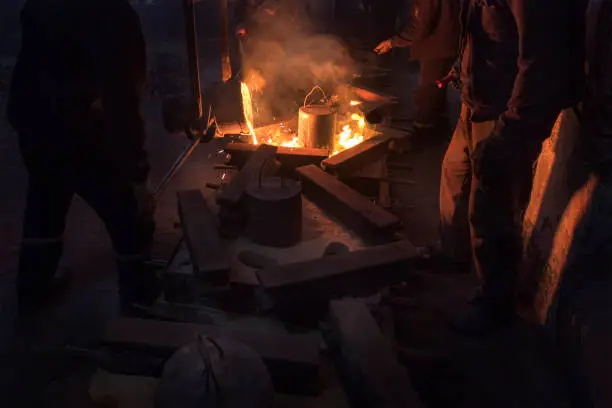
Getting the best deal does not just mean picking the cheapest quote. Strategic buyers evaluate sand casting advantages large parts by looking at what suppliers can do, making sure their needs are clear, and setting up orders in a way that saves money and ensures on-time delivery.
Supplier Qualification Criteria
Although ISO 9001 approval is a good way to make sure that a quality system is in place, looking at particular foundry equipment is what really shows how well it works. Does the building have spectrometers for checking the chemistry itself? What kinds of NDT tools are there for checking inside things? How quickly designs are turned into production tools depends on how well the pattern-maker can do their job. We keep CNC machine tools that do the finishing work in-house. This cuts down on the time it takes for casting and finishing vendors to coordinate. Customers in the automobile industry care a lot about PPAP documents because submission standards require a lot of process validation.
Volume Planning and Pricing Structures
Although die casting has a dramatic per-piece cost reduction, sand casting's economics increase with volume through setup cost amortization. Foundries base their prices on pattern amortization, where the full cost of the tools is covered by the number of prototypes made, while the investment is spread out over many units in production runs. Campaign melting saves money when you order in bulk; furnace efficiency goes up when you make more than one casting from a single melt. After design approval, lead times for production orders are usually between 4 and 8 weeks, but pressing needs can be met by expedited processing when needed.
Managing Logistics Complexity
Shipping problems can happen with large casts that do not happen with smaller parts. A 500 kg pump housing needs to be packed in crates and secured properly. It may also need special goods equipment. We work with logistics partners who know how to handle heavy parts, making sure that all the right paperwork is done and that the load is safe during transport. Clear communication keeps expensive shocks at bay. Dimensional designs should include important working areas where lifting equipment connects, as well as shipping requirements for machined parts. Keeping an eye on the project and sending regular information on production lets buying teams plan when to receive goods and put them together.
Conclusion
Sand casting advantages large parts as the most cost-effective way to make big industrial components because it requires the least amount of tools, can make parts of any size, and can work with a wide range of materials. Other methods simply cannot compete with this. Recycling molds, cutting down on waste, and speeding up pattern development are all great benefits for automotive powertrains, heavy machinery, energy sector equipment, and industrial uses. Concerns about traditional casting have been addressed by modern quality controls and inspection processes. However, the basic economics of sand casting still make it the best choice for parts that need to be made in small quantities or in medium amounts.
FAQ
What qualifies as a "large part" in sand casting?
Large castings are usually defined as parts that weigh more than 50 kg, but the process can make parts that weigh anywhere from a few kilograms to over 100 tonnes. Sand casting is clearly better than other ways of making parts that weigh between 100 kg and 2000 kg, like pump housings, valve bodies, and gearbox casings. The upper limit is more affected by the size and ability of the foundry's crane than by limitations in the process itself.
Can the accuracy needed for functional assemblies be met by sand castings?
These days, sand casting can achieve dimensional tolerances of ISO 8062 CT10–CT13 grades. Resin sand systems offer better control than green sand methods. CNC cutting is almost always needed to get mating surfaces flat and accurate in terms of size and shape, but this combined method is much cheaper than machining whole parts from solid stock. We usually keep tolerances of ±0.05mm on machined parts, and on non-critical surfaces, we get almost net-shape casting economics.
How does the environmental impact of sand casting compare to other methods?
Mold recyclability is one of the environmental benefits of sand casting; after mechanical reconditioning, foundries can reuse more than 95% of the green sand. This constant flow of materials lowers the need for new sand in digging. The amount of energy used per kilogram of finished part is usually less than what is needed for extensive machining, and very little material is wasted because gating systems melt back into production. As companies use environmental responsibility measures to judge suppliers, these things become more important in purchasing decisions.
Partner With Fudebao Technology for Cost-Effective Sand Casting Solutions
Zhejiang Fudebao Technology specializes in providing sand casting advantages large parts demand, with a wide range of skills for aluminum alloy, copper alloy, and stainless steel components. Our factory has low-pressure casting machines, high-speed machining centers, and precise CNC tools that work together to support full "melting-casting-finishing-surface treatment" processes. This gets rid of the coordination delays that come with supply chains with multiple vendors. We keep quality certifications and process controls that meet automotive PPAP requirements as well as industrial equipment specifications as a trusted sand casting supplier. Email hank.shen@fdbcasting.com to talk about your needs for big parts and find out how our engineering team turns difficult casting problems into cost-effective manufacturing solutions.
References
1. American Foundry Society. (2021). Casting Process Selection Guide: Technical and Economic Considerations. Schaumburg: AFS Publications.
2. Campbell, J. (2015). Complete Casting Handbook: Metal Casting Processes, Metallurgy, Techniques and Design. Oxford: Butterworth-Heinemann.
3. Brown, J.R. (2019). Foseco Ferrous Foundryman's Handbook (11th ed.). Oxford: Butterworth-Heinemann.
4. ASM International. (2018). ASM Handbook Volume 15: Casting. Materials Park: ASM International Publishing.
5. Beeley, P.R. & Smart, R.F. (2017). Investment Casting: Manufacturing Process Economics and Quality Assessment. London: Institute of Materials Publishing.
6. Jolly, M.R. (2020). "Sand Casting Process Optimization for Large Industrial Components." International Journal of Metalcasting, 14(3), pp. 612-628.



YOU MAY LIKE