
High-Pressure Die Casting vs. Sand Casting: A Technical Deep Dive
2026-07-10
Procurement teams have to make a big choice between high-pressure die casting and sand casting, which affects the quality of the product, how much it costs, and how long it takes to make. Sand casting is the most flexible way to make complicated shapes and small to medium-sized parts. It can handle metals with melting points higher than 1600°C and doesn't require expensive tools.
Also, high-pressure die casting has short production runs and tight tolerances that make it perfect for making a lot of car parts. When engineering managers and sourcing directors understand these basic differences, they can match manufacturing methods to the needs of a particular project, weighing the initial investment against the cost per unit and performance standards.
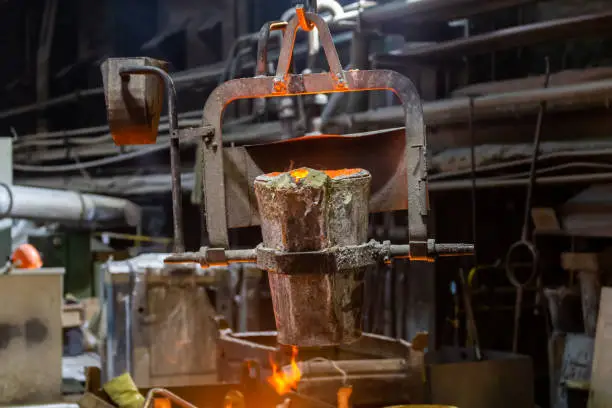
Understanding the Fundamentals of High-Pressure Die Casting and Sand Casting
You need to know how each metal-forming technology works and where it will help your production goals the most in order to choose the right one.
What Defines High-Pressure Die Casting?
Under very high pressures (10,000 to 20,000 psi), high-pressure die casting pushes liquid metal into precise steel molds. This fast filling and solidification cycle makes parts that are very consistent in size, usually within 0.05 mm of the exact size required. This method works great with aluminum and zinc metals, making parts with thin walls and smooth surfaces that usually don't need much secondary cutting. Automakers use this method to make transmission housings, engine frames, and structural parts that need to be strong while also being light.
How Sand Casting Solves Complex Manufacturing Challenges
Molds for sand casting are made from bound sand mixes, such as green sand with clay binders or chemically-bonded resin sand systems. These molds are used only once. This foundry method is used for more than 60% of all metal casts in the world because it doesn't require expensive starting tools and can handle casting weights of over 100 tons. The process works with steel, iron, copper, titanium, and other metals with high melting points that fixed molds can't handle. Molds use silica sands with a high refractoriness that can handle temperatures above 1600°C without melting. Bonding methods provide the shear strength and gas permeability needed to keep the material from porosity.
Material Versatility and Industry Applications
Die casting is mostly used by automakers and tier-1 suppliers to make precise frames, electrical housings, and motor parts. Because the method is so fast, it's possible to make more than 100,000 units a year with uniform quality. In industries where part complexity and material variety are more important than production speed, like big machinery, energy infrastructure, and power equipment, sand casting is the main method used. Duplex steel is used to make large valve bodies for oil and gas uses because it doesn't rust. On the other hand, sand casting is the only way to get the mass and sound damping qualities that are needed for excavator counterweights and gearbox housings.
Technical Performance Comparison: Strengths and Limitations
There are clear benefits to using different casting technologies when it comes to important performance measures that have a direct effect on the standards of your parts and the costs of running your business.
Production Speed and Scalability Factors
Cycle times for high-pressure die casting are measured in seconds, which makes it perfect for car projects that need more than 500,000 units a year. Automated systems work well with monitoring systems for Industry 4.0, keeping track of quality factors in real time and keeping scrap rates below 2%. Sand casting, on the other hand, needs longer cooling times and mold preparation that is done by hand, so it can only make 50 to 5,000 units per year. This slower pace is better for the bottom line when the high costs of equipment for die casting molds—often more than $50,000 per cavity—are higher than the high cost of labor for pattern-based sand molding.
Dimensional Accuracy and Surface Quality
Die-cast parts usually meet ISO 8062 CT4-CT6 tolerances with surface finishes ranging from 1.6 to 3.2 Ra microns, which means that extra machining processes are cut down or eliminated. This level of accuracy makes it possible to directly connect electrical components and heat-dissipating parts that need consistent matching surfaces. When sand casting, the tolerances are usually between CT10 and CT13, and the surface roughness is between 6.3 and 12.5 Ra. This means that important joints need extra CNC machining. The trade-off is less design freedom because sand cores make it hard to use permanent molds to make engine blocks and cylinder heads with complex cooling tunnels inside them.
Material Properties and Mechanical Strength
When solution annealing and artificial aging are added to sand-cast A356 aluminum as part of the T6 heat treatment, it makes it stronger than normal die-cast metals. This heat processing improves the flexibility needed for shock-resistant explosion-proof housings and gives marine navigation screens that are likely to be hit the fracture toughness they need. The fast solidification of die casting makes smaller grain structures, which are good for thin-walled parts but limit the types of metals that can be used. Sand casting works with superalloys, which are needed for pump cases in harsh chemical conditions where failure would be very bad.
Cost Structure Analysis
The main business difference between these methods is the tools that are used. Die casting requires a big investment up front in hardened steel models that are made to last 100,000 or more shot cycles. This is only possible with large-volume projects. Sand casting models are much cheaper, and it usually takes 20 to 30 days for the first sample to be approved. This makes it possible to make inexpensive prototypes and small batches. Die casting is better for making more than 10,000 pieces a year because it costs less per unit, but sand casting is better for making customized industrial equipment where design changes and material testing are more important than production speed.
Choosing the Right Casting Method for Your Industry Needs
By matching the casting technology to the needs of your industry, you can make sure that performance, safety, and total cost of ownership are all optimized throughout the lifespan of the component.
Automotive and Transportation Sector Requirements
Automotive tier-1 suppliers put a high value on PPAP paperwork, repeatable dimensions, and the ability to create molds that can support output with multiple cavities. For transmission housings and engine frames, where lowering weight has a direct effect on fuel economy, high-pressure die casting meets these needs. Sand-cast engine blocks with internal cores make complicated cooling shapes that can handle high temperatures and combustion pressures, which are good for heavy-duty powertrains. Because sand molds are easy to collapse, hot breaking doesn't happen during solidification, which is very important for metals that shrink a lot.
Industrial Machinery and Heavy Equipment Applications
When mechanical engineers design pumps, compressors, and gears, they need long-lasting casts that can handle heat consistently and allow for small batch production. These needs can be met cost-effectively with sand casting, especially for parts that weigh 50 to 500 pounds, which is too heavy for die casting. Excavator counterweights show how sand casting can be used on a larger scale by giving the necessary mass for stable earthmoving. Quality teams like that resin sand systems can make molds stronger than green sand. This lets vacuum impregnation seal micro-porosity when IP66/67 ratings are needed for pressure testing.
Electrical and Energy Infrastructure Components
Power equipment makers like using aluminum sand mold casting to make explosion-proof lamp housings with walls that are thicker than 6 mm to meet Ex d flameproof ratings. Because die casting has limits on section thickness, it can't be used for these safety-critical tasks. Strategic sourcing teams know that sand casting is a cheaper way to make smaller quantities of the copper alloys that are needed for motor housings and connections to carry electricity. These parts can withstand 1000 hours of salt spray tests in offshore wind sites because they have been treated with chromate conversion coating and then epoxy-polyester powder coating.
Risk Management and Quality Assurance Practices
Certifications like ISO 9001 and IATF 16949, which prove written quality management systems, are the first thing that suppliers are looked at. It's also important to look for foundries that have computer modeling tools that can help you make the best gate and riser designs to avoid porosity. It's been our experience that providers who can vacuum impregnate parts offer extra protection against hydraulic parts leaking. Pilot production runs test both the casting process and the conversation between the buyer and the seller. They show how partners deal with changes to the design and differences in measurements before they commit to large orders.
Future Trends and Innovations in Casting Technologies
Manufacturing technology is always changing quickly, adding new features that change how sourcing teams choose casting partners and plan for future projects.
Digital Integration and Smart Manufacturing
IoT-enabled casting equipment now keeps an eye on the melting point, pressure profiles, and cooling rates in real time, sending the information to analytics tools in the cloud. This connection makes predictive maintenance possible, which cuts down on unplanned downtime that causes delivery plans to get thrown off. 3D-printed patterns and cores are used in sand casting, which cuts the time between design changes from weeks to days and lowers the cost of storing patterns. Die casting cells use joint robots to remove parts and trim them. This makes workers safer and keeps cycle times the same across shifts.
Advanced Materials and Alloy Development
Metallurgists are making new aluminum-silicon alloys that are better at both die casting flexibility and heat treatability after casting. This closes the gap in mechanical properties between the different casting methods. High-entropy alloys are used in business sand casting to make aircraft parts that need to be very strong for their weight at high temperatures. Copper-aluminum hybrid casts made with special sand molding methods make EV motor housings better at conducting electricity while using less material than pure copper versions.
Sustainability and Environmental Stewardship
As regulations and companies' promises to environment grow, energy use becomes a bigger factor in choosing a casting method. Modern methods for reclaiming sand can reuse more than 95% of it, which drastically cuts down on the amount of raw materials needed and the cost of dumping. When closed-loop cooling systems are used in die casting processes, 60% less water is used than in older buildings. Lifecycle assessment tools help buying teams figure out how much carbon each casting option leaves behind, keeping in mind that the energy used for shipping and extra handling often outweighs the energy used in the casting itself.
Conclusion
To choose between sand casting and high-pressure die casting, you need to carefully look at your production rate, the difficulty of the parts you need to make, the materials you need, and your budget. Die casting is the fastest and most accurate way to make large quantities of car and electrical parts. Sand casting, on the other hand, is more flexible and can be used for big machinery, energy infrastructure, and making prototypes. When engineering managers and buying directors understand these basic differences, like how much tools cost and what materials can do, they can make choices that are in line with quality standards and strategic manufacturing goals.
FAQ
What tolerances can sand casting realistically achieve for precision components?
With standard sand casting, limits of ISO 8062 CT10–CT13 are met, and the surface finish is between 6.3 and 12.5 Ra microns. Traditional green sand is easier to handle than resin sand methods that use chemically-bonded mixtures. To get the final specs, critical interfaces need extra CNC cutting. This is especially true for contact surfaces in gearbox housings and pump bodies, where the integrity of the seal depends on being flat and straight to within 0.05 mm.
How do you prevent porosity in sand-cast electrical housings requiring pressure testing?
When we build gates and risers, we use computer simulations to make sure that metal flows and feeds smoothly, which stops heavy parts from becoming porous from shrinkage. Resin sand is better for mold strength than green sand, which lowers flaws caused by gas. When parts need to meet IP66/67 standards, vacuum impregnation shuts off any remaining micro-porosity. This makes sure that pressure tests always go well in explosion-proof cabinets and marine equipment.
Can sand casting match die casting's mechanical properties for structural applications?
When sand-cast A356 aluminum is heated to T6, it gets a tensile strength of more than 280 MPa and a stretch strength of more than 5%, which is higher than many normal die-cast alloys. This heat processing—solution annealing at 540°C followed by artificial aging—makes the microstructure more flexible, which is important for uses that need to be resistant to impact. When heat treatment is needed, the fact that sand casting solidifies more slowly actually helps the grain structure form.
Partner with a Proven Sand Casting Manufacturer
Zhejiang Fudebao Technology is a world-class aluminum factory that works with the energy, automobile, and industrial equipment industries. They are experts in sand casting and precise machining. Our factory has low-pressure casting machines, high-speed CNC machining centers, and modern quality control systems that can give accuracy of ±0.05mm. It can handle the whole "melting-casting-finishing-surface treatment" process.
We help our clients with everything from making explosion-proof lamp housings to parts for heavy machinery. We do this by working with them through pattern development, test production, and full-scale production while keeping communication open and collaborating technically. Email our engineering team at hank.shen@fdbcasting.com to talk about your unique casting needs and get full documentation that is relevant to your application.
References
1. American Foundry Society. (2021). Casting Process Selection Guidelines for Design Engineers. Des Plaines: AFS Technical Publications.
2. Campbell, J. (2015). Complete Casting Handbook: Metal Casting Processes, Metallurgy, Techniques and Design (2nd ed.). Oxford: Butterworth-Heinemann.
3. Jabur, A. S., & Kushnaw, F. M. (2020). Comparative Analysis of Sand Casting and Die Casting Methods for Aluminum Alloys. International Journal of Metalcasting, 14(3), 786-798.
4. Kaufman, J. G., & Rooy, E. L. (2018). Aluminum Alloy Castings: Properties, Processes, and Applications. Materials Park: ASM International.
5. Modern Casting Magazine. (2022). Census of World Casting Production: Sand Casting Dominates Global Metal Forming. Modern Casting, 112(12), 16-21.
6. Stefanescu, D. M. (2019). Technological and Economical Aspects of Casting Processes: From Sand to Die Casting. Metallurgical and Materials Transactions B, 50(1), 111-125.



YOU MAY LIKE
_1756347888208.webp "New energy motor shell")
_1756360265131.webp "Aluminum casting chair legs")
_1756346421748.webp "Aluminum casting telescopic bracket Parts")