
Die-Cast Aluminum Manufacturing Supports High-Volume Production
2026-07-28
Die-cast aluminum manufacturing stands as a cornerstone solution for industries demanding large-scale production of precision metal components. This high-pressure casting method injects molten aluminum alloys—commonly A380, A383, or ADC12—into hardened steel molds at pressures reaching 30,000 psi, creating complex geometries with exceptional dimensional accuracy. The process addresses critical production challenges across automotive, aerospace, electrical, and industrial sectors by consolidating multiple features into single net-shape components, reducing assembly steps while maintaining tolerances within ±0.002 inch/inch per NADCA standards. As manufacturers worldwide seek cost-effective pathways to scale production without sacrificing quality, understanding the technical capabilities and strategic advantages of this manufacturing approach becomes essential for informed procurement decisions.
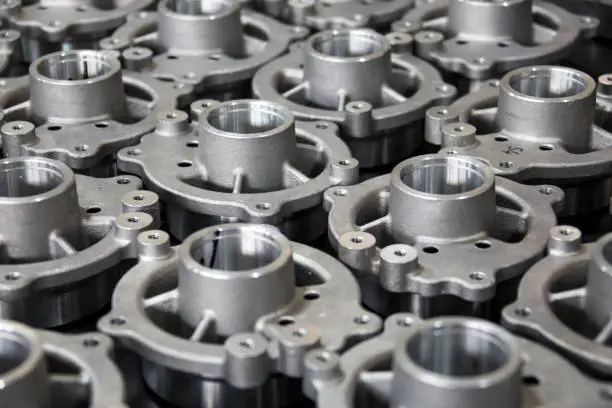
Understanding Die-Cast Aluminum and Its Manufacturing Process
What Makes Die-Cast Aluminum Different?
Precision-engineered parts made by high-pressure die casting (HPDC) are referred to as die-cast aluminum. This process is very different from sand casting or investment casting. The method pushes molten aluminum into steel dies that can be used again and again at speeds and pressures that make the surfaces smoother and the tolerances tighter than with gravity-based methods. Popular metals, such as A380, have a tensile strength of about 47 ksi and a yield strength of 23 ksi. They are also very light, with a density of about 2.71 g/cm³. Because of these factors, the material is very useful for uses where weight efficiency must not be sacrificed for structural integrity, like in car gearbox cases or aerospace structural brackets.
The Step-by-Step Manufacturing Journey
Aluminum alloys are melted in controlled ovens that hit 1,220°F at the start of the production cycle. Here is where quality control starts: optical emission spectroscopy checks that the amount of iron, copper, and zinc meets strict requirements to keep the material from being brittle or porous. When the metal melts to the right temperature, computer-controlled injection systems push it into dies that have already been heated and have complex cavity designs. The metal hardens quickly, usually in seconds, which means that cycle times for parts with a modest level of complexity can be as short as 60 to 90 seconds. Vacuum-assist technology is used in modern facilities during injection to get rid of any trapped air. This greatly reduces the amount of internal porosity that could weaken pressure-tight housings for hydraulic or electrical uses.
Comparing Casting Methods for Strategic Decisions
When buying teams look at different ways to make things, die-casting stands out as being clearly better than other options. It's cheaper to make sand molds, but the finished product isn't as smooth or consistent in size. This makes it good for big industrial equipment where strength is more important than looks. Investment casting is just as precise, but it takes longer to make and costs more per unit. This makes it better for very complicated aerospace parts. When you need to make more than 1,000 to 2,000 units, die-casting is the best option because it has short production processes, accurate results every time, and low tooling costs. This level is the "breakeven point," or the point at which the starting costs of the die are spread out over enough production runs to make CNC cutting much cheaper.
Advantages of Die-Cast Aluminum for High-Volume Production
Strength-to-Weight Excellence Across Industries
When used in die-casting, die-cast aluminum alloys have better mechanical performance than other materials in important situations. Aluminum is better than magnesium at resisting rust and staying stable at high temperatures. This makes it a better choice for parts of an automobile engine that are exposed to salt spray and thermal cycle, which can shorten the life of materials. Compared to zinc alloys, aluminum has a lower density, which is a key factor when the transportation industry figures out how much fuel savings can be made by reducing weight. Plastics don't have the rigidity or electromagnetic shielding properties that are needed for the housings of electronic control units in electric vehicles. These housings protect the structure and actively remove heat. With a thermal conductivity of about 96 W/m-K, housings become built-in heatsinks, getting rid of the need for extra cooling parts.
Economic Scaling Through Tooling Longevity
For high-volume production to be cost-effective, the investment in tools must be spread out over long production runs. Depending on the part's complexity and temperature stress, standard H13 steel dies can usually handle 50,000 to 100,000 injection rounds before they need to be fixed up. Because they last so long, the cost of each part drops greatly as production numbers rise. At 5,000 pieces, a part might cost $15 per unit, but at 50,000 pieces, it might only cost $4 because the cost of the die is spread out over a bigger number of pieces. This benefit is amplified by fast cycle times—a single die can make 300–500 parts a day in multi-cavity designs, meeting demand jumps without having to hire more workers. Touchwork is cut down even more by automated trimming and extraction systems, which creates cost structures that traditional fabrication or machining can't match on a large scale.
Precision and Finishing Capabilities
The surface finish from die-casting is naturally between 63 and 125 microinches Ra, which is smoother than finishes from as-cast sand or investment processes. Because of this quality, secondary cutting is cut down on or not needed for non-critical surfaces. However, CNC post-processing is usually needed for precision features like mounting bosses or sealing surfaces to get them to the right size. In this case, the things to think about when it comes to surface treatment are very important. Anodizing might look like a good way to protect against corrosion, but the high silicon content in die-cast alloys makes the anodized layers dark and uneven. Powder coating or e-coating are the most common methods used in the industry. They give things a regular look and can withstand salt spray for more than 1,000 hours, according to ASTM B117 testing. When the aluminum substrate is properly prepared, these finishes physically stick to it. They pass cross-hatch adhesion tests according to ASTM D3359 standards, which prove that they will last for a long time in harsh settings.
How to Choose the Right Die-Cast Aluminum Alloy and Supplier?
Matching Alloy Properties to Application Demands
The choice of alloy has a direct effect on how well a part works in terms of mechanical, heat, and weather conditions. A380 is still the most popular metal for general-use projects because it is easy to cast and strong enough for car brackets and industrial housings. Its 8.5% silicon content makes it more fluid when it's being poured into a mold, which lets thin-wall sections down to 1.5 mm be made in areas that are locally reinforced. The die-filling qualities of A383 are a little better for complicated geometries with lots of small details, but the mechanical properties are the same. ADC12 is commonly used in Asian manufacturing because it has great resistance to corrosion and is perfect for naval or seaside uses where salt air speeds up material breakdown. In motor housings and power electronics enclosures, where heat dissipation directly affects operational longevity and reliability, buyers in the electrical and energy sectors often ask for alloys with optimized thermal conductivity.
Evaluating Manufacturing Partners
When choosing a supplier, the criteria go beyond just price quotes and include skills that will ensure the success of the project, and for die-cast aluminum, this means evaluating tooling expertise, mold-flow simulation capabilities, volume flexibility, quality certifications (ISO 9001, IATF 16949 for automotive, or AS9100 for aerospace), and geographic logistics—domestic suppliers offering faster communication and lower shipping costs, while overseas partners may provide cost advantages at sufficient volumes to justify ocean freight and longer lead times. Knowing how to make tools is very important because die design has a direct effect on part quality, cycle time, and production costs. Mold-flow modeling software is used by experienced makers to check the design for flaws like porosity or cold shuts before cutting the steel. Flexibility in volume is just as important; suppliers should allow trial runs to make sure the design works before investing in high-volume tools. Systematic process controls are shown by quality certifications such as ISO 9001, IATF 16949 for the auto industry, or AS9100 for the aerospace industry. When weighing logistics costs against lead times, geography plays a role. For example, domestic suppliers in the US offer faster communication and lower shipping costs, while overseas partners may offer cost advantages at large enough volumes to justify ocean freight and longer planning horizons.
Prototyping and Low-Volume Production Solutions
Not every project starts with enough work to warrant its own set of tools. Progressive makers offer trial die services using softer tool steels or aluminum molds that can handle 1,000 to 5,000 shots. This lets customers test the design before committing to production-grade H13 steel dies that cost $15,000 to $80,000. This staged approach lowers the risk of going through multiple revisions of a design. Some suppliers offer rapid tooling, which means they can make prototype dies in 4 to 6 weeks instead of 12 to 16 weeks for complex production tooling. When clients use real parts in production materials, they can see performance traits that 3D-printed samples can't copy. This method works best for companies that make industrial equipment and are making custom pump housings or engine covers. Testing the functionality under load and temperature can confirm design choices before committing to large quantities.
Comparing Die-Cast Aluminum with Alternative Materials and Processes
Material Performance Trade-Offs
When deciding between different materials, decision matrices need to take both technical requirements and cost factors into account. Zinc die-casting has even tighter standards and nicer as-cast finishes than aluminum, but because it has a density 2.6 times higher than aluminum, it can't be used in situations where saving weight is important. At 1.74 g/cm³, magnesium is the lightest option. However, its low resistance to corrosion and high cost make it only useful in high-end applications like aerospace interiors. Engineering plastics can compete with metals in high-volume market goods, but they don't have the electromagnetic shielding, thermal management, or structural strength that are needed in industry and vehicle settings. A gearbox body that is constantly vibrating and changing temperatures needs aluminum's fatigue resistance and dimensional stability under thermal cycles, which are qualities that plastics can't reliably provide over a long service life.
Process Comparison for Informed Sourcing
Aside from choosing the right materials, the production method also sets cost structures and limits on what can be done, and for die-cast aluminum, the process consolidates what would otherwise require five separate operations into a single step, reducing assembly labor, eliminating fasteners, and improving structural integrity through monolithic construction, whereas forging limits geometric complexity, extrusion cannot produce closed shapes without welding, investment casting has long cycle times, and sheet metal requires multiple pressing and welding operations for enclosed structures. Forging gives better grain structure and mechanical properties, but it limits geometric complexity. This means that it works best for high-stress suspension parts rather than complicated housings with internal passages. Extrusion is a fast way to make long curves, but it can't make closed shapes or three-dimensional features without welding or milling them first. Investment casting can handle complex shapes that die-casting can't, like internal undercuts and very thin walls. However, because the cycle time is hours instead of minutes, it can only be used for small quantities or very valuable aircraft parts. Sheet metal production works well for big, shallow parts, but it takes a lot of pressing and welding to make structures that are enclosed. When die-casting, what would normally take five separate operations to make is done in one. This cuts down on assembly work, gets rid of the need for fasteners, and improves structural integrity through monolithic construction.
Supporting High-Volume Production Through Advanced Die-Cast Aluminum Technologies
Post-Casting Enhancement Techniques
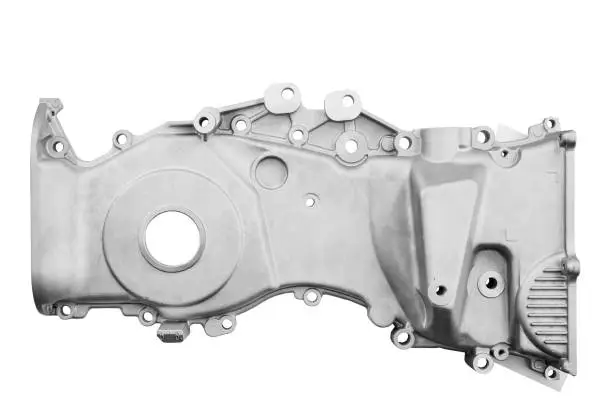
Without processes that improve their mechanical properties and surface characteristics, raw die-cast aluminum castings rarely meet the final requirements. Controlled heating and quenching processes are used in heat treatment methods like T5 and T6 tempers to raise the tensile strength by 20 to 30 percent through precipitation hardening. This treatment is necessary for aircraft uses that need the highest strength-to-weight ratios and resistance to wear over a wide range of temperatures. Precision CNC machining is used on important parts where cast tolerances aren't good enough. For example, mounting surfaces, bearing bores, and threaded holes can be machined on multiple axes to achieve positioning accuracy of within ±0.05mm. Coordinate measuring machines check complicated geometries against GD&T specifications to make sure that parts fit perfectly into automated assembly lines where manual fitting can't handle production rates of more than a hundred units per hour.
Advanced Finishing for Performance and Aesthetics
The choice of surface treatment has to balance the need for functionality with concerns about how it looks and how it will be exposed to the surroundings. Powder coating provides strong protection with film thicknesses of 50 to 100 microns, making outdoor electrical covers and lighting fixtures resistant to contact and UV rays. Through electrophoretic deposition, e-coating fills in gaps and crevices inside things, making sure even coverage where spray methods leave holes. Chemical conversion coats, such as chromate or non-chromate options, add thin layers of protection that help paint stick better and offer some resistance to corrosion. Vacuum impregnation fills in tiny holes in pressure-tight uses with resin. The resin polymerizes to make hermetic seals that can withstand hydraulic pressures or keep gas contained. Accelerated aging tests must be used to make sure that each finishing route works. These tests simulate years of service contact in just a few weeks in the lab.
Quality Assurance Protocols at Scale
Systematic inspection and process controls are needed to keep thousands of parts consistent. Real-time X-ray tools check important castings for internal porosity. Parts with holes that are too big or too many are thrown away before they can be machined into useful shapes. Statistical process control keeps an eye on metal temperatures, injection pressures, and the time it takes for cavities to fill. If any of these parameters move outside of the specified range, alerts are sent. Pressure decay leak testing makes sure that IP67-rated enclosures that keep wetness and dust out of critical electronics are sealed properly. Material verification using spectroscopy makes sure that every melt batch meets the requirements for the alloy. This keeps the alloy from getting contaminated, which could weaken its resistance to rust or its mechanical qualities. During production, these layered quality gates are always working, finding any problems before they spread to other steps or to customer assembly lines, where they are much more expensive to fix than when they are found in the process.
Conclusion
Die-cast aluminum casting is always changing because of new technologies in process control, material science, and finishing methods that make the products more useful in more fields. The method's special mix of short cycle times, repeatable dimensions, and low cost makes it essential for high-volume production where reducing weight, controlling temperature, and maintaining structure integrity are all important. Project success depends on choosing the right metals, reliable manufacturers, and post-processing that works well with them. As global supply chains push for localized production, faster lead times, and strict quality standards, die-casting's benefits become clearer for procurement professionals who have to balance performance requirements with cost pressures in competitive markets.
FAQ
Can aluminum die-cast housings achieve pressure-tight sealing for hydraulic applications?
By removing air from mold holes before metal filling, vacuum-assist die casting greatly lowers the amount of internal porosity. To get rid of shrinkage gaps, manufacturers use squeeze pins on thick parts while they are solidifying. In situations where complete hermetic sealing is needed, resin impregnation fills in any remaining microporosity and hardens to form walls that can't be broken. This is proven by pressure decay tests. This mix usually gets IP67 ratings for outdoor electronics enclosures and pressure ratings good enough for hydraulic valve bodies.
What is the thinnest wall that die-casting can safely make?
For structural integrity, it is standard practice to keep wall thickness at 2.5 mm in most situations. Some parts can become as thin as 1.5 mm (0.060 inches) where the right ribs allow the metal to flow and keep it from solidifying too soon. Thinner walls run the risk of not being fully filled, having cold shuts, or not being strong enough. Part designers use modeling software to check flow patterns before committing to tooling to find the right mix between goals to reduce weight and manufacturing reliability.
How does surface finishing affect corrosion resistance?
Natural oxide layers on raw die-cast aluminum castings offer some protection, but designed finishes make them last a lot longer in tough settings. Powder coating and e-coating both create film barriers that are more resistant to salt spray than 1,000 hours, which is what ASTM B117 standards say. Chemical conversion coatings make it easier for paint to stick and protect the surface underneath. Anodizing doesn't work on high-silicon die-cast alloys because it makes the surfaces uneven and dark, which isn't good for cosmetic uses or reliable corrosion protection.
Partner with Fudebao Technology for Your Die-Cast Aluminum Manufacturing Needs
Zhejiang Fudebao Technology is good at helping the aircraft, industrial equipment, and car industries because it has all the skills it needs in one place, including melting, casting, finishing, and surface treatment. We have high-speed machining centers, CNC lathes, low-pressure casting machines, and die-casting equipment at our facility. These machines help us make everything from molten metal to finished parts with accuracy of ±0.05mm. We sell foreign names, like American HAAS automation machine tools and ESS energy storage systems, which shows that we can meet the strict needs of customers around the world. Our end-to-end manufacturing process eliminates the need to coordinate with multiple vendors, whether your project needs die-cast aluminum housings for electrical enclosures, structural brackets for transportation uses, or precision-machined parts for industrial machinery. Email our team at hank.shen@fdbcasting.com to talk about how we can meet your production needs while still keeping the quality of the materials and accuracy of the measurements that your uses need. We are a reliable supplier of die-cast aluminum, and we offer the flexibility in volume and quality certifications that engineering managers and procurement directors look for in manufacturing partners.
References
1. North American Die Casting Association. (2021). Product Specification Standards for Die Castings Produced by the Semi-Solid, Squeeze Casting, and Conventional Die Casting Processes. NADCA Standards Publication.
2. American Society for Testing and Materials. (2019). ASTM B85-19: Standard Specification for Aluminum-Alloy Die Castings. ASTM International Standards.
3. American Society for Testing and Materials. (2020). ASTM B117-19: Standard Practice for Operating Salt Spray Apparatus. ASTM International Standards.
4. Kaufman, J.G. & Rooy, E.L. (2004). Aluminum Alloy Castings: Properties, Processes, and Applications. ASM International Materials Park.
5. Campbell, J. (2015). Complete Casting Handbook: Metal Casting Processes, Metallurgy, Techniques and Design (2nd ed.). Butterworth-Heinemann.
6. Society of Automotive Engineers. (2018). SAE J452: General Characteristics and Heat Treatments of Steels. SAE Technical Standards Board.



YOU MAY LIKE